
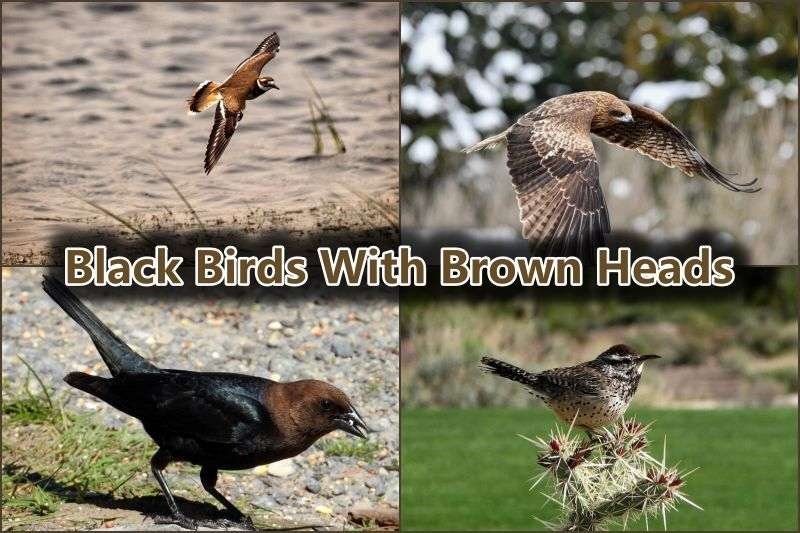
The male Brown-headed Cowbird has a glossy black body and a rich brown head. It is common across much of the United States, especially near open fields, lawns, farms, woodland edges, and suburban bird feeders. The female is much less colorful, with an overall gray-brown body.
This guide explains how to identify a Brown-headed Cowbird, where it lives, how it behaves, and how to tell it apart from similar black birds in the United States.

The bird is usually a male Brown-headed Cowbird
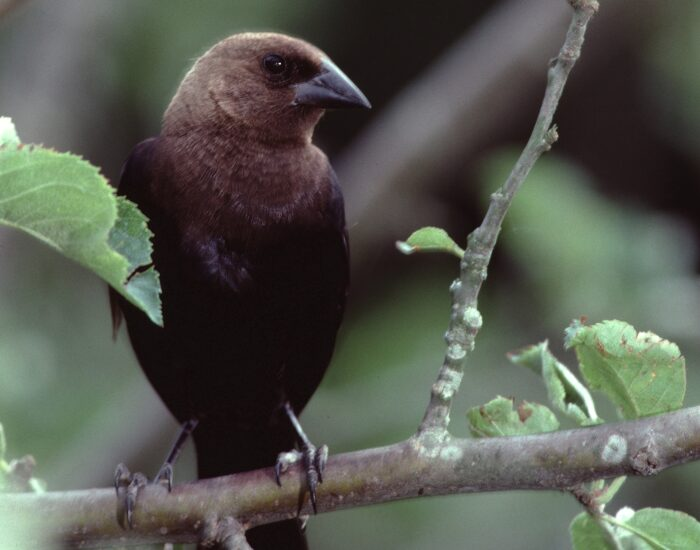
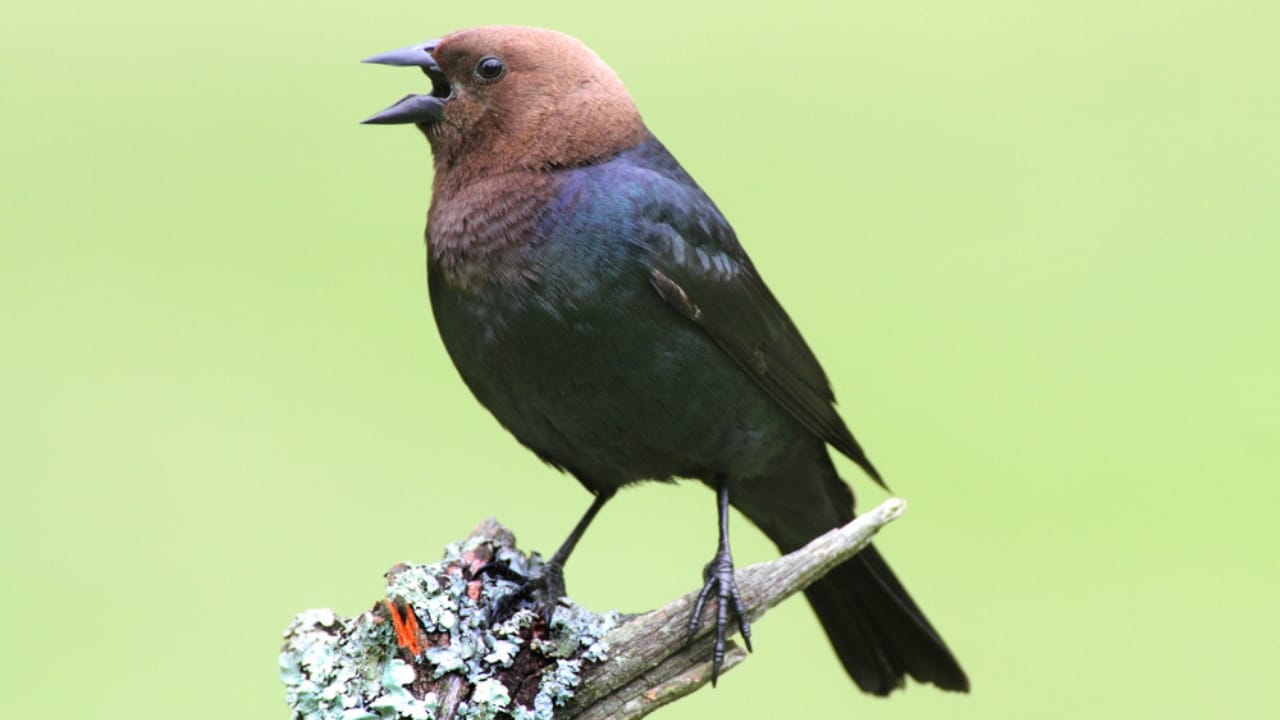
The Brown-headed Cowbird (Molothrus ater) is the best match for a bird with a black body and brown head.
The male has:
- A dark brown or chocolate-brown head
- A glossy black body
- Short, pointed wings
- A short, thick bill
- Dark eyes and legs
- A compact, slightly heavy shape
The brown head may look black in poor light. In sunlight, the contrast becomes easier to see. The body can also show a blue, green, or purple sheen.
Brown-headed Cowbirds are not large birds. They are about the size of a robin, though their short tail and thick body can make them look stockier.
Quick identification
| Feature | Male Brown-headed Cowbird |
|---|---|
| Head | Brown |
| Body | Glossy black |
| Bill | Short and thick |
| Tail | Short |
| Size | About robin-sized |
| Habitat | Fields, farms, roadsides, lawns, and woodland edges |
| Range | Much of the United States and southern Canada |
The key clue is the sharp color split between the brown head and black body.
How to identify a Brown-headed Cowbird in the United States
Look at the bird’s head, body shape, bill, and location. One feature alone may not be enough, especially when the bird is far away.
1. Check the head and body colors
A male Brown-headed Cowbird has a brown head and black body. The brown often extends down the neck and upper throat. The rest of the body is darker and may shine in the sun.
The head is not always bright brown. It may appear:
- Warm chestnut
- Dark chocolate
- Rust brown
- Almost black in shade
Lighting can change the bird’s appearance. A bird that looks all black at dusk may show a brown head in full daylight.
2. Look at the bill
The bill is one of the best clues. Brown-headed Cowbirds have a short, thick, cone-shaped bill. This shape helps them crack and handle seeds.
The bill is different from the longer, slimmer bill of many blackbirds. It also helps separate the cowbird from a Common Grackle, which has a longer, more pointed bill.
3. Watch how it moves
Brown-headed Cowbirds often walk on the ground while searching for food. They may join groups of blackbirds, starlings, or grackles in open areas.
At feeders, they may:
- Feed on the ground below the feeder
- Gather in small or large flocks
- Push through mixed groups of birds
- Eat seeds that fall from platform or tube feeders
They often spend less time clinging to small feeder ports than finches or chickadees.
4. Listen for a simple, liquid call
The male’s song is not a clear whistle like a northern Cardinal’s song. It is often described as a short, bubbly, gurgling, or liquid sound.
The call can be brief. If you see a black bird with a brown head and hear a soft bubbling note, a Brown-headed Cowbird is a strong possibility.

Male and female Brown-headed Cowbirds look different
Only the male has the obvious brown-head and black-body pattern. The female is plain gray-brown from head to tail.
Female Brown-headed Cowbirds usually have:
- A dull gray or brown body
- A lighter throat
- A rounded head
- A similar short, thick bill
- Less contrast than the male
Young birds may look even plainer. Their feathers can be light brown, gray, or streaked before they develop adult plumage.
This difference can lead to confusion. A person may see a male and female together and think they are different species. They are both Brown-headed Cowbirds.
Do not use the male’s colors to identify every cowbird
The species name can also cause confusion. The name “Brown-headed Cowbird” refers mainly to the male’s adult plumage. Females and young birds do not have the same strong color pattern.
The brown head is also less useful when the bird is:
- Wet
- In deep shade
- Seen at dawn or dusk
- Far from the observer
- Molting
- Partly hidden by leaves
Use the bill, body shape, flock behavior, and habitat as extra clues.

Brown-headed Cowbird range and habitat
Brown-headed Cowbirds live across much of the United States. They are especially common in open or partly open habitats.
You may find them in:
- Pastures
- Agricultural fields
- Ranches
- Prairie
- Roadsides
- Parks
- Suburban lawns
- Woodland edges
- Areas near livestock
They are less likely to stay deep inside unbroken forests. Their historic connection with large grazing animals helped shape their behavior. Today, they also use human-made landscapes such as farms, roads, lawns, and bird-feeding areas.
Their range covers most of the continental United States, although numbers and local presence vary by season and region. They also occur in parts of southern Canada and Mexico.
Why they visit open land
Cowbirds eat seeds and insects. Open ground makes it easier for them to find food. They may follow cattle, horses, or other large animals because moving animals disturb insects and expose food.
They do not need to remain near livestock. A lawn, farm field, or park can provide similar feeding space.

What Brown-headed Cowbirds eat
Brown-headed Cowbirds eat a broad mix of foods. Their diet changes with season and habitat.
Common foods include:
- Grass and weed seeds
- Cracked corn
- Millet
- Sunflower seeds
- Insects
- Beetles
- Grasshoppers
- Small fruits
- Other plant matter
During the breeding season, insects can be important. Adults may also feed insects to young birds.
At backyard feeders, cowbirds often eat mixed seed. They may spend much of their time on the ground, where they collect seed dropped by other birds.
If you want to reduce cowbird activity, use feeders that limit access to ground-feeding birds. Keep spilled seed cleaned up. This may reduce cowbird visits, but it will not remove them from the wider area.
Avoid using poison or unsafe traps. These methods can harm protected native birds, pets, and other wildlife.
Brown-headed Cowbird nesting behavior is unusual
Brown-headed Cowbirds are brood parasites. This means a female lays her eggs in the nests of other bird species instead of building and raising a brood in her own nest.
A female may place an egg in the nest of a host bird. The host then incubates the egg and may feed the cowbird chick after it hatches.
Cowbirds use many host species. Examples can include:
- Warblers
- Vireos
- Sparrows
- Flycatchers
- Finches
- Other small songbirds
The effect is not the same for every host. Some host birds reject cowbird eggs. Others accept them. In some cases, a large cowbird chick may compete strongly with the host’s own young.
Why this behavior matters
Cowbird brood parasitism is a natural behavior, but it can create conservation concerns. Some vulnerable songbirds face greater pressure when cowbirds are common near their breeding habitat.
The impact depends on:
- The host species
- The number of cowbirds in the area
- The quality of the habitat
- Whether the host can recognize and remove foreign eggs
- The condition of the host population
Do not remove cowbird eggs from a wild nest unless a qualified wildlife professional tells you to do so. Many native birds are protected by federal and state laws, and incorrect nest handling can harm the host brood.

Similar birds with black bodies
Several U.S. birds may look black at first glance. The head color, bill, tail, and body shape can help separate them.
| Bird | Main difference from a Brown-headed Cowbird |
|---|---|
| Common Grackle | Longer body, longer tail, and longer bill; head may show blue or green |
| European Starling | Speckled plumage in many seasons and a slender, pointed bill |
| Red-winged Blackbird | Red and yellow shoulder patches on the male |
| Brewer’s Blackbird | Dark head and body with a pale eye; no clear brown head |
| Rusty Blackbird | Rust-colored body markings, especially in worn or winter plumage |
| American Crow | Much larger, with a heavy bill and broad wings |
| Common Raven | Larger still, with a longer bill and shaggy throat feathers |
Brown-headed Cowbird versus Common Grackle
This is one of the most common mix-ups. Both birds may visit lawns and open fields.
A Common Grackle usually has:
- A longer tail
- A longer, heavier bill
- A more slender body
- Blue or green shine on the head
- A larger overall appearance
A Brown-headed Cowbird has a shorter tail, a more compact body, and a clearer brown head.
Brown-headed Cowbird versus Brewer’s Blackbird
Brewer’s Blackbirds can look dark brown or black. Males often have a glossy purple or green head and a pale eye.
The Brown-headed Cowbird has a more obvious brown head and usually a thicker, shorter bill. Location can help, since the two species are more common in different parts of the country, though their ranges can overlap.

Is a Brown-headed Cowbird dangerous?
A Brown-headed Cowbird is not dangerous to people. It does not normally attack humans, and it is not a bird that needs to be handled.
Keep a safe distance from any wild bird. Do not try to catch one, touch a nest, or interfere with eggs. Birds can carry germs and may scratch or bite when frightened.
If you find an injured cowbird, contact a licensed wildlife rehabilitator. Do not give food or water unless the rehabilitator provides instructions. Improper care can cause choking, aspiration, or other harm.
Can Brown-headed Cowbirds harm other birds?
They can affect the nesting success of some songbirds through brood parasitism. However, this does not mean every cowbird causes serious harm or that every host nest will fail.
The best response is habitat-based conservation:
- Protect large blocks of native habitat
- Reduce unnecessary edge habitat near sensitive nesting areas
- Keep cats indoors
- Avoid disturbing active nests
- Follow guidance from local wildlife agencies
Backyard bird feeders are not usually the sole cause of cowbird impacts. Cowbirds use many kinds of open habitat across the United States.

How to confirm the bird’s identity
Use this short field checklist:
- Head: Is the head brown or chestnut?
- Body: Is the body glossy black?
- Bill: Is the bill short, thick, and cone-shaped?
- Tail: Is the tail short rather than long and flowing?
- Size: Is the bird about robin-sized?
- Habitat: Is it in a field, lawn, farm, roadside, or woodland edge?
- Behavior: Is it walking on the ground or feeding in a flock?
- Sound: Does it give a short bubbling or gurgling song?
If most answers are yes, the bird is likely a male Brown-headed Cowbird.
For a reliable confirmation, compare several features rather than relying on color alone. A clear photo from the side can show the head color, bill, wing shape, and tail.

Frequently asked questions
What is the name of the black bird with a brown head?
It is most likely a male Brown-headed Cowbird. The species is common in much of the United States and often appears in fields, lawns, farms, and areas near bird feeders.
Are Brown-headed Cowbirds blackbirds?
Yes. Brown-headed Cowbirds belong to the blackbird family, Icteridae. They are related to grackles, red-winged blackbirds, meadowlarks, and orioles.
Do female Brown-headed Cowbirds have brown heads?
Females are mostly gray-brown and do not show the male’s strong black-body and brown-head pattern. Young birds are also less distinct.
Do Brown-headed Cowbirds migrate?
Some populations migrate, while others remain in the same general area year-round. Movement depends on region, weather, food, and local breeding patterns.
Should I remove a cowbird egg from a nest?
Usually, no. Nest intervention can harm protected birds and may be illegal in some situations. Contact a state wildlife agency or licensed bird conservation professional before taking action.
How can I keep cowbirds away from my feeder?
Use tube feeders that limit access by larger birds, avoid platform feeders, clean up spilled seed, and place feeders away from large open feeding areas. These steps may reduce visits but cannot prevent cowbirds from living nearby.
Bottom line
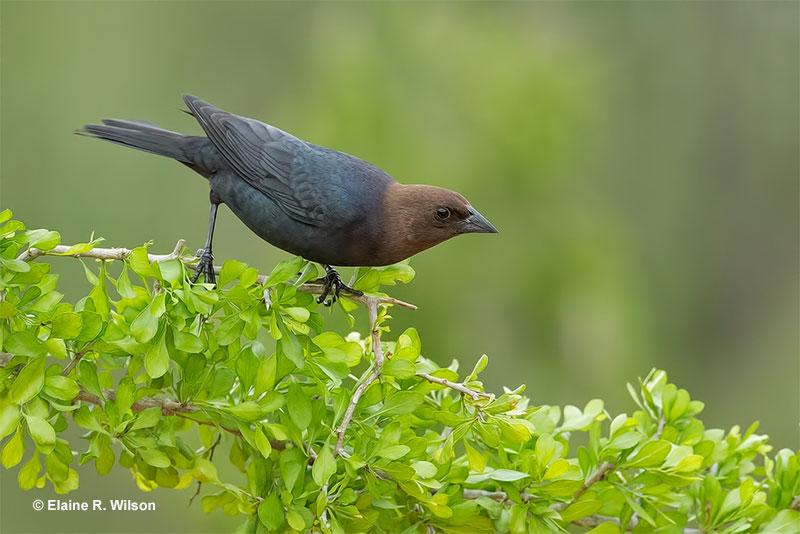
The bird most commonly described as having a black body and a brown head is the male Brown-headed Cowbird. Look for its short, thick bill, compact body, short tail, ground-feeding behavior, and presence in open habitats across the United States.
The female looks very different, so check more than color when making an identification. If the bird has a long tail or a long bill, compare it with a Common Grackle. If it has red shoulder patches, it is more likely a Red-winged Blackbird.
For the next step, note the bird’s location, size, bill shape, tail length, and behavior. A clear photo and those details will usually make identification straightforward.