
In the United States, the bird most often described as having a black head and gray body is the Black-capped Chickadee (Poecile atricapillus). It has a black cap, black throat bib, white cheeks, a soft gray back, and pale underparts.
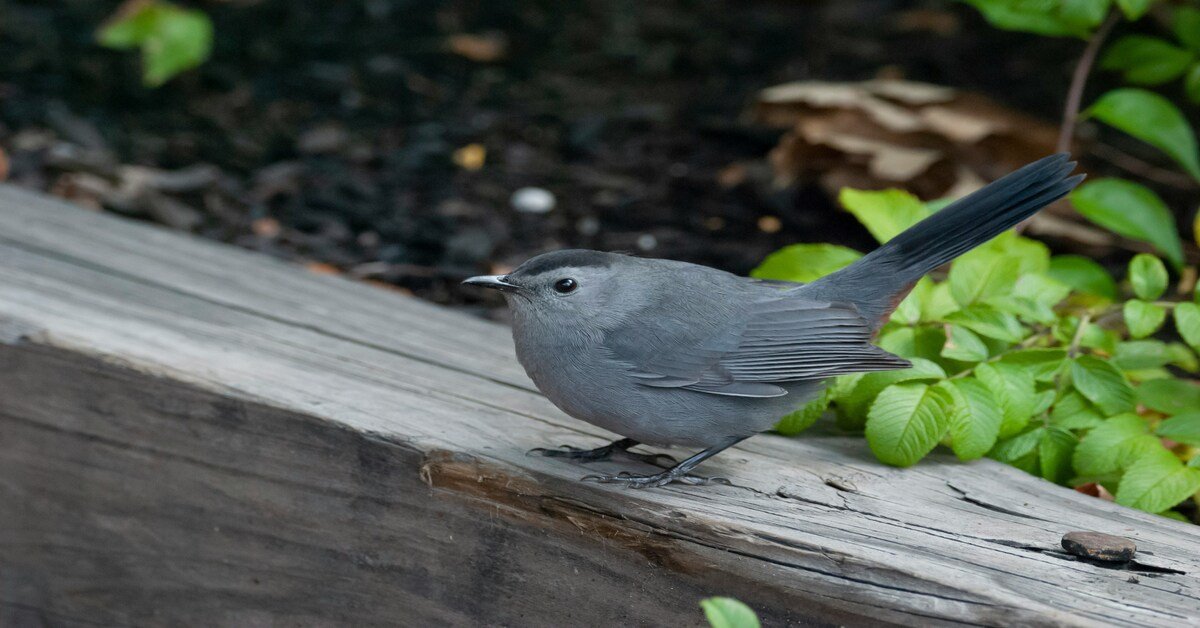
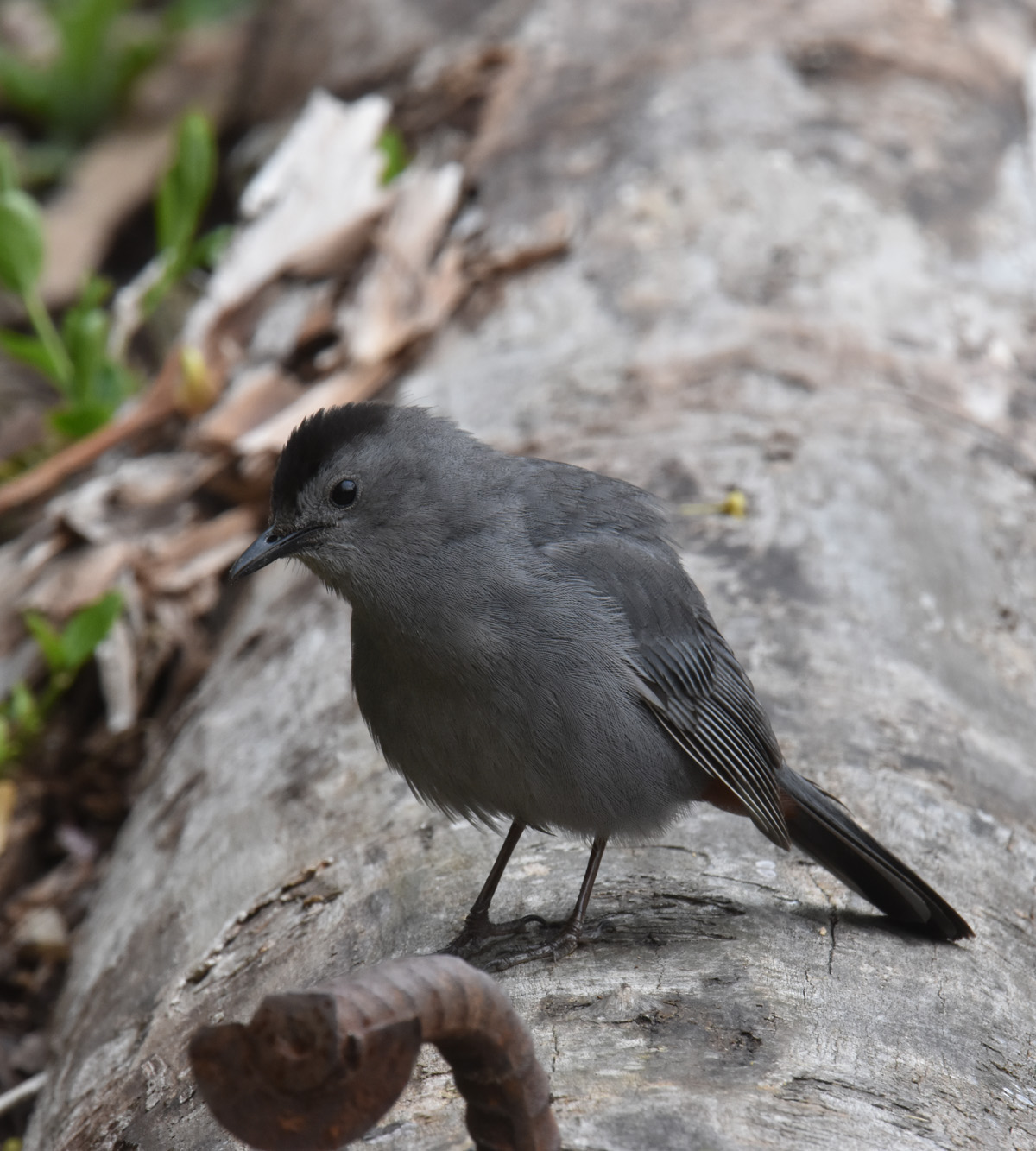
Another common match is the Gray Catbird (Dumetella carolinensis). It has a gray body and a dark slate-colored cap, but its head is not usually solid black. Use the bird’s size, cheek color, tail, and behavior to tell them apart.
Quick Answer
The Black-capped Chickadee is the best match when you see:
- A small, round-bodied bird
- A black cap and black throat
- Bright white cheeks
- A gray back and wings
- A short, sharp bill
- Active movement through trees and shrubs
If the bird is larger, has a long tail, and lacks white cheeks, it may be a Gray Catbird instead.
Black-Capped Chickadee: The Most Likely Match
The Black-capped Chickadee is a small North American songbird found across much of the northern United States, Alaska, and parts of the western mountains. It often visits bird feeders, woodland edges, parks, and suburban yards.
Its most useful field marks are the black cap, black bib, and white cheek patches. The back and wings are gray, while the underside is usually light gray or white. The bird may look mostly black and gray from a distance, but the white cheeks are a key clue.
Black-Capped Chickadee identification
| Feature | Description |
|---|---|
| Size | About 4.7–5.9 inches long |
| Head | Black cap and black throat |
| Cheeks | White |
| Back and wings | Gray |
| Belly | White or pale gray |
| Bill | Short and pointed |
| Tail | Medium length |
| Typical call | “Chick-a-dee-dee-dee” |
The Black-capped Chickadee is often easy to recognize by behavior. It moves quickly from branch to branch, hangs briefly on twigs, and may take one seed at a time from a feeder. It often joins mixed flocks with Tufted Titmice, nuthatches, kinglets, and woodpeckers.
The species is common in deciduous and mixed forests. It also adapts well to backyards, especially where native shrubs, mature trees, and sunflower seeds are available.
For a documented range and identification details, see the Cornell Lab of Ornithology species guide and the National Audubon Society bird guide.

Gray Catbird: A Common Look-Alike
The Gray Catbird is another strong answer to the question “what bird has a black head and gray body?” Its body is mostly slate gray, and its head often appears darker than its back. In some light, the cap can look nearly black.
A Gray Catbird is much larger and longer than a Black-capped Chickadee. It has a long tail, a slim body, and a dark bill. It also has a small patch of rusty red feathers under the tail, though this patch is often hidden.
Gray Catbird identification
| Feature | Description |
|---|---|
| Size | About 8.3–9.4 inches long |
| Head | Dark slate gray |
| Body | Medium gray |
| Cheeks | Gray, not white |
| Tail | Long and rounded |
| Bill | Long and dark |
| Under-tail | chestnut or rusty red |
| Typical sound | Varied whistles, chatters, and catlike calls |
Gray Catbirds live in dense shrubs, woodland edges, thickets, gardens, and overgrown fields. They often stay low in vegetation, unlike chickadees, which tend to forage in trees.
Their song is another useful clue. A catbird may mimic other birds and produce a long series of whistles, squeaks, and harsh notes. Its call can sound like a mewing cat, which explains the common name.
The Cornell Lab of Ornithology Gray Catbird guide provides range, habitat, behavior, and identification information for this species.

How to Tell the Two Birds Apart
The fastest way to identify the bird is to check the cheeks, size, and tail.
| Field mark | Black-capped Chickadee | Gray Catbird |
|---|---|---|
| Overall size | Small | Medium-sized |
| Black on head | Clear black cap | Dark gray cap |
| Cheeks | White | Gray |
| Tail | Short to medium | Long |
| Body shape | Compact and round | Slim and long |
| Habitat | Trees and feeders | Dense shrubs and thickets |
| Main sound | “Chick-a-dee” call | Catlike notes and varied song |
| Feeding style | Quick movements on branches | Often feeds in low cover |
A small bird with bright white cheeks is almost certainly a Black-capped Chickadee or a related chickadee species. A larger gray bird with a long tail is more likely a Gray Catbird.
Size can be hard to judge when there is no nearby object for comparison. In that case, focus first on the cheek color. White cheeks point toward a chickadee. A plain gray face points toward a catbird.
Other U.S. Birds That May Match the Description
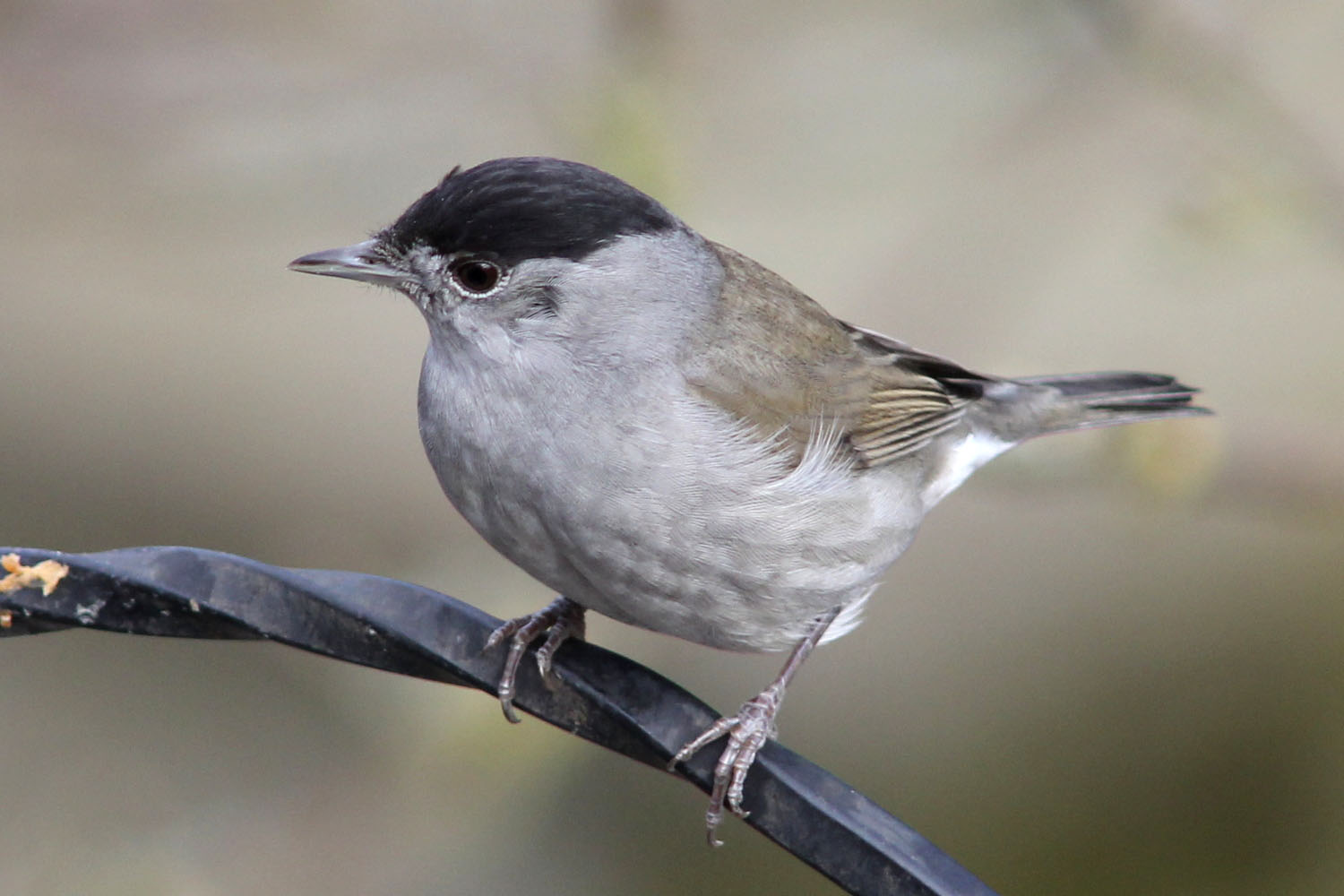
The description “black head and gray body” is useful but not precise enough to identify every bird. Several species can look similar at a quick glance.
Mountain Chickadee
The Mountain Chickadee resembles the Black-capped Chickadee but has a noticeable white stripe above the eye. It lives mainly in mountainous parts of the western United States.
Carolina Chickadee
The Carolina Chickadee has the same basic black, white, and gray pattern. It is common in the southeastern and central United States. Its range overlaps with the Black-capped Chickadee in some areas, where identification can be difficult.
Tufted Titmouse
The Tufted Titmouse has a gray body and a pointed crest. Its head is gray rather than black, and it lacks the strong black cap and white cheeks of a chickadee.
Eastern Kingbird
The Eastern Kingbird has a dark head, gray back, and white underside. It is larger than a chickadee and has a broad, dark bill. It often perches in open areas and catches insects in flight.
Northern Mockingbird
The Northern Mockingbird is gray above and pale below, with darker wings and a long tail. Its head is not solid black. White wing patches often show when it flies.
Loggerhead Shrike
The Loggerhead Shrike has a gray body and a black facial mask. The black color covers the eyes and sides of the face, not the entire head. It has a strong hooked bill and often lives in open country.
Dark-eyed Junco
Some Dark-eyed Juncos have a dark gray head and a paler gray body. They commonly feed on the ground and often show a white outer tail when they fly.

Identification by Location in the United States
Location can narrow the answer, but it should not replace field marks.
- Northeastern and northern states: Black-capped Chickadee and Gray Catbird are both common possibilities.
- Southeastern states: Carolina Chickadee may be more likely than Black-capped Chickadee.
- Rocky Mountain states: Mountain Chickadee is a strong possibility.
- Pacific Northwest: Chestnut-backed Chickadee may appear, although its brown sides make it less likely to fit the gray-body description.
- Open grassland or farm country: Eastern Kingbird or Loggerhead Shrike may fit better.
- Dense backyard shrubs: Gray Catbird is especially likely.
- Bird feeders in wooded neighborhoods: Black-capped Chickadee is a leading candidate.
Season also matters. Gray Catbirds migrate from much of the northern United States in winter, while Black-capped Chickadees remain in their breeding range throughout the year. Some catbirds spend the winter in the southern United States.
The U.S. Geological Survey Breeding Bird Survey and the eBird species maps can help confirm whether a species occurs in a particular area. Range maps are guides, not proof of identity, because birds can wander and seasonal ranges can change.
What Bird Has a Black Head and Gray Body at a Feeder?
At a U.S. bird feeder, the most likely answer is a Black-capped Chickadee. It commonly takes sunflower seeds, peanuts, and suet.
The bird may grab a seed and fly to a nearby branch before eating. It may also hang upside down from a feeder or thin twig. Its black cap, white cheeks, and gray back should remain visible even during quick visits.
A Tufted Titmouse may appear at the same feeder. It is larger and has a pointed gray crest. A White-breasted Nuthatch may also look gray and black, but it has a white face, a longer pointed bill, and a habit of moving headfirst down tree trunks.
Keep feeders clean and place them near natural cover, but not so close to dense cover that cats can hide beside them. The U.S. Fish and Wildlife Service recommends reducing hazards such as window strikes, free-roaming cats, and contaminated feeding areas. The U.S. Fish and Wildlife Service bird-feeding guidance explains safe ways to support backyard birds.

What Bird Has a Black Head and Gray Body Near Water?
Near ponds, marshes, and slow rivers, several birds may fit the basic description.
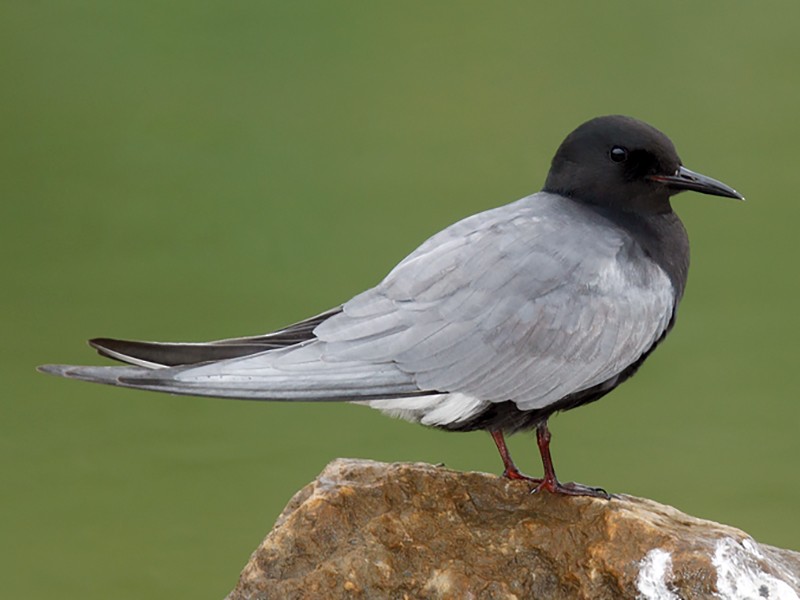
A Black-crowned Night Heron has a black crown and back, gray wings, and a stocky body. It is much larger than a chickadee or catbird and often rests in wetlands during the day.
An American Coot has a dark body and head, but its body is usually dark gray to black rather than medium gray. Its white bill and forehead shield are more useful identification marks.
A Belted Kingfisher has a gray-blue back and a dark head crest. It also has a large bill and often hovers or dives for fish.
Habitat is especially helpful in this setting. A small, active songbird in nearby trees is likely a chickadee. A large, still bird at the water’s edge may be a heron or another wetland species.

Common Identification Mistakes
The most common mistake is treating “black head” as a complete identification. Many birds have a dark cap, mask, crown, or crest, but these markings do not mean the whole head is black.
Another mistake is ignoring the bird’s size. A chickadee is small enough to fit easily in the hand, while a catbird is closer in length to a robin. A heron, kingfisher, or shrike has a different body shape and bill.
Lighting can also change the apparent color. Gray feathers may look black in deep shade. Black feathers may look dark blue or charcoal in bright sun. Check more than one feature before reaching a conclusion.
Avoid identifying a bird from a single blurry photo when possible. Look for:
- White or gray cheeks
- Body size
- Tail length
- Bill shape
- Habitat
- Behavior and call
- Season and location
A field guide or birding app can help, but photo-based tools may produce errors when the image is dark, distant, or taken from an unusual angle. Confirm the suggestion with visible field marks.
Frequently Asked Questions
Is a Black-capped Chickadee’s body gray?
Yes. Its back and wings are gray, while its underside is usually white or pale gray. The black cap and bib contrast sharply with the white cheeks.
Is a Gray Catbird’s head black?
Usually, no. The Gray Catbird has a dark slate-gray cap that may look black in poor light. Its face is gray, and it does not have the bright white cheek patches of a Black-capped Chickadee.
What bird has a black head, white cheeks, and gray wings?
The most likely bird is a Black-capped Chickadee. A Carolina Chickadee or Mountain Chickadee may look similar, depending on the region.
What bird has a black mask and gray body?
A Loggerhead Shrike has a gray body and black mask. The mask crosses the eyes and sides of the face, rather than covering the entire head.
How can I identify the bird without hearing its call?
Use the cheek color, body size, tail length, bill shape, and habitat. White cheeks and a small compact body suggest a chickadee. A long tail and plain gray face suggest a Gray Catbird.
Key Takeaways
- The Black-capped Chickadee is the best general answer for a bird with a black head and gray body in the United States.
- Its strongest marks are a black cap, black bib, white cheeks, and gray back.
- A Gray Catbird can look similar but is larger, has a long tail, and usually has a dark gray rather than black head.
- A Loggerhead Shrike has a black facial mask, not a fully black head.
- Use several clues together: color, size, tail, habitat, behavior, and sound.
Conclusion
If you saw a small bird with a black cap, white cheeks, and a gray back in a U.S. yard or woodland, it was most likely a Black-capped Chickadee. If the bird was larger, long-tailed, and hiding in thick shrubs, a Gray Catbird is the better match.
The next step is to compare the bird’s cheek color and tail length. Those two features often separate the most common possibilities at a glance.