
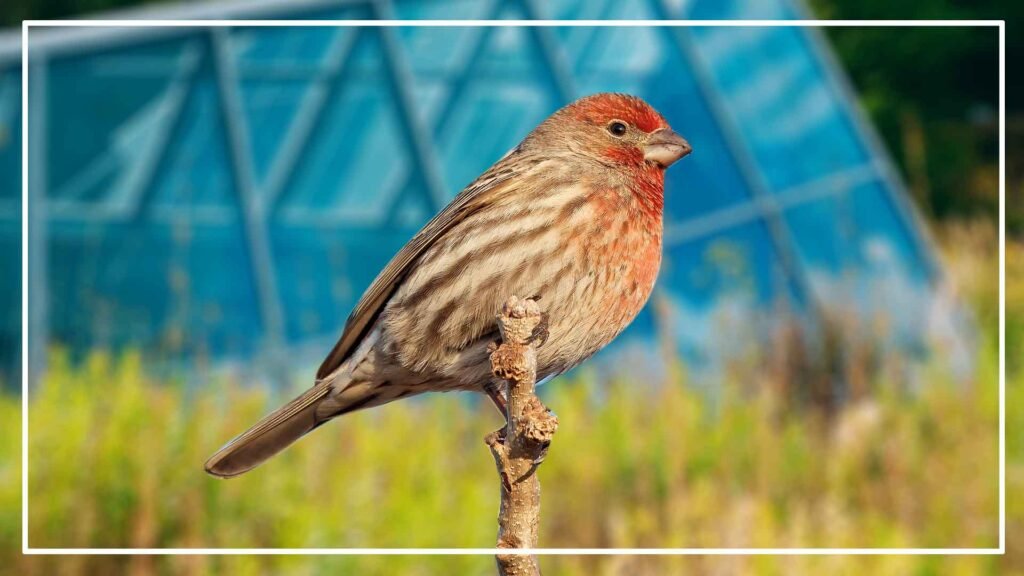
The House Finch is the most likely answer in the United States when you see a small bird with a red head and a brown body. A male House Finch has red on the forehead, face, throat, and upper chest. Its back and wings are brown, while its underside often has brown streaks.
Still, several U.S. birds can look similar. The Purple Finch, Cassin’s Finch, Common Redpoll, and Red Crossbill may also show a red head with brown or muted body feathers. Size, bill shape, location, and the amount of red can help you tell them apart.

The Most Likely Bird Is a Male House Finch
A male House Finch is the best match for the description “red head and brown body.” It is common across much of the United States, often near homes, parks, farms, roadsides, and bird feeders.
The red color is usually strongest on the:
- Forehead and crown
- Face and throat
- Upper breast
- Sometimes the back and shoulders
The rest of the bird is mainly brown, gray-brown, or brown with streaks. The belly is often pale with dark streaking.
House Finches are small songbirds with a short, rounded bill and a long, slightly notched tail. They are about 6 inches long, which is close to the size of a sparrow.
House Finch identification clues
Look for these features:
| Feature | Male House Finch |
|---|---|
| Head | Red or orange-red forehead and face |
| Throat and chest | Red, often spreading down the breast |
| Back | Brown and streaked |
| Belly | Pale brown or whitish with dark streaks |
| Bill | Short, thick, and conical |
| Tail | Long and slightly notched |
| Habitat | Suburbs, towns, farms, parks, and open woodland |
| U.S. range | Much of the United States |
The shade of red can vary. Diet affects feather color, so some males look bright crimson while others look orange, rusty, or dull red.
A female House Finch does not have the red head. She is mostly brown and heavily streaked. This difference often explains why two birds at the same feeder may look like different species.
For comparison, the Cornell Lab of Ornithology House Finch account describes the male’s red face and upper breast, along with the bird’s brown-streaked body.

Birds That Also Have a Red Head and Brown Body
The House Finch is not the only possibility. Use the bird’s shape, pattern, and location to separate similar species.
Purple Finch
The Purple Finch is one of the closest matches. The adult male has a raspberry-red or wine-red head, throat, breast, and back. The red often looks more blended across the head and upper body than the sharper red markings of a House Finch.
A Purple Finch usually has:
- A rounded head
- A short, thick bill
- A reddish wash over the back and breast
- Less strong streaking on the underside than a House Finch
- A slightly larger and fuller appearance
Purple Finches are common in northern forests and parts of the Northeast, West, and Pacific Northwest. They may visit feeders, especially in winter.
The Cornell Purple Finch species account notes the male’s raspberry-colored head and body. If the bird looks soft, rounded, and deeply red rather than sharply streaked, Purple Finch may be the better choice.
Cassin’s Finch
The Cassin’s Finch is mainly a western U.S. bird. The male has a red crown and rosy-red face, throat, and breast. Its back is brown, gray, or reddish-brown.
Cassin’s Finch often looks larger and longer-bodied than a House Finch. Its bill is also more substantial, and its head may appear peaked or angular.
Look for Cassin’s Finch in:
- Mountain forests
- High-elevation areas
- Conifer stands
- Western towns near mountain habitats
The Cornell Cassin’s Finch guide provides range and identification details. In the western United States, location is a major clue: a red-headed finch in a mountain pine forest deserves a closer look.
Common Redpoll
The Common Redpoll is a small northern finch. It has a bright red cap, a small red or pink area on the throat, and a pale brown or gray-brown body.
Unlike a House Finch, the red on a Common Redpoll is usually limited to the cap and throat. The bird also has a tiny bill and a pale body with fine streaks.
Common Redpolls appear in the northern United States during some winters. They are more likely near birch trees, weedy fields, and feeders with small seeds.
The Cornell Common Redpoll account is useful for checking the red cap, small bill, and northern range.
Red Crossbill
A Red Crossbill can appear red-headed and brown-bodied, especially when viewed from a distance. Adult males are often brick red or orange-red overall, while females are olive or yellow-brown.
The key clue is the bill. The two bill tips cross when the bird closes its mouth. This bill helps the bird remove seeds from conifer cones.
A Red Crossbill is more likely than a House Finch if the bird:
- Is feeding in a conifer tree
- Has a heavy, curved bill
- Shows red across much of the body
- Makes short, sharp calls from a pine or spruce
The Cornell Red Crossbill guide explains this unusual bill and the species’ close link to conifer forests.
Pine Grosbeak
The Pine Grosbeak is a much larger bird. An adult male may have a red head, throat, and breast with a gray or brown body.
Its size is the easiest clue. Pine Grosbeaks are about 9 to 10 inches long, with a thick, rounded bill and a long tail. They live mainly in northern forests and high mountain areas.
If the bird looks closer to a robin than a sparrow, Pine Grosbeak becomes more likely.

Quick Comparison: Which Red-Headed Brown Bird Did You See?
This table can help narrow down the identification.
| Species | Red pattern | Body appearance | Best clue | Typical U.S. setting |
|---|---|---|---|---|
| House Finch | Face, forehead, throat, and chest | Brown and streaked | Common near homes and feeders | Most of the country |
| Purple Finch | Raspberry-red head, throat, breast, and back | Softer brown body | Rounded shape and blended red color | Northern forests and winter ranges |
| Cassin’s Finch | Red crown, face, throat, and breast | Brown-gray back | Larger finch in the West | Mountain forests and western towns |
| Common Redpoll | Small red cap and throat | Pale brown or gray | Tiny bill and compact body | Northern states in winter |
| Red Crossbill | Red or orange-red head and body | Brown, red, or olive | Crossed bill | Conifer forests |
| Pine Grosbeak | Red head and upper body | Gray-brown wings and back | Large, bulky size | Northern forests and mountains |
The most useful identification questions are:
- How large was the bird?
- Was the red limited to the head, or did it cover the back and chest?
- Did the belly have strong brown streaks?
- What did the bill look like?
- Where in the United States did you see it?
A small bird with a red face, brown streaked belly, and no unusual bill is usually a male House Finch.

How to Identify the Bird in the Field
Start with the bird’s shape and behavior, then study color. Color alone can mislead you because light, age, diet, and feather wear can change how red and brown look.
1. Estimate the size
Compare the bird with familiar species:
- Sparrow-sized: House Finch, Purple Finch, or Common Redpoll
- Robin-sized: Pine Grosbeak
- Slim and upright: Some flycatchers may look different from finches
- Large and heavy-billed: Pine Grosbeak or another large finch
House Finches and Purple Finches are similar in size. Pine Grosbeaks are clearly larger.
2. Check the bill
The bill can rule out several species.
- Short, thick, cone-shaped bill: House Finch or Purple Finch
- Very small bill: Common Redpoll
- Crossed bill tips: Red Crossbill
- Large, rounded bill: Pine Grosbeak
Do not rely on the bill alone. Juvenile birds and poor viewing angles can make the bill seem different.
3. Study the red pattern
A male House Finch usually has red on the face, forehead, throat, and chest. The red may fade before reaching the lower belly.
A Purple Finch often has a more even raspberry wash over the head, back, and breast. A Common Redpoll usually has a clear red cap instead of a fully red face.
4. Look for streaks
Strong brown streaks on the belly favor House Finch. A cleaner, less streaked underside may suggest Purple Finch or Cassin’s Finch.
Streaking also varies with age and sex. Young finches may look brown and streaked before they develop adult male colors.
5. Use habitat and range
Habitat helps, but it should not override the bird’s physical traits.
- Backyard feeder or suburban street: House Finch is likely
- Northern forest or winter feeder: Purple Finch or Common Redpoll may fit
- Western mountain forest: Cassin’s Finch is worth considering
- Pine or spruce cone: Red Crossbill is possible
- Cold northern forest with a large finch: Pine Grosbeak may fit
Range maps from the Cornell Lab of Ornithology can help confirm whether a species is expected in your state.

Red-Headed Birds That Are Often Confused With Finches
Some birds have red heads but do not have the brown finch-like body described in the question.
Northern Cardinal
A male Northern Cardinal has a red crest, face, body, and tail. Its body is not mainly brown. It also has a large orange-red bill and a prominent crest.
A female cardinal is brown with reddish highlights, but she does not usually have a fully red head.
Red-headed Woodpecker
The Red-headed Woodpecker has a bright red head, white body, and black wings. It is much larger than a House Finch and does not have a brown finch body.
Vermilion Flycatcher
A male Vermilion Flycatcher may have a bright red head and breast with darker brown wings and back. This can match the color description at first glance.
However, it has a slender flycatcher shape, a thin bill, and a noticeably different posture. It often sits upright on exposed perches and catches insects in flight. The species is most common in the southern and southwestern United States.
The Cornell Vermilion Flycatcher account can help separate it from red finches.
Scarlet Tanager
A male Scarlet Tanager has a red body and black wings. It does not have a brown body, and its bill and shape differ from those of a House Finch.
Red-bellied Woodpecker
The name can cause confusion. A Red-bellied Woodpecker has a red crown and nape, but its body is mostly pale gray with black-and-white barred wings. The red is not on the entire head.

Male, Female, and Young Birds Can Look Very Different
Sex and age are major reasons bird identification feels difficult.
Male House Finches develop red plumage, while females are brown and streaked. Young birds also tend to look brown and streaked before they acquire adult feathers.
A bird’s color may also change because of:
- Molting
- Worn feathers
- Poor lighting
- Distance
- Shade or backlighting
- Diet
- Individual variation
The red color in male finches comes from pigments in their diet. As a result, one male may look bright red while another looks orange or rusty.
Do not reject House Finch simply because the red is pale. Instead, combine color with body shape, bill type, streaking, habitat, and behavior.

Common Identification Mistakes
Mistake 1: Treating every red bird as a cardinal
Cardinals are familiar, so people often use them as the first comparison. A bird without a large crest and orange-red bill is unlikely to be a Northern Cardinal.
Mistake 2: Ignoring the underside
The back may look brown on many finches. The belly and breast often provide better clues. Strong streaking favors House Finch, while a smoother raspberry wash may favor Purple Finch.
Mistake 3: Using color without checking size
A large red-headed bird may be a Pine Grosbeak or Vermilion Flycatcher rather than a House Finch. Size can narrow the options quickly.
Mistake 4: Assuming all red-headed birds are males
Female and juvenile birds may be mostly brown. A brown finch near a red male may be the same species.
Mistake 5: Trusting one photograph or app result
Bird identification apps can help, but poor photos, unusual angles, and similar species can lead to errors. Use the image as a clue, then check the range, bill, shape, and markings in a trusted field guide.
Mistake 6: Feeding without cleaning the feeder
House Finches can spread disease at crowded feeders. Clean feeders often and remove wet or spoiled seed. If you see sick birds, such as birds with crusted eyes or weak behavior, temporarily take down feeders and contact a local wildlife agency or bird-health authority for guidance.
Never handle a wild bird unless a permitted wildlife rehabilitator or wildlife agency instructs you to do so.
What to Record for a Reliable Identification
Write down the details while you still remember them. A useful field note includes:
- Date and time
- State or general location
- Habitat
- Estimated size
- Head and body colors
- Bill shape
- Tail shape
- Belly streaking
- Song or call
- What the bird was doing
- A photograph, if available
A side view is often more useful than a front-facing photo. Try to capture the bill, wing pattern, breast, and tail. Do not chase the bird or disturb a nest to obtain a better image.
For a final check, compare the observation with a regional field guide and a reputable species database such as the Cornell Lab of Ornithology, Audubon, or a state wildlife agency.

Frequently Asked Questions
What is the most common bird with a red head and brown body?
In much of the United States, it is a male House Finch. Its red face and chest contrast with a brown, streaked body, and it often lives near people.
What bird has a red head and brown body in the western United States?
A House Finch is still common, but Cassin’s Finch becomes more likely in mountain and conifer habitats. The bird’s larger size, red crown, and western range can help separate it from a House Finch.
What small bird has a red cap and brown body?
The Common Redpoll has a red cap, a small red throat patch, and a pale brown or gray body. It is most likely in northern states, especially during winter movements.
Is a red-headed brown bird always a male?
No. Some females and young birds are mostly brown, and several species have red-headed males. Color, age, sex, and species all affect appearance.
What bird has a red head and a crossed bill?
The Red Crossbill has a distinctive bill in which the upper and lower tips cross. It often feeds on seeds in pine, spruce, and other conifer cones.
Bottom Line
If you saw a small bird in the United States with a red face or head, brown back, and streaked underside, identify it first as a likely male House Finch. Check for a short conical bill, a long notched tail, and red concentrated on the face, throat, and upper chest.
If the bird has a raspberry wash over much of its body, consider a Purple Finch. In the West, check for Cassin’s Finch. A red cap may indicate a Common Redpoll, while a crossed bill points to a Red Crossbill.
The best next step is to record the bird’s size, bill shape, streaking, habitat, and location before comparing it with a trusted regional bird guide.