
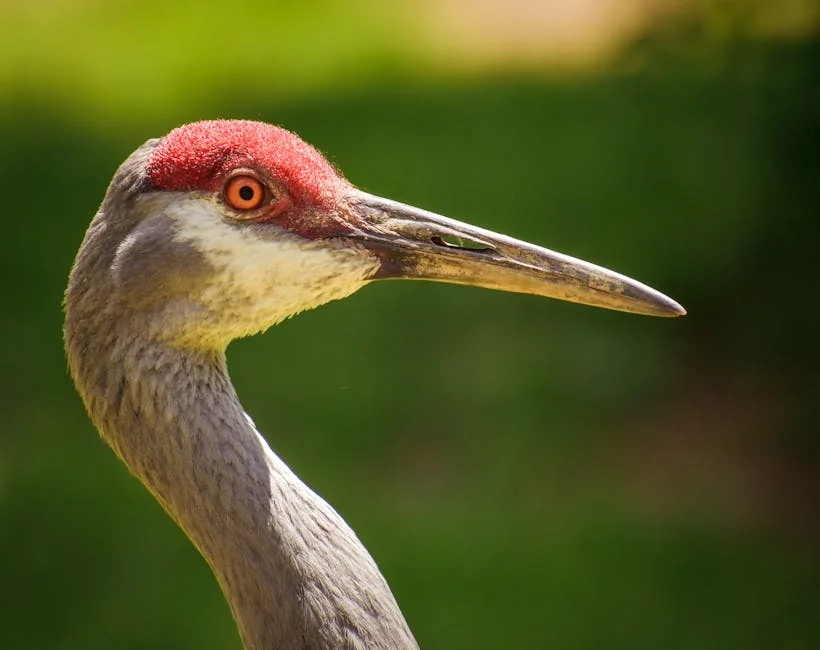
In the United States, the male house finch is one of the most common birds described as having a red head and gray or brown body. However, it is not the only possibility. Depending on the bird’s size, location, season, and body pattern, you may be seeing a pine grosbeak, purple finch, Cassin’s finch, or a vermilion flycatcher.
The fastest way to identify it is to check more than the head color. Look at the bird’s size, bill shape, wing pattern, tail, habitat, and the exact shade of red.

Quick Answer: The Most Likely Bird Is a Male House Finch
A male house finch often has a red forehead, crown, throat, and upper breast. The rest of the body is usually brown, gray-brown, or streaked. Its color can look brighter or duller depending on the light and the bird’s diet.
House finches are common across much of the United States. You may see them at:
- Backyard bird feeders
- Parks and city streets
- Open woodland
- Farms and suburban yards
- Dry areas with shrubs and small trees
The male house finch is small, usually about the size of a sparrow. It has a short, thick, cone-shaped bill and a long, slightly notched tail.
A key detail is that the red color often spreads down the face and chest. The bird usually does not have a completely red head with a clean gray body.
Birds That Can Have a Red Head and Gray Body
Several North American birds fit this description. The table below shows the most useful differences.
| Bird | Red area | Body color or pattern | Typical U.S. clue |
|---|---|---|---|
| Male house finch | Forehead, crown, throat, and breast | Brown-gray and streaked | Common at feeders and in towns |
| Male purple finch | Crown, face, throat, and upper breast | Brown with soft gray or pink wash | More common in northern forests and during winter movements |
| Male Cassin’s finch | Crown, face, and throat | Gray body with a red or rosy crown | Western mountain forests |
| Male pine grosbeak | Head, chest, and upper body | Gray wings, tail, and lower body | Northern forests and high-elevation areas |
| Vermilion flycatcher | Head, breast, and underparts | Brown-gray back and wings | Open, dry areas, mainly the Southwest |
| Northern cardinal | Entire head and much of the body | Bright red overall in males | Red body, orange bill, and black face mask |
Male House Finch
The male house finch is the best first guess for a small backyard bird with a red head and a gray-brown body.
Its red color can range from orange-red to deep crimson. The body often has brown streaks, especially on the sides and belly. Females lack the red coloring and are mostly brown with heavy streaking.
House finches have a rounded head and a thick bill suited to seeds. They often sit in groups and may visit tube feeders, platform feeders, or spilled seed beneath feeders.
Male Purple Finch
The male purple finch can look red-headed, but its color is usually more rose, raspberry, or wine-red than the bright red of a house finch. The red color often covers the head, throat, chest, and back.
Its body has a soft, blurred appearance rather than the sharp streaks often seen on a house finch. The purple finch also has a more rounded head and a larger-looking bill.
In the United States, purple finches are most likely in northern states, New England, the Pacific Northwest, and parts of the West. They may move south in winter.
Male Cassin’s Finch
The male Cassin’s finch is a strong match if the bird is in the western United States. It has a red or rosy crown, a red face and throat, and a gray body.
Compared with a house finch, Cassin’s finch often looks longer and more elegant. Its body is less heavily streaked, and its crown may appear sharply colored. It is closely linked with conifer forests and mountain regions.
Cassin’s finches may visit feeders, but they are also found in pine, fir, spruce, and mixed mountain forests.
Male Pine Grosbeak
The male pine grosbeak is larger than a house finch. Its head and upper breast may be red, while the wings and lower body can look gray.
This bird has a thick, powerful bill and a long, rounded tail. It often moves slowly through trees or feeds on fruit, buds, and seeds.
Pine grosbeaks are most likely in Alaska, Canada, the northern United States, and high mountain areas. In the Lower 48, sightings are most common in northern states and during winter movements.
Vermilion Flycatcher
A vermilion flycatcher may look red-headed from a distance because the male has a bright red head, throat, chest, and belly. Its back and wings are dark brown or gray-brown.
This bird is smaller and slimmer than a finch. It has a broad, flat flycatcher bill and often sits on an exposed wire, fence, shrub, or low branch before flying out to catch insects.
In the United States, vermilion flycatchers are especially associated with Arizona, New Mexico, Texas, southern California, and other warm parts of the Southwest.

How to Identify a Red-Headed, Gray-Body Bird
Start with the bird’s size and shape. Color can change with light, distance, age, and molt, but shape is often more reliable.
1. Check the size
- Small, sparrow-sized: House finch, purple finch, or Cassin’s finch
- Medium and sturdy: Pine grosbeak
- Small and slim with a broad bill: Vermilion flycatcher
- Larger with a vivid red body: Northern cardinal
If the bird looks plump and seed-eating, begin with the finches. If it sits upright on a wire and makes quick flights after insects, consider a flycatcher.
2. Look at the bill
A finch has a short, thick, cone-shaped bill. This shape helps it crack seeds.
A vermilion flycatcher has a wider, flatter bill. It uses that bill to catch insects rather than crush hard seeds.
A northern cardinal has a large orange-red bill with a strong triangular shape.
3. Study the red pattern
The red area can help separate similar birds:
- House finch: Red forehead, face, throat, and breast
- Purple finch: Rosy-red head and breast with a soft, blended look
- Cassin’s finch: Strong red crown and face, often with a gray body
- Pine grosbeak: Red head and chest on a much larger bird
- Vermilion flycatcher: Red underparts and head, with brown-gray wings and back
- Northern cardinal: Red covers most of the male’s body, not just the head
4. Check the back and wings
A gray body with clear wing bars may point toward a finch. A dark brown back with bright red underparts is more typical of a vermilion flycatcher.
House finches often show brown streaking on the belly and sides. Cassin’s finches usually appear cleaner and grayer. Purple finches can look softly washed with rose.
5. Note where it was seen
Location is one of the strongest clues.
| Location in the United States | More likely choices |
|---|---|
| Suburban yard or feeder | House finch |
| Northern forest or winter feeder | Purple finch or pine grosbeak |
| Western mountain forest | Cassin’s finch |
| Desert, ranchland, or open Southwest | Vermilion flycatcher |
| Open yards across much of the country | Northern cardinal |
Range is not absolute. Birds migrate, disperse, and sometimes appear outside their usual range. Use location as supporting evidence, not as the only test.

House Finch vs. Purple Finch vs. Cassin’s Finch
These three finches cause many identification mistakes because all can show red or rosy coloring.
House finch
Choose house finch when the bird is:
- Common around homes and feeders
- Brown-streaked below
- Red mainly on the face and breast
- Small and fairly plain in shape
- Seen in groups near people
The male’s color can be orange, red, or yellowish-red. House finches have a broad U.S. range and are one of the most frequent backyard finches.
Purple finch
Choose purple finch when the bird is:
- More rounded and full-bodied
- Rose-colored over much of the head and upper body
- Less sharply streaked than a house finch
- Seen in northern forests or during winter movements
The name “purple” does not mean the bird is truly purple. The male often looks raspberry-red or wine-colored.
Cassin’s finch
Choose Cassin’s finch when the bird is:
- Seen in the western United States
- Associated with pine or mountain forest
- Gray-bodied with a distinct red crown
- Longer-tailed and more refined than a house finch
- Less heavily streaked below
A field guide or range map is especially helpful for separating Cassin’s finch from the other two.

Red-Headed Birds That Are Often Misidentified
Northern cardinal
A male northern cardinal has a red crest, red body, and black mask around the bill. If only the head looks red because the body is hidden by leaves, it can be mistaken for a gray-bodied bird.
The cardinal’s orange-red bill is a strong clue. House finches have darker, seed-cracking bills.
Red-headed woodpecker
A red-headed woodpecker has a completely red head, a white body, and large black-and-white wings. It does not have a gray body.
It also has the stiff posture and strong bill typical of a woodpecker. Look for it on tree trunks, dead limbs, or fence posts.
Red crossbill
A male red crossbill may show red on the head and body, but its crossed bill is distinctive. The body is usually red-orange rather than gray.
If the bill tips cross over one another, the bird is likely a crossbill, not a house finch.
Scarlet tanager
A male scarlet tanager is bright red with black wings. Its body is not gray, although poor light can make the darker wings look gray.
Tanagers have a more streamlined shape and are often seen high in leafy trees.

Where to Report or Verify the Sighting
For a reliable identification, compare the bird with regional guides from trusted bird organizations. The Cornell Lab of Ornithology’s All About Birds profiles provide photos, range maps, calls, and seasonal information for many North American species.
Useful resources include:
- Cornell Lab of Ornithology: All About Birds
- Audubon Guide to North American Birds
- eBird species and range information
- The National Audubon Society birding resources
When checking a sighting, compare several features at once:
- Body size
- Bill shape
- Red color placement
- Wing and tail markings
- Habitat
- Geographic range
- Season
- Behavior and call
A single color is rarely enough for a certain identification.
Common Identification Mistakes
Mistake 1: Treating every red-headed bird as a cardinal
Cardinals are bright red overall, while many finches have red only on the head, throat, and chest. Check the bill and body pattern before choosing cardinal.
Mistake 2: Calling a brown-streaked bird gray
Shade, shadow, and distance can turn brown feathers gray. A close photo may reveal strong brown streaks, which support house finch rather than pine grosbeak or Cassin’s finch.
Mistake 3: Ignoring the bill
The bill often reveals the bird’s feeding group. Thick cone-shaped bills suggest finches. A broad, flatter bill suggests a flycatcher.
Mistake 4: Using range as proof
A bird can appear outside its typical range. Weather, food supply, migration, and seasonal movements can all affect where a bird is seen.
Mistake 5: Relying on one photograph
A single image may hide the tail, wings, or bill. Take several photos from different angles when possible. Do not approach nests or disturb the bird for a better picture.

Frequently Asked Questions
What small bird has a red head and gray body?
The most likely answer is a male house finch, especially near homes, feeders, and city parks. In the western mountains, a male Cassin’s finch may be more likely.
What bird has a red head and gray body in winter?
A male pine grosbeak, purple finch, or Cassin’s finch may fit this description. Winter location matters: pine grosbeaks are more likely in northern states, while Cassin’s finches are tied mainly to the West.
What bird has a red head and brown-gray body at a bird feeder?
A male house finch is the most common possibility. Look for a thick seed-eating bill, a red face and throat, and brown streaks on the belly.
What bird has a bright red head and gray wings in the Southwest?
A male vermilion flycatcher is a strong possibility. It often perches in open areas and flies out to catch insects. Its back and wings are brown-gray, while its head and underparts are bright red.
Is a male house finch the same as a purple finch?
No. They are different species, although they look similar. House finches often have stronger brown streaking and a more common urban range. Purple finches usually have a softer rosy color and a rounder appearance.
Final Identification Guide
If you saw a small bird near a feeder with a red face, red throat, and brown-gray streaked body, identify it first as a male house finch.
If the bird was larger, gray-bodied, and in a northern forest, consider a pine grosbeak. If it was in a western mountain forest, compare it with a Cassin’s finch. A slim red-and-brown bird on a wire in the Southwest may be a vermilion flycatcher.
The best next step is to record the bird’s location, size, bill shape, body markings, and behavior. Then compare those details with a trusted U.S. field guide rather than relying on head color alone.