
Introduction
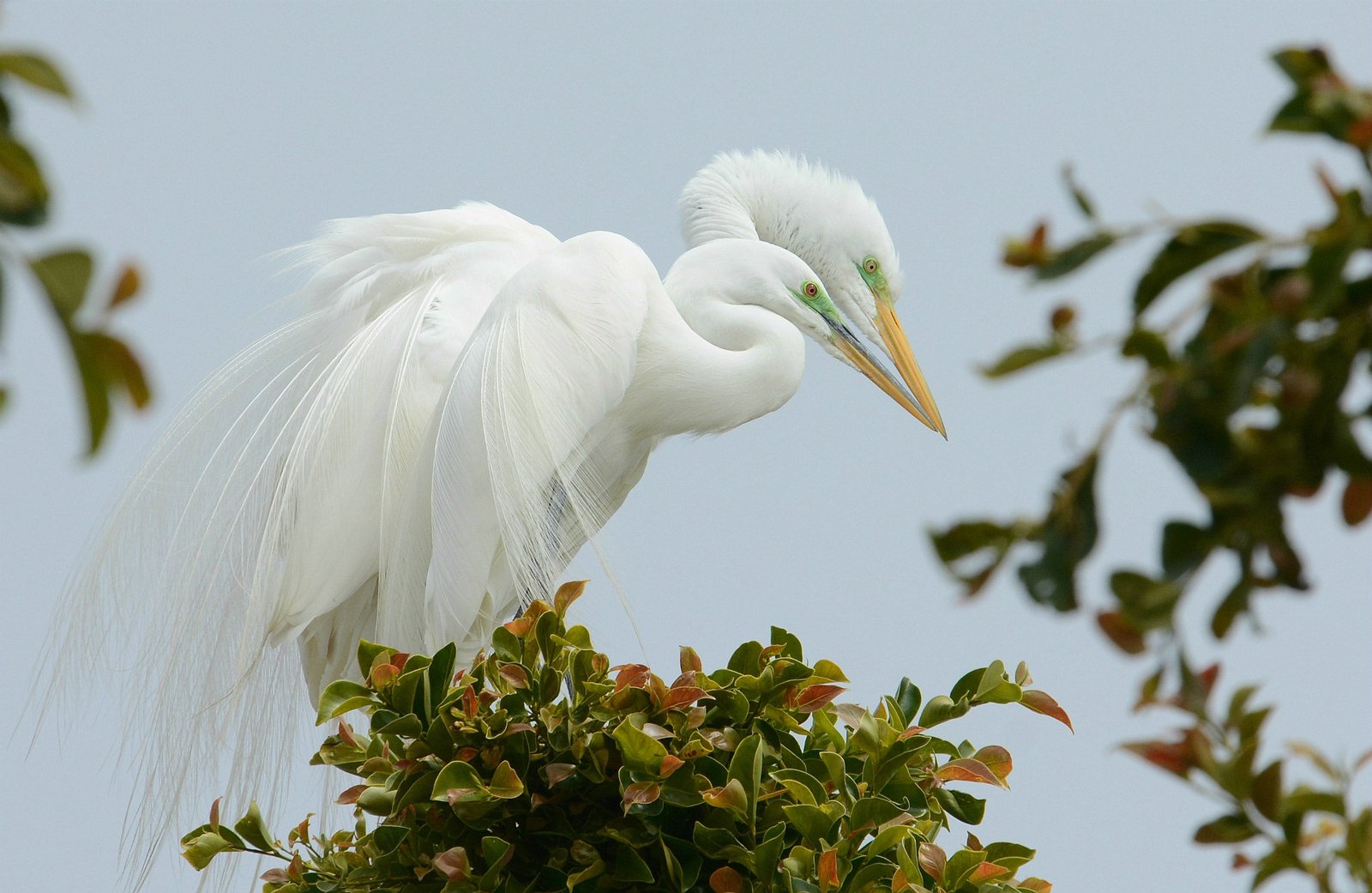
A great egret is a tall, slim white wading bird found across much of the United States. It has a long, narrow neck, a sharp yellow bill, and long black legs and feet. In flight, its neck folds into an S shape, while its broad white wings move in slow, deep strokes.
The great egret is one of the easiest large birds to spot near American lakes, rivers, marshes, ponds, and coastal wetlands. Its bright body may look simple at first, but a few key traits help separate it from snowy egrets, white herons, and other white birds.
This guide explains what a great egret looks like at every stage of life, how to identify it in flight, and how to tell it apart from similar birds in the United States.

What does a great egret look like?
A great egret is a large, all-white heron with a long neck, pointed yellow bill, and black legs. Its body is narrow and upright, and its head is small compared with its body.
Key great egret features include:
- Color: Bright white feathers across the body
- Bill: Long, straight, and yellow
- Legs: Long, thin, and black
- Feet: Black, unlike the yellow feet of a snowy egret
- Neck: Long and slender
- Head: Small, with a pointed crown
- Body shape: Tall, narrow, and graceful
- Flight shape: Neck folded back in an S curve
- Size: About 37 to 41 inches long
- Wingspan: About 52 to 57 inches
The great egret has no dark feathers on its body during normal adult plumage. Its black legs create a strong contrast with its white feathers. That contrast is one of the best clues when the bird stands in shallow water.
The bird’s bill is often the first feature people notice. It looks like a long yellow dagger and helps the egret catch fish, frogs, insects, and other small animals.
The Cornell Lab of Ornithology describes the great egret as a tall, long-legged heron with a long, pointed yellow bill and black legs. The U.S. Fish and Wildlife Service also lists the species as Ardea alba.
Great egret appearance at a glance
| Feature | What to look for |
|---|---|
| Body | Large and completely white |
| Bill | Long, straight, and yellow |
| Legs | Long and black |
| Feet | Black |
| Neck | Long and narrow |
| Flight | Neck folded back, legs stretched out |
| Breeding season | Long decorative back plumes |
| Typical habitat | Wetlands, ponds, rivers, marshes, and coasts |

How big is a great egret?
A great egret is about the height of a small child when it stands upright, but its slim body makes it look lighter than it is. Adults usually measure about 3 feet tall, with a wingspan of more than 4 feet.
Size can be hard to judge in the field. A great egret may look smaller when it crouches while hunting. It may also appear larger when it stretches its neck or spreads its wings.
The best size clues are its height, leg length, and body shape. A great egret is much larger and taller than a snowy egret. It is also slimmer than many white pelicans and lacks the thick bill of a pelican.
Compared with a great blue heron, the great egret has a cleaner white body. A great blue heron is usually gray-blue, though rare white color forms can cause confusion.
Great egret size compared with similar birds
| Bird | General size | Main size clue |
|---|---|---|
| Great egret | 37–41 inches long | Tall, slim body and wide wings |
| Snowy egret | About 24–27 inches long | Much smaller and more delicate |
| Cattle egret | About 18–22 inches long | Shorter legs and stockier body |
| Great blue heron | About 38–54 inches long | Bulkier body and larger head |
| American white pelican | About 50–65 inches long | Much larger, with a huge bill |
Measurements can vary by source and by individual bird. In the field, use several traits together rather than relying on size alone.

What does a great egret look like in flight?
In flight, a great egret shows three clear features: a folded neck, long legs, and broad white wings.
The neck bends back into an S shape. The bird does not fly with its neck stretched straight forward. Its long legs extend well beyond the tail, which makes the bird easy to recognize from below or at a distance.
The wings are broad and rounded. Great egrets often fly with slow, powerful wingbeats. They may also glide for short periods between wingbeats.
This flight shape helps separate the great egret from cranes, geese, and large gulls. Cranes fly with their necks stretched out. Geese also fly with extended necks. A great egret’s folded neck and trailing legs give it the classic heron shape.
Standing posture versus flight posture
A standing great egret often holds its neck straight or in a gentle curve. While hunting, it may lower its head and neck close to the water.
In flight:
- The neck folds into an S shape.
- The legs trail behind the body.
- The wings beat slowly and deeply.
- The white body can look bright against dark water or trees.
A bird that looks like a white streak crossing a wetland may be hard to identify by color alone. Wait for the neck and leg shape. Those features are more useful than brightness.

How does a great egret look during breeding season?
During the breeding season, an adult great egret grows long, delicate feathers called aigrettes. These plumes extend from the back and may flow beyond the tail.
Breeding birds may also show brighter color on the skin around the bill and eyes. The exact color can vary with age, season, sex, and breeding condition.
The long back plumes are not present all year. They are most visible during the breeding period, when adults display near nesting colonies. Both males and females can grow these feathers.
Great egrets nest in colonies called rookeries or heronries. They often build nests in trees or shrubs near wetlands. During the nesting season, adults may carry sticks, guard a nest, or stand near other wading birds.
The plumes once caused severe harm to egrets. In the late 1800s and early 1900s, hunters killed many birds to supply feathers for fashion. Legal protection and conservation work helped great egret numbers recover in the United States. The species is now a familiar sight in many American wetlands.
What do young great egrets look like?
Young great egrets look much like adults. They are white, long-legged, and long-necked. They may lack the long breeding plumes of mature birds.
Juveniles can have less vivid facial color and a less polished appearance. However, they still show the main identification traits:
- White body
- Yellow bill
- Black legs
- Long neck
- Large, slow wingbeats
Age is usually harder to judge than species. If the bird has a white body, yellow bill, and black legs, it is likely a great egret even without visible plumes.
Great egret vs. similar white birds
The easiest way to identify a great egret is to compare its bill, legs, feet, and size with nearby birds. White plumage alone is not enough.
Great egret vs. snowy egret
A snowy egret is smaller and more slender. It has a black bill, black legs, and bright yellow feet. During breeding season, it may grow long head and neck plumes.
A great egret has a yellow bill and black feet. It is also much taller.
| Feature | Great egret | Snowy egret |
|---|---|---|
| Body size | Large | Smaller |
| Bill | Yellow | Black |
| Legs | Black | Black |
| Feet | Black | Yellow |
| Body | White | White |
The feet may be hard to see in deep grass or muddy water. When the feet are hidden, bill color and body size are better clues.
Great egret vs. cattle egret
A cattle egret is shorter and more compact. It has a shorter neck and legs. Adults often show buff or orange feathers on the head, chest, or back during breeding season.
A great egret remains much taller and has a more graceful, stretched shape. It is also more closely tied to water than cattle egrets, which often forage in fields and pastures.
Great egret vs. great blue heron
A normal great blue heron is gray-blue, not white. It has a dark stripe above the eye, a heavier body, and dark accents on the head and wings.
Rare white great blue herons can confuse observers. Look at body proportions, bill shape, and behavior. A white great blue heron may have a larger head and heavier bill than a great egret. A reliable local bird guide or clear photograph can help when the color form is unusual.
Great egret vs. American white pelican
An American white pelican is far larger and heavier. It has a huge, broad bill with a pouch. It also has large black wing patches that show clearly in flight.
A great egret has a narrow pointed bill and a slim heron body. It does not have a bill pouch.
Where can you see a great egret in the United States?
Great egrets live near shallow water across much of the United States. You may see them in freshwater marshes, coastal bays, ponds, lakes, rivers, flooded fields, and drainage areas.
They are common in the Southeast, Gulf Coast, Atlantic Coast, California, and parts of the Midwest and West. Some birds remain in warm areas year-round. Others move south during colder months.
A great egret may stand still at the edge of water for several minutes. This stillness is part of its hunting method. When a fish or frog comes near, the egret thrusts its bill forward with a quick strike.
Look for great egrets:
- Along pond edges
- In marshes with shallow water
- Near slow rivers and creeks
- On coastal mudflats
- In wet farm fields
- Around quiet lakes
- In mangrove and estuary habitats in warm regions
The bird may hunt alone or with other wading birds. It can also feed in loose groups when food is plentiful.
Give nesting colonies space. Approaching too closely can disturb adults and expose nests to predators or heat. Use binoculars or a camera with a zoom lens instead of walking toward the bird.
How to identify a great egret quickly
Use the following field check when you see a tall white bird near water:
- Check the body color. Is the bird fully white?
- Look at the bill. A long yellow bill supports great egret identification.
- Check the legs. Long black legs are a strong clue.
- Look at the feet. Black feet rule out the usual snowy egret pattern.
- Judge the size. It should look tall and larger than a snowy egret or cattle egret.
- Watch the flight. A folded S-shaped neck and trailing legs confirm a heron-like flight style.
- Check for plumes. Long back feathers suggest an adult in breeding condition.
Do not identify the bird from one feature alone. Mud, shadow, distance, and poor light can change how colors look. A yellow bill may appear dull, and black legs may disappear against dark water.
A clear side view is often best. If the bird is flying, focus on the neck and legs. If it is standing, focus on bill color, body size, and feet.
A simple memory aid
Remember: white body, yellow bill, black legs, black feet.
That short description separates the great egret from most other white wading birds in the United States.
Are great egrets dangerous?
Great egrets usually avoid people and are not dangerous when left alone. They may defend a nest if a person approaches too closely, but attacks are uncommon.
Their bills are sharp and can cause injury if someone tries to catch, feed, or handle one. Never attempt to rescue a healthy wild egret. If the bird is visibly injured, tangled, or unable to fly, contact a licensed wildlife rehabilitator or a local animal control or wildlife agency.
Keep dogs away from nesting areas and shallow feeding sites. Dogs can frighten birds, destroy nests, or become injured by a defensive bird.
Do not feed wild egrets. Human food can harm wildlife, and feeding may cause birds to lose their natural fear of people.
Frequently asked questions
Is a great egret the same as a white heron?
A great egret is a type of heron. “White heron” is a broad description, not always a precise species name. In the United States, the phrase may refer to a great egret or, less often, a white color form of another heron.
What color are a great egret’s legs?
Great egrets have long black legs and black feet. Their legs may look gray or brown in poor light or when covered with mud.
Does a great egret have a yellow bill?
Yes. An adult great egret usually has a long yellow bill. Facial color can change during the breeding season, but the bill remains a key identification feature.
Do great egrets change color?
Their main body plumage stays white. During breeding season, adults may grow long back plumes and show brighter color around the face and bill. Young birds may look less ornate but still have white feathers.
What should I do if I find an injured great egret?
Keep people and pets away, avoid touching the bird, and contact a licensed wildlife rehabilitator. Use a local wildlife agency directory if you do not know whom to call. Do not give the bird food or water unless a trained rehabilitator instructs you to do so.
Sources and evidence
The identification details in this guide are based on established species accounts and conservation references, including:
- Cornell Lab of Ornithology — Great Egret
- U.S. Fish and Wildlife Service — Great Egret
- National Audubon Society — Great Egret
- National Geographic — Great Egret
These sources support the bird’s appearance, size range, habitat, behavior, and breeding traits. Field conditions can affect how color and size appear, so use several features together when making an identification.
Conclusion
A great egret is a tall white heron with a long yellow bill, black legs, black feet, and a long folded neck in flight. Its large size helps separate it from snowy and cattle egrets, while its narrow bill and slim body distinguish it from white pelicans.
When you see a white wading bird in the United States, check the bill first, then the legs, feet, body size, and flight shape. The combination of white feathers, yellow bill, black legs, and black feet is the clearest answer to the question, “What does a great egret look like?”