
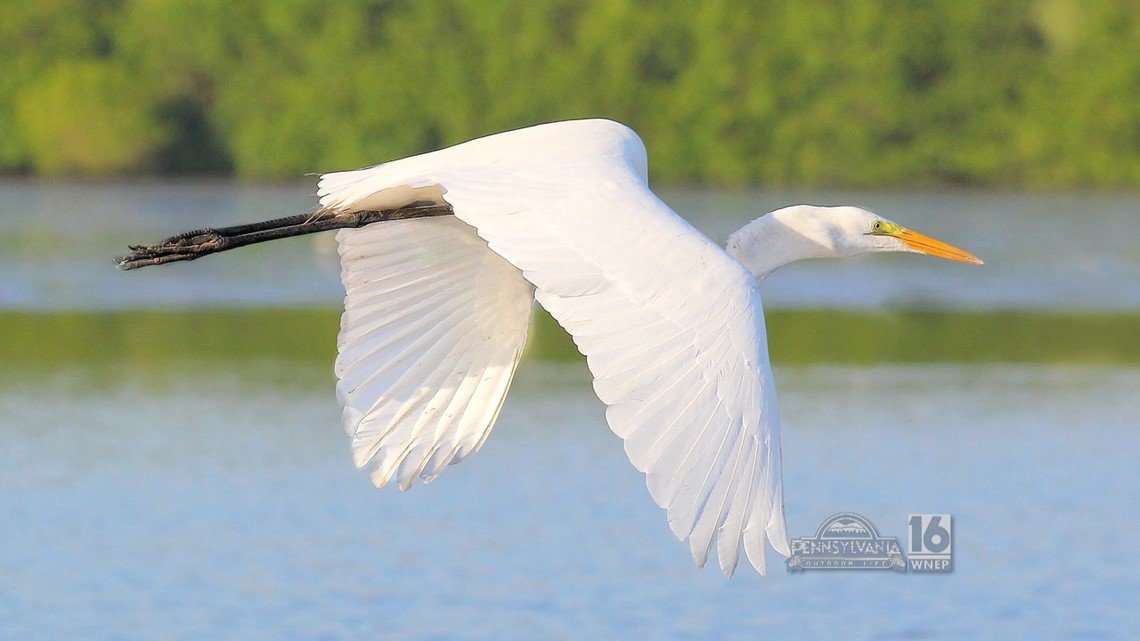
Yes, some Great Egrets migrate, while others stay in the same area all year. In the United States, Great Egrets that breed in the northern states and southern Canada often move south in fall. Many birds spend winter in the southern United States, Mexico, the Caribbean, or Central America.
Great Egrets that live in Florida, along the Gulf Coast, and in parts of coastal California may remain year-round. Their choice depends on food, weather, habitat, and age. A Great Egret seen in the United States during winter may be a resident bird or a migrant from farther north.

Where Do Great Egrets Live in the United States?
Great Egrets live in wetlands across much of the United States. They use marshes, ponds, lakes, rivers, coastal lagoons, flooded fields, and shallow bays.
Their breeding range extends across much of the lower 48 states. They also breed in parts of southern Canada. Large numbers nest in the Southeast, the Gulf Coast region, California, and other areas with warm weather and reliable wetlands.
Great Egrets need shallow water where they can hunt. They walk slowly through the water and use their long, sharp bills to catch fish, frogs, snakes, insects, crayfish, and small mammals.
The species is easy to identify. An adult Great Egret has:
- White feathers
- A long, narrow yellow bill
- Long black legs and feet
- A long neck
- A body about 3 feet tall
- A wide wingspan of about 4.5 to 5.5 feet
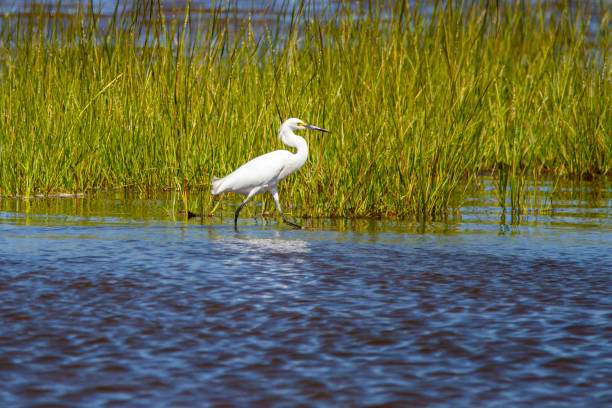
Great Egrets are much larger than Snowy Egrets. A Snowy Egret has a black bill and yellow feet. These differences help birders avoid confusing the two species.
The scientific name of the Great Egret is Ardea alba. In North America, it is one of the largest and most common white herons.

Do All Great Egrets Migrate?
No. Great Egrets use both migration and year-round residence as survival strategies.
Birds in the northern part of the breeding range are more likely to migrate. Cold weather can freeze ponds and wetlands. Snow and ice also make fish, frogs, and other prey harder to find.
Birds in the southern United States often have less need to move. Florida, southern Texas, coastal Louisiana, and parts of California can provide open water and food through winter.
This creates three broad groups:
| Great Egret group | Usual pattern in the United States | Main reason |
|---|---|---|
| Northern breeders | Migrate south in fall | Winter cold and frozen water |
| Southern breeders | Often remain in place | Mild winters and open wetlands |
| Birds in changing habitats | May move short or long distances | Food and water conditions |
These are general patterns, not strict rules. A cold winter can push birds farther south. A mild winter may allow some birds to remain farther north.
Young Great Egrets may also behave differently from adults. After the breeding season, young birds can wander before settling into a regular pattern. This movement is called dispersal. It is not always the same as a planned seasonal migration.

When Do Great Egrets Migrate?
Great Egrets usually move south in late summer and fall. They return north in late winter and spring.
The exact dates vary by location and weather. A general U.S. pattern looks like this:
| Season | Typical movement |
|---|---|
| Late summer | Adults finish nesting; young birds begin to spread out |
| August to November | Many northern birds move south |
| December to February | Wintering birds remain in southern areas |
| February to April | Many birds return north to breeding grounds |
| Spring and summer | Nesting and chick rearing take place |
Migration does not happen on one fixed day. Some birds may leave before a major cold spell. Others may stay if food remains easy to find.
In the northern United States, the first birds may begin returning in early spring. In the South, Great Egrets may be present throughout the year, so it can be hard to tell whether a bird is a local resident or a migrant.
The best clue is not one bird. It is a pattern. A sudden increase in Great Egrets during spring or fall may show that migrants are passing through.

Why Do Great Egrets Migrate?
Great Egrets migrate mainly to find food and suitable nesting conditions.
Cold weather affects their food supply in several ways. Shallow ponds may freeze. Fish may move into deeper water. Frogs and insects may become inactive. Snow and ice can also cover the muddy edges where egrets hunt.
Migration also helps birds reach productive breeding areas. Northern wetlands can produce large amounts of food during spring and summer. Long days give parent birds more time to hunt and feed their chicks.
Several factors can affect when a Great Egret moves:
- Air temperature
- Water temperature
- Ice and snow cover
- Water levels
- Fish and amphibian numbers
- Day length
- Wind and storms
- Condition of nearby wetlands
Day length helps birds track the season. Food and weather then help shape the final decision. Migration is not controlled by a single signal.
Great Egrets do not migrate because the cold itself always harms them. They move because cold conditions can make feeding less efficient. A bird that cannot find enough food must either move or risk losing body condition.
How Far Do Great Egrets Migrate?
Migration distance depends on where the bird breeds and where it spends winter.
A Great Egret from Minnesota, Wisconsin, or southern Canada may travel hundreds or more than a thousand miles to reach winter habitat. A bird from Florida may move only a short distance, or it may stay near its breeding site.
Some North American Great Egrets winter in:
- The southern United States
- Mexico
- Central America
- The Caribbean
- Northern parts of South America
Not every bird from the same nesting area follows the same route. Weather, food, habitat loss, and individual behavior can change the path.
Great Egrets often follow wetlands and coastlines during movement. Rivers, lakes, reservoirs, marshes, and flooded agricultural fields can provide places to rest and feed.
Migration routes are not always straight lines. A bird may pause for days or weeks in a productive wetland. These stopover sites are vital. Losing one important wetland can make a long journey much harder.

Do Great Egrets Migrate at Night?
Great Egrets may travel at different times, but field observers should not assume that every bird follows the same schedule.
Many wading birds can move between feeding and nesting areas during daylight. Longer migrations may also include nighttime travel. Wind, weather, predators, and the need to reach safe habitat can affect timing.
Most people will not see a Great Egret migrating overhead. The bird’s broad wings and slow wingbeats are easier to notice near wetlands than in the open sky.
If you want to study migration, watch for changes in local numbers. Keep records of the first spring sightings, the last fall sightings, and the number of birds using a wetland. Platforms such as eBird can help compare observations across locations.
Do not use a single sighting to prove migration. A Great Egret may be a local resident, a winter visitor, a passage migrant, or a young bird dispersing from its birthplace.

Where Can You See Migrating Great Egrets in the U.S.?
Good places to look include shallow wetlands with open views and plenty of prey. National wildlife refuges, coastal marshes, lake edges, riverbanks, and managed ponds can all attract Great Egrets.
In the United States, productive areas may include:
- Gulf Coast marshes
- Florida wetlands
- Chesapeake Bay shorelines
- California coastal wetlands
- Great Lakes marshes
- Central Valley wetlands
- Southern Atlantic Coast estuaries
- Texas bays, ponds, and river systems
The best time to look depends on the region. In northern states, spring and fall may bring the clearest movement. In the South, Great Egrets can be seen in every season.
Look for a tall white bird standing still in shallow water. Great Egrets often hunt alone, but several may gather where food is plentiful.
Use binoculars from a safe distance. Stay on marked paths and public viewing areas. Avoid walking into nesting colonies or flushing birds from feeding sites.

How Can You Tell if a Great Egret Is Migrating?
You usually cannot tell from one bird alone. Instead, look for several clues.
A bird is more likely to be a migrant when:
- It appears during the usual spring or fall movement period
- Local numbers rise quickly
- It is seen in a wetland where Great Egrets do not remain all year
- Other migrating waterbirds are present
- The bird disappears after a short period
- Weather changes occur before or during the sighting
A bird is more likely to be a resident when:
- It is seen in the same area during every season
- It uses a known local nesting colony
- Food and open water remain available through winter
- Other Great Egrets remain nearby year-round
These clues are useful but not conclusive. Bird banding, tracking studies, and repeated observations provide stronger evidence than appearance alone.
A field notebook can help. Record the date, location, number of birds, weather, habitat, and behavior. Photos can also help confirm identification and support local bird records.

Do Great Egrets Return to the Same Nesting Area?
Many Great Egrets return to the same general breeding region, but they do not always use the exact same nest.
Great Egrets often nest in colonies with other waterbirds. These colonies may be in trees, shrubs, or on islands near wetlands. A colony can support Great Egrets, herons, ibises, and other species at the same time.
A nesting site must offer several things:
- Nearby shallow water
- Reliable prey
- Trees or shrubs for nests
- Protection from predators
- Low disturbance during the breeding season
If a wetland dries up or a colony becomes unsafe, birds may move to another site. This is one reason local habitat protection matters.
Do not approach an active colony to inspect nests. Human activity can cause adults to leave. Eggs and young birds may then become exposed to heat, cold, predators, or other dangers.
In the United States, Great Egrets are protected under the Migratory Bird Treaty Act. People should not kill, capture, possess, or disturb these birds, their nests, or their eggs. Rules can vary by location, so contact a state wildlife agency or the U.S. Fish and Wildlife Service if a problem involves an injured bird or an active colony.

What Is the Difference Between Migration and Dispersal?
Migration is a repeated seasonal movement between breeding and nonbreeding areas. Dispersal is a less predictable movement away from the birthplace or nesting area.
This difference matters when watching young Great Egrets. A young bird may travel far from its nest without following the same route as its parents. It may explore new wetlands and later settle in a different region.
Migration tends to follow a seasonal pattern. Dispersal can happen at many times and may be one-way. A bird that appears far from a known colony is not automatically a migrant.
Both types of movement help Great Egrets use changing food sources. They also help young birds find future breeding areas.
Common Misconceptions About Great Egret Migration
“Every Great Egret flies south for winter.”
Not every Great Egret migrates. Birds in warm parts of the United States may stay in the same region all year.
“A Great Egret in winter must be a local bird.”
Not always. A winter bird may have migrated from a northern breeding area.
“All white herons are Great Egrets.”
Snowy Egrets and other white herons can look similar. Check the bill, feet, size, and leg color.
“Migration dates are the same every year.”
Weather and food change from year to year. Migration timing can shift.
“A bird that disappears has completed migration.”
It may have moved to another nearby wetland. Local movements can look like migration if observations are limited.
Frequently Asked Questions
Are Great Egrets found in all 50 states?
Great Egrets occur in many parts of the United States, but their numbers vary by state and season. They are most common where shallow wetlands and suitable nesting habitat are available.
Do Great Egrets migrate in Florida?
Some do, but many Florida Great Egrets remain year-round. Florida also receives wintering birds from other areas, so local numbers may rise during the cooler months.
Do Great Egrets migrate from California?
Some California birds remain in the state, especially where wetlands stay open. Other birds move within California or farther south. Local water conditions strongly affect their movements.
Do Great Egrets migrate alone or in groups?
They may move alone or near other birds. Great Egrets often feed alone, but suitable wetlands can attract many birds during migration and winter.
What should I do if I find an injured Great Egret?
Do not chase, feed, or handle the bird unless a trained wildlife professional gives you instructions. Keep people and pets away, then contact a licensed wildlife rehabilitator, animal control agency, or state wildlife office.
Key Takeaways
- Yes, Great Egrets migrate, but not all of them do.
- Northern birds often move south in fall and return in spring.
- Many Great Egrets in Florida, along the Gulf Coast, and in parts of California remain year-round.
- Migration is driven mainly by food, water, temperature, and breeding needs.
- Young birds may disperse in ways that do not match adult migration routes.
- The safest way to study them is to watch from a distance and record seasonal patterns.
Conclusion
Great Egret migration in the United States is flexible rather than uniform. Some birds travel long distances between northern breeding grounds and southern winter habitat. Others remain in warm regions where food and open water are available throughout the year.
If you want to know whether a Great Egret in your area is a migrant, track sightings across several months. Note the date, location, habitat, and number of birds. A season-long record gives a much clearer answer than a single observation.