
In the United States, birds of paradise plants (Strelitzia reginae and Strelitzia nicolai) are most often damaged by scale insects, mealybugs, spider mites, aphids, caterpillars, snails, and slugs. Deer, rabbits, and grasshoppers may also chew the leaves in some areas.
The first step is to identify the pest. Small insects on the leaves need a different treatment from leaf holes, sticky residue, or chewed edges. Most bird-of-paradise pest problems can be reduced with regular checks, water, pruning, and a mild control method.

Common Pests That Eat Bird-of-Paradise Plants
The main pests depend on whether the plant grows indoors, in a greenhouse, or outdoors. Indoor plants often attract scale, mealybugs, and spider mites. Outdoor plants face a wider mix of insects and animals.
| Pest | Signs of damage | Where to look | Risk level |
|---|---|---|---|
| Scale insects | Hard bumps, yellow leaves, sticky residue | Leaf stems, veins, undersides | Moderate to high |
| Mealybugs | White cotton-like spots | Leaf joints, stems, new growth | Moderate |
| Spider mites | Fine webbing, pale speckles, dry leaves | Leaf undersides | Moderate |
| Aphids | Curled new leaves, sticky honeydew | New shoots and flower stalks | Low to moderate |
| Caterpillars | Ragged edges and holes | Leaf surfaces and undersides | Moderate |
| Snails and slugs | Large holes and slimy trails | Soil and lower leaves | Moderate |
| Grasshoppers | Missing leaf sections and rough chewing | Leaf edges and nearby plants | Low to moderate |
| Deer and rabbits | Torn or clipped leaves | Outdoor foliage | Variable |
Scale insects
Scale insects are among the most common pests on ornamental tropical plants. They may look like tiny brown, gray, tan, or white bumps rather than moving insects.
Scale often gathers along leaf veins, stems, and leaf stalks. Some species produce honeydew, a sticky fluid that can support black sooty mold. Heavy infestations may cause yellow leaves, weak growth, and premature leaf drop.
The University of California Statewide Integrated Pest Management Program explains that scale control depends on the insect’s life stage. Young “crawler” stages are easier to control than mature scale protected by a waxy or shell-like covering.
Mealybugs
Mealybugs look like small pieces of white cotton. They hide where leaf stalks meet the main stem, around new growth, and in tight folds.
They suck plant sap. A small group may cause little harm, but a large infestation can weaken the plant. Mealybugs also produce honeydew, which may attract ants and lead to sooty mold.
Spider mites
Spider mites are very small and can be hard to see without close inspection. Their damage appears as many pale dots, a faded leaf surface, yellowing, or fine webbing.
They are more common when indoor air is hot and dry. They can spread quickly because they reproduce faster in warm conditions. A bird of paradise with dry, dusty leaves is more likely to suffer from mites than one with clean leaves and steady moisture.
Aphids
Aphids usually gather on soft new growth. They may be green, black, brown, yellow, or gray.
Aphids can cause curled leaves and weak shoots. Like scale and mealybugs, they may leave sticky honeydew behind. Natural predators such as lady beetles, lacewings, and hoverfly larvae often help control small outdoor populations.
Caterpillars and chewing insects
Caterpillars, grasshoppers, and some beetles chew the leaves rather than suck plant sap. Their damage is easy to spot:
- Round or irregular holes
- Ragged leaf margins
- Missing sections of young leaves
- Dark droppings on the leaf surface
- Caterpillars or shed skins nearby
A few holes do not usually threaten a mature bird of paradise. New growth and young plants need closer attention.
Snails and slugs
Snails and slugs feed at night or during cool, wet periods. They leave large holes and may leave a shiny slime trail.
Check beneath pots, mulch, dense leaves, and low plant debris. Snails and slugs are more common in damp beds with heavy ground cover.

What Animals Eat Bird-of-Paradise Leaves Outdoors?
Outdoor bird-of-paradise plants can attract larger plant eaters, but the level of damage varies by region. Deer and rabbits may browse the leaves when food is scarce. Grasshoppers may also cause visible chewing.
Birds may peck at insects on the plant. They usually are not the main cause of leaf damage. Some birds may also investigate flowers or seeds, but this is different from a pest infestation.
Deer
Bird of paradise is often described as relatively resistant to deer, but deer resistance does not mean deer-proof. Deer may still sample the plant, especially during drought, winter, or periods when preferred food is limited.
Signs of deer browsing include:
- Ragged or torn leaf edges
- Broken leaf stalks
- Damage above the height of rabbits
- Several nearby plants showing similar feeding
A fence is the most reliable physical barrier. Repellents may help for a short time, but rain, plant growth, and deer pressure can reduce their effect.
Rabbits
Rabbits usually feed close to the ground. They may clip young leaves or chew lower stalks.
A low wire barrier can protect a small plant. The barrier should extend below the soil or sit tightly against the ground so rabbits cannot push beneath it.
Grasshoppers
Grasshoppers leave rough, irregular bites in leaves. They may hide in nearby grass, weeds, or shrubs during the day.
Remove tall weeds near the plant and inspect the foliage in the morning. Garden netting can protect valuable young plants. Broad insecticide use may also harm pollinators and other helpful insects, so it should not be the first choice for light damage.
What about birds?
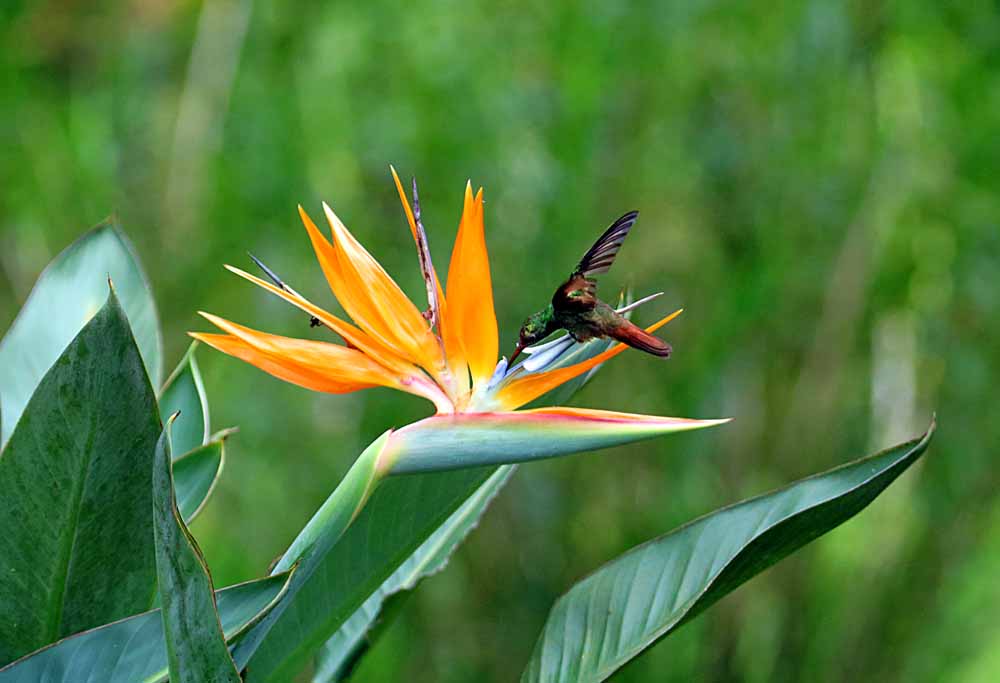
Most birds do not eat the leaves of bird-of-paradise plants in a way that causes serious harm. They may visit the plant for insects, shelter, or flower nectar.
If the damage looks like clean cuts, large holes, or torn leaves, inspect for insects or mammals before blaming birds.
How to Tell What Is Eating Your Bird of Paradise
The damage pattern often gives the best clue. Look at the leaf surface, the leaf underside, the soil, and the base of the plant.
If you see sticky leaves
Sticky leaves usually point to honeydew from scale, aphids, or mealybugs. Ants may also climb the plant because they collect honeydew from these insects.
Inspect:
- Leaf veins
- Leaf stalks
- New growth
- The underside of leaves
- Nearby plants
Black coating on the leaves may be sooty mold. The mold grows on honeydew. It does not usually cause the first problem; the sap-feeding insect does.
If you see white cotton-like material
White cotton-like clusters usually indicate mealybugs. Look closely at leaf joints and protected spaces.
Do not assume every white mark is a mealybug. Mineral residue, dust, and dried plant sap can look similar. A hand lens can help.
If you see fine webbing
Fine webbing and pale speckles suggest spider mites. Tap a leaf over a sheet of white paper. Tiny moving dots may become easier to see against the paper.
Spider mite damage often affects many leaves at once. The plant may look dull, dusty, or bronze rather than showing a few clear holes.
If you see holes or ragged edges
Holes and ragged edges usually come from chewing pests. Inspect the plant after dark for snails, slugs, and caterpillars.
During daylight, check nearby weeds, the soil surface, and the undersides of leaves. Caterpillars may hide in folds or match the leaf color.
If leaves split without signs of pests
Bird-of-paradise leaves naturally split along their length. Wind, low humidity, rough handling, and crowded growth can make splitting worse.
Leaf splitting is not proof that something ate the plant. If there are no insects, trails, holes, or chewed edges, environmental stress is more likely.

How to Control Pests on a Bird of Paradise
Use the least harmful method that fits the pest. Start with inspection and physical removal before reaching for an insecticide.
1. Isolate an indoor plant
Move an infested houseplant away from other plants. Many pests spread through touching leaves, shared tools, or recently purchased plants.
Keep the plant isolated while you inspect it and treat it. Check neighboring plants every few days.
2. Remove pests by hand
For light infestations, wipe scale and mealybugs from leaves and stems with a damp cloth or cotton swab. Some gardeners use a small amount of rubbing alcohol on a cotton swab for individual mealybugs or scale.
Test first on one small area. Alcohol can injure plant tissue, especially in strong sun or at high concentration. Do not spray a whole plant with household cleaners.
Prune badly infested leaves when removal will not leave the plant bare. Place infected plant material in a sealed bag and discard it.
3. Wash the plant
A firm stream of lukewarm water can dislodge aphids, mites, and some small pests. Support the leaves and avoid breaking the leaf stalks.
For an indoor plant, cover the soil if needed so it does not become waterlogged. Let the foliage dry with good air movement.
Washing does not kill every pest or remove mature scale. Repeat inspections are necessary.
4. Improve plant care
Healthy growing conditions help a bird of paradise recover, but they do not replace pest control.
Provide:
- Bright light
- Good drainage
- Air movement
- Water when the upper soil begins to dry, based on the pot and growing conditions
- Enough space between plants
- Clean leaves
Avoid keeping the soil constantly wet. Overwatering can weaken roots and create a separate problem that looks like general decline.
5. Use insecticidal soap or horticultural oil with care
Insecticidal soap and horticultural oil can work against exposed soft-bodied pests. They must contact the insect to work. They do not provide the same results as a systemic treatment for every pest.
Read the product label before use. Confirm that it lists the plant or ornamental use you need. Test a small section first, then wait to check for leaf injury.
Avoid spraying in:
- Hot afternoon sun
- High heat
- Drought stress
- Freezing conditions
- Strong wind
- Open flowers visited by pollinators
Never mix products unless the label allows it. “Natural” does not mean risk-free for plants, pets, people, or beneficial insects.
6. Treat snails and slugs with barriers and sanitation
Remove hiding places such as boards, dense weeds, and heavy debris. Watering early in the day can reduce the damp nighttime conditions that favor slugs.
Hand-pick pests at night with gloves. If you use bait, follow the label and keep it away from children, pets, and wildlife. Avoid products that create an unnecessary risk to animals in the yard.
7. Use professional help for severe infestations
Contact a licensed pest professional or local Cooperative Extension office when:
- The plant is declining despite repeated treatment
- The infestation affects many plants
- You cannot identify the pest
- The plant is large or difficult to reach
- You are considering a systemic insecticide
- The plant is near a sensitive waterway, pollinator garden, child-care area, or pet area
Your local Cooperative Extension office can often help identify pests and recommend options suited to your state.

Can Bird-of-Paradise Flowers Be Eaten?
Bird-of-paradise plants are ornamental plants, not food crops. Do not eat the leaves, flowers, seeds, or other parts.
The National Capital Poison Center lists bird of paradise among plants that may cause illness if eaten. Pets and children may be at higher risk because they may chew plant material without understanding the danger.
Keep the plant out of reach of pets and young children. If someone eats part of the plant, contact Poison Control at 1-800-222-1222 in the United States. For a pet, contact a veterinarian or an animal poison service.
Do not induce vomiting unless a medical professional tells you to do so.

If You Mean Birds-of-Paradise Birds
The phrase “birds of paradise” can also mean a group of birds in the family Paradisaeidae. These birds are native mainly to New Guinea and nearby islands, not the United States.
Their predators can include snakes, raptors, monitor lizards, and tree-climbing mammals. The exact risk depends on the bird species, age, nest location, and habitat. Nestlings and eggs are usually more vulnerable than adult birds.
This is a different question from what eats a bird-of-paradise plant. For a plant, inspect leaves and stems for pests. For a wild bird, do not approach, capture, or feed it; contact a local wildlife agency for species-specific guidance.

Common Mistakes When Treating Bird-of-Paradise Pests
Several mistakes can make the problem worse.
Treating before identifying the pest
A pesticide for chewing insects may not control scale or mites. First match the damage to the likely pest.
Spraying stressed plants
Heat, drought, and poor roots increase the chance of leaf burn. Correct basic care and test a small area before treating the whole plant.
Using dish soap as a pesticide
Household dish soaps vary widely. Some can strip leaf surfaces and cause injury. A labeled insecticidal soap is designed for plant use, but it still requires careful application.
Ignoring ants
Ants do not always damage the plant directly. They may protect aphids, scale, or mealybugs because they feed on honeydew. Control the sap-feeding insects and reduce ant access where practical.
Expecting one treatment to solve the problem
Eggs, hidden pests, and new hatchlings may survive the first treatment. Inspect the plant again after the interval stated on the product label.
Removing every damaged leaf
A few damaged leaves can still support the plant. Remove leaves that are dead, badly infested, or unsafe to keep. Excess pruning can slow recovery.

Frequently Asked Questions
What is eating holes in my bird-of-paradise leaves?
Caterpillars, grasshoppers, snails, slugs, and beetles can make holes. Check the plant at night for slugs and caterpillars, and inspect the undersides of leaves during the day. If the leaves split without holes or chew marks, wind or low humidity may be the cause.
Do deer eat bird-of-paradise plants?
Deer may browse bird of paradise, although the plant is often considered relatively deer-resistant. Deer may eat it when preferred food is scarce. A fence is more dependable than a repellent.
Are spider mites common on indoor bird-of-paradise plants?
Yes. Spider mites favor warm, dry conditions. Look for pale speckles, dull leaves, and fine webbing. Washing the foliage, improving humidity around the plant, and using a labeled treatment may help.
Can I use neem oil on a bird of paradise?
Neem products may help with some pests, but the label controls how and where the product can be used. Test a small area first, avoid hot sun and open flowers, and follow the product directions.
Should I cut off leaves with pests?
Remove leaves that are heavily infested, dead, or badly damaged. For minor infestations, wiping and washing may preserve the leaf while reducing the pest population.
Conclusion
The most common things that eat or damage bird-of-paradise plants are scale insects, mealybugs, spider mites, aphids, caterpillars, snails, slugs, grasshoppers, and occasional browsing mammals. Sticky residue points to sap-feeding insects, fine webbing suggests mites, and holes usually point to chewing pests.
Start by checking the plant closely. Remove visible pests, wash the foliage, improve growing conditions, and use a labeled treatment only when needed. Keep the plant away from children and pets because ornamental bird-of-paradise plants should not be eaten.