

For readers in the United States, the superb bird-of-paradise is a bird to study through field guides, wildlife films, and trusted zoo programs—not one to expect in a wild North American forest. Its natural home lies in the mountain forests of New Guinea, far from the United States. The bird depends on cool, wet woodland with dense plant cover, fruiting trees, insects, and quiet clearings for courtship displays.
Quick answer: The superb bird-of-paradise (Lophorina superba) lives mainly in montane and mossy forests of New Guinea. It is most often linked with highland forest between about 1,000 and 2,000 meters, although its range can include nearby forest types at different elevations. Habitat loss, forest clearing, hunting, and disturbance can reduce the quality of this habitat.

Where Does the Superb Bird-of-Paradise Live?
The superb bird-of-paradise lives on the island of New Guinea, which includes Papua New Guinea and the Indonesian provinces of Papua. Its range is centered on forested mountain regions rather than lowland plains, open grasslands, or dry scrub.
New Guinea has some of the largest and most varied tropical forests in the world. High mountains divide the island into many valleys and isolated forest blocks. This rugged landscape helps explain why bird-of-paradise populations may differ from one region to another.
The species is associated with the New Guinea highlands, including areas of:
- Papua New Guinea
- Indonesian Papua
- The central mountain ranges
- Montane rainforest zones
- Moss-covered upland forest
- Forest edges and small clearings within wooded habitat
The exact range depends on taxonomic treatment. Some bird authorities divide populations once grouped under the superb bird-of-paradise into separate species or regional forms. For that reason, older books and newer digital field guides may use different names for similar birds.
The superb bird-of-paradise should also be separated from the magnificent bird-of-paradise and the lesser bird-of-paradise. These birds belong to the same family, Paradisaeidae, but they do not all use the same habitat or occupy the same range.

What Is the Superb Bird-of-Paradise Habitat Like?
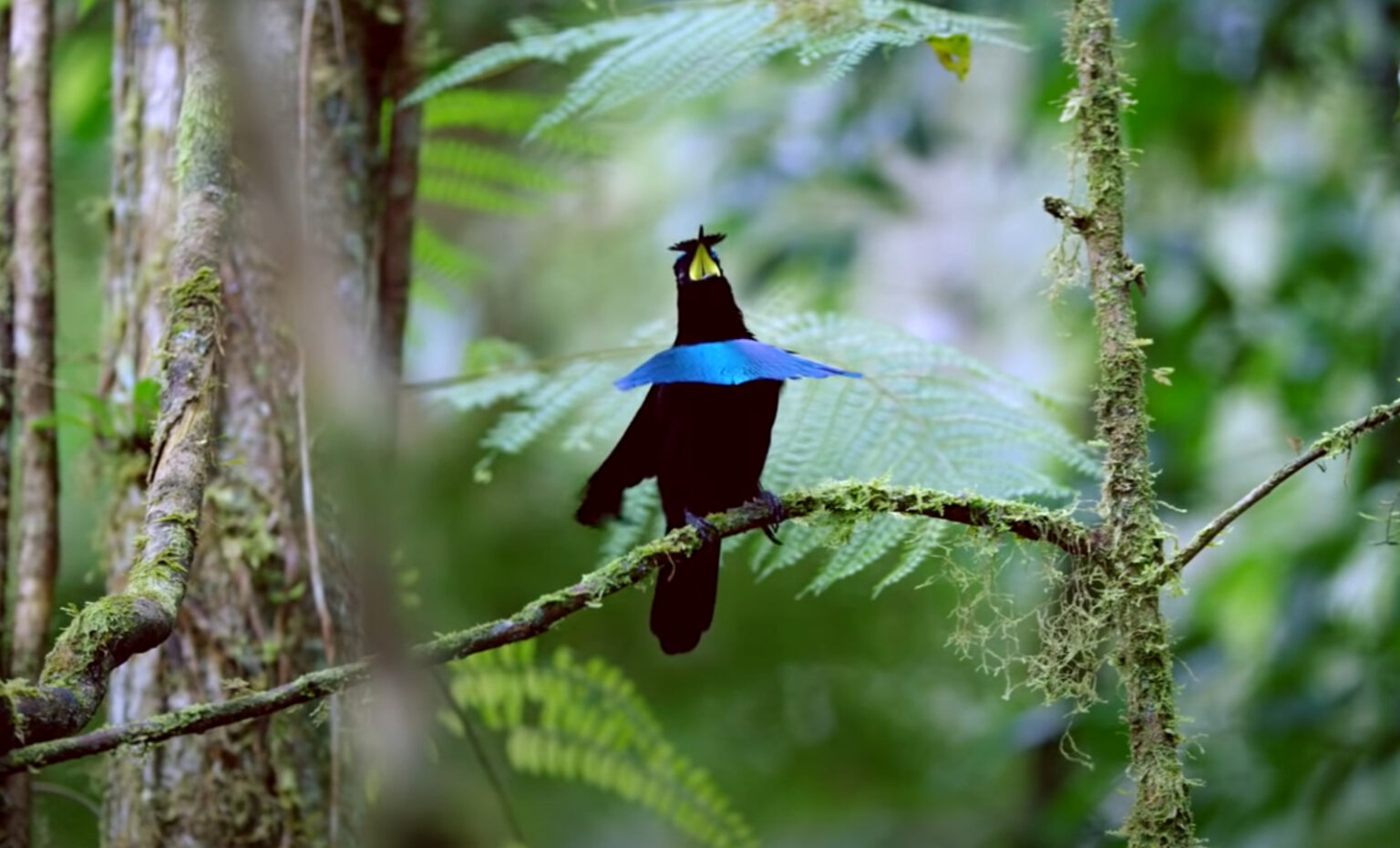
The best superb bird-of-paradise habitat is cool, humid, and heavily wooded. The bird needs more than a simple canopy of trees. It also depends on vines, moss, shrubs, branches, fruiting plants, and leaf litter that support insects and other food.
Key habitat features include:
| Habitat feature | Why it matters |
|---|---|
| Montane forest | Provides shelter, food, and display sites |
| Dense canopy | Offers cover and protects birds from weather and predators |
| Moss and epiphytes | Common signs of cool, moist upland forest |
| Fruiting trees and shrubs | Supply fruit eaten by adults |
| Insect-rich leaf litter | Supports insect feeding, especially where birds forage near the ground |
| Small forest clearings | Give males space for courtship displays |
| Low human disturbance | Helps preserve feeding and breeding areas |
A mature mountain forest is not uniform. It contains tall trees, shaded lower layers, fallen branches, vines, tree ferns, and open patches. This mix gives the bird places to feed, rest, hide, and display.
The species is often linked with cloud forest and mossy forest. Cloud forests receive frequent mist and have plants that grow on tree trunks and branches. Moss, lichens, orchids, and ferns are common. These plants help create the damp structure that supports a large range of insects and other small animals.
The bird does not require a completely untouched forest in every case. Some individuals may use forest edges or disturbed woodland if enough food and cover remain. However, heavily cleared land cannot provide the same shelter, food supply, or safe display areas.
Elevation, Climate, and Forest Structure
Elevation is one of the most useful clues when identifying superb bird-of-paradise habitat. The species is commonly associated with upland forest from roughly 1,000 to 2,000 meters above sea level, or about 3,300 to 6,600 feet. Records may occur outside that band because local climate, forest type, and taxonomy vary across New Guinea.
At these elevations, conditions differ from hot lowland rainforest. Temperatures are often cooler, clouds are more common, and moisture remains high. The forest may stay wet for long periods, especially on mountain slopes and ridges.
The habitat usually has several layers:
- Upper canopy: Tall trees form a roof that provides shade and cover.
- Midstory: Smaller trees, vines, and broad-leaved plants create feeding and resting sites.
- Understory: Shrubs, ferns, young trees, and moss provide concealment.
- Forest floor: Leaf litter supports insects and other invertebrates.
- Open patches: Small clearings may serve as display or gathering areas.
This layered structure matters because the superb bird-of-paradise uses more than one part of the forest. It may feed in trees, move through dense vegetation, and perform courtship behavior on the ground or on a low, cleared display area.
Why moisture matters
Moisture shapes the whole habitat. Regular rain and cloud cover support mosses, ferns, fungi, and epiphytes. Those plants create hiding places and help sustain insects, which form part of the bird’s diet.
A drier forest may still contain trees, but it may not provide the same plant growth or food web. When forest clearing creates hot, dry gaps, the habitat can lose value even before all trees disappear.

How Does the Bird Use Its Habitat?
The superb bird-of-paradise uses its habitat for feeding, shelter, movement, and courtship. Male and female birds may use the same broad forest but behave differently within it.
The male is known for its dramatic courtship display. During display, he raises and spreads his dark, curved feathers around his head and body. Bright blue markings become visible, creating a striking shape against the shaded forest.
This behavior requires a suitable display site. A male needs:
- A relatively open patch on the forest floor or low in the vegetation
- Enough light for the blue markings to be seen
- A clean surface or cleared area
- Nearby cover for escape
- Access to food and perches
- Low enough disturbance for repeated display
Bird-of-paradise courtship areas are often called leks when several males display in separate but nearby territories. The term does not mean every display site has the same structure or that all males gather in large groups. It describes a mating system in which males display and females choose among them.
A forest can appear healthy from a distance but still be poor habitat if its display sites are damaged. Fallen vegetation, invasive plants, roads, noise, or frequent human activity may make a site less suitable for courtship.
Feeding habitat
The superb bird-of-paradise eats a mix of fruit and animal foods. Fruit may come from forest trees, vines, and shrubs. Insects and other small invertebrates provide protein and may be especially important during periods when fruit is scarce.
This flexible diet links the bird to several parts of the forest. A single tree species is unlikely to support the bird by itself. Instead, habitat quality depends on plant diversity and a steady supply of food across seasons.

What Does the Superb Bird-of-Paradise Eat?
The superb bird-of-paradise feeds mainly on fruit and insects. Its exact diet can vary with season, elevation, and local food supply.
Fruit provides energy, while insects and other invertebrates provide nutrients that fruit alone may lack. The bird may search through vegetation, branches, and leaf litter. It can also move between feeding areas as different plants produce fruit.
A healthy habitat should therefore include:
- Native fruiting trees
- Shrubs and vines with seasonal fruit
- A damp forest floor
- Decaying wood and leaf litter
- Plant layers that support insects
- Safe perches and dense cover
This food pattern explains why forest fragmentation can be harmful. A small isolated patch may contain trees, but it may not offer enough fruit throughout the year. It may also have fewer insects if the edge becomes dry, hot, or exposed.
Habitat and seasonal food
Food availability can change over time. When one plant stops producing fruit, birds may need to travel to another part of the forest. Connected forest allows this movement.
When roads, farms, or cleared land break the forest into small patches, birds may have fewer safe routes between feeding areas. The result can be a habitat that looks green on a map but functions poorly for wildlife.

Threats to Superb Bird-of-Paradise Habitat
The main habitat concern is the loss and decline of forest in New Guinea. The scale and effect of threats vary by location, but several pressures can reduce suitable habitat.
Forest clearing
Land may be cleared for subsistence farming, commercial agriculture, roads, settlements, or resource extraction. Removing mature trees reduces food, cover, and display sites at the same time.
Fragmentation
Fragmentation occurs when one large forest becomes several smaller pieces. Even when some trees remain, fragmentation can:
- Increase forest-edge heat and dryness
- Separate feeding areas
- Make movement harder
- Reduce safe courtship sites
- Increase exposure to people and predators
- Limit breeding opportunities
Hunting and capture
Birds-of-paradise have long been valued for their feathers and appearance. Hunting pressure can affect populations even when forest remains. Capture for the wild animal trade can also remove birds from local breeding populations.
Modern conservation work and national laws restrict many forms of hunting and wildlife trade, but enforcement and local conditions differ. A protected status on paper does not guarantee that every forest block is safe.
Roads and mining activity
Road construction can open remote forest to further clearing, hunting, noise, and settlement. Mining and other large projects may remove forest directly or change nearby water, soil, and vegetation.
Climate change
A warmer climate may shift the conditions that support montane forest. Changes in rainfall, cloud cover, fire risk, and plant ranges could affect food and shelter. The exact future effect on the superb bird-of-paradise remains difficult to measure because long-term population data from remote forests are limited.

How Conservation Helps
Protecting large, connected areas of montane forest is the most direct way to protect superb bird-of-paradise habitat. Conservation is stronger when it protects both the forest itself and the local systems that manage it.
Useful conservation actions include:
- Establishing and maintaining protected areas
- Supporting community-managed forests
- Enforcing wildlife and hunting laws
- Limiting damaging road expansion
- Protecting known display sites
- Monitoring bird populations over time
- Restoring native vegetation where practical
- Supporting sustainable local livelihoods
Local communities are central to conservation in New Guinea. Many forests are used, owned, or managed under customary systems. Conservation plans work best when they respect land rights, involve local people, and provide clear benefits.
The species is generally treated as Least Concern by the International Union for Conservation of Nature, but that label does not mean every population is secure. The category applies at the global level. Local populations can still decline when forests are cleared or hunting increases.
For a current assessment, readers should check the latest entry from the IUCN Red List and species information from BirdLife International. Taxonomic treatment and conservation data may change as new surveys become available.
Superb Bird-of-Paradise Habitat Compared With Other Bird-of-Paradise Species
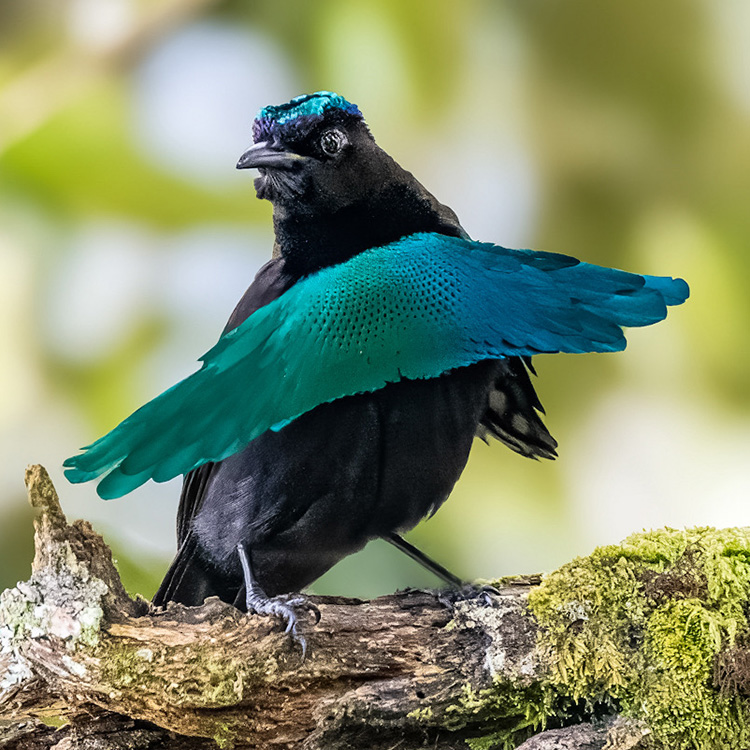
Birds-of-paradise share a family, but their habitat needs are not identical. Comparing them helps prevent a common mistake: assuming that every bird-of-paradise lives in the same type of forest.
| Species or group | General habitat pattern |
|---|---|
| Superb bird-of-paradise | Upland and montane forest in New Guinea |
| Magnificent bird-of-paradise | Forest habitats in parts of New Guinea |
| Lesser bird-of-paradise | Lowland and hill forest in parts of New Guinea and nearby islands |
| King of Saxony bird-of-paradise | Montane forest and upland habitat |
| Raggiana bird-of-paradise | Lowland and foothill forest in Papua New Guinea |
These patterns are broad. A species may use more than one forest type, and local records can fall outside a commonly cited elevation range.
The safest approach is to identify the exact species first, then check a current range map and habitat account. Common names can overlap, and older sources may group regional forms differently.

Can You See a Superb Bird-of-Paradise in the United States?
You will not find a wild superb bird-of-paradise in the United States. Its natural range is restricted to New Guinea and nearby areas recognized in current taxonomic sources.
Some zoos, aviaries, museums, or bird exhibits may display birds-of-paradise, but availability changes. A captive bird is not evidence that the species can live outdoors in a typical U.S. climate. The bird’s natural habitat is a specialized tropical mountain environment with complex food, climate, and social needs.
For U.S. readers who want to support the species, practical options include:
- Visit accredited zoos with conservation programs.
- Use reliable field guides and museum resources.
- Support habitat conservation groups with transparent projects.
- Avoid products made from protected bird feathers.
- Learn whether a wildlife organization works in New Guinea.
- Share conservation information without encouraging disturbance at display sites.
Do not attempt to keep or acquire a wild bird-of-paradise without checking federal, state, and local laws. International wildlife trade is regulated, and legal ownership rules can be strict.

How to Identify Good Habitat in a Photo or Field Report
A habitat report is more useful when it describes structure, not just scenery. “Tropical forest” is too broad to confirm superb bird-of-paradise habitat.
Look for several clues together:
- Location: Is the site in New Guinea?
- Elevation: Is it in or near an upland or montane zone?
- Moisture: Does the forest show moss, ferns, mist, or wet leaf litter?
- Structure: Are there several layers of trees and plants?
- Food: Are fruiting plants and insect-rich ground cover present?
- Display space: Are there small clearings near dense cover?
- Disturbance: Are roads, farms, fires, or heavy clearing nearby?
No single clue proves that the species is present. Mossy forest in the wrong country is not superb bird-of-paradise habitat. Likewise, a forest in New Guinea may be too low, too dry, too open, or too disturbed.
A confirmed sighting requires a reliable identification and location record. Habitat clues can suggest suitability, but they cannot replace field evidence.

Common Misconceptions About the Habitat
“The bird lives in any tropical forest.”
Not quite. The species is most strongly associated with upland and montane forest. Tropical lowland forest may support other birds-of-paradise, but it should not automatically be labeled superb bird-of-paradise habitat.
“The male’s display happens anywhere.”
Courtship displays need suitable space and low disturbance. The display may look dramatic, but the site itself can be a small, carefully maintained patch within dense forest.
“Least Concern means habitat loss is harmless.”
Global conservation categories do not remove local risk. A species may remain widespread while individual mountain populations lose habitat.
“A green forest patch is always healthy.”
Satellite images and photographs can miss edge effects, hunting, invasive plants, and the loss of food trees. Habitat quality depends on structure, connection, and use—not just tree cover.

Key Takeaways
- The superb bird-of-paradise lives naturally in New Guinea.
- Its main habitat is cool, wet montane and mossy forest.
- A commonly cited elevation range is about 1,000 to 2,000 meters.
- The bird needs fruit, insects, dense cover, and suitable display sites.
- Forest clearing, fragmentation, hunting, roads, and climate change can reduce habitat quality.
- The species’ global status does not guarantee that every local population is safe.
- U.S. readers should look to accredited zoos, trusted conservation groups, and current scientific sources to learn more.
Frequently Asked Questions
What is the scientific name of the superb bird-of-paradise?
The scientific name is Lophorina superba. Some taxonomic sources divide related regional populations into separate species, so names may differ between field guides.
Does the superb bird-of-paradise live in rainforests?
Yes. It lives in tropical forest, especially cool, wet rainforest in the mountains of New Guinea. Its habitat is often described as montane, cloud, or mossy forest.
What elevation does the superb bird-of-paradise prefer?
The species is commonly associated with about 1,000 to 2,000 meters above sea level. Local records may vary because habitat and taxonomy differ across New Guinea.
What does the superb bird-of-paradise eat?
Its diet includes fruit and insects. It uses several forest layers and depends on a healthy mix of fruiting plants, leaf litter, and insect habitat.
Is the superb bird-of-paradise endangered?
It is generally listed as Least Concern globally by the IUCN, but local threats remain. Forest loss, hunting, and habitat fragmentation can place pressure on individual populations.
Can the superb bird-of-paradise live in the United States?
It does not live wild in the United States. Some accredited facilities may house birds-of-paradise, but the species requires specialized care and is protected by wildlife trade laws.
Conclusion
The superb bird-of-paradise is a highland forest specialist. Its habitat is not defined by trees alone, but by the full forest system: cool mountain air, steady moisture, layered vegetation, fruiting plants, insects, dense cover, and quiet display sites.
Protecting connected montane forests in New Guinea is the clearest way to protect the species. For readers in the United States, the next useful step is to consult current IUCN, BirdLife International, and accredited zoo resources before sharing information or supporting a conservation project.