
Establishing an ideal cat feeding schedule is vital for your pet’s long-term health, weight management, and behavioral well-being. By balancing nutritional needs with routine, you can prevent obesity and ensure your cat stays happy and energetic throughout their life.
If you have ever been woken up by a persistent paw tapping your face at 5:00 AM, you know exactly how much cats value their mealtime. As cat owners in 2026, we have access to more nutritional data and feeding technologies than ever before. Yet, finding the perfect rhythm for your feline friend remains an art form. Your goal is to balance convenience with your cat’s natural predatory instincts to keep them thriving.
Creating an ideal cat feeding schedule isn’t just about putting food in a bowl. It is about understanding how your cat’s body processes nutrients and how their mind views mealtime. Whether you are a new kitten parent or caring for a senior cat, mastering this routine will improve your cat’s quality of life and potentially save you from future vet bills related to weight or digestive issues.
Key Takeaways
- Routine Matters: Cats are creatures of habit; feeding them at the same time daily reduces stress and regulates their metabolism.
- Individual Needs: An ideal cat feeding schedule varies based on your cat’s age, activity level, and specific health requirements.
- Portion Control: Measuring food precisely prevents overfeeding and helps combat the common issue of feline obesity.
- Hydration is Essential: Always pair your feeding schedule with access to fresh water to support kidney health and digestion.
- Consult Your Vet: Always verify your chosen schedule with a veterinarian, especially if your cat has underlying health conditions.
Understanding Feline Nutritional Needs
Before you set a clock, you need to understand what is going in the bowl. Cats are obligate carnivores. This means their bodies are built to process animal proteins. Unlike humans or even dogs, cats do not have a strong physiological need for complex carbohydrates. An ideal cat feeding schedule must prioritize high-quality protein to keep their muscles strong and their energy levels stable.
The Importance of Protein and Moisture
In the wild, a cat’s prey is full of moisture. Many dry kibble diets are very low in water content. When you build your feeding schedule, consider mixing wet and dry food. Wet food provides essential hydration that helps protect your cat’s kidneys and bladder. If you choose an all-dry diet, ensure your cat has plenty of fresh water sources throughout the house to compensate.
Protein should be the first ingredient on any label you buy. Look for named meat sources like chicken, turkey, or salmon. Avoid products where “meat by-products” or “corn” are the first listed items. By feeding them correctly, you are fueling their natural agility.
Balancing Caloric Intake
An ideal cat feeding schedule is also a math problem. Every cat has a specific caloric requirement. A sedentary indoor cat needs fewer calories than a young, active mouser. If you overfeed, even by a small amount, that extra weight adds up quickly. Over time, feline obesity can lead to diabetes, arthritis, and heart disease. Use a measuring cup—not a “heaping scoop” to ensure consistency.
Establishing the Perfect Routine
Cats are creatures of habit. They feel safer when they know what happens next. A predictable schedule helps their digestive system prepare for food at specific times, which can lead to better nutrient absorption. For most adult cats, twice-daily feedings are the gold standard for an ideal cat feeding schedule.
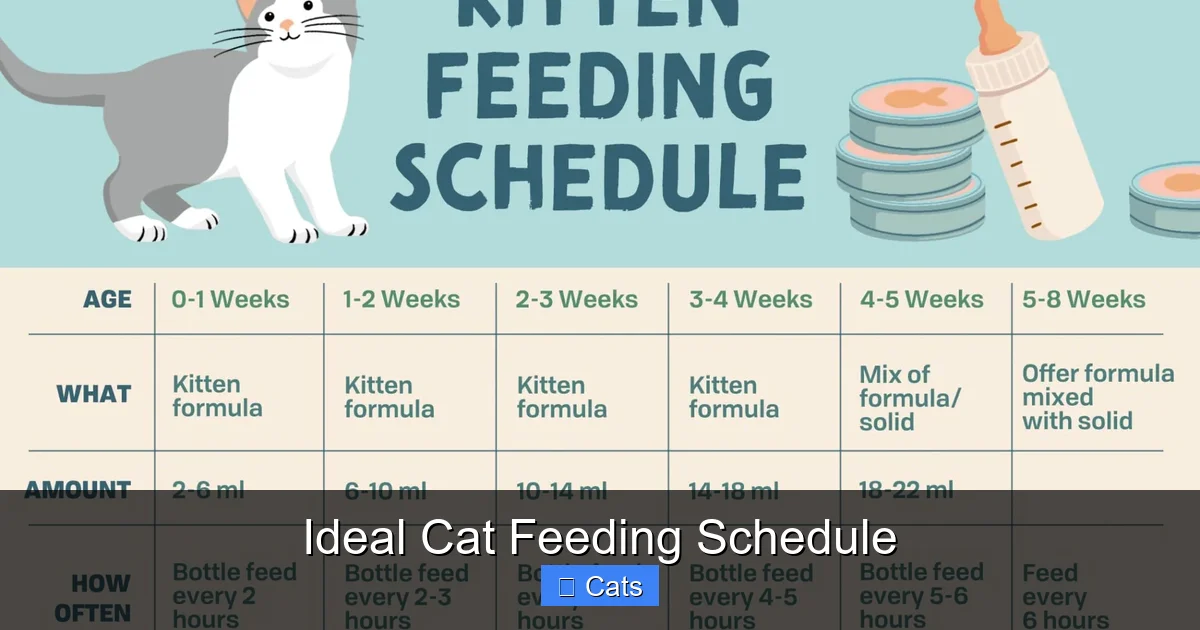
Visual guide about Ideal Cat Feeding Schedule
Image source: i.pinimg.com
The Twice-a-Day Method
Feeding twice a day once in the morning and once in the evening—works well for most households. It aligns with the schedule of many working pet owners and allows you to monitor your cat’s appetite. If you notice your cat is consistently leaving food in their bowl, you know immediately that you may need to adjust the portion size or consult a vet about a potential illness.
The Benefits of Smaller, Frequent Meals
If your cat is a “scarf and barf” eater someone who eats too fast and then vomits you might consider smaller, more frequent meals. By breaking the daily allowance into three or four smaller portions, you reduce the strain on their stomach. Many modern automatic feeders allow you to schedule these small portions, giving you the benefit of a professional feeding routine even when you are not at home.
Age-Specific Feeding Requirements
Your cat’s needs change as they grow. An ideal cat feeding schedule for a kitten is very different from what a senior cat requires. You must adapt your approach as your cat enters different life stages.
Kitten Feeding Schedules
Kittens have tiny stomachs and high energy demands. They need to eat much more frequently than adults. A growing kitten should be fed three to four times a day. Their food must be specifically formulated for “Growth” or “Kitten” to ensure they get the extra fats and minerals needed for bone and brain development. Do not skip meals for a kitten; they need that steady supply of energy.
Adult and Senior Cat Needs
Once a cat hits the one-year mark, you can transition to an adult formula and a twice-daily routine. However, when your cat enters their senior years (usually around age 10 or 11), they may become less active. Their metabolism slows down. An ideal cat feeding schedule for seniors often involves slightly lower caloric density and easier-to-digest proteins. Keep a close eye on their weight, as senior cats are prone to muscle loss and weight fluctuation.
The Role of Interactive Feeding
Feeding time does not have to be limited to a bowl. In 2026, we understand that cats thrive when they engage their hunting instincts. An ideal cat feeding schedule can incorporate puzzle feeders, which turn mealtime into a game.
Mental Stimulation Through Food
Puzzle feeders or food-dispensing toys force cats to work for their dinner. This slows down their eating speed, which is great for digestion, and provides much-needed mental stimulation. If you have an indoor cat, they often get bored. Puzzles are the perfect cure for that boredom. You can place their dry food allotment into a puzzle toy to keep them occupied while you are busy.
Reducing Stress at Mealtime
If you have multiple pets, mealtime can be a source of stress. Always ensure your cat has a quiet, safe place to eat away from other animals. If your cat feels like they have to “defend” their bowl, they will eat too quickly or develop anxiety. Using a dedicated feeding station is a key component of a successful, low-stress routine.
Tools and Technology for Success
Technology has made maintaining an ideal cat feeding schedule much easier. Smart feeders allow you to dispense precise portions at set times, even if you are stuck at work or traveling. This technology is a game-changer for owners of cats with specific dietary needs, such as those on a prescription diet who cannot share food with other pets.
Choosing the Right Feeder
When selecting a smart feeder, look for models that have a backup battery feature in case your power goes out. Some models even come with integrated scales that track how much your cat eats, which can alert you via your phone if your cat’s appetite drops. These insights are incredibly valuable for catching health issues early.
Portioning Tools
If you do not want to use an automatic feeder, keep it simple. Use a digital kitchen scale to measure food by weight. Weight is much more accurate than volume. Over the course of a week, volume-based measuring can lead to significant overfeeding errors, whereas a scale ensures your cat gets exactly what they need every single time.
Monitoring and Adjusting Your Strategy
Finally, your feeding plan is not set in stone. You should be constantly evaluating your cat’s response to their current schedule. A healthy cat will have a shiny coat, clear eyes, and a steady weight. If you notice your cat gaining excess fat, reduce the portion sizes slightly. If they seem lethargic or losing weight, it is time to check with your vet.
When to Consult a Veterinarian
Always talk to your vet before making drastic changes to your cat’s diet. If you are switching food brands, do it slowly over a week by mixing the old and new food. This prevents tummy upsets. Furthermore, if you suspect your cat has an allergy or a specific health issue, skip the DIY approach and get a professional plan.
In conclusion, an ideal cat feeding schedule is the foundation of a long, healthy life for your pet. By providing consistent timing, the right amount of food, and mental stimulation, you are showing your cat the ultimate love. Stay observant, keep things simple, and enjoy the bonding time that feeding brings to your daily routine.
Frequently Asked Questions
How often should I feed my adult cat?
Most veterinarians recommend feeding an adult cat twice a day, once in the morning and once in the evening. This routine provides enough energy while preventing overeating and supporting healthy digestion.
Can I leave food out for my cat all day?
Free-feeding or leaving food out all day can lead to obesity and makes it hard to track if your cat is eating properly. It is usually better to serve measured meals at specific times to maintain control over their health.
What should I do if my cat eats too fast?
If your cat eats too fast, try using a puzzle feeder or a slow-feed bowl to pace them. You can also split their daily portion into three or four smaller meals throughout the day to reduce stomach strain.
How do I know if I am feeding my cat the right amount?
The right amount depends on your cat’s weight, age, and activity level, which can be found on the pet food label or via your vet. You should be able to feel your cat’s ribs without them being overly prominent, and they should have a visible waistline when viewed from above.
Is it okay to mix wet and dry food?
Yes, mixing wet and dry food is a great way to ensure your cat gets extra hydration while still enjoying the crunch of kibble. Just be sure to adjust the total caloric intake so you do not exceed their daily requirements.
Should I change my cat’s diet as they get older?
Yes, senior cats often require fewer calories and more easily digestible proteins as their activity levels drop. Consult your veterinarian when your cat turns 10 or 11 to discuss transitioning to a senior-specific formula.