
At ten months, your cat is in the final stages of kittenhood, bridging the gap between rapid growth and adult maintenance. To keep them healthy, you must balance high-quality protein intake with appropriate portion sizes based on their individual activity levels and metabolic needs.
Congratulations! Your little fur baby is growing up fast. If you are asking yourself how much to feed 10 month old cat, you are already ahead of the game. At this age, your cat is in a unique “tween” phase. They have left the wild energy of kittenhood behind, but they are not quite full-grown adults yet. It is a vital time to get their diet right so they stay lean, healthy, and happy.
Managing nutrition in 2026 means we have access to incredible resources and high-quality ingredients, but it can also be overwhelming. You might see fancy marketing on cat food bags that confuses you. Let’s break it down into simple terms so you can feel confident every time you scoop food into their bowl. Remember, your goal is to support their final growth spurt without packing on unnecessary pounds.
Key Takeaways
- Growth Stage: A 10-month-old cat is technically a “junior” cat; they need nutrient-dense food but are transitioning away from high-calorie kitten formulas.
- Caloric Density: Focus on food labels that specify “Growth” or “All Life Stages” until your veterinarian confirms they have reached their adult weight.
- Portion Control: Avoid free-feeding to prevent obesity, as many cats lose their natural self-regulation as they approach adulthood.
- Hydration Matters: Incorporate wet food into the diet to ensure your cat stays hydrated, which is crucial for long-term kidney health.
- Individual Needs: Factors like spay/neuter status and activity levels significantly change how much to feed 10 month old cat.
- Monitoring Weight: Use the “body condition score” method to ensure your cat is at a healthy weight rather than relying solely on the bag’s feeding chart.
Understanding the Nutritional Needs of a 10-Month-Old Cat
At ten months, your cat is technically considered a “junior” cat. Their bones are almost fully formed, but they might still be filling out in terms of muscle mass. Because they are still developing, they require more protein and fat than an elderly cat. However, they are also less active than they were at four months old. This means they cannot burn off excess calories as easily as they used to.
Protein is the Foundation
Cats are obligate carnivores. This means they need meat to survive. When deciding how much to feed 10 month old cat, the quality of the food matters just as much as the quantity. Look for labels where the first ingredient is a named protein source, like chicken, turkey, or salmon. Avoid fillers like corn or wheat, which provide empty calories that won’t help your cat grow healthy muscle.
The “Growth” Formula Transition
Most kitten foods are calorie-dense to support rapid growth. If your cat is nearing their adult size, you might start noticing they seem a bit pudgy. That is a sign to talk to your vet about switching to an adult formula. Some 10-month-old cats still need the extra energy, while others are ready to slow down. Watch your cat’s waistline closely.
Determining Daily Caloric Intake
There is no “one size fits all” answer to how much to feed 10 month old cat. A highly active indoor-outdoor cat will need more fuel than a couch potato who sleeps eighteen hours a day. Generally, a 10-month-old cat needs about 200 to 250 calories per day, depending on their weight and activity. If you aren’t sure, start by checking the feeding guide on your cat food packaging, but treat it as a suggestion, not a law.
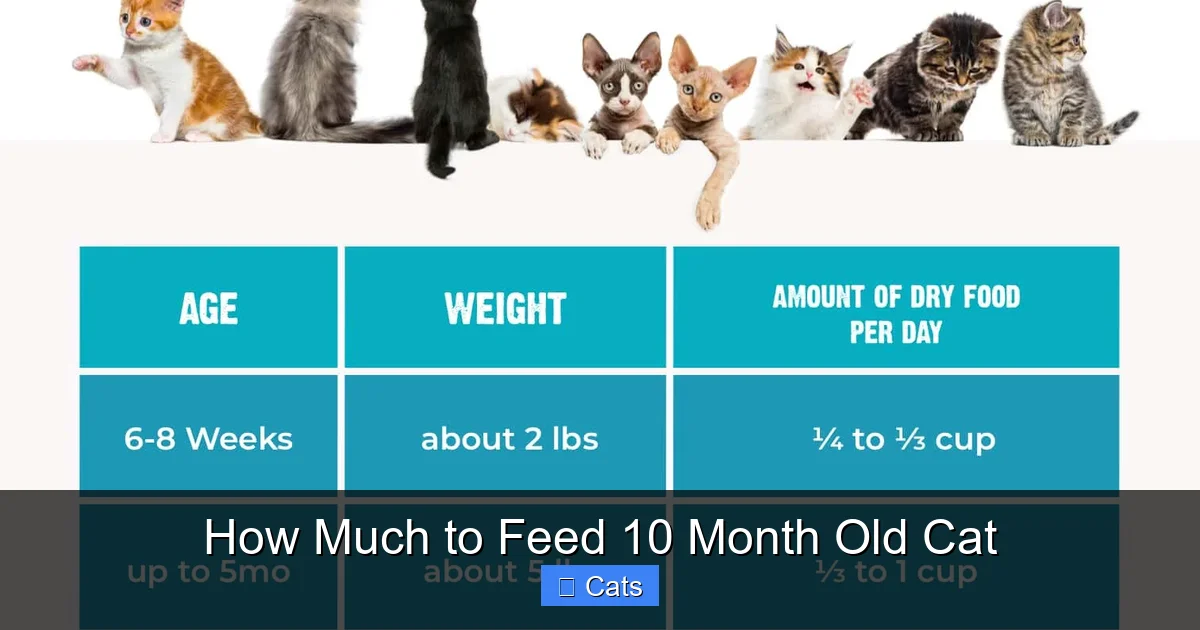
Visual guide about How Much to Feed 10 Month Old Cat
Image source: b4111172.smushcdn.com
Calculating by Weight
A good rule of thumb is that cats need roughly 30 to 40 calories per pound of body weight. If your 10-month-old cat weighs 8 pounds, they likely need between 240 and 320 calories daily. Always adjust based on how much they move. Use a kitchen scale to measure their portions. This is much more accurate than using a plastic scoop, which often leads to “portion creep” where you accidentally feed more each day.
The Importance of Body Condition
Forget the scale for a second. Look at your cat from above and from the side. You should be able to feel their ribs under a thin layer of muscle, but you shouldn’t see them poking out sharply. You should also be able to see a slight “waist” when looking down at them. If they look round like a potato, you are feeding too much. If they look bony, you might need to increase their intake slightly.
Establishing a Feeding Schedule
Many owners ask if they should leave a bowl of dry food out all day. For a 10-month-old cat, this is often a bad idea. Free-feeding makes it impossible to track exactly how much they are eating. It also makes it difficult to spot if your cat loses their appetite, which is often the first sign of illness.
Meal-Feeding vs. Free-Feeding
Switching to scheduled meals is a game-changer. Most cats at this age do well with two to three meals a day. This keeps their blood sugar stable and gives you a chance to bond with them. If your work schedule is busy, consider an automatic feeder. These devices are fantastic for delivering the exact portion size at the exact time, even when you aren’t home.
Setting a Routine
Cats thrive on predictability. Try to feed your cat at the same time every morning and evening. This routine reduces anxiety and helps regulate their digestive system. If your cat is begging for food constantly, don’t give in to the “meows.” Instead, provide mental stimulation. Often, cats eat out of boredom rather than true hunger.
Combining Wet and Dry Food
Should you feed kibble or canned food? The best answer is usually a combination. Dry food is convenient and can help keep teeth clean, but wet food is a secret weapon for hydration. In 2026, we understand more than ever that cats are prone to kidney and urinary issues. Since cats often don’t drink enough water from a bowl, wet food provides the moisture they need to stay healthy.
The Benefits of Moisture
Wet food is closer to the natural diet of a cat. It is generally higher in protein and lower in carbohydrates than dry kibble. By feeding your 10-month-old cat at least one or two meals of wet food a day, you are investing in their future health. It helps prevent dehydration and keeps their coat shiny and soft.
Mixing It Up
You can mix a little wet food with their dry kibble to make it more exciting. Just be careful with leaving wet food out. It spoils quickly in the air, especially in warmer months. If your cat doesn’t eat their wet food within thirty minutes, pick it up and put it in the fridge or toss it. Never leave canned food sitting out for hours, as it can grow bacteria.
Managing Treats and Table Scraps
It is so hard to say no to those big, cute eyes! However, treats should never make up more than 10 percent of your cat’s daily caloric intake. If you feed your 10-month-old cat too many treats, they won’t be hungry for their balanced meals. This can lead to nutritional deficiencies.
Healthy Treat Alternatives
Instead of processed treats full of sugar and dyes, try healthier options. Small pieces of boiled chicken or plain, freeze-dried protein treats are excellent choices. Many cats also love the occasional piece of steamed broccoli or carrot, though they aren’t naturally attracted to veggies. Keep treats for training or special bonding moments rather than as a regular snack.
The Danger of “People Food”
Be very careful with what you share from your plate. Ingredients like onions, garlic, grapes, and chocolate are toxic to cats. Even dairy, which many people think cats love, often causes diarrhea because many adult cats are lactose intolerant. When you wonder how much to feed 10 month old cat, remember that “extra” food is almost always a mistake.
Watching for Health Changes
As your cat transitions to adulthood, keep an eye on their energy levels and grooming habits. A sudden change in appetite is always a reason to call your vet. Sometimes, a cat might seem hungry but is actually suffering from a dental issue or a stomach bug. By keeping a strict eye on their feeding schedule, you will be the first to know if something is wrong.
When to See the Vet
If your cat is eating the correct amount but still seems lethargic, or if they are losing weight despite having a hearty appetite, head to the vet. Parasites, such as worms, are common in young cats and can steal the nutrients from their food. Regular checkups during their first year of life are essential for ensuring they are developing correctly.
The Importance of Fresh Water
Never forget the water! Even if you are feeding your cat the perfect amount of food, they need access to clean, fresh water at all times. If your cat seems to ignore their water bowl, consider a cat water fountain. The moving water mimics a stream, which is much more attractive to a cat’s natural instincts. Hydration is just as important as the food itself.
Conclusion
Learning how much to feed 10 month old cat is all about balance. You are guiding them through a major transition period, ensuring they get the energy they need to be active while preventing the weight gain that often accompanies adulthood.
By focusing on high-quality protein, sticking to a consistent feeding schedule, and monitoring their body condition, you are giving your cat the best possible start to a long, healthy life.
Enjoy these final days of “kitten energy” as your cat grows into their personality. With your thoughtful care, they will remain your healthy, playful companion for many years to come. Remember, you aren’t just feeding them for today; you are building their health for the next decade. Keep observing, keep adjusting, and keep loving your feline friend.
Frequently Asked Questions
Is it okay to feed my 10-month-old cat kitten food?
You can usually continue kitten food until they are about 12 months old, but monitor their weight closely to ensure they aren’t becoming overweight. If they start looking round or losing their waistline, it is time to consult your vet about a transition to an adult formula.
How often should I feed my cat at this age?
Most 10-month-old cats do best with two to three scheduled meals per day rather than free-feeding. This helps you monitor exactly how much they eat and prevents them from grazing throughout the day.
Can I leave dry food out all day for my 10-month-old cat?
It is generally discouraged because it makes it difficult to track calorie intake and can lead to obesity. Scheduled meals help you manage their portion sizes effectively as they transition toward adulthood.
How can I tell if my cat is gaining too much weight?
You should be able to feel your cat’s ribs without a thick layer of fat covering them, and you should see a visible waistline from above. If they have a hanging belly or feel “cushiony” to the touch, they may be eating more than they need.
Why is wet food recommended for my cat?
Wet food provides essential moisture that supports kidney and urinary health, which is vital for all cats. Since many cats do not drink enough water on their own, wet food helps keep them well-hydrated.
Should I change my cat’s food suddenly?
Never switch foods abruptly, as this can cause digestive upset like vomiting or diarrhea. Always mix the new food with the old food over a period of 7 to 10 days, gradually increasing the amount of the new food until the transition is complete.