

Feeding your cat the right amount of Royal Canin is essential for their long-term health and weight management. By following the feeding guidelines on the packaging and adjusting for your cat’s specific lifestyle, you can ensure they receive optimal nutrition every single day.
Bringing a new cat home is one of the most exciting experiences a pet parent can have. As we settle into 2026, we are learning more than ever about the importance of precision nutrition. If you have chosen Royal Canin for your feline friend, you are already on the right track. Royal Canin is known for its scientifically backed formulas that cater to specific breeds, ages, and lifestyles.
However, even the highest quality food can lead to health issues if the portion sizes are incorrect. Many owners often ask, “How much Royal Canin to feed my cat?” without realizing that there isn’t a single “perfect” number for every animal. Feeding your cat is an art balanced with science, requiring you to observe your pet’s behavior and physical changes over time.
Key Takeaways
- Check the Bag: Always start with the manufacturer’s recommendations printed on the Royal Canin bag as your baseline.
- Individual Needs Matter: Every cat is unique; factors like metabolism, age, and activity level dictate how much Royal Canin to feed my cat.
- Use a Kitchen Scale: Measuring food by weight rather than volume is the most accurate way to prevent overfeeding.
- Monitor Body Condition: Regularly check your cat’s ribs and waistline to ensure they aren’t becoming overweight or underweight.
- Consult Your Vet: If your cat has specific health concerns or is losing or gaining weight rapidly, schedule a professional check-up.
- Consistent Schedules: Feeding your cat at the same times each day helps regulate their metabolism and keeps their hunger in check.
Understanding the Basics of Feline Nutrition
To determine how much Royal Canin to feed my cat, we must first look at why portion control is so critical. Cats are obligate carnivores, meaning they require specific nutrients found in animal tissues to thrive. Royal Canin designs its kibble and wet food to provide these exact nutrients. When we provide too much food, we risk feline obesity, which can lead to diabetes, joint pain, and shortened lifespans.
Decoding the Feeding Guidelines
Every bag of Royal Canin features a feeding chart. These charts are your best friend. They provide a range based on your cat’s current weight. For instance, if you have a 10-pound adult cat, the bag might suggest a range of 1/2 cup to 3/4 cup per day. This range exists because an active, outdoor hunter has different caloric needs than a sedentary, indoor cat who spends most of their day napping on a sunny windowsill.
Weight Versus Volume
Most of us use a measuring cup to scoop out food. While this is convenient, it is not always the most accurate method. Pellets can settle differently, and a rounded scoop can add dozens of extra calories that you didn’t intend to feed. In 2026, the gold standard for pet owners is using a small digital kitchen scale. By weighing the food in grams, you eliminate the guesswork entirely and ensure that “how much Royal Canin to feed my cat” is answered with mathematical precision.
Adjusting for Life Stages and Activity
A kitten’s needs are vastly different from those of a senior cat. Growth requires high energy, while aging often results in a slower metabolism. Understanding these life stages is the second step in mastering your cat’s diet.
Kitten Development
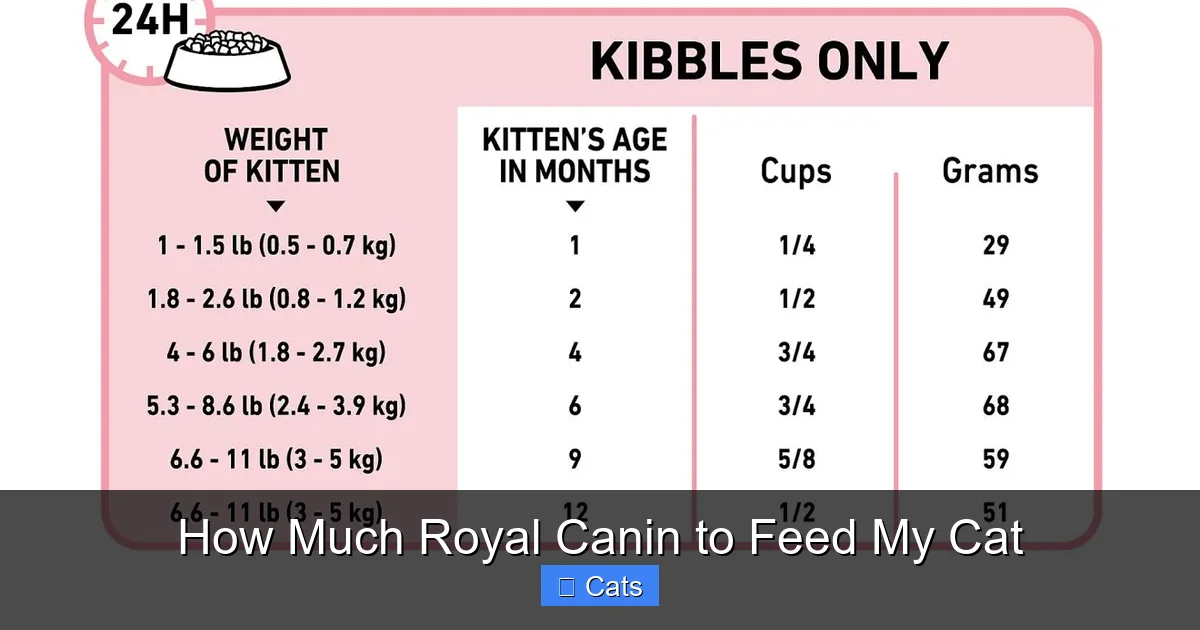
Kittens are growing rapidly and require more frequent meals. You might feed a kitten three to four times a day. Their Royal Canin formula is dense in calories to support rapid bone and muscle growth. As they approach one year of age, you will gradually transition them to an adult maintenance diet, which will naturally reduce the total volume of food you provide.
The Senior Feline
When our cats reach their golden years, they often become less active. This reduction in daily movement means they require fewer calories to maintain a healthy weight. If you keep feeding them the same amount as they were eating in their prime, you will likely see unwanted weight gain. Watch for subtle changes in their activity, and consult your veterinarian about moving to a senior-specific formula if necessary.
How Much Royal Canin to Feed My Cat Based on Lifestyle
Your cat’s living environment significantly impacts their caloric requirements. An indoor cat living in an apartment faces fewer physical challenges than an indoor-outdoor cat roaming a backyard.
The Indoor Cat Dilemma
Indoor cats are prone to boredom, which can sometimes look like hunger. If your cat is constantly hovering by their food bowl, it might not be a sign that they need more food; it might be a sign that they need more enrichment. Providing food puzzles or using a treat-dispensing ball can satisfy their natural hunting instinct without increasing their daily calorie intake. Stick to the lower end of the feeding guide if your cat spends most of their time lounging.
The Energetic Outdoor Cat
If your cat spends hours chasing bugs or exploring, they are burning through energy quickly. These cats often need to be on the higher end of the Royal Canin feeding recommendations. However, be careful not to overcompensate. Always monitor their body condition. If you notice your cat starting to lose their waistline, scale back the amount slightly.
The Importance of Monitoring Body Condition
Rather than obsessing over the number on the back of the bag, start focusing on the “Body Condition Score.” This is a visual and tactile assessment of your cat. Can you feel their ribs without pressing through a thick layer of fat? When looking from above, does your cat have a visible waist? If the answer to these questions is no, you are likely overfeeding.
Practical Tips for Daily Feeding
If you are struggling to maintain your cat’s weight, consider these tips:
- Meal Feeding vs. Free Feeding: Free feeding leaving food out all day can make it impossible to track intake. Meal feeding allows you to know exactly how much they have eaten.
- Consistent Measuring: Always use the same measuring device or scale every single day.
- Treat Management: Remember that treats count toward the daily caloric total. If you give a few extra treats, reduce the next meal accordingly.
Transitioning and Troubleshooting
If you find that your cat is constantly hungry, check the Royal Canin formula you are using. Some formulas are specifically designed to be highly satiating, meaning they help the cat feel full despite having a controlled calorie count. If you are changing formulas, always perform a gradual transition over 7 to 10 days to avoid digestive upset.
When to See the Vet
If you have calculated the correct amount of Royal Canin to feed your cat, but they are still losing weight or gaining weight rapidly, it is time for a check-up. Underlying health issues, such as hyperthyroidism or dental pain, can change how a cat eats and absorbs nutrients. Never assume a change in appetite is purely behavioral without ruling out medical causes first.
Conclusion
Determining how much Royal Canin to feed my cat is a journey of trial, observation, and adjustment. By utilizing the guidelines on the packaging as a starting point and fine-tuning based on your cat’s unique activity level and physical condition, you provide the foundation for a long and vibrant life.
Remember to prioritize consistency, use accurate measuring tools, and always keep an eye on your cat’s body shape. Your cat relies on you to be their advocate in nutrition, and by taking these steps, you are ensuring they have the very best care possible in 2026 and beyond.
Frequently Asked Questions
How do I know if I am feeding my cat too much Royal Canin?
The best way to tell is to monitor their body condition. If you cannot easily feel their ribs or if they lose their waistline when viewed from above, they are likely being overfed.
Should I follow the feeding guide on the Royal Canin bag exactly?
The guide on the bag is a starting point, not a strict rule. You should adjust the amount based on your cat’s age, activity level, and current body weight.
Is it better to measure Royal Canin by weight or volume?
Measuring by weight using a digital kitchen scale is much more accurate than using a measuring cup. It ensures your cat receives the exact same number of calories every day.
Can I mix Royal Canin dry and wet food?
Yes, mixing wet and dry food is a great way to provide variety and hydration. Just ensure you calculate the total calories from both to avoid overfeeding.
Why does my cat seem hungry even after eating their portion?
If your cat is eating the correct amount but still acts hungry, try using food puzzles or interactive toys to slow down their eating and provide mental enrichment.
How often should I feed my cat Royal Canin?
For most adult cats, feeding twice a day is ideal. Kittens usually require more frequent meals, typically three to four times a day, to support their growth.