
In the United States, the bird most often described as having a red spot on the back of its head is a male Downy Woodpecker. The red patch sits on the nape, or the back of the neck. Male Hairy Woodpeckers can show a similar mark.
A Red-bellied Woodpecker is another common possibility. It usually has a wider red cap that runs from the bill over the crown and down the back of the neck. The best clue is the bird’s size, bill shape, back pattern, and the exact place where the red color appears.
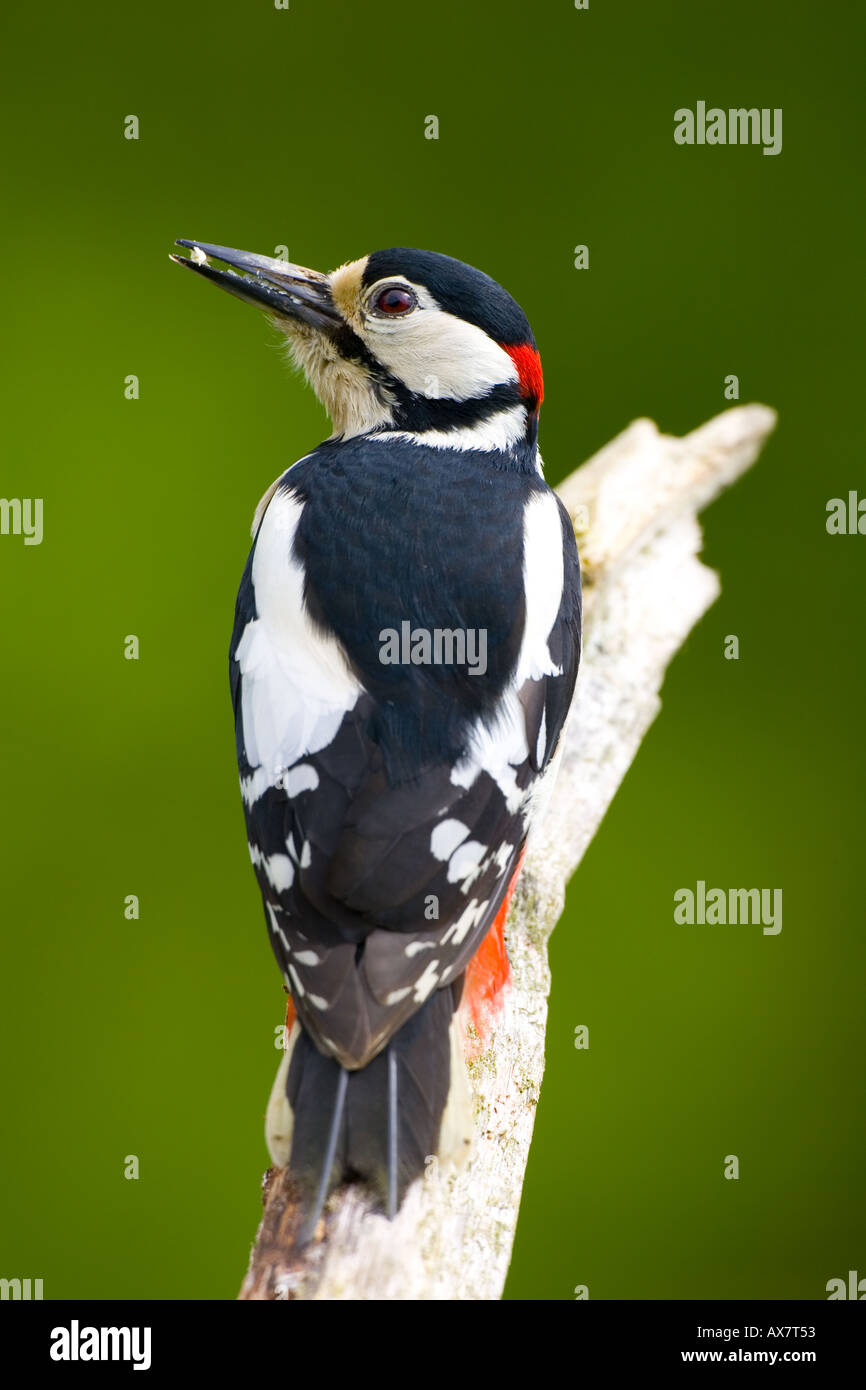
The Most Likely Bird: Male Downy Woodpecker
A male Downy Woodpecker has a small red patch on the back of its head. This patch is often easy to miss because the bird is small, quick, and usually clings to the far side of a tree trunk.
Downy Woodpeckers are common across much of the United States. They visit backyards, parks, woodland edges, and mature trees. You may also see them at suet feeders.
Look for these field marks:
- Small body, about the size of a sparrow
- Short, narrow bill
- Black-and-white striped head
- White back with black wings
- White spots on the wings
- Black tail with white outer feathers
- Red patch on the rear of the head in adult males
The red patch is not on the bird’s forehead. It is farther back, near the nape. Females usually lack this red patch, which makes them look more plainly black and white.
Downy Woodpeckers often move in short hops along tree bark. They may tap softly on dead branches while looking for insects. Their small bill is one of the fastest ways to separate them from a Hairy Woodpecker.

Hairy Woodpecker: A Similar Bird With a Red Nape
A male Hairy Woodpecker can also have a red spot on the back of its head. It looks much like a Downy Woodpecker, but it is larger and has a longer, stronger bill.
Size can be hard to judge when the bird is alone. Use nearby objects for scale. A Hairy Woodpecker may look closer to a robin in body length, while a Downy Woodpecker is much smaller.
| Feature | Downy Woodpecker | Hairy Woodpecker |
|---|---|---|
| Overall size | Small | Medium-sized |
| Bill | Short and delicate | Longer and more chisel-like |
| Red mark | On the rear of the head in males | On the rear of the head in males |
| Typical setting | Backyards, small trees, woodland edges | Mature woods and larger tree trunks |
| Flight and movement | Light and quick | Stronger and more deliberate |
The two species may occur in the same area. Their black-and-white patterns can also look nearly identical at a distance.
A useful rule is simple: if the bird has a very short bill and a tiny body, start with Downy Woodpecker. If it has a long bill and a larger frame, consider Hairy Woodpecker.

Red-Bellied Woodpecker: The Common Look-Alike
A Red-bellied Woodpecker often causes confusion because its red color is much more visible. The red usually runs over the crown and down the nape. In some views, it may look like a large red spot on the back of the head.
Despite its name, the red belly is often hard to see. The bird’s most useful marks are its:
- Medium to large size
- Pale, plain face
- Black-and-white barred back
- Red crown and nape
- Long, pointed bill
- Pale or lightly reddish underside
male Red-bellied Woodpeckers usually show more red on the front of the crown. Females often show red mainly on the back of the head and neck.
This species is common in the eastern United States and parts of the central United States. It may visit suet feeders, sunflower feeders, wooded yards, and suburban parks.
If the bird has a broad red cap and a zebra-like back, it is more likely a Red-bellied Woodpecker than a Downy Woodpecker.

Other U.S. Birds That May Show Red on the Head
Not every bird with red on its head is a Downy, Hairy, or Red-bellied Woodpecker. Several other woodpeckers can create a similar first impression.
Pileated Woodpecker
The Pileated Woodpecker has a large, pointed red crest. The red extends well beyond a small spot on the nape.
It is one of the largest woodpeckers in the United States. Its bold crest, black body, white face stripes, and loud calls make it easier to identify once you see the full bird.
Northern Flicker
A Northern Flicker does not usually show a red spot on the back of the head. However, some forms have a red or orange mark on the back of the neck. The bird also has a spotted belly, a barred back, and a white rump that flashes during flight.
In the western United States, the red-shafted form has red shafts in the flight feathers. In the East, the yellow-shafted form has yellow shafts.
Yellow-Bellied Sapsucker
A male Yellow-bellied Sapsucker has red on the forehead and crown. The red is usually toward the front of the head, not just at the back.
This bird has a pale face, a black-and-white pattern, and a white wing stripe. It often makes rows of small holes in tree trunks to collect sap.
Acorn Woodpecker
The Acorn Woodpecker has a red crown, black-and-white face, and bold facial pattern. It lives mainly in the western United States, especially in oak woodlands.
Its red area is broader than the small nape patch of a Downy Woodpecker.

How to Identify the Bird in Your Yard
The best identification method is to check several traits instead of relying on the red mark alone.
1. Check the bird’s size
A very small woodpecker is likely a Downy Woodpecker. A larger bird may be a Hairy Woodpecker or Red-bellied Woodpecker.
Do not judge size from memory alone. Compare the bird with a feeder, branch, fence post, or nearby sparrow.
2. Look at the bill
The bill often gives a better clue than the red patch.
- Short bill: Downy Woodpecker
- Long, heavy bill: Hairy Woodpecker
- Long bill with a larger head and body: Red-bellied Woodpecker
- Very large, chisel-like bill and tall crest: Pileated Woodpecker
3. Find the red’s exact location
Red on the rear of the head points toward a male Downy or Hairy Woodpecker.
Red across the crown and down the neck points more toward a Red-bellied Woodpecker.
Red on the forehead may indicate a Yellow-bellied Sapsucker.
A tall red crest suggests a Pileated Woodpecker.
4. Study the back and wings
Black-and-white barring is a strong clue for Red-bellied Woodpecker. A mostly white back with black wings fits Downy or Hairy Woodpecker better.
A spotted underside and a flashing white rump point toward Northern Flicker.
5. Listen to the call
Sound can support an identification, but it should not replace visual marks.
Downy Woodpeckers often give a sharp, short call. Hairy Woodpeckers may sound similar but often have a stronger presence. Red-bellied Woodpeckers give a rolling or churring call and may also make loud, harsh notes.

Quick Identification Table
Use this table when the bird is visible only for a few seconds.
| What you see | Most likely bird |
|---|---|
| Tiny black-and-white woodpecker with a small red nape patch | Male Downy Woodpecker |
| Larger version of a Downy with a long bill and red nape | Male Hairy Woodpecker |
| Broad red crown, barred back, and pale face | Red-bellied Woodpecker |
| Large black woodpecker with a tall red crest | Pileated Woodpecker |
| Red forehead, pale face, and rows of sap holes | Yellow-bellied Sapsucker |
| Spotted belly, barred back, and flashing white rump | Northern Flicker |
| Red crown with a bold black-and-white face in the West | Acorn Woodpecker |
This table is a starting point, not a substitute for a full view. Lighting can make red look darker, brighter, or less visible. Juvenile birds may also have less clear adult markings.

Why Male Woodpeckers Have Red Head Patches
The red patch is a normal feather color, not a wound. In many North American woodpecker species, males and females have different head markings.
The patch can help birds recognize members of their own species. It may also play a role in courtship or territory behavior. The exact function differs among species, so the color should not be treated as proof of age, health, or dominance.
Young birds may show duller colors than adults. Feathers can also wear or fade. A bird seen in poor light may appear to have no red patch at all.
Do not approach or handle a wild woodpecker to inspect its head. Binoculars, a camera with a zoom lens, or a clear view from indoors is safer for both the bird and the observer.

Common Identification Mistakes
Mistake 1: Calling every red-headed woodpecker a Red-headed Woodpecker
The Red-headed Woodpecker is a different species. Its entire head is bright red, from the bill to the neck. It does not have only a small red spot on the back of the head.
Mistake 2: Ignoring body size
Downy and Hairy Woodpeckers share similar patterns. Their size and bill length are often more useful than color.
Mistake 3: Looking only at the red mark
Red can appear in different places on different species. Check the back, wings, face, tail, and bill as well.
Mistake 4: Assuming sex from one quick view
A female Downy or Hairy Woodpecker may lack the red nape patch. A female Red-bellied Woodpecker may still show red on the back of the head. Color patterns can overlap.
Mistake 5: Using location as the only clue
Range helps, but it does not identify the bird by itself. Many woodpeckers overlap across parts of the United States. Habitat, size, pattern, and behavior should work together.

Where to Find Reliable Identification Help
For a confirmed identification, compare your sighting with regional bird guides and trusted field resources. The Cornell Lab of Ornithology’s All About Birds species pages provide range maps, photos, sounds, and identification notes for many U.S. woodpeckers.
The National Audubon Society and the U.S. Fish and Wildlife Service also provide useful bird information. Local bird clubs can help with unusual sightings, especially when you have a photo or sound recording.
When using a birding app, treat the result as a suggestion. Check whether the suggested species fits the bird’s location, size, markings, and season.

Key Takeaways
- A male Downy Woodpecker is the most common answer to “what bird has a red spot on the back of its head?”
- A male Hairy Woodpecker can look similar but is larger and has a longer bill.
- A Red-bellied Woodpecker usually has a broader red crown and nape.
- Red on the forehead may point to a Yellow-bellied Sapsucker.
- A tall red crest suggests a Pileated Woodpecker.
- Use size, bill shape, back pattern, location of the red, and behavior together.
Frequently Asked Questions
Is a bird with a red spot on its head always a woodpecker?
No. Several birds can show red on the head, including some finches, tanagers, and other species. A red spot on the back of the head combined with clinging to tree bark and tapping strongly suggests a woodpecker.
Do female Downy Woodpeckers have red on the back of the head?
Usually, no. Adult male Downy Woodpeckers commonly have a red nape patch. Adult females generally have a black-and-white head without that red patch.
What is the difference between a Downy Woodpecker and a Hairy Woodpecker?
The Hairy Woodpecker is larger and has a longer, heavier bill. The Downy Woodpecker is smaller, with a shorter bill that looks more delicate. Both males can have red on the back of the head.
Why does my Red-bellied Woodpecker not have a red belly?
The red color on a Red-bellied Woodpecker is often faint or hidden. The red crown and nape, barred back, and pale face are usually easier to see than the belly color.
Can a juvenile woodpecker have a red head patch?
Yes, some young woodpeckers can show developing red feathers. Their colors may look dull or incomplete, so age can make identification harder. Body shape and pattern remain useful clues.
Conclusion
If you saw a small black-and-white bird with a single red patch at the back of its head, it was most likely a male Downy Woodpecker. A larger bird with the same type of patch may have been a Hairy Woodpecker. If the red formed a broad cap and the back looked strongly barred, a Red-bellied Woodpecker is the better match.
The next time you see one, note the bird’s size, bill, back pattern, red patch location, and behavior. Those details usually turn a quick glimpse into a confident identification.