
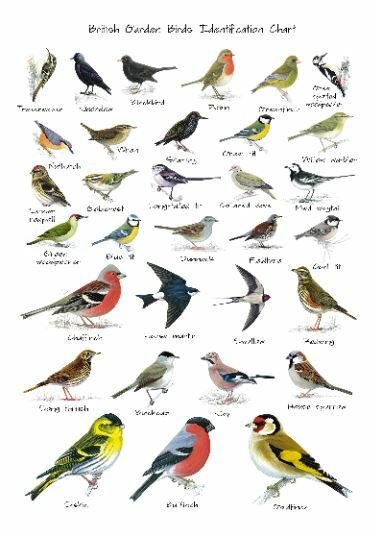
The best bird identification tips are simple: note a bird’s size, shape, color pattern, behavior, habitat, location, season, and call before choosing a name. In the United States, even a quick field note can help you separate similar birds, such as a Downy Woodpecker from a Hairy Woodpecker or a House Finch from a Purple Finch.
Start by watching the bird for a few seconds. Do not rely on one bright color or a single sound. Compare several clues, check whether the bird is common in your area, and confirm your choice with a trusted field guide or identification app.

What Bird Identification Involves
Bird identification means matching an observed bird to a species using several traits. These traits are called field marks. A field mark may be a stripe, wing bar, tail shape, bill type, eye ring, crest, or pattern on the underside of the wings.
A good identification uses more than appearance. The same species can look different because of age, sex, season, lighting, wear, or distance. A juvenile bird may have dull feathers, while an adult male may show bright breeding colors.
Bird identification also depends on place and time. A bird seen along the Gulf Coast in winter may be unlikely in Minnesota during summer. Range maps from sources such as Cornell Lab of Ornithology and eBird can help narrow the choices.
Field marks and clues
Use these main clue types:
- Size: Compare the bird with a familiar species, such as an American Robin, Mourning Dove, or crow.
- Shape: Look at the body, neck, head, tail, wings, and bill.
- Color pattern: Note where the colors occur, not just the colors themselves.
- Movement: Watch how the bird flies, walks, hops, climbs, or feeds.
- Habitat: Record whether it is in a lawn, forest, marsh, beach, farm field, or city.
- Behavior: Look for feeding habits, flocking, tail movement, and use of the ground or trees.
- Sound: Listen for songs, calls, chips, rattles, and alarm notes.
- Location and date: These clues help rule out species that do not normally occur nearby.
The strongest identification usually comes from a combination of clues, not one standout feature.

A Step-by-Step Method for Identifying Any Bird
Use the following sequence when you see an unfamiliar bird in your yard, neighborhood, or a U.S. park.
1. Watch before reaching for a guide
Observe the bird for at least several seconds. First, ask broad questions:
- Is it smaller than a sparrow, about robin-sized, or larger?
- Is it on the ground, in a tree, on a wire, or over water?
- Does it sit still, hop, climb, swim, or hover?
- Is it alone or in a group?
- Is the bird feeding, nesting, calling, or traveling?
A quick first impression helps you avoid focusing too soon on one detail.
2. Estimate size and shape
Size is useful, but visual distance can mislead you. A bird high in a tree may look smaller than it is. Compare it with a known object or species nearby.
Shape often gives a better clue than size. Notice whether the bird has:
- A long or short tail
- A round or slim body
- A large or small head
- A thick or narrow bill
- Long or short legs
- Pointed, rounded, or broad wings
- An upright or horizontal posture
For example, a Brown Creeper has a curved body posture and climbs up tree trunks. A White-breasted Nuthatch often moves headfirst down a trunk. Their behavior can support what their shape suggests.
3. Study the head first
The head contains many useful field marks. Check:
- Crown color
- Forehead and eyebrow stripe
- Eye line
- Eye ring
- Cheek patch
- Throat color
- Malar stripe, which is a line along the cheek below the eye
- Crest or lack of a crest
- Bill length and shape
Head patterns often separate birds that share the same body color. For instance, a Black-capped Chickadee has a black cap and bib, white cheeks, and a gray back.
4. Follow the pattern down the body
Next, examine the back, wings, chest, belly, and tail. Look for:
- Wing bars
- Spots or streaks
- Patches on the wings
- A breast band
- A colored rump
- A pale or dark belly
- Tail spots or edge color
- Strong contrast between the back and underside
Ask where each mark is located. “A red bird” is not enough. “A red bird with a black mask, pointed crest, and yellow wing patches” gives a guide or app much more useful information.
5. Watch movement and feeding behavior
Behavior can confirm or challenge an identification. Note whether the bird:
- Hops with both feet or walks
- Bobs its tail
- Flicks its wings
- Hovers at flowers
- Dives into water
- Probes mud
- Picks seeds from the ground
- Clings to bark
- Strikes prey from a perch
- Flies in a straight line or an undulating pattern
A bird’s behavior is not always unique. Use it as supporting evidence rather than proof by itself.
6. Record the habitat and location
Habitat can quickly reduce the number of likely species. Record the setting:
- Deciduous or evergreen woods
- Open grassland
- Suburban yard
- Urban park
- Freshwater pond
- Salt marsh
- Ocean beach
- Desert wash
- Agricultural land
- Mountain slope
Then consider the U.S. region. A bird in the Pacific Northwest may have a different set of likely species than one in the Southeast, Great Plains, or Northeast.
7. Listen for sound
If the bird is hidden, sound may be your best clue. Try to describe the sound in plain words:
- Clear whistle
- Rapid trill
- Harsh note
- Two-part call
- Repeated phrase
- Rising or falling tone
- Soft chip
- Rattle or buzz
Bird songs can vary by region and individual. Some species also have several calls. Use a recording as a comparison, not as the only basis for identification.
8. Compare two or three likely species
Do not search only for the bird you hope it is. Build a short list of possible species and compare them.
For each candidate, ask:
- Does its range include this location?
- Does it occur during this season?
- Does it use this habitat?
- Does its shape match?
- Do its key field marks match?
- Does its behavior or voice fit?
The best answer is the species that explains the most clues with the fewest conflicts.
9. Confirm and record the sighting
Use a regional field guide, a reputable birding app, or a local bird checklist. Record:
- Date
- Time
- Exact or general location
- Habitat
- Number of birds
- Main field marks
- Behavior
- Sound
- Photo or audio, if available
This record makes future identification easier. It also helps you notice seasonal patterns in your yard or local park.

How to Use Color, Shape, and Pattern Correctly
Color helps, but pattern and structure are usually more reliable. Light, shade, wet feathers, and camera settings can change how a color appears.
Look for pattern placement
Instead of asking, “What color is the bird?” ask:
- Is the head darker than the body?
- Is the breast plain, spotted, or streaked?
- Is there a white patch on the wing?
- Does the tail have white edges?
- Is the belly lighter than the back?
- Is the face marked by a stripe or mask?
Pattern placement stays more useful when color changes with lighting.
Learn common body shapes
Several broad body types can help you narrow a choice:
| Shape or type | Useful clues | Common U.S. examples |
|---|---|---|
| Small songbird | Short bill, active movement, often in shrubs | Chickadees, sparrows, wrens |
| Woodpecker | Stiff tail, strong bill, climbs tree trunks | Downy Woodpecker, Northern Flicker |
| Waterfowl | Broad body, webbed feet, water habitat | Mallard, Canada Goose |
| Raptor | Hooked bill, broad or pointed wings, soaring or hunting | Red-tailed Hawk, American Kestrel |
| Wader | Long legs and bill, shallow water or mud | Great Blue Heron, Killdeer |
| Shorebird | Small to medium body, long legs or bill, beach or mudflat | Sanderlings, Dunlin |
| Swift or swallow | Long pointed wings, fast flight, aerial feeding | Barn Swallow, Chimney Swift |
This table is a starting point, not a final identification. Many birds share a body type.
Compare similar species
When two birds look alike, focus on the traits that differ. For example:
Downy Woodpecker and Hairy Woodpecker
- The Downy Woodpecker is smaller.
- The Hairy Woodpecker has a larger, longer bill.
- Both can show black-and-white patterns and may visit the same feeders.
- Size comparison is most useful when the birds are seen under similar conditions.
House Finch and Purple Finch
- House Finches often show streaking on the belly and sides.
- Purple Finches often have a more blended red or raspberry wash.
- The shape, bill, and amount of streaking can help.
- Females of both species can be difficult to separate, so location and behavior matter.
American Crow and Common Raven
- Ravens are usually larger, with a heavier bill.
- Ravens often show a wedge-shaped tail in flight.
- Their wing shape and deeper voice can support the identification.
- A single distant silhouette may not provide enough evidence.
Avoid forcing a choice when the view is poor. “Unknown sparrow” is better than a confident but incorrect species name.
Bird Songs, Calls, and Other Sounds
Bird sounds are valuable because birds are often hidden by leaves or seen only in flight. A recording can help, but sound identification requires care.
Separate songs from calls
A song is often a longer, repeated vocal pattern used in territory defense or courtship. A call is usually shorter and may signal contact, alarm, food, or danger. This distinction is useful, but it is not absolute.
Some birds sing at dawn. Others call while traveling in flocks or feeding. Young birds and regional populations may sound different from recordings in a guide.
Describe the sound before searching
Write down what you hear before opening an app. Note:
- Number of notes
- Speed
- Pitch
- Repetition
- Rhythm
- Harshness or clarity
- Direction and distance
- Time of day
A phrase such as “three clear notes, then a pause, repeated from a pine tree” is more useful than “nice bird song.”
Use sound apps with caution
Sound-recognition tools can suggest likely species. They may struggle with:
- Wind
- Traffic
- Multiple birds
- Echoes
- Low-quality recordings
- Regional song differences
- Unusual calls
- Birds that mimic other species
Treat an app result as a candidate, not a confirmed result. Verify the sound with a visual clue, range, habitat, and a trusted recording library such as the Macaulay Library.
Never play loud recordings near nesting birds or repeatedly use playback to attract a bird. Excessive playback can interrupt feeding, defense, and nesting behavior.

Bird Identification Tools That Help
You can identify many birds with basic tools. The best setup depends on how often you bird and where you go.
A regional field guide
A printed guide is useful when you want to compare species without a phone signal. Choose one that covers your region and includes:
- Range maps
- Seasonal information
- Similar-species notes
- Flight views
- Male, female, and juvenile plumage
- Songs and calls, if available
A national guide gives broad coverage, while a regional guide may be faster in the field.
Binoculars
Binoculars help you see fine details without approaching wildlife. For general birding, many people choose binoculars in the 7x or 8x magnification range because they balance detail, brightness, and ease of use.
Higher magnification is not always better. It can make the view shakier and harder to find. Choose binoculars with comfortable focus, clear glass, and a fit that works with your eyes.
Smartphone camera
A phone photo can preserve a field mark that you missed. Take several photos if possible:
- One of the whole bird
- One of the head and bill
- One showing the bird’s habitat
- One showing the underside or wing pattern
Do not approach a nest or leave a path to get a closer image. A distant photo with good notes is often more useful than a blurry close photo.
Birding apps and online databases
Apps can help with:
- Photo suggestions
- Sound comparisons
- Range maps
- Seasonal occurrence
- Personal checklists
- Local bird reports
Use data from reputable organizations. eBird provides checklists and occurrence information, but local observations can contain errors. A reported species is not automatically proof that every similar-looking bird in the area is that species.
A simple notebook
A notebook remains one of the most useful birding tools. A basic entry might read:
March 18, 8:10 a.m.; suburban oak tree in Austin, Texas; small gray bird with black cap and white cheeks; moved in short hops; gave soft chick-a-dee calls.
This kind of record supports later review and improves your observation skills.

How Season, Range, Age, and Sex Change Identification
A bird may look or sound different depending on when and where you see it.
Season
Many birds change plumage after breeding. Some species look bright in spring and duller in fall or winter. Migration also changes which birds are likely in a location.
Check whether the bird is:
- A year-round resident
- A summer breeder
- A winter visitor
- A spring or fall migrant
- A rare or accidental visitor
Season does not prove an identification, but it changes the odds.
Age
Young birds may have:
- Duller colors
- Loose or fluffy feathers
- Streaked breasts
- Shorter-looking tails
- Different bills
- Less clear head markings
Juvenile plumage can make a familiar species look unfamiliar. If the bird does not match an adult illustration, check juvenile images before choosing a rare species.
Sex
Males and females may differ greatly. A bright male Northern Cardinal is easy to recognize, while a female may look more subdued. In other species, the sexes look nearly identical.
Do not assume a dull bird is a different species. First check whether the difference may be related to sex, age, or season.
Geographic variation
Some species have regional forms with different shades, sizes, or songs. This occurs across the large geographic range of the United States. When a bird seems close to a species but not exact, check regional variation before rejecting the identification.

Common Bird Identification Mistakes
Most identification errors come from using too little evidence or trusting a weak clue.
Mistake 1: Identifying a bird by one color
Red, yellow, blue, and orange occur in many unrelated birds. Light can also change color.
Better approach: Match color with shape, pattern, habitat, and season.
Mistake 2: Ignoring female and juvenile birds
Many guides show bright adult males first. This can make females and young birds seem like separate species.
Better approach: Check all age and sex patterns before deciding.
Mistake 3: Treating an app as final proof
Photo and sound tools can make useful suggestions, but they can also misread poor images or noisy recordings.
Better approach: Confirm the suggestion with at least two independent clues.
Mistake 4: Overlooking common species
A rare bird may feel more exciting than a common one. This can cause observers to overlook a familiar species seen in unusual light or plumage.
Better approach: Test common local species first. Choose a rare species only when the evidence rules out common alternatives.
Mistake 5: Confusing range with identity
A species can appear outside its normal range because of weather, migration, or an unusual movement. Range is a filter, not a guarantee.
Better approach: Use range to set a prior expectation, then rely on field marks and documentation.
Mistake 6: Chasing the bird
Moving closer can make the bird fly away and may disturb feeding or nesting.
Better approach: Stay on a trail, use binoculars, and let the bird’s comfort set the distance.

Ethical and Safe Birding in the United States
Good bird identification should not harm birds, nests, habitats, or people.
Follow these practices:
- Keep a respectful distance from nests and young birds.
- Do not handle a wild bird unless trained and legally authorized.
- Avoid entering restricted areas or private land without permission.
- Stay on marked paths where required.
- Keep dogs under control near wildlife.
- Limit playback, especially during nesting season.
- Do not bait birds in ways that create danger or violate local rules.
- Clean feeders and birdbaths to reduce disease risk.
- Avoid sharing the exact location of sensitive nesting or rare birds when public attention could cause disturbance.
- Follow rules from the National Park Service, state wildlife agencies, refuges, and local land managers.
If you find an apparently injured bird, keep people and pets away. Do not give it food or water unless a licensed wildlife rehabilitator tells you to do so. Contact a permitted wildlife rehabilitator or your state wildlife agency for instructions.

A Quick Bird Identification Checklist
Use this checklist in the field:
- Where is the bird? Record the state, habitat, and exact setting.
- When did you see it? Note the date and time.
- How large is it? Compare it with a known bird.
- What is its shape? Check the bill, tail, wings, legs, and posture.
- What patterns stand out? Look at the head, wings, breast, belly, and tail.
- How does it move? Watch its flight, feeding, and perching behavior.
- What does it sound like? Record or describe the call.
- Could age or sex explain the appearance?
- Does the range and season fit?
- What similar species must you rule out?
A useful rule is to seek three matching clues before you settle on an identification. For example, a bird may match in shape, head pattern, and habitat. If only its color matches, keep investigating.

Frequently Asked Questions About Bird Identification
What is the easiest way to identify a bird?
Start with size, shape, habitat, and one or two clear field marks. Then compare the bird with common species in your area. A photo, sound recording, or written note can help confirm the result.
How can I identify a bird without binoculars?
Watch the bird’s silhouette, movement, habitat, and sound. Note its size compared with nearby objects. A smartphone photo taken from a safe distance may reveal details that were hard to see in real time.
Are bird identification apps accurate?
They can be useful, but accuracy depends on the photo, sound quality, species, region, and background noise. Use an app to create a short list, then verify the result with field marks, range, habitat, and a trusted guide.
How do I identify a bird by its song?
Listen for rhythm, pitch, note count, repetition, and tone. Record the sound if possible. Compare it with regional recordings, but also check the bird’s habitat and season because similar sounds can cause confusion.
What should I do if I cannot identify the bird?
Record the details and keep the identification at the safest level. You might write “sparrow,” “small woodpecker,” or “unidentified hawk.” Later, compare the notes with a field guide or ask a local birding group for help. An honest uncertain record is better than a false precise one.
Conclusion: Build Better Bird Identification Skills
The most reliable bird identification tips are based on patient observation. Start with shape and behavior, add pattern and sound, then check habitat, season, and range. Compare similar species instead of stopping at the first plausible answer.
Your next step is simple: choose a common bird in your area, write down five observations, and verify them with a regional guide or trusted bird database. With practice, the details that once seemed small—such as a tail flick, wing bar, or bill shape—will become clear and useful clues.