
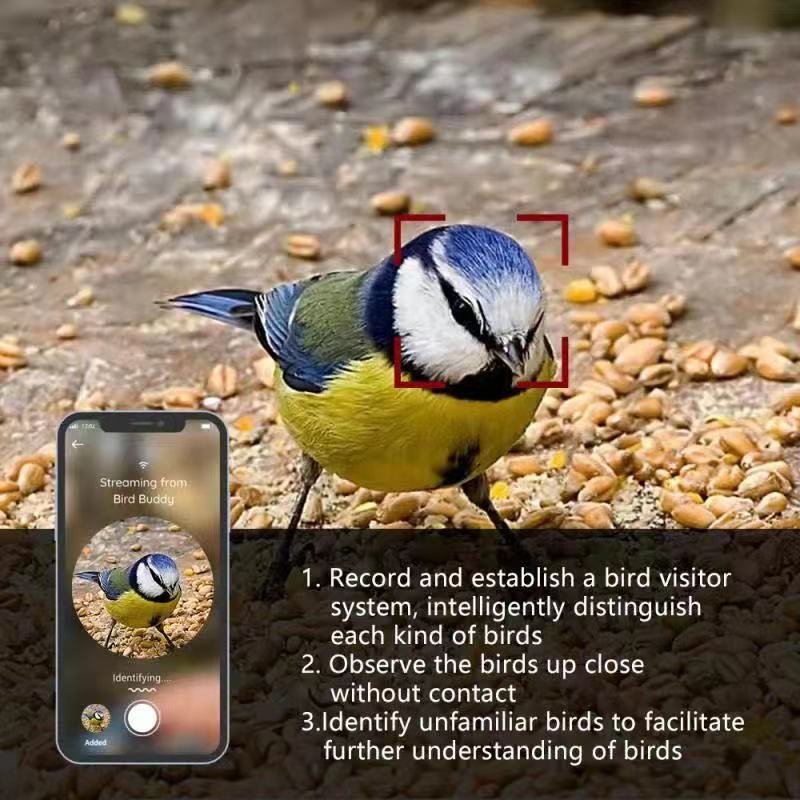
Across the United States, bird identification often starts with two clues: color and shape. A bright red body may suggest a Northern Cardinal, while a long neck and wide wings may point to a Great Blue Heron. Yet color alone can mislead you. Light, distance, season, age, and sex can all change a bird’s look.
The best method is to combine color, body shape, size, bill shape, wing pattern, behavior, habitat, and range. Start with the bird’s overall form. Then use color and markings to confirm or reject possible species.

Why Color and Shape Matter in Bird Identification
Color and shape work together because birds have both broad visual traits and fine markings. Shape helps you place a bird into a group. Color and pattern then help narrow the list.
For example, a bird with a short tail, round body, and thick bill may be a finch. A bird with a long pointed bill, upright posture, and long tail may belong to a different group. The exact color can then separate similar species.
Shape gives you the first clue
Look at the bird’s silhouette, or its outer shape. Try to study the bird before focusing on small marks.
Notice these features:
- Overall body size
- Body length and depth
- Head size
- Neck length
- Tail length and shape
- Wing shape
- Leg length
- Bill size and form
- Posture
A bird’s silhouette often stays useful when the light is poor. A dark bird against a bright sky may show no color, but its shape can still reveal whether it is a hawk, crow, duck, or shorebird.
Color confirms the first clue
After studying shape, check the bird’s main colors and patterns. Ask:
- Is the body mostly brown, gray, black, white, yellow, blue, or red?
- Is the back a different color from the belly?
- Does the bird have a wing bar?
- Is there a stripe through the eye?
- Does the tail show white edges?
- Is the throat plain, spotted, or streaked?
- Does the bill have one color or two?
Color patterns are often more useful than color names alone. “Brown bird” is broad. “Brown bird with a pale eyebrow, streaked chest, and dark tail” is much more useful.
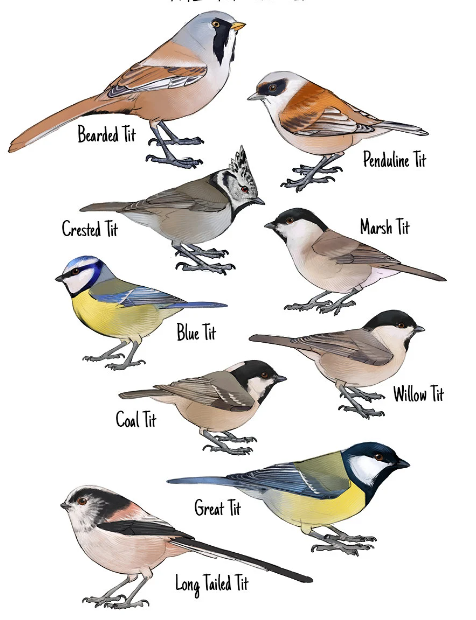
The Main Features to Check
Use the same feature order each time. A fixed process helps you avoid guesses based on one striking mark.
1. Start with size
Estimate size by comparing the bird with a familiar species. This is often easier than guessing inches.
Useful comparisons include:
- Smaller than a sparrow
- About the size of a sparrow
- Between a sparrow and a robin
- About the size of a robin
- Between a robin and a crow
- About the size of a crow
- Larger than a crow
Size estimates can fail when the bird is far away or viewed alone. Use size as a guide, not as proof.
2. Study the body shape
A bird’s body shape can suggest its family or feeding style.
| Shape or structure | Possible bird groups |
|---|---|
| Small, round body with a short neck | Chickadees, wrens, sparrows |
| Long, slim body with a long tail | mockingbirds, thrashers, some flycatchers |
| Broad body with a short tail | Doves, pigeons, some gallinules |
| Long neck and long legs | Herons, egrets, cranes |
| Compact body with a short neck | Ducks and many water birds |
| Strong hooked bill and broad wings | Hawks, eagles, falcons |
| Slim body with long pointed wings | Swallows, swifts, some terns |
| Small body with a long thin bill | Hummingbirds |
These are starting points. Many bird groups overlap in shape, so check more than one feature.
3. Examine the bill
The bill can tell you how a bird feeds.
- Short and cone-shaped: seed-eating birds such as finches and sparrows
- Short and pointed: insect-eating birds such as chickadees
- Long and straight: probing or water-feeding birds
- Long and curved: some nectar feeders and shorebirds
- Wide and flat: ducks
- Hooked: birds of prey
- Chisel-like: woodpeckers
Bill shape is especially helpful when two birds share similar body colors.
4. Check the tail
Tail length and shape can be strong field marks.
Look for:
- Long or short tail
- Square, rounded, or forked tip
- White outer feathers
- Dark center feathers
- Tail flicking
- Tail bobbing
- Tail held upright or down
A Northern Mockingbird, for example, often shows white patches in the wings and tail during flight. A Northern Flicker may reveal a bright underwing or tail color when it flies.
5. Look at the wings
When the bird is sitting still, search for:
- One or two wing bars
- White patches
- Pale edges on the feathers
- Dark wing tips
- Folded wing color
- Long or rounded wing shape
When the bird flies, note the wingbeat. Fast, shallow wingbeats differ from slow, deep wingbeats. A bird that glides often has a different shape from one that flaps nearly all the time.
6. Study the head pattern
Head markings can separate similar species. Look for:
- Eye ring
- Eyebrow stripe
- Eye line
- Crown color
- Cap or crest
- Cheek patch
- Throat patch
- Malar stripe, which is a line below the eye
A bird’s head pattern may remain clear even when the body is hidden by leaves.

How to Identify a Bird by Color
Color is useful, but you should treat it as a pattern rather than a single label. A bird may look blue, gray, or black because of shade, glare, or feather structure.
Use color blocks
Break the bird into simple areas:
- Crown
- Face
- Throat
- Back
- Wings
- Chest
- Belly
- Tail
- Bill and legs
Write down the strongest contrast. For example:
Gray back, orange chest, white eye ring, dark bill, and long tail.
This description is more useful than:
A colorful bird.
Watch for structural color
Some bird colors come from how light reflects from feathers. Blue feathers may look dull in shade and bright in direct sun. A bird that appears black may show blue, green, or purple highlights when it moves.
Do not reject a species because the color looks slightly different. Check the pattern and shape first.
Account for light and distance
The same bird can look different at sunrise, in deep shade, or against snow. Bright light can wash out pale colors. Backlighting can turn a bird into a silhouette.
If the view is poor, record only what you know:
- “Dark upper body”
- “Pale underside”
- “Light wing patch”
- “Warm color on the chest”
Avoid forcing an exact color when the light does not support it.

How to Identify a Bird by Shape
Shape is often the best tool when a bird is far away, moving fast, or seen in poor light.
Use the “shape first” method
Follow these steps:
- Watch the bird for several seconds. Note whether it sits, climbs, hops, swims, or flies.
- Estimate its size. Compare it with a known bird nearby.
- Study the silhouette. Check the neck, tail, wings, and body.
- Look at the bill. Decide if it is short, long, thick, thin, flat, or hooked.
- Check the legs. Long legs suggest a different group from short, hidden legs.
- Add the color pattern. Use color to narrow the choices.
- Check habitat and range. Ask whether the bird fits the place and season.
- Compare two or three likely species. Do not stop at the first match.
This process works for backyard birds, birds in city parks, and birds seen on U.S. beaches, wetlands, forests, and fields.
Learn common silhouettes
A few silhouettes are easy to remember:
- Hummingbird: tiny body, long narrow bill, fast wingbeats
- Woodpecker: stiff tail, straight bill, upright stance on a trunk
- Hawk: broad wings, short or medium tail, strong body
- Falcon: pointed wings, slim body, fast flight
- Crow: large dark body, broad wings, strong bill
- Heron: long neck, long legs, long pointed bill
- Gull: long wings, heavy body, short legs, thick bill
- Swallow: small body, long pointed wings, quick flight
- Owl: large head, short tail, upright posture
These descriptions do not identify every bird. They help you choose the right group before you study finer marks.

Color and Shape Examples From the United States
The following examples show how to combine clues. They are not a substitute for checking range, season, and behavior.
Northern Cardinal
A male Northern Cardinal is often recognized by its red body, black face mask, pointed crest, and thick orange-red bill. The female is mostly tan or warm brown with red accents, so a color-only search may miss her.
The bird’s crest and heavy cone-shaped bill are useful for both sexes. Cardinals often visit feeders and dense shrubs across much of the eastern and central United States.
American Robin
The American Robin has a round body, upright posture, orange or rust-colored breast, gray-brown back, and thin yellow bill. Its shape is often more reliable than the exact breast color.
Young birds can show spotted breasts and may not resemble adults. Robins also look darker in shade or when their feathers are wet.
Blue Jay
The Blue Jay has a large crest, broad body, strong bill, and blue, black, and white pattern. The blue color can look dull in poor light.
The black necklace across the throat and the white wing and tail markings are key clues. Its bold shape separates it from smaller blue birds such as the blue-gray gnatcatcher.
Mourning Dove
The Mourning Dove has a small head, plump body, long pointed tail, and soft gray-brown color. The dark spots on the wing and the long tail help separate it from many sparrows.
Its flight is fast and direct, with pointed wings. The tail often shows pale edges when the bird takes off.
American Goldfinch
The male American Goldfinch is bright yellow in breeding plumage, with black wings and a black forehead patch. In winter, both sexes look much duller and more olive-brown.
The short conical bill, pointed wings, and bouncy flight remain useful when the yellow color fades. Seasonal change is a major reason that color alone can fail.
Red-tailed Hawk
The Red-tailed Hawk is a large, broad-winged hawk. Adults often show a reddish tail, but the tail color may be hard to see from below or at a distance.
Look for the dark belly band, pale underside, broad wings, and stocky shape. Juveniles do not have the same red tail as adults, so shape and flight pattern matter more for young birds.
How Season, Age, Sex, and Molt Change Bird Color
Bird color is not fixed. The same species may look very different at different times of year.
Seasonal plumage
Many birds molt, or replace feathers, on a regular cycle. A male bird may show bright breeding colors in spring and summer, then appear duller in fall and winter.
Goldfinches are a clear U.S. example. A bright yellow male in summer may become a muted yellow-brown bird in winter.
Juvenile birds
Young birds often have:
- Duller colors
- Streaked breasts
- Shorter-looking tails
- Less clear head markings
- Different bills or eye colors
Do not assume that a bird is a different species because it lacks adult markings.
Female and male differences
Some species show strong sex differences. Others show little difference.
When using a field guide or app, check whether the image shows:
- Male
- Female
- Juvenile
- Breeding adult
- Nonbreeding adult
The bird’s shape may stay similar even when its colors change.
Feather wear
Old feathers can fade or fray. A worn bird may show pale edges or uneven color. This can make a normal bird look unusual.

Use Habitat and Range to Confirm the Identification
Color and shape should lead the process, but habitat and range can confirm it. A bird’s location does not prove its identity, yet it can rule out many unlikely choices.
Ask:
- Is the bird in a backyard, forest, field, marsh, lake, coast, or city?
- Is it on the ground, in a tree, on a fence, or in water?
- Is it present in this part of the United States?
- Is it expected during this season?
- Does it use the habitat in the way this species usually does?
For example, a long-legged bird in shallow water may be a heron or egret. A similar-sized bird in a dry grassland may belong to a very different group.
Use range maps from trusted sources such as the Cornell Lab of Ornithology, National Audubon Society, and the U.S. Fish & Wildlife Service. Range maps show likely areas, not strict borders. Birds migrate, wander, and sometimes appear outside their usual range.

A Simple Bird Identification Checklist
Use this field checklist when you see an unfamiliar bird:
| Feature | What to record |
|---|---|
| Size | Sparrow, robin, crow, or larger |
| Shape | Round, slim, heavy, long-necked, or compact |
| Bill | Short, thick, pointed, flat, or hooked |
| Tail | Long, short, forked, rounded, or white-edged |
| Wings | Broad, pointed, barred, or marked with white |
| Main colors | Back, chest, head, wings, and tail |
| Head marks | Eye ring, stripe, cap, crest, or throat patch |
| Behavior | Hops, walks, climbs, swims, hovers, or glides |
| Habitat | Yard, woods, marsh, shore, field, or city |
| Location and date | State, county, date, and season |
Take a quick photo if you can. Even a poor photo may show the bill, tail, wing bars, or head pattern.
If you use a bird identification app, treat its result as a suggestion. Compare the suggested species with a field guide and check the location, season, and behavior. Apps can confuse similar birds, especially when the photo is dark, distant, or partly blocked.

Common Bird Identification Mistakes
Mistake 1: Relying on one color
Many species share the same main color. Brown birds are common, but they may be sparrows, thrushes, wrens, juvenile birds, or female birds of brightly colored species.
Better approach: Use at least three clues, such as shape, bill, and head pattern.
Mistake 2: Ignoring females and young birds
A guide image may show a bright adult male while the bird in front of you is a female or juvenile.
Better approach: Check all plumages shown for the species.
Mistake 3: Confusing lighting with plumage
Shade can make a blue bird look black. Bright light can make a yellow bird look pale.
Better approach: Watch the bird move and look for stable patterns.
Mistake 4: Guessing from size alone
A faraway bird may look much larger or smaller than it is.
Better approach: Compare the bird with a known object or bird when possible.
Mistake 5: Ignoring behavior
A bird’s movement can be a strong clue. Woodpeckers climb trunks. Nuthatches often move headfirst down trees. Wrens may flick their tails and stay low in thick cover.
Better approach: Record what the bird does, not just what it looks like.
Mistake 6: Forgetting range and season
A species may look like a perfect match but be highly unlikely in that state or month.
Better approach: Check a current range map and seasonal status, then consider rare-but-possible sightings only after common options fail.

When a Bird Cannot Be Identified With Confidence
Some sightings do not contain enough information for a firm answer. That is normal. A dark shape in a tree may not show enough detail to separate two similar species.
Use an uncertainty label:
- Certain: Several strong marks match, and no major clue conflicts.
- Likely: The bird fits, but one key feature is hidden.
- Possible: The bird matches a few traits, but other species also fit.
- Unknown: The view is too poor to support a useful guess.
Write down what would settle the question. You may need a clear view of the tail, a recording of the call, a photo of the wing pattern, or the exact location.
Do not approach nests, roosts, or feeding birds to get a closer look. Keep a safe distance and follow local wildlife rules. Never handle a wild bird unless a licensed wildlife rehabilitator or qualified authority directs you to do so.

Best Tools for Bird Identification
A few simple tools can improve accuracy:
- Compact binoculars
- A regional bird field guide
- A phone camera
- A notebook or birding app
- A bird sound recording tool
- A local bird checklist
- A range map
Binoculars help you see marks without moving close to the bird. A field guide helps you compare similar species in the same region. A camera can preserve details that are easy to forget.
The Cornell Lab’s Merlin Bird ID app can help generate identification suggestions. The eBird platform can help you review species records and local checklists. These tools are useful aids, but they do not replace observation and careful comparison.

Key Takeaways
- Start with the bird’s overall shape before focusing on color.
- Use the bill, tail, wings, head marks, and posture as core clues.
- Treat color as a pattern, not a single label.
- Check age, sex, season, molt, and lighting.
- Use behavior, habitat, location, and date to confirm the match.
- Compare similar species instead of accepting the first possible result.
- Mark uncertain sightings as likely or possible when the evidence is weak.
FAQs
What is the easiest way to identify a bird by color?
Start by dividing the bird into color areas: head, back, wings, chest, belly, and tail. Then record special marks such as an eye ring, wing bar, black cap, or white tail edge. Combine those marks with shape and location.
Can bird color change during the year?
Yes. Birds may change color through seasonal molt, feather wear, age, or sex. Some males are bright during breeding season and duller during the rest of the year. Young birds may also have a different pattern from adults.
Is shape more reliable than color for bird identification?
Shape is often more reliable in poor light or at long distances. It can show the bird’s group even when color is hidden. Color and markings are still needed to separate many similar species.
How many clues do I need to identify a bird?
Try to confirm at least three independent clues. A useful set may include body shape, bill shape, and a head or wing pattern. Habitat, season, and range can add support.
What should I do if two bird species look alike?
Compare the features that differ most between them. Check the bill, tail, wing bars, eye markings, behavior, habitat, and range. If one feature is hidden, record the sighting as uncertain rather than forcing a final answer.
Conclusion
Bird identification by color and shape becomes easier when you follow a set order. Begin with size and silhouette. Add the bill, tail, wings, head pattern, and main colors. Then confirm the result with behavior, habitat, season, and U.S. range.
The next time you see an unfamiliar bird, do not ask only, “What color is it?” Ask, “What is its shape, how does it move, and which marks stay the same as it moves?” Those questions lead to better and more reliable identifications.