

Introduction
Swifts in the United States usually sound like high, rapid twittering, chattering, or dry clicking. Their calls are often heard as a busy stream of short notes rather than a clear melody. A flock may sound like a rush of tiny whistles above a city street, forest, or open canyon.
The exact sound depends on the species. Chimney Swifts give the call most Americans hear: a fast, high-pitched twitter. Vaux’s Swifts sound similar but often form large, noisy groups near chimneys during migration. White-throated Swifts have sharp, rapid calls in western canyons, while Black Swifts tend to give thinner, less obvious notes.
Swifts are easy to confuse with swallows because both birds fly quickly and catch insects in the air. Sound, flight style, habitat, and the season together offer the best clues.
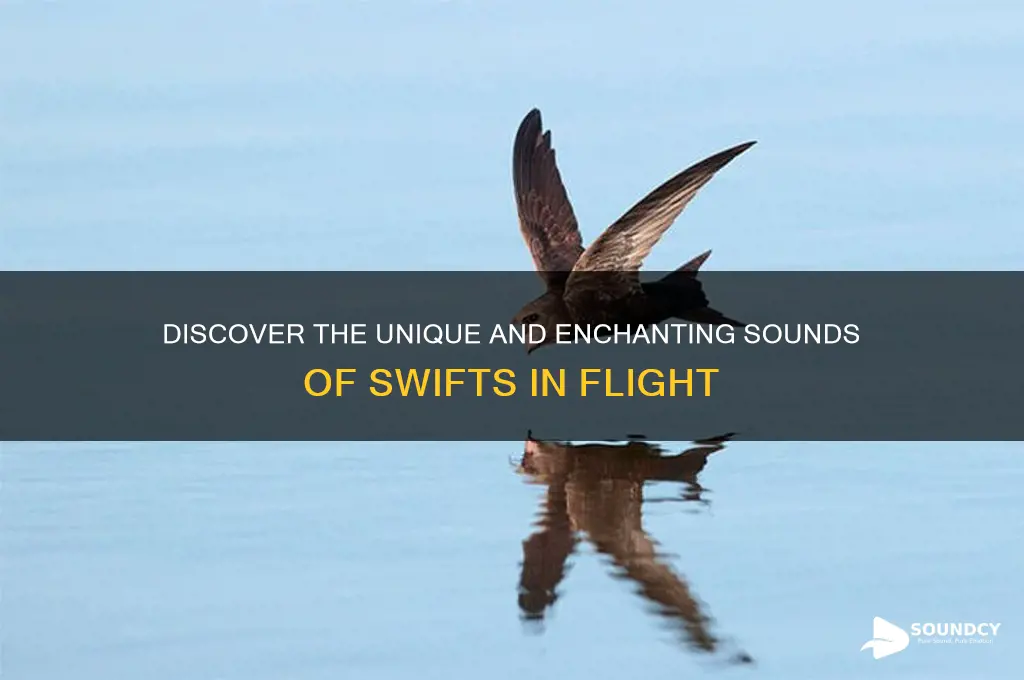
Quick answer: What does a swift sound like?
A swift sounds like a high-pitched, fast, rattling twitter. The call may include:
- Short, dry “tik” or “tchik” notes
- Rapid twittering phrases
- Thin, high whistles
- Quick chattering from a group
- A faint, scratchy sound during close flight
Swift calls often seem to come from high above you. The birds may circle, pass overhead, or vanish behind buildings before you can see them.
The sound is not usually a rich song like that of a thrush or mockingbird. Instead, it is a quick flight call that helps birds keep contact with one another.
What do Chimney Swifts sound like?
Chimney Swifts make a high, rapid twitter that rises and falls in short bursts. The sound is often described as a busy, chattering “tsee-tsee-tsee” or a dry, rolling twitter.
You may hear Chimney Swifts:
- Above towns and cities
- Near brick chimneys
- Over parks, lakes, and rivers
- At dawn or dusk
- During spring and fall migration
- Around nesting or roosting sites
A single bird may call as it flies. A group can sound much louder, especially when the birds circle above a chimney or gather before entering it.
The call may seem rough at close range, but distance changes the sound. From the ground, a flock often blends into one high, continuous stream. This can make the birds sound like a small group of distant insects or squeaky wheels.
How to identify the Chimney Swift sound
Listen for a call that is:
- High in pitch — often above the range of many common city birds.
- Very fast — notes follow one another with little space.
- Dry or scratchy — the call lacks a smooth, flute-like tone.
- Repeated during flight — the bird often calls while circling.
- Linked to chimneys — especially in eastern and central parts of the country.
The Cornell Lab of Ornithology describes the Chimney Swift’s voice as a fast, high-pitched twitter. Its species account and audio examples are useful references for comparing field recordings.

What do Vaux’s Swifts sound like?
Vaux’s Swifts give rapid, high twittering calls that resemble Chimney Swift calls. The two species can be difficult to separate by sound alone.
Vaux’s Swifts are found mainly in the western United States. During migration, large groups may gather around tall chimneys, especially in parts of the Pacific Northwest and along the West Coast. A large flock can create a dense, excited sound as birds circle and descend.
Their calls may seem:
- Thin and high
- Fast and continuous
- Slightly squeaky
- More noticeable when many birds call together
Sound alone is not a reliable way to tell Vaux’s Swifts from Chimney Swifts. Location, season, body shape, flight behavior, and roost site are also needed.
A large group dropping into a chimney at dusk is a strong clue, but it does not identify the species by itself. Vaux’s Swifts and Chimney Swifts both use chimneys as roosts.
What do White-throated Swifts sound like?
White-throated Swifts often make sharp, high calls that can sound like quick squeaks, chips, or twittering notes. Their calls are usually heard in open western landscapes.
Look and listen for them near:
- Steep cliffs
- Canyons
- Desert rock walls
- Mountain slopes
- Large bridges and similar structures
White-throated Swifts often fly in fast groups. Their calls may come in short bursts as birds chase one another or move along a cliff face. The sound can be easy to miss when wind, traffic, or rushing water is present.
Unlike a Chimney Swift over a city, a White-throated Swift may call against a wide, open background. The sound can seem more scattered because the flock covers a larger area.
To identify this species, combine the call with its bright white throat and belly, long pointed wings, and strong, fast flight. Do not rely on the call alone.

What do Black Swifts sound like?
Black Swifts are often quieter and less familiar by ear than Chimney Swifts. Their calls may include thin, high notes, short chips, and soft twittering.
Black Swifts breed in parts of the western United States, often near mountain waterfalls, wet cliffs, and remote rocky sites. They spend much of their time in flight and may be difficult to observe at close range.
Their vocalizations can be hard to hear because:
- The birds may fly far from the observer.
- Water and wind can cover the calls.
- The species often occurs in remote habitat.
- Calls may be short rather than continuous.
- A flock may pass quickly and disappear.
If you hear a swift near a waterfall or high mountain cliff, Black Swift is worth considering. Habitat is a major clue, but an audio recording or clear visual view is better than habitat alone.
Do swifts sing or call?
Swifts mostly produce calls, not long, varied songs like many perching birds. Their sounds help with contact, flock movement, courtship, and behavior around nests or roosts.
The terms “song” and “call” are useful but not absolute. Bird researchers often use “song” for a more complex vocal display and “call” for shorter sounds used in specific situations. Swift vocal behavior is usually described as twittering or calling.
A swift may sound different when it is:
- Flying alone
- Joining a flock
- Approaching a nest
- Entering a roost
- Calling near a mate
- Responding to nearby birds
These changes do not always produce a different species-level sound. They may reflect the bird’s behavior or the number of birds calling at once.

Swift sounds compared with swallows and bats
Many people mistake swift calls for swallow calls. The birds share some habitats, but their voices and flight patterns differ.
| Animal or bird | Typical sound | Flight clue | Common confusion |
|---|---|---|---|
| Chimney Swift | High, fast twitter | Stiff, rapid wingbeats; often circles high | Swallows |
| Vaux’s Swift | High twittering, especially in flocks | Large groups near chimneys | Chimney Swifts |
| White-throated Swift | Sharp, rapid squeaks or twitters | Fast groups near cliffs and canyons | Swallows |
| Barn Swallow | Cheerful, liquid twitter and chatter | Glides more often; forked tail | Chimney Swifts |
| Purple Martin | Chatter, gurgles, and warbling notes | Broad glides and open-air flight | Swifts |
| Bat | Clicks or chirps, often outside human hearing | Erratic movement near dusk | Swift calls |
Swifts versus swallows
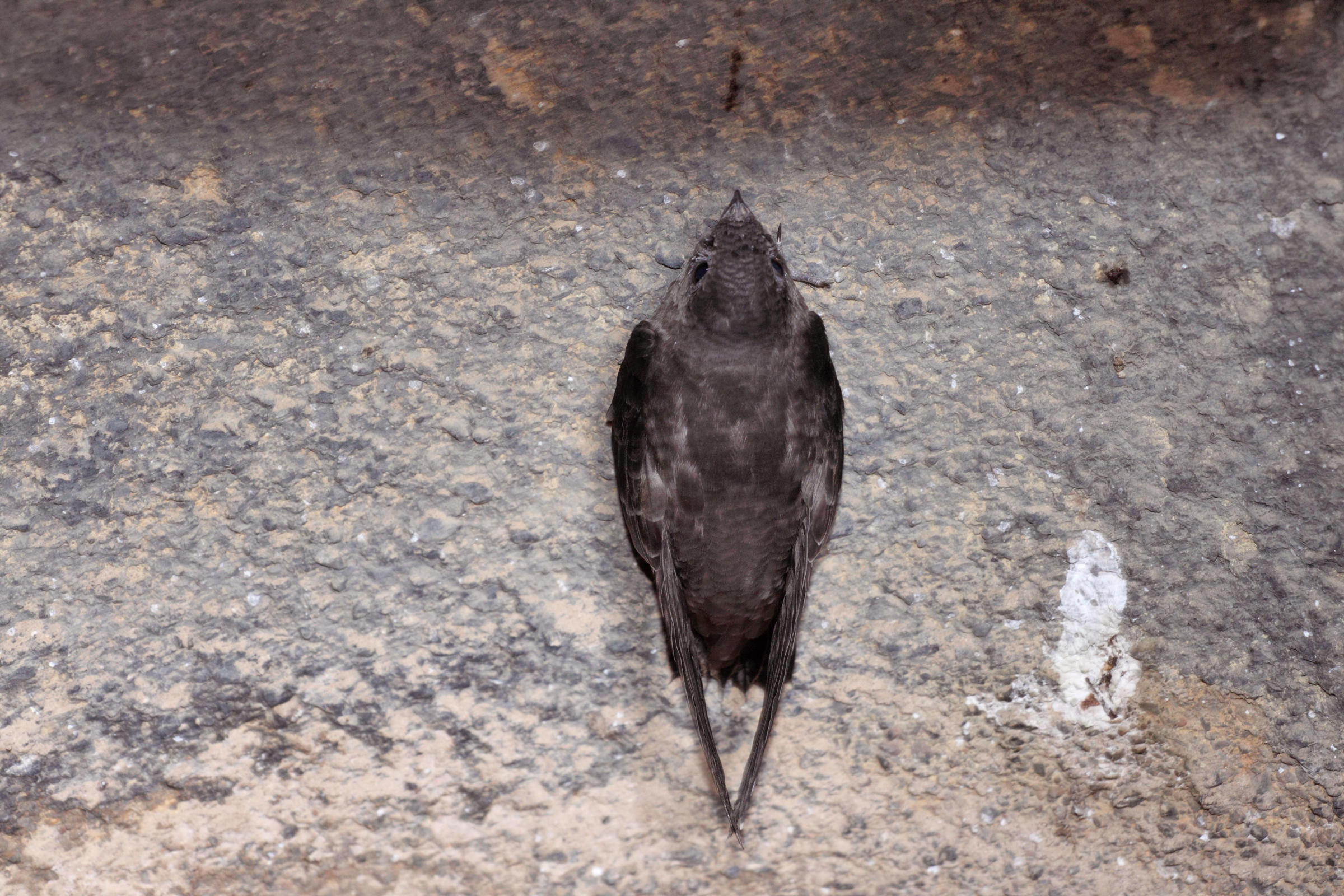
Swifts usually have stiffer, narrower wings and spend more time in continuous flight. Chimney Swifts also cling to vertical surfaces rather than perching on wires or branches.
Swallows often glide, turn smoothly, and perch in visible places. Their calls may sound more musical or conversational. Barn Swallows, for example, can produce soft twittering mixed with rattles and chatter.
A bird sitting on a wire is not a swift. Swifts are poorly suited to ordinary perching because their feet and legs are adapted for clinging to walls, chimneys, and other vertical surfaces.
Swifts versus bats
Bats may produce high-frequency echolocation calls that people cannot hear. Some bat social calls are audible, but they usually do not sound like the long, rapid twitter of a flying swift.
If the sound occurs in daylight and comes from a bird moving in wide circles overhead, a swift is more likely. At dusk, both bats and swifts may be active, so visual clues matter more.
When and where are swift calls easiest to hear?
The best time to hear swifts is when they are active and close enough for their calls to rise above background noise. This often means early morning, late afternoon, or the period before birds enter a roost.
Try listening:
- Near tall chimneys
- Beside lakes, rivers, and wetlands
- Under cliff walls
- Around bridges and old buildings
- In open parks below feeding flocks
- During spring and fall migration
Weather affects what you hear. Wind can spread or mask a call. Rain may reduce flight activity. Calm conditions make short, high notes easier to detect.
Urban noise also changes the experience. A swift may be calling normally, but traffic and construction can hide the softer parts of the sound. Moving even a short distance from a busy road can improve detection.
How to identify a swift by sound
Use sound as the first clue, then confirm it with place, flight, and appearance.
Step 1: Notice the pitch
Swift calls are usually high. If the sound is low, rich, or flute-like, another bird may be responsible.
Step 2: Check the rhythm
Swift calls are often rapid and tightly spaced. Listen for a steady twitter instead of a series of slow, separate whistles.
Step 3: Look overhead
Search the sky, not just nearby trees. Swifts often call while flying high above the ground.
Step 4: Watch the wingbeats
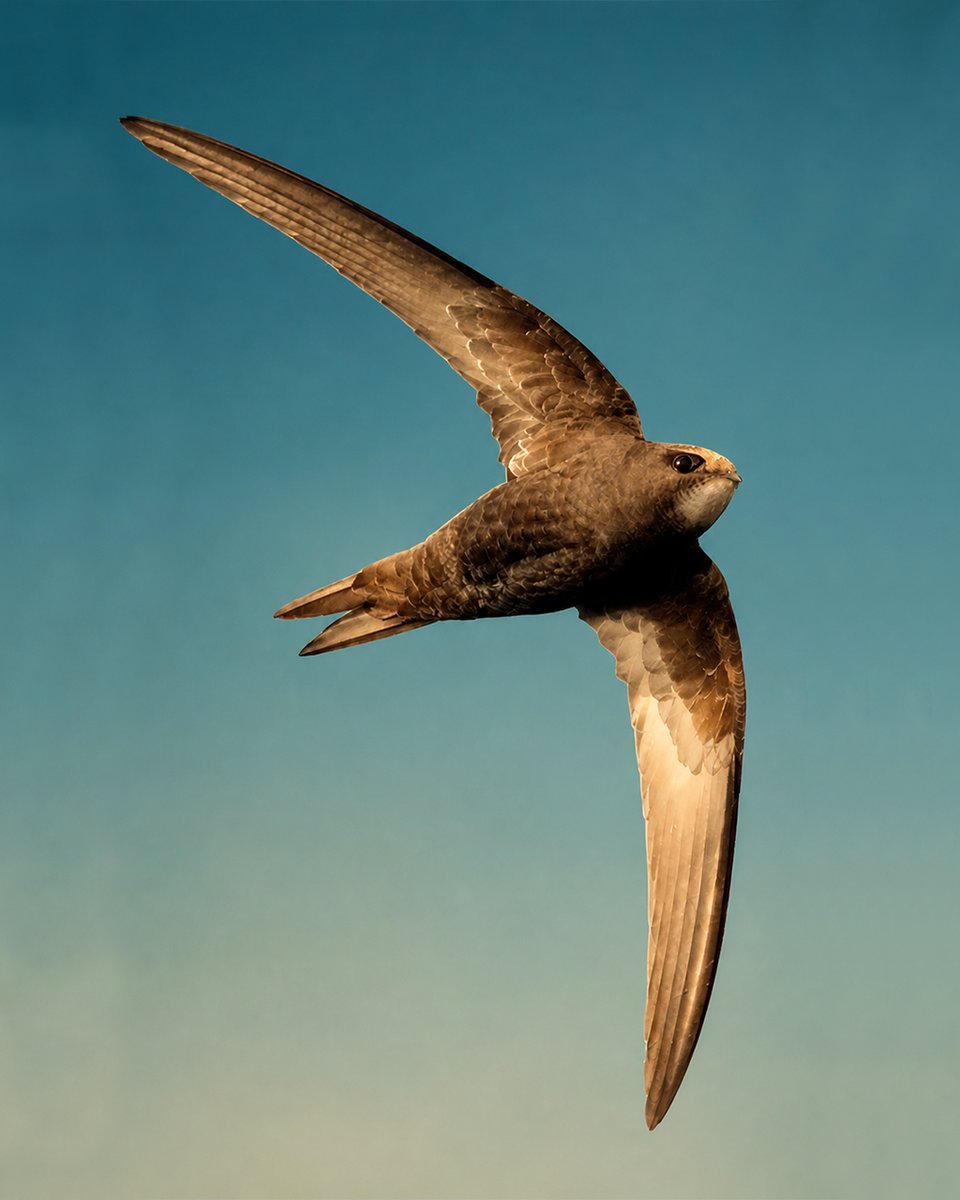
Chimney Swifts show quick, stiff wingbeats with short glides. They often look like dark, curved shapes moving rapidly through the sky.
Step 5: Check the habitat
A chimney in the eastern United States suggests Chimney Swift. A western canyon suggests White-throated Swift. A remote waterfall or wet cliff may suggest Black Swift.
Step 6: Record the sound
A short phone recording can help you compare the call later. Hold the phone toward the sound, reduce handling noise, and record for at least 20 to 30 seconds when possible.
Do not play a recording repeatedly near a nest or roost. Playback can disturb birds and may change their behavior.
A simple field comparison
The table below helps narrow the likely species. It is a guide, not a substitute for a confirmed identification.
| Likely species | Main U.S. range or habitat | Sound impression | Best supporting clue |
|---|---|---|---|
| Chimney Swift | Eastern, central, and parts of southern U.S.; towns and cities | Fast, high twitter | Birds circling chimneys |
| Vaux’s Swift | Western U.S.; migration routes and chimney roosts | Similar rapid twitter, often from large flocks | Large groups entering a chimney |
| White-throated Swift | Western cliffs, canyons, and open rocky areas | Sharp, high squeaks and twitters | White throat and cliff habitat |
| Black Swift | Western mountains, waterfalls, and wet cliffs | Thin, quiet, brief calls | Remote wet cliff or waterfall site |
Range can overlap or change with migration. A species that is common in one region may be rare or absent in another. For that reason, location and date should always be part of the identification record.
Common mistakes when identifying swift sounds
Mistaking a swallow for a swift
A high twitter does not automatically mean swift. Swallows also make fast calls while flying. Look for perching behavior, tail shape, and flight style.
Expecting one fixed call
A species can produce more than one call. Young birds, adults, pairs, and flocks may sound different. Distance also changes the sound.
Using habitat as proof
A chimney supports a Chimney Swift identification, but it does not prove one. Vaux’s Swifts also use chimneys. A canyon supports White-throated Swift, but other birds may call there too.
Trusting a poor recording
Wind, traffic, phone microphones, and echoes can remove key details. A recording may help, but it should not outweigh clear visual evidence.
Searching for a swift in trees
Swifts rarely sit on ordinary branches or utility wires. Scan the open sky and vertical structures instead.
Where to hear verified swift recordings
For reliable comparisons, use established bird-recording libraries rather than random short clips. Good starting points include:
Search for the exact species name, not only “swift.” Compare several recordings from the same species and note the region, behavior, and recording conditions.
A useful listening method is to compare one Chimney Swift recording with one Barn Swallow recording. The swift usually sounds faster, sharper, and less musical, while the swallow often has more varied notes and smoother phrasing.
Frequently asked questions
Are swift calls loud?
They can be. A single swift may sound faint when high overhead, but a flock can be loud and continuous. Chimney Swift roosts are especially noticeable when many birds gather near dusk.
Do swifts make a whistle?
Some swift calls may sound slightly whistled, but most are better described as high twittering, chattering, squeaking, or clicking. The sound is usually short and rapid rather than a long, pure whistle.
Can you hear swifts at night?
You may hear swifts near a roost around dusk, but they are mainly active during the day. A bird calling in complete darkness may be another species unless it is near a roost or disturbed site.
Do swifts sound like hummingbirds?
Both can make high sounds, but their calls are different. Hummingbirds often give short chips, squeaks, or wing sounds near flowers and feeders. Swifts produce rapid vocal twittering while flying in open air.
Why do swifts scream around chimneys?
The birds may be calling as they gather, compete for space, maintain contact, or prepare to enter a roost. A noisy group does not always indicate danger. Avoid blocking, sealing, or disturbing an active chimney roost without first checking local wildlife rules and obtaining qualified guidance.
Key takeaways
- Swifts usually sound like high, rapid twittering or chattering.
- Chimney Swifts are the most familiar swift in much of the United States.
- Vaux’s Swifts sound similar and may gather in large chimney roosts.
- White-throated Swifts often give sharp calls near western cliffs and canyons.
- Black Swifts may sound thinner and quieter near mountain waterfalls.
- Use sound with flight style, habitat, season, and appearance for a reliable identification.
- Compare recordings from trusted bird libraries, and avoid repeated playback near nests or roosts.
Conclusion
A swift usually sounds like a fast, high stream of twittering notes overhead. The Chimney Swift call is the best-known example in the United States, but Vaux’s, White-throated, and Black Swifts each add regional variation.
For the strongest identification, listen first, then look at the bird’s flight and habitat. A high, dry twitter above a chimney points toward a Chimney Swift or Vaux’s Swift. Sharp calls near a western cliff suggest a White-throated Swift, while a thin call near a remote waterfall may belong to a Black Swift.
1 thought on “What Do Swifts Sound Like: Calls And Songs”