

By the time your cat reaches their first birthday, they have officially transitioned from a growing kitten into a young adult. Properly managing how much to feed one year old cat is essential for maintaining their ideal weight and preventing long-term health issues like obesity.
Congratulations! Your furry companion has officially hit the one-year milestone. It is a big deal. Watching a kitten grow into a sleek, confident adult cat is one of the best parts of being a pet parent. However, this transition also means it is time to rethink the kitchen routine. You might find yourself searching for guidance on how much to feed one year old cat to ensure they stay in peak physical condition for years to come.
As of 2026, feline nutrition science emphasizes that this life stage is the most critical for setting the foundation for long-term health. While kittens need massive amounts of energy to support bone growth and muscle development, a one-year-old cat requires a more balanced approach.
Finding the right balance prevents the “middle-age spread” that often starts as early as age two or three. Let’s dive into everything you need to know about nourishing your young adult cat.
Key Takeaways
- Caloric Needs: A one-year-old cat typically needs between 200 to 250 calories per day, depending on activity level and weight.
- Transitioning Food: Always switch from kitten formula to adult maintenance food gradually over seven to ten days.
- Individual Variation: Not all cats are the same; factors like sterilization status, metabolism, and breed influence specific dietary requirements.
- Monitor Body Condition: Use a body condition score chart to ensure your cat remains lean and healthy rather than just relying on scale weight.
- Hydration Matters: Incorporate wet food into your cat’s diet to ensure they receive adequate moisture for kidney and urinary health.
- Avoid Free-Feeding: Scheduled meal times help you monitor appetite and prevent overeating, which is common with ad-lib feeding.
Understanding the Nutritional Transition
When a cat turns one, they are technically an adult in the eyes of veterinarians. Their rapid growth phase has ended, and their metabolism is beginning to stabilize. If you are still feeding them high-calorie kitten food, it is time to make a shift.
Continuing with kitten kibble can lead to unwanted weight gain, as these diets are packed with the fats and proteins necessary for a growing kitten but excessive for a sedentary adult.
Moving Away from Kitten Formulas
Kitten food is designed for density. It packs a punch in small bites. When you look at how much to feed one year old cat, you must account for the shift in nutrient density. Adult food is formulated to provide “maintenance” levels of nutrition.
It focuses on high-quality animal protein to keep muscles strong while carefully monitoring fat content to prevent obesity. Look for packaging that explicitly states “Adult Maintenance” to ensure your cat is getting the right profile for their current life stage.
The Gradual Shift Strategy
Cats are notoriously sensitive to dietary changes. If you swap their food overnight, you are likely to end up with a mess in your litter box or a cat that decides to go on a hunger strike. To transition safely, mix the old kitten food with the new adult formula over the course of ten days.
Start with 25 percent new food and 75 percent old, gradually increasing the ratio until they are eating 100 percent adult food. This method is the gentlest way to introduce the new menu.
Calculating Daily Caloric Intake
There is no “one size fits all” answer to how much to feed one year old cat. However, we can use science to get very close. On average, an indoor, neutered or spayed cat weighs about ten pounds. These cats typically require about 200 to 250 calories per day to maintain a healthy weight. If your cat is highly active or an outdoor explorer, they might need closer to 300 calories. If they are a “couch potato,” they might only need 180.
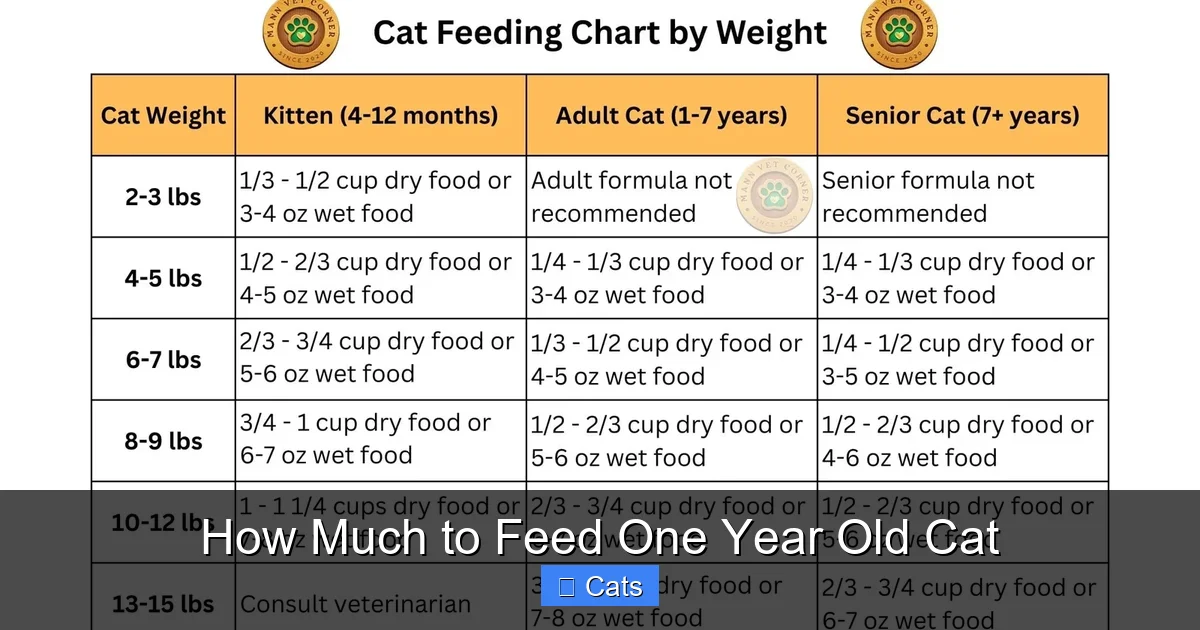
Visual guide about How Much to Feed One Year Old Cat
Image source: mannvetcorner.com
Reading the Label
Don’t just look at the serving suggestion on the back of the bag. Those numbers are often inflated to sell more product. Instead, look for the “kcal/cup” or “kcal/can” measurement on the label. This is your most valuable data point.
If your cat needs 220 calories a day and your food has 400 calories per cup, you know that your cat should get just over half a cup of food per day. Always use a standard measuring cup, not a random coffee mug, to maintain consistency.
The Role of Metabolism
Metabolism is affected heavily by spaying or neutering. These procedures are vital for pet health, but they do reduce a cat’s resting energy expenditure. Many owners notice their cat suddenly gains weight a few months after the procedure.
If you know your cat has recently been fixed, keep a closer eye on their waistline. If you notice they are starting to look a little “round” from above, reduce their daily ration by ten percent and see if the weight stabilizes over the next two weeks.
Wet Food Versus Dry Food
The debate between wet and dry food is a constant topic in 2026. Many experts advocate for a combination of both. Dry food is convenient and great for dental health if the kibble is formulated to clean teeth. However, wet food provides essential hydration. Cats have a low “thirst drive,” meaning they don’t naturally drink enough water to stay perfectly hydrated if they eat a diet consisting solely of dry food.
Hydration and Urinary Health
Feeding your one-year-old cat wet food is one of the best preventative measures for future urinary tract issues. Because wet food is about 75 to 80 percent water, it helps flush the kidneys and bladder naturally.
If you decide to feed only dry food, you must ensure your cat has access to multiple fresh water sources throughout the house. Some cats even prefer running water, so a fountain can be a fantastic investment to encourage better drinking habits.
The Balanced Approach
Most owners find success with a “mixed diet.” You might feed a small amount of high-quality dry food for breakfast and a portion of wet food for dinner. This gives your cat the variety they crave and provides the moisture they need. When figuring out how much to feed one year old cat using a mixed method, just add the calories from both meals together to ensure you don’t exceed the daily total recommended by your vet.
Establishing a Feeding Routine
Cats are creatures of habit. They love predictability. Free-feeding, where you leave a big bowl of food out all day, is a common cause of obesity. It is very hard to track exactly how much your cat is eating when they can graze 24/7. Moving to scheduled meals is much better for your cat’s health and helps you spot changes in appetite immediately.
Scheduled Meal Times
Aim for two to three meals per day. This mimics the natural hunting cycle of a feline, which involves small, frequent meals rather than one large “feast.” If you work long hours, an automatic feeder is a great tool for 2026. These devices allow you to set precise portion sizes that release at specific times, ensuring your cat stays on their diet even when you aren’t home.
The Problem with Grazing
If you have multiple pets, free-feeding becomes even more difficult to manage. One cat might be a “scoffer” who eats everything in sight, while the other is a “nibbler.” By feeding at set times, you can ensure each cat gets their fair share.
If you find your cat meowing constantly for more food, try to resist the urge to fill the bowl. Instead, distract them with a wand toy or a grooming session. Often, cats beg for food because they are bored, not because they are hungry.
Monitoring Your Cat’s Body Condition
Forget the scale for a moment. A number on a scale doesn’t tell the whole story. A big, muscular Maine Coon will weigh much more than a slender Siamese, yet both could be perfectly healthy. Instead of focusing on weight, learn how to perform a “Body Condition Score” assessment on your one-year-old cat. This is the industry standard for determining if your cat is at the right weight.
The Rib Cage Test
Gently run your hands along your cat’s sides. You should be able to feel their ribs without pressing hard, but you shouldn’t be able to see the ribs protruding. If the ribs are invisible and you can’t feel them at all, your cat is likely carrying too much weight. If the ribs are extremely sharp and visible, your cat might be underweight. From an overhead view, your cat should have a visible “waist” behind their ribs.
Consulting Your Veterinarian
At your one-year wellness checkup, ask your vet to show you how to assess your cat’s body condition. They can provide a personalized caloric goal based on your cat’s specific breed, build, and activity level.
If your cat is a purebred, there might be breed-specific nutritional needs that you should consider. Some breeds, like Ragdolls, are prone to slower metabolism, while others, like Bengals, are high-energy engines that need more fuel.
Treats and Extra Snacks
We all love to spoil our cats. But those little “extra” snacks can really add up. If you are learning how much to feed one year old cat, you must include treats in your total calorie count. Treats should never make up more than ten percent of your cat’s daily caloric intake. If you give too many treats, you are effectively diluting the balanced nutrition of their main meals.
Healthy Alternatives
Instead of processed, calorie-dense treats, try offering small pieces of plain, cooked chicken or a few steamed green beans. Many cats actually enjoy these healthy snacks. If you use dry food treats, try putting them inside a puzzle toy. This makes your cat “work” for the snack, providing mental stimulation and slowing down their eating speed, which prevents them from gulping their food.
The “Treat Tax”
If you find that you are frequently giving treats, subtract that amount from the next meal. If your cat is acting hungry but has already had their full daily allowance, try to substitute the treat for affection or playtime. A one-year-old cat has a lot of energy to burn. Redirecting that energy into play is much healthier than adding extra calories to their bowl. Your cat will appreciate the bonding time just as much as the snack.
Conclusion
Navigating the first year of your cat’s life is a journey, and mastering the art of feeding is a massive part of that success. By transitioning to adult maintenance food, calculating calories, prioritizing hydration, and keeping a close eye on their physical condition, you are giving your cat the best possible start to their adult years. Remember, consistency is your best friend.
Stay observant, communicate with your veterinarian, and remember that your cat’s needs might change slightly as they enter their prime years. With your careful attention to their diet, you can look forward to many years of purrs, play, and companionship. You are doing a great job, and your cat is lucky to have an owner who cares enough to ask these important questions.
Frequently Asked Questions
Should I feed my one-year-old cat once or twice a day?
Feeding twice daily is generally recommended to keep your cat’s metabolism steady and prevent hunger-related behavior. Some cats prefer three smaller meals, which can be easily managed with an automatic feeder or by dividing their total daily ration into smaller portions.
Can I keep my cat on kitten food after their first birthday?
It is generally not recommended as kitten food is significantly higher in calories and fat, which can lead to rapid weight gain in adult cats. Transitioning to an adult maintenance diet helps ensure they receive the correct balance of nutrients for their life stage.
How can I tell if my cat is gaining too much weight?
Use the body condition score: you should be able to feel their ribs easily under a thin layer of fat. If you cannot feel the ribs or notice their stomach starting to hang, it is a sign they are likely overweight and need a slight caloric reduction.
Is it okay to mix dry and wet food together?
Yes, mixing wet and dry food is a great way to ensure your cat gets extra hydration while still enjoying the crunch of kibble. Just ensure you calculate the total calories from both food types to avoid overfeeding.
What should I do if my cat refuses to eat the new adult food?
If your cat is being picky, try warming the wet food slightly or mixing in a very small amount of low-sodium tuna juice as a topper. Always ensure you are transitioning slowly over ten days to allow their palate to adjust to the new taste and texture.
How many treats are acceptable for a one-year-old cat?
Treats should account for no more than ten percent of your cat’s daily caloric intake. If you find yourself giving many treats, make sure to reduce their main meal portions accordingly to prevent unwanted weight gain.