
Across the United States, the bird most often linked to a soft, eerie trill at night is the Eastern Screech-Owl. Its call is not a musical trill like a songbird’s. It is a short, vibrating sound called a tremolo, and it may rise or fall in pitch.
The Western Screech-Owl makes a similar sound in the western United States. Other nighttime birds, including nightjars, mockingbirds, and some thrushes, can also make rapid or repeated sounds. The bird’s location, rhythm, pitch, and timing help narrow the answer.

The Eastern Screech-Owl is the most likely answer
The Eastern Screech-Owl (Megascops asio) is a small owl found across much of the eastern and central United States. It often calls from trees, woodlots, parks, suburbs, and neighborhoods after dark.
Its best-known call is a soft, rapid tremolo. To many listeners, it sounds like a long trill or a bouncing, wavering note. The call may last several seconds and can seem to fade in and out.
The Eastern Screech-Owl also makes a descending, horse-like sound called a whinny. It may give both calls during the same night.
According to the Cornell Lab of Ornithology, the Eastern Screech-Owl has several calls, including a tremolo and a whinny. The tremolo is often used between birds and can help pairs stay in contact.
How the Eastern Screech-Owl’s trill sounds
Listeners may describe the call as:
- A soft, trembling whistle
- A steady electronic buzz
- A wavering trill
- A bouncing musical note
- A high, thin sound that rises and falls
- A sound that seems to come from deep inside a tree line
The call is usually smoother and more continuous than the repeated “who-who” sound many people expect from an owl.
Where you may hear it
Eastern Screech-Owls live in much of the eastern half of the United States. Their range extends from the Great Lakes and New England south to Florida and west through parts of the Great Plains and Texas.
They often use:
- Tree cavities
- Old woodpecker holes
- Nest boxes
- Mature suburban trees
- Forest edges
- Open woodland near water
If you hear a soft trill from a wooded yard, especially near the eastern or central United States, an Eastern Screech-Owl should be high on your list.

The Western Screech-Owl can make a similar trill
In the western United States, the likely match may be the Western Screech-Owl (Megascops kennicottii). It occurs in parts of the Pacific states, the Southwest, the Great Basin, and nearby areas.
The Western Screech-Owl’s sounds can include a rapid series of notes, a bouncing call, and a soft tremolo-like sound. Its calls may overlap with those of the Eastern Screech-Owl, so location is one of the best clues.
A night sound heard in Arizona, California, Nevada, New Mexico, Oregon, Utah, Washington, or parts of western Texas is less likely to come from an Eastern Screech-Owl. The Western Screech-Owl or another western species may be a better fit.
The Western Screech-Owl often lives in:
- Desert washes
- Canyon woodlands
- Oak groves
- Riparian forests
- Suburban areas
- Open pine and mixed forests
It is small, nocturnal, and well camouflaged. You may hear one many times before you ever see it.

Other birds that may sound like a nighttime trill
A trill does not identify one species by itself. Several North American birds can create a similar impression, especially when distance, wind, or background noise changes the sound.
| Possible bird | Typical sound | Main clue |
|---|---|---|
| Eastern Screech-Owl | Soft, vibrating tremolo or descending whinny | Heard near wooded areas after dark |
| Western Screech-Owl | Bouncing notes, tremolo-like calls, and whistles | Found mainly in the western United States |
| Whip-poor-will | Repeated, clear “whip-poor-will” phrase | Loud, steady call in forest edges |
| Chuck-will’s-widow | Deep, rolling repeated phrase | Common in parts of the Southeast |
| Northern Mockingbird | Long series of copied sounds | Often sings from rooftops or trees |
| American Robin | Clear phrases, sometimes after dark | More common near lights or during migration |
| Hermit Thrush | Flute-like song, usually at dawn or dusk | More likely during migration or breeding season |
| Barred Owl | “Who cooks for you?” pattern | Strong rhythm rather than a true trill |
Whip-poor-will
The Eastern Whip-poor-will is a nightjar found mainly in the eastern United States. Its name comes from its loud, repeated call, which sounds like “whip-poor-will.”
At a distance, the final part of the call may blur into a rapid or trilling sound. However, a true whip-poor-will song usually has a clear three-part rhythm rather than one smooth vibration.
The related Mexican Whip-poor-will occurs in parts of the Southwest and Mexico. Its song can also create confusion when heard from far away.
Chuck-will’s-widow
The Chuck-will’s-widow is another nightjar. It is found mainly in the southeastern United States and parts of Texas.
Its song is deeper and more rolling than the Eastern Whip-poor-will’s call. It may sound like a repeated phrase rather than a short owl tremolo. The call can continue for long periods on warm nights.
Northern Mockingbird
A Northern Mockingbird may sing at night, especially in spring. It often sings near streetlights, porch lights, parking lots, and other bright places.
Unlike an owl, a mockingbird usually produces a changing stream of phrases. It may copy other birds, frogs, insects, alarms, or mechanical sounds. If the “trill” is part of a long and varied song, a mockingbird becomes more likely.
American Robin and other songbirds
American Robins sometimes sing at night in cities and suburbs. Artificial light, migration, and breeding activity may affect when they sing.
Some thrushes and sparrows can also sound active before dawn or after sunset. Their notes are often clearer and more melodic than an owl’s tremolo.

How to tell which bird you heard
Use five clues: sound shape, rhythm, pitch, location, and time. No single clue is always enough.
1. Listen to the sound shape
Ask whether the sound was:
- One smooth vibrating note
- A repeated phrase
- A series of different notes
- A whistle that dropped in pitch
- A harsh screech
- A deep, rhythmic call
A smooth, vibrating note points toward a screech-owl tremolo. A repeated “whip-poor-will” phrase points toward a nightjar. A long series of varied sounds suggests a mockingbird.
2. Count the rhythm
Try to describe the pattern:
- Continuous vibration: likely a screech-owl tremolo
- Three-part repeated phrase: possible whip-poor-will
- Deep rolling phrase: possible Chuck-will’s-widow
- Many changing phrases: possible mockingbird
- “Who cooks for you?” pattern: likely Barred Owl
You do not need formal birding skills. Tapping the rhythm with a finger can help you remember it.
3. Note the pitch
Eastern Screech-Owls often sound higher and thinner than Barred Owls. Chuck-will’s-widows usually sound deeper. Nightjar calls often carry well but may seem to come from the ground or a low tree.
Pitch can change with distance. A high call may sound lower through walls, closed windows, or dense foliage.
4. Consider your location
Bird ranges are useful filters.
- Northeast, Midwest, Southeast, or central Texas: Eastern Screech-Owl is possible.
- Pacific Coast, Southwest, Great Basin, or western Texas: Western Screech-Owl is more likely.
- Southeastern forests: Eastern Whip-poor-will or Chuck-will’s-widow may fit.
- Bright urban or suburban area: Northern Mockingbird or American Robin deserves consideration.
Range maps from the Cornell Lab of Ornithology and the National Audubon Society can help confirm whether a species occurs in your state.
5. Note when the call occurs
Most night calls occur between sunset and sunrise, but timing still matters.
- Early evening: owls and nightjars may begin calling.
- Late night: screech-owls, nightjars, and other nocturnal species may remain active.
- Before dawn: songbirds may begin their dawn chorus.
- During migration: normally quiet birds may call at night while flying.
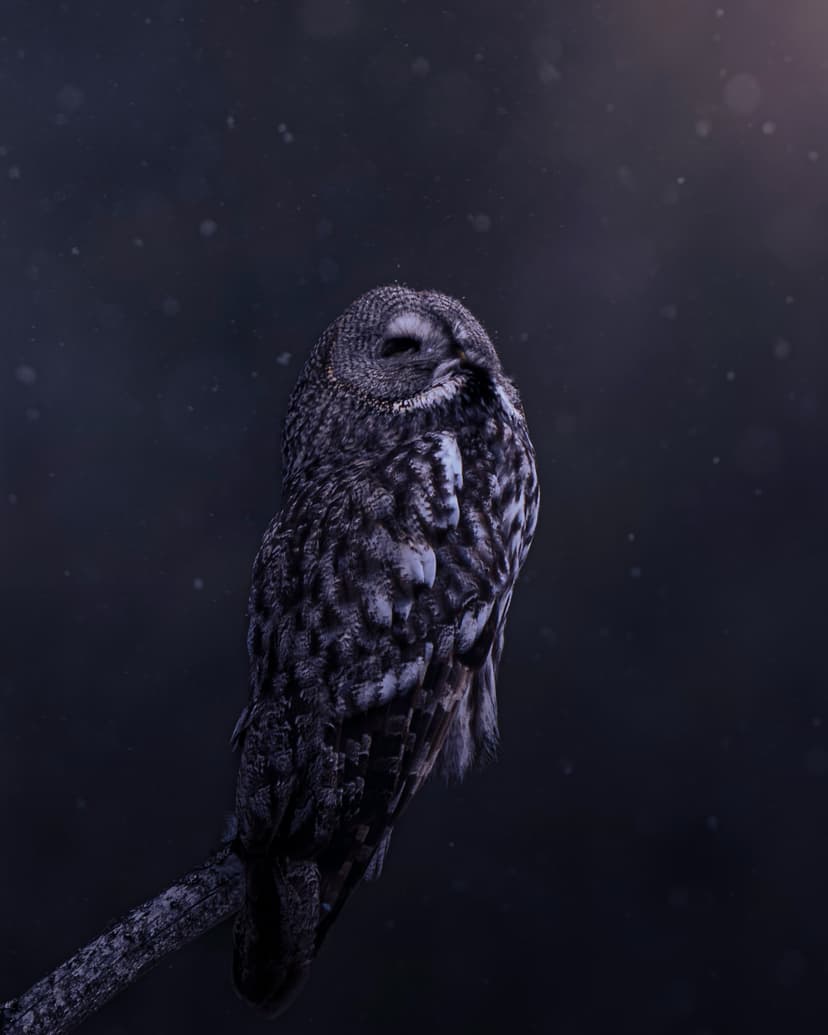
A simple night bird identification method
You can often identify the sound without seeing the bird.
Step 1: Record the sound safely
Use a phone from indoors, a porch, or another safe place. Do not walk through dark woods or approach an unknown animal.
Record at least 20 to 30 seconds if possible. A longer clip can reveal whether the sound repeats or changes.
Step 2: Write down the conditions
Record:
- State or region
- Date
- Approximate time
- Weather
- Habitat
- Whether the sound came from a tree, roof, ground, or open field
- Whether lights were nearby
These details help rule out species that do not live in the area or habitat.
Step 3: Compare the pattern, not just one note
One short sound can mislead you. Compare the full rhythm and spacing between calls.
For example, a screech-owl tremolo may sound like one sustained vibration. A whip-poor-will usually repeats a recognizable phrase at regular intervals.
Step 4: Use a trusted sound library
Useful identification sources include:
- Cornell Lab of Ornithology: Eastern Screech-Owl
- Cornell Lab of Ornithology: Western Screech-Owl
- Cornell Lab of Ornithology: Eastern Whip-poor-will
- Cornell Lab of Ornithology: Chuck-wills-widow
- Cornell Lab of Ornithology: Northern Mockingbird
- Merlin Bird ID
Sound recognition apps can suggest species, but treat the result as a lead rather than proof. Recordings may contain traffic, insects, echoes, and other birds that affect the result.

Why birds call at night
Birds call at night for several reasons. A male may attract a mate, a pair may stay in contact, or a bird may defend a territory.
Owls also use sound to communicate with mates and young. Their calls can travel through dark woods when visual signals are less useful.
Nightjars often call during the breeding season. Their open habitats and loud songs help them communicate over distance.
Some daytime birds sing at night because of artificial light or migration. A bright city can shift a bird’s normal schedule. A bird flying at night may also call while it travels.

Common mistakes when identifying a nighttime trill
Mistaking every owl sound for a hoot
Not all owls hoot. Screech-owls, Barn Owls, and other owl species use whistles, screams, hisses, barks, and tremolos.
The word “screech” can also mislead people. The Eastern Screech-Owl often does not sound like a loud human scream. Its tremolo may be soft and musical.
Calling every repeated sound a whip-poor-will
Whip-poor-wills have a distinctive phrase. A continuous vibrating note is more consistent with a screech-owl tremolo than with a whip-poor-will song.
Trusting a sound app without checking the range
An app may suggest a species that does not normally occur in your state. Always compare the result with a reliable range map and the habitat around you.
Assuming the bird is close
Sound can travel far at night. Cool, calm air may carry a call across a neighborhood or field. The bird may be farther away than it seems.
Playing calls to attract the bird
Repeated playback can disturb birds, especially during nesting season. It can also draw them toward roads, pets, or people. Passive listening and recording are better choices for casual identification.

Can a nighttime trill come from an insect or frog?
Yes. Crickets, katydids, tree frogs, and other animals can create sounds that resemble a bird trill.
Insects often produce a steady, mechanical buzz. Frogs may make short pulses or repeated calls near ponds, ditches, and wet ground.
A bird call usually has more structure. It may rise, fall, stop, and repeat at changing intervals. Still, an audio recording is the safest way to compare uncertain sounds.
If the sound continues without pauses for many minutes and seems to come from grass or shrubs, check insects before assuming it is a bird.
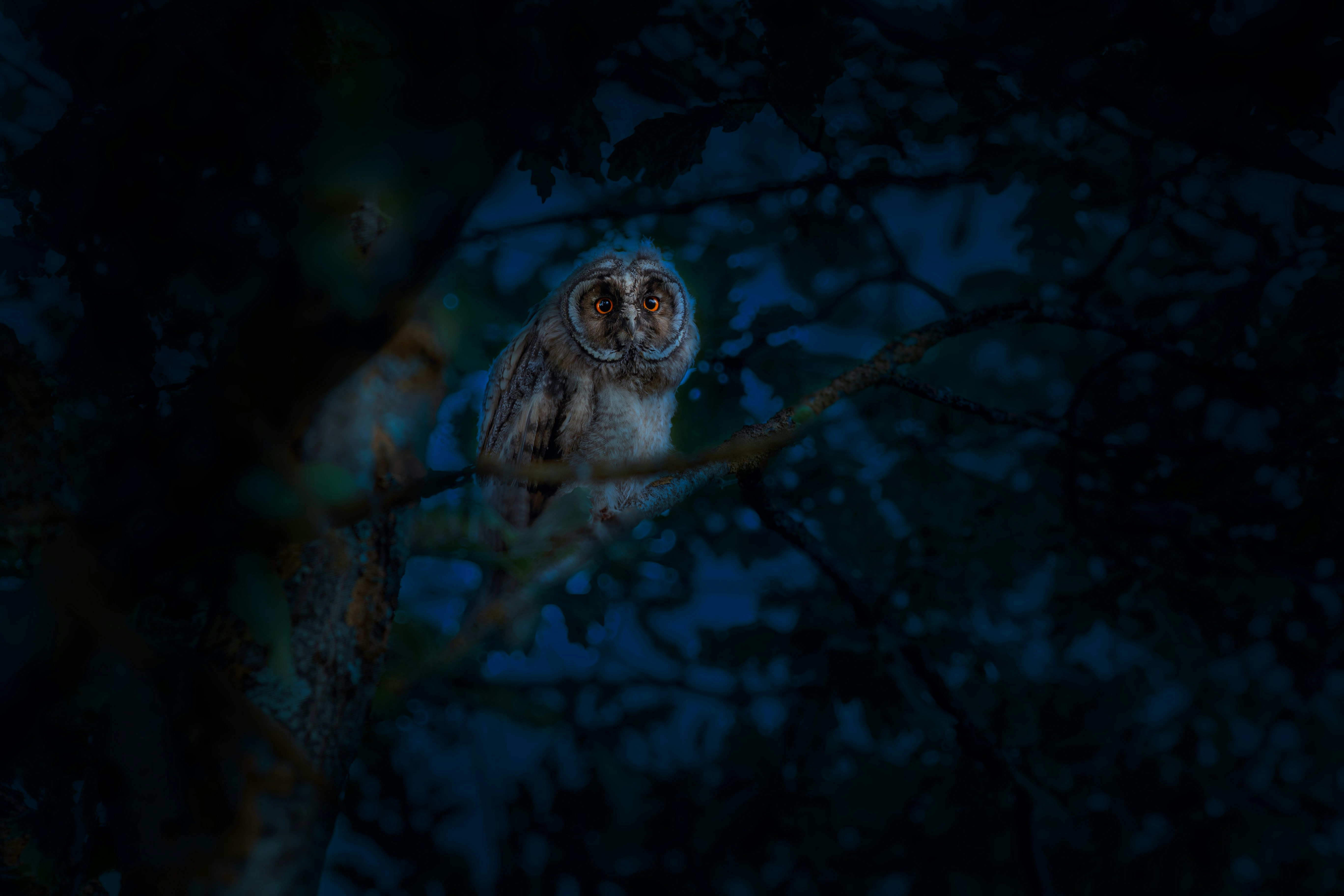
Key takeaways
- The Eastern Screech-Owl is the most likely source of a nighttime trill in much of the eastern and central United States.
- The Western Screech-Owl is a strong possibility in the western United States.
- A screech-owl’s “trill” is usually a vibrating tremolo, not a songbird-style trill.
- Whip-poor-wills and Chuck-will’s-widows make repeated night calls that can cause confusion.
- A long, varied song near artificial light may come from a Northern Mockingbird.
- Use the sound’s rhythm, pitch, habitat, location, and time to identify it.
- Record the call from a safe place, then compare it with trusted bird sound libraries.
Frequently asked questions
What bird makes a high-pitched trill at night?
A high-pitched nighttime trill may come from an Eastern Screech-Owl or Western Screech-Owl. A mockingbird or migrating songbird is also possible, especially near bright outdoor lights.
What owl sounds like a bird singing at night?
The Eastern Screech-Owl often sounds more musical than people expect. Its tremolo can resemble a soft bird song, while its descending whinny may sound like a short, wavering whistle.
Is a whip-poor-will the bird that trills at night?
It may be, but the sound usually has a repeated “whip-poor-will” rhythm. A smooth, sustained vibration is more likely to be a screech-owl tremolo.
What bird makes a trilling sound at night in Texas?
In eastern and central Texas, the Eastern Screech-Owl is possible. In western Texas, the Western Screech-Owl may fit better. Eastern Whip-poor-wills and Chuck-will’s-widows may also occur, depending on the habitat and season.
How can I identify a bird by its nighttime call?
Record the sound, note your location and habitat, and compare the full rhythm with reliable recordings. Use a bird identification app as a starting point, then confirm the result with a range map and sound library.
Conclusion
The best first answer to “what bird makes a trill sound at night?” is the Eastern Screech-Owl in the eastern and central United States, or the Western Screech-Owl in much of the West. Their tremolo calls can sound like soft, wavering trills from a hidden bird.
If the call has a clear repeated phrase, compare it with a whip-poor-will or Chuck-will’s-widow. If it is a long stream of changing sounds near lights, check for a Northern Mockingbird. A short recording, the bird’s location, and the rhythm of the call will usually provide the strongest clues.