
Animals that use warning calls include birds, primates, prairie dogs, ground squirrels, meerkats, whales, dolphins, and some social fish and insects. These sounds can alert nearby animals to predators, rival groups, or other dangers.
In the United States, common examples include blue jays calling when hawks approach, prairie dogs barking at coyotes, ground squirrels giving alarm calls, and crows warning others about threats. The exact sound and meaning depend on the species, the predator, and the animal’s social group.
Introduction
A warning call is a sound or signal that tells other animals that danger may be near. Scientists often use the terms alarm call, alert call, and warning call in similar ways, although the signal may also include body movements, smells, colors, or vibrations.
Warning calls help animals survive without requiring every member of a group to see the predator. One animal detects danger, and others gain time to hide, flee, freeze, mob the predator, or move their young.
The signal does not always mean, “A predator is here.” It may mean, “Look up,” “Run,” “Aerial danger,” “A snake is near,” or “A rival group is approaching.” Meaning depends on context, call type, and the behavior that follows.
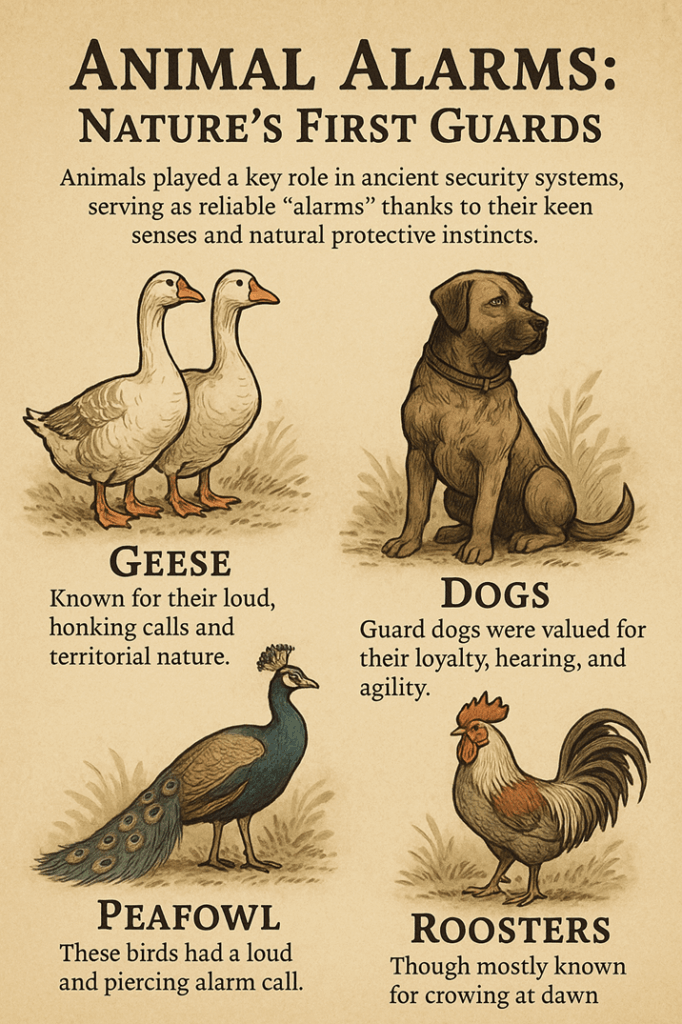
Which Animals Use Warning Calls?
Many social animals use warning calls because one animal’s discovery can protect the whole group. The best-known examples come from birds and mammals, but other animals also use alarm signals.
| Animal group | Examples | Common warning signal | Typical danger |
|---|---|---|---|
| Songbirds | Blue jays, chickadees, titmice | Sharp calls, mobbing calls, high-pitched notes | Hawks, owls, cats, snakes |
| Crows and ravens | American crows, common ravens | Harsh calls and group mobbing | Raptors, mammals, people |
| Primates | Vervet monkeys, macaques, baboons | different calls for different predators | Snakes, leopards, eagles, rivals |
| Prairie dogs | Black-tailed and Utah prairie dogs | Bark-like alarm calls | Coyotes, badgers, hawks, humans |
| Ground squirrels | California ground squirrels, Richardson’s ground squirrels | Whistles, chirps, or chatters | Coyotes, snakes, hawks |
| Meerkats | Meerkats in southern Africa | Sentinel calls and alarm calls | Eagles, jackals, snakes |
| Ungulates | Elk, deer, antelope | Snorts, whistles, foot stamps, or barks | Wolves, mountain lions, people |
| Marine mammals | Dolphins and some whales | Pulses, whistles, and group responses | Predators or social threats |
| Fish | Some schooling and reef fish | Pulses, knocks, or movement signals | Predatory fish |
| Insects | Honeybees and social wasps | Vibrations, sounds, pheromones, or attack behavior | Nest disturbance or predators |
Not every loud sound is a warning call. A bird may sing to defend a nesting area, and an elk may bugle to attract mates. A warning call has a direct connection to danger or a possible threat.
Birds
Birds are among the most familiar animals that use warning calls. A blue jay, for example, may give harsh calls when it spots a hawk or an owl. Other birds may respond by hiding, fleeing, or gathering around the predator.
Some birds also use different calls for different threats. Chickadees can change the structure of their alarm calls based on the type and danger level of a nearby predator. Small birds may also join together to mob a hawk or owl. Mobbing means several animals approach, call at, or harass a predator until it leaves.
The Cornell Lab of Ornithology explains that bird calls can carry information about alarm, contact, territory, and other social needs. A bird’s call is best understood alongside its posture, movement, and the behavior of nearby birds.
Primates
Primates often have complex alarm systems. Research on vervet monkeys found that the monkeys give different alarm calls for threats such as snakes, leopards, and large birds of prey. Group members respond in different ways: they may look toward the ground, climb into trees, or scan the sky.
This does not mean that every primate call works like a human word. The call’s meaning comes from the sound, the situation, and the listener’s response. Some calls may identify a broad threat type rather than name a specific predator.
Other primates, including baboons and macaques, use alarm calls, threat calls, and group calls. Their vocal systems can also help maintain contact when the group moves through forests or open land.
Prairie dogs and ground squirrels
Prairie dogs use short, sharp calls to alert colony members. A prairie dog may stand upright, watch for danger, then call when it sees a coyote, hawk, badger, or other threat.
Studies of prairie dog calls suggest that the calls can contain information about the type of predator and, in some conditions, features of the threat. However, claims that prairie dogs use a full human-like language go beyond what the evidence proves. Their calls are complex, but researchers still debate how much detailed information the calls encode.
Ground squirrels also use alarm calls. Some give a whistle when a hawk is nearby and use a different sound when a ground predator approaches. Young squirrels may learn part of this system by hearing adults and by experiencing threats themselves.
Crows and ravens
American crows are highly social and often warn one another about predators. If a crow finds a hawk, owl, raccoon, or human threat, it may call loudly. Other crows may arrive and mob the danger.
Crows can also remember individual human faces, as shown in research from the University of Washington. That finding does not mean every crow call is a warning about a person. It does show that crows can connect a perceived threat with a specific individual and change their behavior later.
Common ravens use calls for danger, food, group contact, and social conflict. Their large brains and flexible social behavior make their calls difficult to interpret from sound alone.
Deer, elk, and other hoofed mammals
White-tailed deer may snort, blow, stomp, or flag their tails when they detect danger. These actions can warn nearby deer, but they can also signal that the individual has noticed something unusual.
Elk may bark or give short alarm sounds when they detect predators or people. Their well-known bugle is mainly linked to the breeding season, so it should not be treated as a general warning call.
Many hoofed mammals also use body signals. A raised tail, sudden foot stamp, frozen posture, or rapid head movement may alert others without a loud call. In open habitats, visual signals can be safer than sound because they are less likely to attract a predator from far away.
Marine mammals
Dolphins and whales use many sounds for contact and social coordination. Some may use vocal signals when a predator is near, but researchers must separate a true warning call from normal group communication.
Dolphins may gather, change direction, swim tightly together, or confront a predator such as a shark. These behaviors can protect calves and weaker members of the group. Sound may be part of the response, but the full warning system includes movement and social cooperation.
How Do Warning Calls Work?
Warning calls work by changing the behavior of nearby animals. A call is useful when the listener responds in a way that improves its chance of survival.
A typical sequence looks like this:
- Detection: One animal notices a predator or unusual event.
- Assessment: The animal decides whether the threat is real and how close it may be.
- Signal: It gives a call, movement, smell, vibration, or another warning signal.
- Response: Other animals hide, flee, freeze, gather, or attack.
- Adjustment: The group changes its behavior as the danger moves or disappears.
The signal carries costs. A calling animal may reveal its location to the predator. It may also draw attention away from its young or reduce the time available to escape. For this reason, animals do not always call when they see danger.
Alarm calls can identify threat type
Some species use different calls for different predators. An aerial predator may trigger a high-pitched call and upward scanning. A snake may cause animals to look down or move back. A ground predator may lead to escape into trees, burrows, or dense cover.
This pattern is well documented in vervet monkeys and has also been observed in several bird and mammal species. Still, the level of detail varies. A call may identify a general threat category rather than provide a complete description.
Alarm calls can show urgency
Animals often change the rate, pitch, or intensity of a call when danger is closer. A nearby predator may produce faster calls or a stronger group response than a distant one.
The listener also uses other information:
- How close the predator is
- Whether it is moving
- Whether it has seen the group
- Whether young animals are present
- Whether escape cover is nearby
- Whether other animals are calling
A single sound rarely gives the full message. Context is part of the signal.
Some calls protect the caller
At first, warning another animal may seem costly. Yet the caller can benefit when it lives in a family group or colony. Relatives may survive, and the caller may gain protection when the group gathers.
A warning call can also confuse or discourage a predator. A group of crows mobbing a hawk may make an attack less likely. A prairie dog colony may become harder for a predator to approach when many animals watch and call.
Warning Calls Versus Other Animal Sounds
Not every animal sound is a warning call. Knowing the difference prevents common errors when identifying wildlife behavior.
Contact calls
Contact calls help animals stay connected. A bird may call to locate its mate or young. A dolphin may whistle to maintain contact with its group. These calls can happen when no predator is present.
Mating calls
Mating calls attract partners or compete with rivals. The elk bugle is a clear example. It can sound loud and urgent, but its main role is reproduction, not danger.
Territorial calls
Territorial calls tell other animals to stay away. Songbirds often sing to defend breeding areas. A territorial call may occur after a rival appears, but it is not the same as an alarm call.
Distress calls
A distress call signals that an animal is trapped, attacked, injured, or separated. It may attract help in some social species, but it may also attract predators. Distress calls and alarm calls can overlap, yet they serve different immediate purposes.
Warning signals without sound
Animals can warn others through:
- Tail movements
- Foot stamping
- Posture changes
- Color changes
- Chemical alarm signals
- Vibrations
- Sudden group movement
Honeybees are a useful example. They can use pheromones and body vibrations during nest defense. Calling this a “warning call” may be too narrow because the warning system is chemical and mechanical as well as acoustic.
Why Do Some Animals Stay Silent?
Animals may stay silent because calling can expose them to danger. A hidden mouse may freeze instead of calling. A bird near a nest may avoid a loud alarm if the sound could lead a predator toward its chicks.
Silence can also occur when:
- The animal is alone
- The threat is too close for a call to help
- Other animals have already detected the danger
- The animal cannot identify the threat
- The species relies more on scent or movement
- The predator hunts by following sound
Some animals use quiet signals when danger is near and loud signals when the threat is farther away. The best response depends on the habitat and the predator’s senses.
How to Recognize a Warning Call in the Wild
You can often identify a possible warning event by watching behavior, not just listening to sound.
Look for a combination of signs:
- Several animals suddenly stop normal activity.
- Birds give repeated harsh calls from trees or shrubs.
- Crows gather and fly at one larger bird.
- Prairie dogs or ground squirrels stand upright and call.
- Deer stamp their feet, snort, or stare in one direction.
- The same call spreads from one animal to another.
- The group moves toward cover or gathers around young animals.
Do not assume that every repeated call means a predator. Birds may react to a cat, a person, a vehicle, a nest dispute, or another bird. Wind, construction, and pets can also change animal behavior.
The safest approach is to observe from a distance. Do not approach a nest, burrow, den, or group of animals. A warning call may mean that you are already too close.

Common Misconceptions About Animal Warning Calls
“All animals warn one another”
Many animals use warning signals, but not all species cooperate in this way. Solitary animals may rely on hiding, camouflage, speed, or personal defense. A warning system is most useful when nearby animals can hear or see the signal and benefit from responding.
“A loud call always means danger”
Loud sounds can defend territory, attract mates, maintain contact, or express distress. Behavior and context matter more than volume.
“Animals use exact words like people”
Some calls carry specific information, but animal communication is not automatically the same as human language. Researchers must test what listeners do after hearing a call and whether the response changes with the situation.
“A warning call always helps the entire group”
The caller may warn relatives, mates, or nearby group members, but some listeners may ignore the signal. A predator may also learn that certain calls reveal prey locations.
“Birds stop calling when danger is gone”
Birds may continue calling after a predator leaves. They may be confirming its location, warning late-arriving group members, or responding to a lingering threat.
Frequently Asked Questions
What animal has the most advanced warning calls?
No single animal can be named as the clear winner. Vervet monkeys, prairie dogs, crows, ravens, and several bird species show complex alarm behavior. “Advanced” depends on whether you mean threat categories, individual recognition, social learning, or control of group behavior.
Do dogs use warning calls?
Yes. Dogs bark, growl, whine, or howl to alert people and other dogs. A bark can signal a stranger, another dog, fear, excitement, pain, or a territorial dispute. The sound alone does not identify the cause.
Do cats use warning calls?
Cats may hiss, growl, yowl, or spit when they perceive a threat. These sounds usually warn the threat itself rather than alerting a large social group. Domestic cats also use vocal signals to communicate with people.
Do snakes use warning calls?
Some snakes make warning sounds, but they do not use social alarm calls in the same way as prairie dogs or birds. Rattlesnakes use tail rattling as a defensive warning. Hissing can also warn a predator or person to keep away.
Can humans understand animal warning calls?
People can often recognize broad patterns, such as alarm, distress, or aggression. Exact meaning is harder to determine. Reliable interpretation requires knowledge of the species, habitat, call type, and behavior that follows.
Key Takeaways
- Birds, primates, prairie dogs, ground squirrels, crows, deer, and other animals use warning signals.
- A warning call alerts others to predators, rivals, or unusual danger.
- Some species use different calls for aerial, ground, or snake threats.
- Sound is only one part of animal communication; posture, movement, scent, and vibration can also warn others.
- A loud animal sound is not always an alarm call.
- The safest way to interpret a warning is to watch the whole group from a respectful distance.
Conclusion
Animals use warning calls when sharing information can improve survival. Birds may mob a hawk, prairie dogs may warn a colony about a coyote, and primates may give different calls for snakes, leopards, and eagles.
The meaning of a call depends on the species and the setting. To understand it, listen for the sound, watch the animal’s behavior, and look at how nearby animals respond. In the United States, that simple approach can help you recognize alarm behavior in backyards, parks, forests, grasslands, and coastal habitats without disturbing the animals.
2 thoughts on “What Animals Use Warning Calls: Animal Alarm Signals”