
Introduction
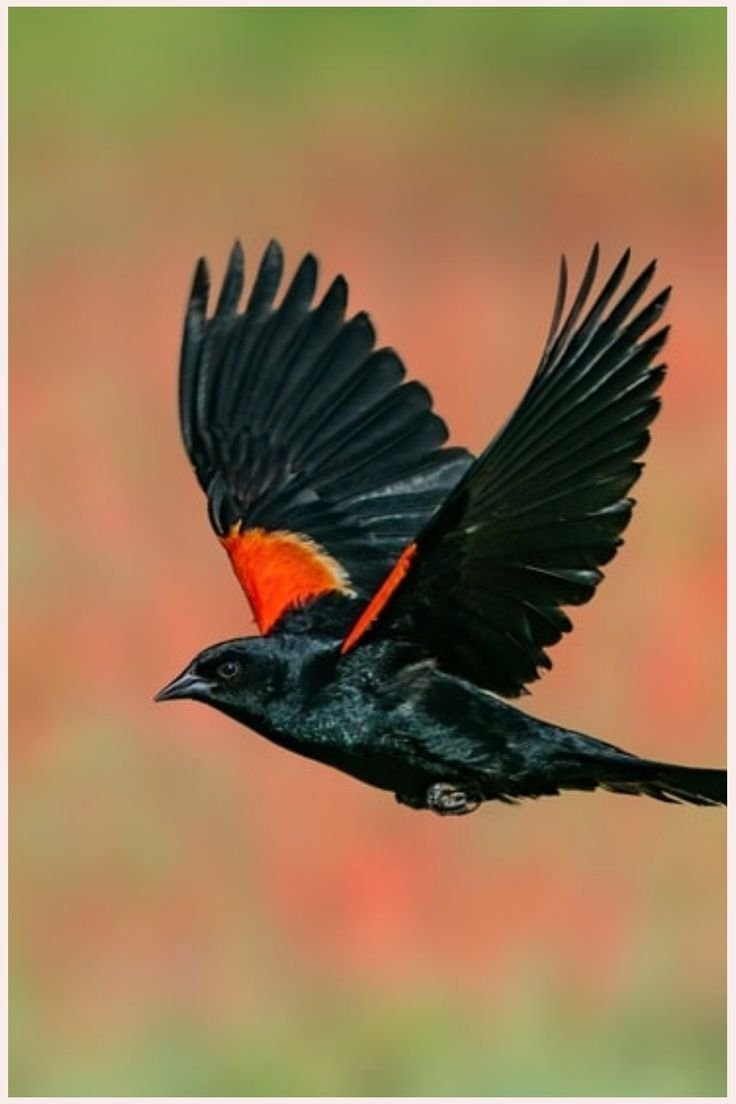
The American redstart is one of the best answers to “what bird has orange wings?” In the United States, the male has bright orange patches on his wings and tail. These patches flash as he moves through shrubs and trees.
Other U.S. birds may also look like they have orange wings. The Northern flicker shows orange underwings in flight, while the Baltimore oriole has orange-and-black wings. The right answer depends on the bird’s size, location, wing pattern, and behavior.

The Most Likely Answer: American Redstart
The American redstart is a small songbird with clear orange wing patches. It breeds across much of the United States and migrates through many states in spring and fall.
A male American redstart is mostly black. He has:
- Bright orange patches on the sides of the breast
- Orange patches in the wings
- Orange edges on the tail
- A slim body
- A fairly long tail
The orange patches often appear suddenly when the bird fans its wings or tail. This can make the bird seem to flash orange in a shaded woodland.
Female and young American redstarts look different. They are often gray, olive, or yellow rather than black. Their wing and tail patches may look yellow-orange instead of vivid orange.
Where American redstarts live
American redstarts use:
- Open forests
- Woodland edges
- Parks with thick shrubs
- Streamside trees
- Second-growth forests
They often hunt insects from low branches. The bird may flick its wings and tail before darting out to catch prey. This active movement is a useful clue.
How to tell a redstart from similar birds
Look for a small, fast bird that moves through leafy cover. If orange flashes from both the wings and tail, the American redstart is a strong match.
Do not rely on color alone. A bright flash may come from the underside of another bird’s wing. Shape, size, location, and behavior matter just as much.

Other U.S. Birds With Orange or Orange-Looking Wings
Several birds can fit this description. Use the table below as a quick guide.
| Bird | What looks orange | Best identification clue | Common U.S. setting |
|---|---|---|---|
| American redstart | Wing and tail patches | Small black male with orange flashes | Shrubby woods |
| Northern flicker | Underwings and undertail | Large woodpecker with a spotted belly | Yards, woods, open areas |
| Baltimore oriole | Orange body with black wings | Bright orange breast and black head | Trees near homes and parks |
| Bullock’s oriole | Orange body and wing markings | Orange face and black eye line | Western and central trees |
| Orchard oriole | Chestnut-orange body and dark wings | Smaller, darker oriole | Woodlands and river edges |
| Eastern bluebird | Orange breast, not orange wings | Blue back with rust-orange chest | Fields and open yards |
| Scarlet tanager | Red body with dark wings | Bright red male with black wings | Mature forests |
Northern Flicker
The Northern flicker is a large woodpecker. In the eastern United States, its flight feathers often show a warm yellow color. In the western United States, the same feathers tend to look orange or salmon-colored.
When a Northern flicker flies, the color can flash beneath the wings and tail. This is why someone may describe it as a bird with orange wings.
Other clues include:
- Brown, barred back
- Black spots on the belly
- A black crescent on the upper chest
- A white rump patch visible in flight
- Long, slightly curved bill
The Northern flicker often feeds on the ground. It searches for ants and other insects in lawns, open woods, and forest edges.
Baltimore Oriole
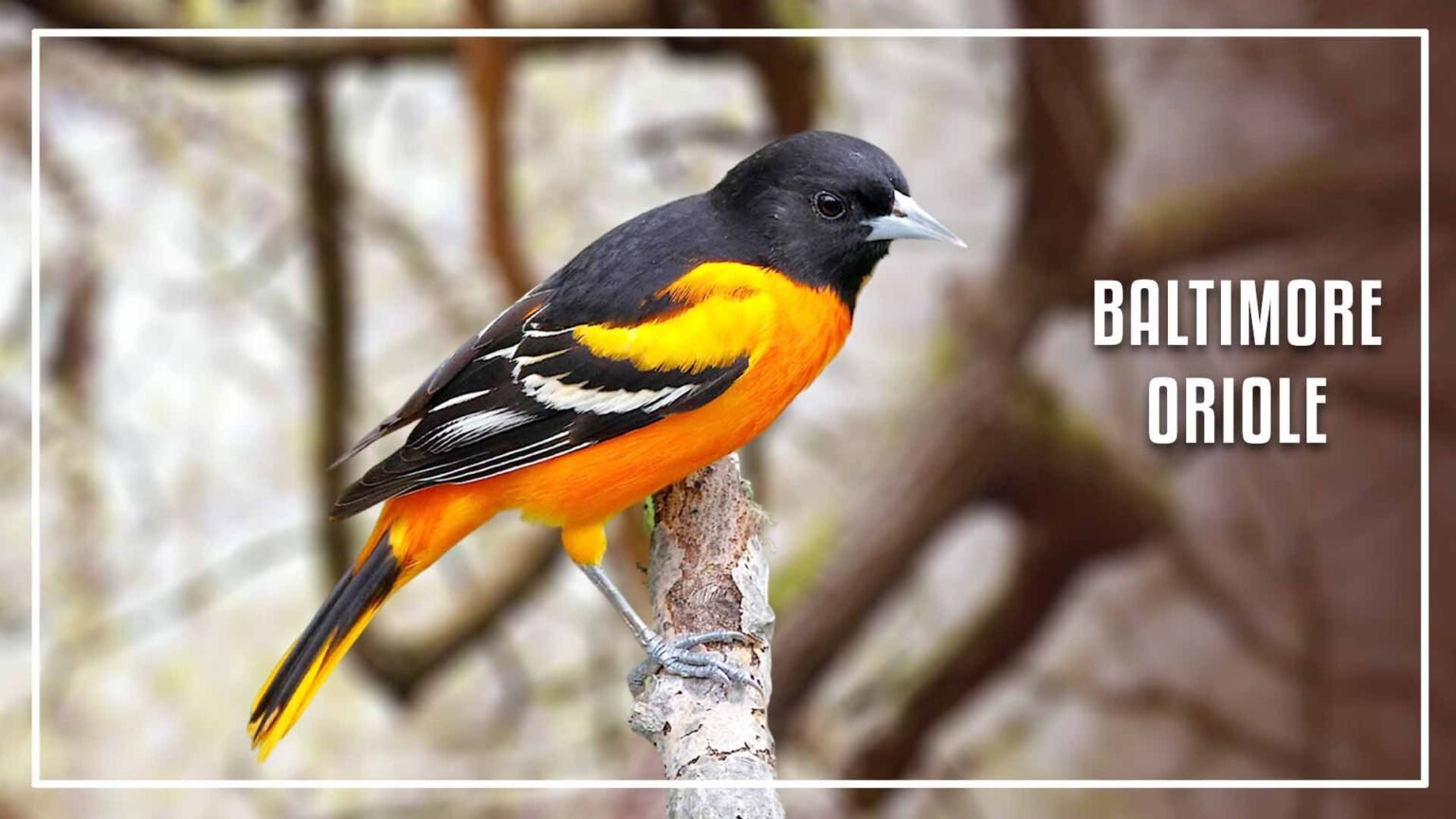
The Baltimore oriole has orange plumage on much of the body, but its wings are mainly black with white bars and orange edging. From a distance, the whole bird may look orange and black.
Adult males usually show:
- Orange underparts
- A black head
- Black wings
- White wing bars
- Orange patches on the shoulders and rump
Baltimore orioles spend much of their time high in trees. They may visit nectar feeders, fruit, or flowering plants during migration and summer.
Bullock’s Oriole
The Bullock’s oriole is common in much of the western United States. The male has orange underparts, a black throat, and black-and-white wings. His face often has a strong black eye line.
This bird favors:
- Open woodlands
- Cottonwood stands
- River corridors
- Parks
- Large shade trees
The wing itself is not fully orange. Instead, orange body feathers and bright wing edges create the impression of orange wings.
Orchard Oriole
The male Orchard oriole is smaller and darker than the Baltimore oriole. His lower body may look rich chestnut or burnt orange. The wings are dark, with pale edges.
This color can look orange in strong sunlight. Orchard orioles often occur near streams, woodland edges, and brushy areas.
Eastern Bluebird
The Eastern bluebird does not have orange wings. It has a blue back and rusty orange breast. However, people who see it briefly may mistake the orange breast for orange wing color.
The bird’s blue wings and back are usually clear when it perches in good light. It often sits on fence posts, low branches, and nest boxes near open fields.
Scarlet Tanager
The male Scarlet tanager has a vivid red body and black wings. In warm light, the red body may appear orange. The wings, however, remain dark.
This bird is most often found in mature forests. Its thick bill and steady movements help separate it from the smaller, more active American redstart.

How to Identify a Bird With Orange Wings
Start with the color, but do not stop there. The most reliable identification uses several traits at once.
1. Check where the orange appears
Ask whether the color is on:
- The upper wing
- The underside of the wing
- The shoulder
- The tail
- The breast
- The whole body
Orange underwings suggest a Northern flicker. Orange wing and tail patches suggest an American redstart. An orange breast with blue wings suggests an Eastern bluebird.
2. Estimate the bird’s size
Size is often more useful than color.
- Sparrow-sized: American redstart
- Robin-sized: Baltimore oriole or Eastern bluebird
- Larger woodpecker-sized: Northern flicker
- Robin-sized forest songbird: Scarlet tanager
If the bird is much larger than a sparrow, an American redstart becomes less likely.
3. Look at the shape
Notice the bill, tail, and body.
- A long, pointed bill may suggest an oriole.
- A strong, slightly curved bill may suggest a Northern flicker.
- A thin bill and long tail fit an American redstart.
- A short, straight bill fits an Eastern bluebird.
4. Watch the behavior
Behavior can provide a strong clue.
An American redstart often flicks its wings and tail. A Northern flicker may forage on the ground or climb a tree trunk. Orioles usually stay high in trees and move among leaves and flowers.
5. Consider the region
Range changes the likely answer.
- Eastern and central forests: American redstart, Baltimore oriole, Northern flicker
- Western woodlands: Bullock’s oriole, Northern flicker, American redstart during migration
- Open fields and yards: Eastern bluebird
- Mature forests: Scarlet tanager
Range alone cannot prove an identification. Birds migrate, and some species may appear outside their usual breeding areas.

Orange Wings Seen in Flight: The Best Clues
A brief orange flash is hard to identify, but the flight pattern can help.
If the bird rises from the ground and shows orange or yellow beneath the wings, check for a Northern flicker. Its white rump patch may also stand out as it flies away.
If the bird darts between shrubs and repeatedly flashes orange on its wings and tail, check for an American redstart. Its quick, restless movements are often more useful than the color.
If the bird flies from a tall tree and looks orange and black overall, check for a Baltimore oriole or Bullock’s oriole. Look for a pointed bill and long body.
Lighting can change the color. Yellow may look orange in shade, and red may look orange in bright sun. Try to observe the bird more than once before deciding.

Male, Female, and Juvenile Birds Can Look Different
Sex and age may change the answer. A male and female of the same species may not share the same orange pattern.
American redstart
The male is black with orange patches. The female is mostly yellow-olive and gray, with pale yellow patches.
Baltimore oriole
The adult male is bright orange and black. The female is usually yellowish or olive-brown, with darker wings.
Bullock’s oriole
The male has strong orange and black markings. The female is more muted and may look yellow-gray.
Northern flicker
Males and females share the main brown, spotted pattern. Males have an extra cheek mark. The underwing color can vary by region.
This difference matters when using bird guides. A photo of an adult male may not match a female or immature bird in your yard.

Orange Versus Yellow, Red, and Rust: Avoiding Common Mistakes
Color names are not fixed in the field. A bird may look orange because of light, distance, or motion.
Common mix-ups include:
- Yellow underwings: A Northern flicker in the eastern United States may look yellow rather than orange.
- Red plumage: A Scarlet tanager can look orange in strong light.
- Rust-colored breast: An Eastern bluebird has an orange breast, not orange wings.
- Orange body: An oriole may look like it has orange wings even when the wings are mostly black.
- Brown or chestnut feathers: An Orchard oriole may appear orange at close range.
Use a photo when possible. A clear image of the wing, tail, head, and underside is more useful than a description of color alone.

A Simple Field Checklist
Use this checklist when you see a bird with orange wings in the United States:
- Where was the orange? Wing, underside, shoulder, tail, or breast?
- How large was the bird? Sparrow, robin, or larger?
- What color was the head? Black, blue, gray, brown, or orange?
- Did it flick its wings or tail?
- Did it feed on the ground or stay in the trees?
- Was there a white rump patch?
- Was the bird in the East, West, or central United States?
- Did the color appear only during flight?
A small black bird with orange wing and tail patches is likely an American redstart. A larger bird with orange underwings and a spotted belly is more likely a Northern flicker.
Frequently Asked Questions
What is the small black bird with orange wings?
It is most likely a male American redstart. The species has orange patches on the wings and tail, plus orange areas on the sides of the breast.
What bird has orange under its wings?
The Northern flicker has orange or yellow underwings, depending on the bird’s regional form. Eastern birds often show yellow, while western birds often show orange or salmon tones.
Do Baltimore orioles have orange wings?
Baltimore orioles have orange bodies and mostly black wings with white bars and orange edging. Their overall orange-and-black pattern can make the wings appear orange from a distance.
What bird has blue wings and an orange breast?
The Eastern bluebird has blue wings and back with a rusty orange breast. Its wings are not orange, but the breast is easy to see when the bird perches in an open area.
Why does the same bird look yellow in one photo and orange in another?
Light, shadow, camera settings, feather wear, and viewing angle can change color. Regional differences also matter, especially in Northern flickers. Look at the bird’s shape and markings along with its color.
Key Takeaways
- The American redstart is the strongest match for a small U.S. bird with orange wing patches.
- The Northern flicker shows orange or yellow underwings in flight.
- Orioles have orange bodies with dark wings and may look orange from far away.
- Eastern bluebirds have orange breasts, not orange wings.
- Size, wing location, behavior, and region are more reliable than color alone.
Conclusion
When someone asks what bird has orange wings, start with the American redstart. It is small, active, and known for bright orange flashes in its wings and tail.
If the bird is larger and shows orange beneath the wings, consider a Northern flicker. If it is orange and black high in a tree, check for a Baltimore oriole or Bullock’s oriole. A photo, location, and note about the bird’s behavior can turn a quick color clue into a reliable identification.
For further comparison, use regional field guides from Cornell Lab of Ornithology, Audubon, and the U.S. Fish & Wildlife Service.