
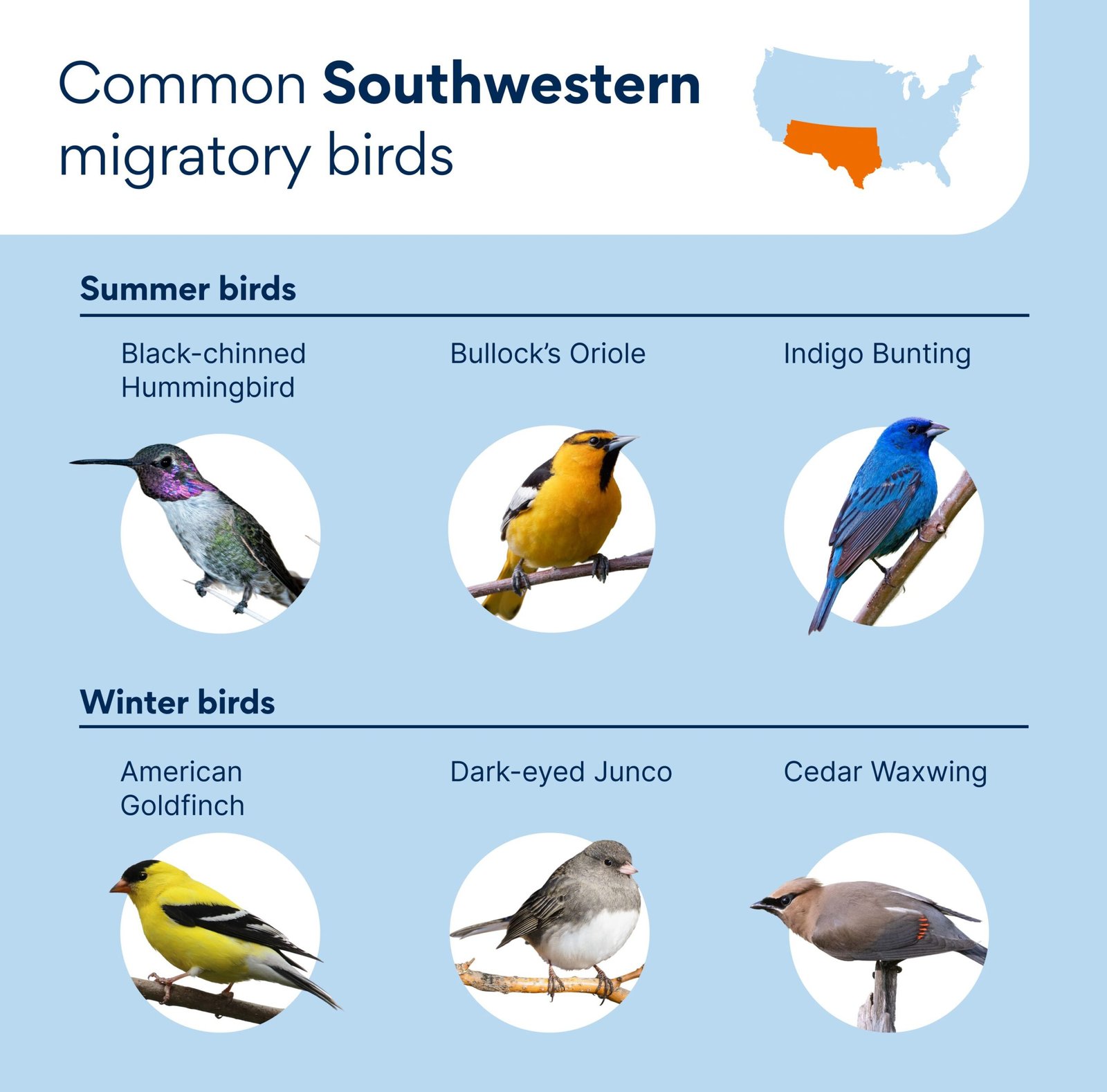
In the United States, most birds migrate south between August and November. The peak months are usually September and October, when many warblers, vireos, flycatchers, shorebirds, and other summer birds leave their breeding grounds.
The exact month depends on the species, weather, food supply, age, and location. Some birds start moving in July. Others, such as many ducks, geese, and finches, may remain in the northern United States until November or later.

When Do Birds Migrate South in the United States?
Most fall migration in the United States occurs from late summer through mid-fall.
| Time of year | What often happens |
|---|---|
| July | Some shorebirds and early-moving songbirds begin southward travel. |
| August | Many shorebirds, swallows, hummingbirds, and insect-eating birds move south. |
| September | Migration becomes strong across much of the United States. Many songbirds pass through. |
| October | This is often the busiest month for songbird migration, raptor movement, and visible bird activity. |
| November | Waterfowl, finches, sparrows, and late-migrating birds continue south. |
| December to February | Most fall migration has ended, but some species still move during winter or after cold snaps. |
For many people in the United States, October is the best single answer to the question, “What month do birds migrate south?” However, September may be better for viewing small songbirds in the Northeast and Midwest, while November can be better for ducks and geese in many regions.
Bird migration is not one event that happens on one date. It is a long wave of movement that passes through different areas at different times.
Why Do Birds Migrate South?
Birds migrate south because winter changes the balance of food, shelter, and survival.
In the northern United States and Canada, insects become scarce in cold weather. Plants stop producing seeds and fruit. Shorter days also reduce the time birds have to find food. Moving south can give birds access to insects, berries, seeds, nectar, or open water.
The journey also helps birds return to areas where they can survive through winter. Many birds that breed in the United States spend the colder months in the southern United States, Mexico, Central America, the Caribbean, or South America.
The main triggers of fall migration
Birds use several signals before migration begins:
- Day length: Shorter days help set seasonal changes in hormones and behavior.
- Weather: Cold fronts and north winds can encourage birds to depart.
- Food supply: A drop in insects, fruit, or seeds can push birds to move.
- Body condition: Birds build fat reserves before a long trip.
- Genetics: Many species inherit an internal migration program.
- Landmarks and navigation: Birds use stars, the sun, Earth’s magnetic field, smells, and landscape features.
A strong cold front can cause a sudden movement of birds. Birders often call this a fallout when large numbers of migrants stop in one area after crossing difficult conditions.
Migration is not always a straight trip. Birds may pause for days or weeks if they find good food. They may also turn back, change route, or wait for safer winds.

Which Birds Migrate South, and When?
Different bird groups follow different migration schedules. The table below gives broad patterns for the United States.
| Bird group | Common southbound period | Typical winter range |
|---|---|---|
| Warblers and vireos | August to October | Southern United States, Mexico, the Caribbean, or Central and South America |
| Flycatchers | August to September | Southern United States, Mexico, and Central America |
| Swallows | August to October | Southern United States, Mexico, and South America |
| Hummingbirds | August to October | Southern United States, Mexico, and Central America |
| Shorebirds | July to October | Southern coasts, Mexico, Central America, and South America |
| Raptors | September to November | Southern United States, Mexico, Central America, and South America |
| Ducks and geese | September to December | Southern United States and Mexico |
| Sparrows and finches | September to November | Southern United States or nearby regions |
| Crows and some blackbirds | October to December | Southern parts of the United States |
These are general patterns, not fixed rules. A species may have early and late migrants within the same population.
Hummingbirds
Many ruby-throated hummingbirds leave the eastern United States from August through October. Some travel across the Gulf of Mexico, while others follow the coast through Texas and Mexico.
In the western United States, species such as rufous hummingbirds may begin moving south in July or August. Some western hummingbirds now remain in parts of the United States through winter when feeders and flowers provide enough food.
Leaving a feeder out does not usually stop a healthy hummingbird from migrating. Natural daylight and other seasonal cues still guide its behavior.
Shorebirds
Shorebirds are often among the first birds to head south. Some begin moving in July, even while many songbirds are still raising young.
Their early migration makes sense because many shorebirds breed far north in the Arctic. Their route to winter wetlands and coastlines can cover thousands of miles.
Waterfowl
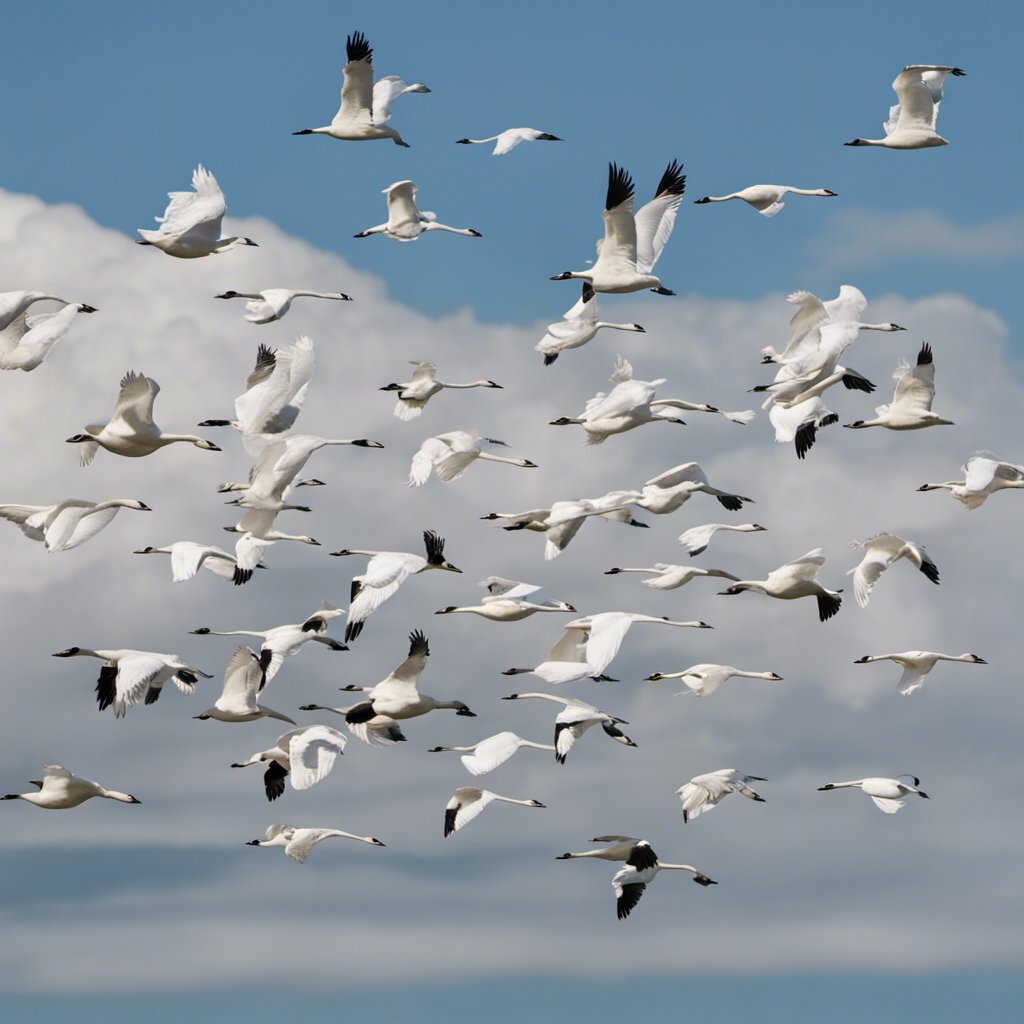
Ducks, geese, and swans often migrate later than insect-eating songbirds. Many wait until ice covers northern ponds or food becomes hard to reach.
In a mild year, some waterfowl may remain far north into November or December. In a cold year, a freeze can cause a rapid southward movement.
Raptors
Hawks, eagles, falcons, and vultures often migrate from September through November. They use rising warm air, called thermals, to reduce the energy needed for flight.
Raptors are easier to see on clear days with light winds. Well-known viewing sites include mountain ridges, coastlines, and narrow land routes where birds gather.
Does Bird Migration Change by U.S. Region?
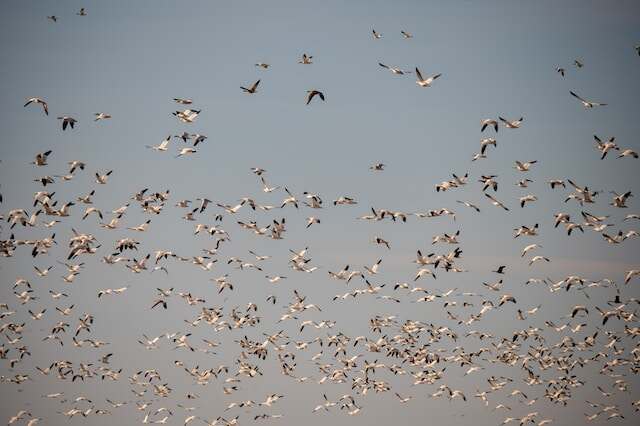
Yes. The best migration month depends on where you live.
Northeast
In the Northeast, many songbirds move south from late August through October. September often brings large numbers of warblers and other small birds. October is a strong month for hawks, sparrows, finches, and waterfowl.
Midwest and Great Lakes
Migration usually peaks from September through October. The Great Lakes can guide birds along major routes, but storms and strong winds may cause birds to gather near shorelines.
Wetlands, parks, and wooded areas can become busy stopover sites. A stopover site is a place where migrating birds rest and feed before continuing.
Southeast
The Southeast has a long migration season. Some birds begin arriving from the north in August, while others continue moving through November.
Coastal areas can attract large numbers of birds during storms. Florida may also receive migrants from the eastern United States, the Caribbean, and Central America.
Great Plains and Mountain West
Many birds migrate through the Great Plains from August through October. Mountain routes can produce excellent views of hawks and other soaring birds in September and October.
High elevation areas may see earlier movement when cold weather arrives. Lower valleys may continue to hold birds later into the season.
Southwest and West Coast
Migration timing varies widely across the West. Some birds move south along the Pacific Coast from August through October. Others travel through desert valleys, mountain passes, and river corridors.
Because many western states cover large elevation ranges, birds may migrate at different times within the same state.

How Far South Do Migrating Birds Go?
Not every bird flies to South America. A bird’s winter range depends on its species and breeding population.
Some birds move only a few hundred miles. For example, a bird from the northern United States may winter in the southern United States. This is called short-distance migration.
Other birds travel thousands of miles. Many warblers, vireos, swallows, and shorebirds cross Mexico and Central America. Some continue to the Caribbean or South America.
Birds can also use different routes in fall and spring. Fall migration may seem more spread out because birds often move at different speeds. Spring migration is often faster because birds compete for breeding territories.
Migration distance can also differ within one species. Birds that breed farther north may travel farther south than birds of the same species that breed in the southern United States.
What Weather Makes Birds Migrate South?
Birds often migrate after a cold front passes. Clear skies, north winds, and falling temperatures can create good conditions for southbound travel.
Weather affects both the timing and visibility of migration:
- North winds may help birds travel south.
- Tailwinds reduce the energy needed for flight.
- Rain and storms can delay departure.
- Strong headwinds can slow or stop migration.
- Cold fronts may trigger a large movement.
- Warm weather may delay migration in some species.
Birds do not always choose the warmest day. They often choose a window that combines safe wind, clear skies, and enough energy.
Bad weather can create dangerous conditions. Birds may land in large numbers along the coast, near lights, or in small patches of habitat. This is one reason protected parks and wetlands matter during migration.
How Can You Tell When Migration Is Happening?
You can look for several signs in your area.
Listen for more bird calls
Many migrating birds travel at night. You may not see them, but you may hear short call notes overhead or notice more birds at dawn.
Watch trees and shrubs
Migrants often stop in places with insects, berries, and shelter. A quiet wooded park may hold many birds after a night of travel.
Check ponds and wetlands
As fall progresses, ducks, geese, herons, shorebirds, and other water birds may appear in larger numbers.
Look for soaring birds
On clear fall days, watch ridges, shorelines, and open fields for groups of hawks, vultures, and eagles.
Track local reports
The free eBird database can show recent bird sightings. The Cornell Lab of Ornithology also provides species information and migration resources.
The U.S. Fish and Wildlife Service and the National Audubon Society explain how migration, habitat, weather, and seasonal cues affect birds.
How Can You Help Migrating Birds?
The most useful actions are simple.
- Keep cats indoors. Free-roaming cats kill large numbers of birds and can harm tired migrants.
- Reduce window strikes. Place screens, decals, or outside patterns on windows, especially near feeders.
- Turn off unnecessary lights at night. Bright lights can draw migrating birds into buildings.
- Plant native trees and shrubs. Native plants provide insects, berries, seeds, and cover.
- Keep fresh water available. Clean birdbaths can help birds rest and drink.
- Clean feeders and birdbaths often. This lowers the risk of disease spread.
- Avoid trimming shrubs during peak migration. Dense cover gives tired birds a safe place to rest.
If you find an injured bird, do not try to raise or treat it yourself. Place it in a ventilated box in a quiet, dark place and contact a licensed wildlife rehabilitator. The U.S. Fish and Wildlife Service provides guidance for handling sick or injured wild birds.
Common Mistakes About Southbound Bird Migration
“All birds migrate in October”
October is a major month, but some birds begin in July and others leave in November or later.
“Birds fly south because they are cold”
Temperature matters, but food is often the stronger pressure. A bird may leave before severe cold arrives because insects, seeds, or fruit are becoming scarce.
“Every bird flies to the tropics”
Some species spend winter in the southern United States. Others move only a short distance or remain in the same region.
“Birds migrate on the same date each year”
Migration timing shifts with weather, food, daylight, age, and location. Climate trends may also change the timing or range of some species, but the effect differs by species and region.
“A feeder keeps birds from migrating”
A feeder can support birds during stopovers and cold weather. It does not normally override the seasonal cues that control migration.
Frequently Asked Questions
What is the peak month for bird migration?
For much of the United States, October is the best overall answer. September can be better for many songbirds, while October and November can be better for hawks, ducks, geese, and finches.
Do birds migrate south at night?
Yes. Many songbirds, thrushes, vireos, and some other species migrate at night. They use the stars, Earth’s magnetic field, and other cues to navigate.
Do birds migrate south from Florida and Texas?
Some do, but these states also receive birds from farther north. Birds that breed in Florida or Texas may remain there, move south into Mexico or the Caribbean, or migrate only a short distance.
What time of day is best for seeing migrating birds?
Early morning is often best for songbirds because migrants feed after a night of travel. Late morning and afternoon can be useful for watching hawks and other soaring birds.
Do all birds leave the United States in winter?
No. Many birds remain in the United States year-round. Others migrate within the country, such as birds that move from northern states to the Southeast or Southwest.
The Bottom Line
Most birds in the United States migrate south from August through November, with the strongest movement often occurring in September and October. The best month depends on the bird group and your location.
For songbirds, watch from late August through September. For hawks and many waterfowl, try October. For ducks, geese, finches, and other late migrants, continue watching into November.
The next step is to check a local migration map or recent eBird reports, then visit a park, wetland, woodland edge, or shoreline early in the morning.