
Introduction
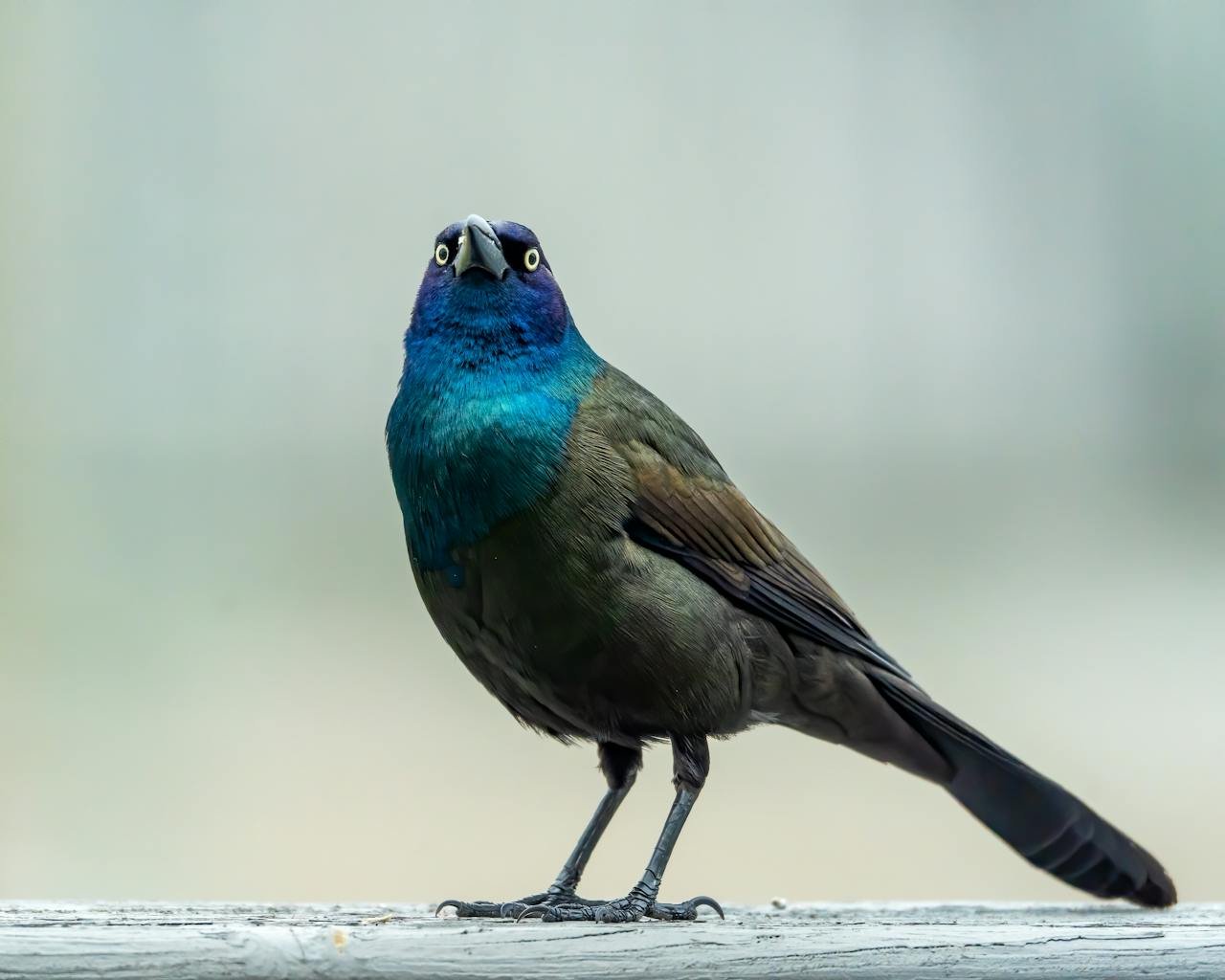
The bird most often described in the United States as black with a blue neck is a male wild turkey if it is large and seen on the ground. Its dark body can look black, while bare skin on its head and neck may appear blue, red, or pale gray. If the bird is small, the better match may be a common grackle, whose glossy black body can shine blue or purple around the head and neck.
Color alone is not enough for a sure ID. Size, tail shape, habitat, behavior, and location can quickly narrow the choice.

The Most Likely Birds
Several North American birds can look black and blue under bright light. Their feathers often have iridescence, which means the color changes with the angle of the light. A black bird may flash blue, green, or purple as it moves.
| Bird | Typical size | What looks blue | Where you may see it |
|---|---|---|---|
| Wild turkey | Large, 3–4 feet long | Bare head and neck skin; some dark feathers may shine blue | Forest edges, fields, roadsides, parks |
| Common grackle | About 12 inches long | Glossy blue or purple head and upper neck | Lawns, farms, wetlands, towns |
| Boat-tailed grackle | About 15–17 inches long | Blue-purple head and neck | Coastal marshes and shorelines |
| Great-tailed grackle | About 15–18 inches long | Blue, purple, or green sheen on the head and neck | Open areas in the western and central United States |
| Purple gallinule | About 14 inches long | Blue-violet head, neck, and body | Marshes, ponds, and wetlands in the Southeast |
| Indian peafowl | About 3–4 feet long, excluding tail display | Bright blue neck and breast | Zoos, estates, parks, and some private flocks |
The common grackle is the best match when the bird is crow-sized, slim, and has a long, pointed bill. The wild turkey is the better match when the bird is much larger, has a broad fan-shaped tail, or walks through a field with a group.
1. Male wild turkey
A male wild turkey, called a tom, has a dark body with bronze, copper, green, and blue reflections. Its head and neck have little feather cover, so the skin can look blue, gray, white, or red.
The colors change with mood and blood flow. A tom may show a bright red wattle and a blue or pale neck when displaying. Its body is not truly solid black, but it can look black from a distance or in shade.
Look for these signs:
- Large body and long legs
- Small, mostly bare head
- Red, blue, or gray skin on the head and neck
- Fan-shaped tail when displaying
- Long beard of bristles on the chest in many adult males
- Slow walking, scratching, or strutting in fields and woodland edges
Wild turkeys occur across much of the United States. The National Wild Turkey Federation and the Cornell Lab of Ornithology describe the adult male as a large, dark bird with changing iridescent plumage and bare, colorful skin.
2. Common grackle
A common grackle is often the correct answer when someone sees a small black bird with a blue neck. Adult males have glossy black bodies. Their heads and upper necks can show blue, violet, or green tones in sunlight.
The bird may look plain black in cloudy weather. In direct sun, the blue sheen can become clear. This effect is caused by feather structure, not blue pigment alone.
Key features include:
- Crow-like shape but a slimmer body
- Long, pointed bill
- Pale yellow or golden eye
- Long tail, often with a keel-like shape
- Black body with blue, purple, or green shine
- Frequent presence in lawns, parking lots, farms, and wet areas
Common grackles are widespread in the United States. They often forage in groups and may walk across grass while looking for insects, seeds, and other food.
3. Boat-tailed and great-tailed grackles
A boat-tailed grackle may look black with a blue neck in coastal areas. Adult males are large, dark birds with long, graduated tails. Their heads and necks can show a blue or purple gloss.
A great-tailed grackle has a similar appearance. Its most useful clue is the very long, broad tail of the adult male. Great-tailed grackles are common in much of the western and central United States, especially near open land, towns, farms, and water.
To separate these birds:
- Boat-tailed grackle: mainly coastal; common around salt marshes, beaches, and coastal towns.
- Great-tailed grackle: mainly inland and western; often found in parking lots, fields, ranches, and city parks.
- Common grackle: smaller and more widespread; often has a more compact look.
The blue color on all three grackles is usually strongest on the head and upper neck. The rest of the body often remains glossy black.
4. Purple gallinule
A purple gallinule is a strong possibility only if the bird was near a warm, plant-filled wetland. It has a blue-violet head, neck, and underside, with a green back and wings. Its bill is red and yellow, and its legs and feet are bright yellow.
This bird does not usually look like a plain black bird. Its bold colors are easier to see at close range. It is found mainly in wetlands in the southeastern United States, including Florida and parts of the Gulf Coast.
The purple gallinule often walks across floating plants. That behavior can help separate it from grackles and turkeys, which do not move across lily pads in the same way.
5. Indian peafowl
An Indian peafowl, often called a peacock when referring to a male, has a vivid blue neck and breast. Its back may look dark green or black from a distance. A male also has a tall crest and a long train of patterned tail feathers.
In the United States, peafowl are usually seen in:
- Zoos and wildlife parks
- Private estates
- Suburban neighborhoods with free-ranging birds
- Farms and ornamental flocks
- Some city parks
A peafowl is easy to identify if it spreads its large train. When the tail is folded, however, its blue neck and dark body may cause confusion with native birds.

How to Identify a Black and Blue Bird
Start with size and shape, then use color. This method is more reliable because many birds can show blue-black feathers in the right light.
Step 1: Estimate the size
Compare the bird with a familiar object:
- Robin-sized: likely not a grackle or turkey
- Crow-sized: common grackle, boat-tailed grackle, or great-tailed grackle
- Much larger than a crow: wild turkey or peafowl
- Chicken-sized near a wetland: possibly a purple gallinule
Do not rely on color before judging size. Distance can make a large turkey look smaller than it is.
Step 2: Check the bill and eye
The bill gives useful clues:
- Long, pointed bill and pale eye: grackle
- Shorter, heavier bill with a bare head: wild turkey
- Bright red-and-yellow bill: purple gallinule
- Short bill with a crest and blue neck: peafowl
A common grackle’s pale eye often stands out against its dark head.
Step 3: Look at the tail
Tail shape can settle the question:
- Fan-shaped tail: wild turkey
- Long, narrow, keel-shaped tail: common grackle
- Very long, broad tail: great-tailed or boat-tailed grackle
- Long ornamental train: male peafowl
- Short tail with a wetland bird shape: purple gallinule
Ask whether the tail is long because of normal flight feathers or because the bird is displaying ornamental feathers.
Step 4: Note the habitat
Habitat can rule out several options:
- Forest edge or farm field: wild turkey
- Lawn, parking lot, or open town area: common grackle
- Salt marsh or beach town: boat-tailed grackle
- Dry open land or inland city: great-tailed grackle
- Warm freshwater marsh: purple gallinule
- Park, estate, or captive flock: Indian peafowl
Habitat is a clue, not proof. Birds can travel outside their usual areas.
Step 5: Watch the behavior
Behavior often confirms the identification:
- A turkey may strut, fan its tail, drag its wings, or feed in a group.
- A grackle may walk on grass, probe soil, gather in noisy flocks, or perch on wires.
- A purple gallinule may walk on floating leaves.
- A peafowl may call loudly, display its train, or remain near buildings.
- Boat-tailed and great-tailed grackles often forage on the ground near water or human food sources.
If you can do so safely, take a photo from a distance. A side view showing the bill, eye, tail, and legs is more useful than a close crop of the neck.

Quick Identification Guide
Use this guide when the bird is still in view:
-
Is it very large, with a bare head or a fan-shaped tail?
It is probably a male wild turkey. -
Is it crow-sized, glossy black, and blue or purple on the head and neck?
It is probably a common grackle. -
Does it have an extremely long tail and live near a coast?
It may be a boat-tailed grackle. -
Does it have an extremely long tail in an inland or western area?
It may be a great-tailed grackle. -
Does it have a red-and-yellow bill and bright yellow legs in a wetland?
It may be a purple gallinule. -
Does it have a bright blue neck, crest, and ornamental tail?
It is likely an Indian peafowl.
The main trade-off is simple: color suggests the answer, but shape and habitat confirm it.

Why Black Feathers Can Look Blue
Black bird feathers often reflect blue or purple light. This is called structural coloration. Tiny structures in the feathers scatter light in a way that creates a shifting sheen.
The effect depends on:
- Sun angle
- Viewing angle
- Feather condition
- Distance
- Background light
- Whether the bird is wet or dry
This is why the same grackle may look black in the shade and blue-purple in sunlight. The bird has not changed species or suddenly grown blue feathers.
Bare skin can also create blue color. In turkeys, blood flow and display behavior can change the color of the head and neck. A photograph may show a stronger blue or red tone than the human eye saw in motion.

Common Identification Mistakes
Mistaking a grackle for a crow
Grackles are smaller and slimmer than American crows. They also have a longer, more pointed bill and a pale eye. Their tail often looks longer and more tapered.
Calling every black bird with blue shine a “bluebird”
Eastern bluebirds are blue and orange, not black with a blue neck. A blue reflection on black feathers does not make a bird a bluebird.
Assuming every large dark bird is a turkey
A turkey has a distinctive body shape, long legs, and often a bare head. A large grackle may look big when it is close, but it will not have a turkey’s broad chest or fan-shaped tail.
Using color without considering light
A black bird can look blue, green, purple, or bronze. Try to view the bird from more than one angle before deciding.
Feeding or approaching the bird
Wild turkeys and grackles can become bold around people when food is available. Do not chase, corner, or hand-feed them. Keep a safe distance, especially from a turkey that is displaying or acting aggressively.
If the bird is injured, contact a licensed wildlife rehabilitator or your state wildlife agency. Do not attempt to capture a healthy wild bird for closer inspection.

Is a Black Bird With a Blue Neck Rare?
Usually, no. In the United States, a black-looking bird with blue or purple feather shine is often a common grackle or another grackle species. A large bird with a blue neck is often a wild turkey, which is also widespread.
The sighting becomes more unusual when several clues occur together, such as:
- A bright blue neck and a long ornamental train in a residential area
- A purple-blue bird walking across floating plants outside its normal range
- A bird that looks unlike local species and may be an escaped captive bird
Range, season, and habitat matter. For a confirmed identification, compare the sighting with a regional field guide or submit a clear photo to a bird identification service such as the Cornell Lab of Ornithology’s Merlin Bird ID.

Frequently Asked Questions
What is the most common black bird with a blue neck?
A common grackle is the most likely answer when the bird is small or crow-sized. Its glossy black feathers can show a blue or purple sheen on the head and upper neck.
What large bird has a blue neck and black feathers?
A male wild turkey may look black with a blue neck. It has dark iridescent feathers and bare skin that can appear blue, gray, or red.
What bird has a bright blue neck and a long tail?
An Indian peafowl has a bright blue neck and a long train on the male. In the United States, it is most often found in captivity, private flocks, or places where ornamental birds roam freely.
Can a crow have a blue neck?
A crow may show blue or purple reflections in its feathers, but a crow usually has a more uniform black appearance. A pale eye and a slimmer body point more strongly to a grackle.
What should I do if I cannot identify the bird?
Record the location, date, habitat, size, bill shape, tail shape, and behavior. Take a photo from a safe distance, then compare it with a regional guide or use a reputable bird identification app. A photo that shows the whole bird is usually more useful than one focused only on the neck.
Conclusion
The best answer depends on the bird’s size and setting:
- Large bird with a bare blue-and-red neck: male wild turkey
- Crow-sized bird with a glossy blue-purple neck: common grackle
- Large grackle near the coast: boat-tailed grackle
- Large grackle inland with a very long tail: great-tailed grackle
- Bright blue wetland bird with a red-and-yellow bill: purple gallinule
- Bright blue neck with a crest and ornamental train: Indian peafowl
For the fastest identification, check the tail, bill, eye, habitat, and behavior rather than relying on color alone.