
Introduction
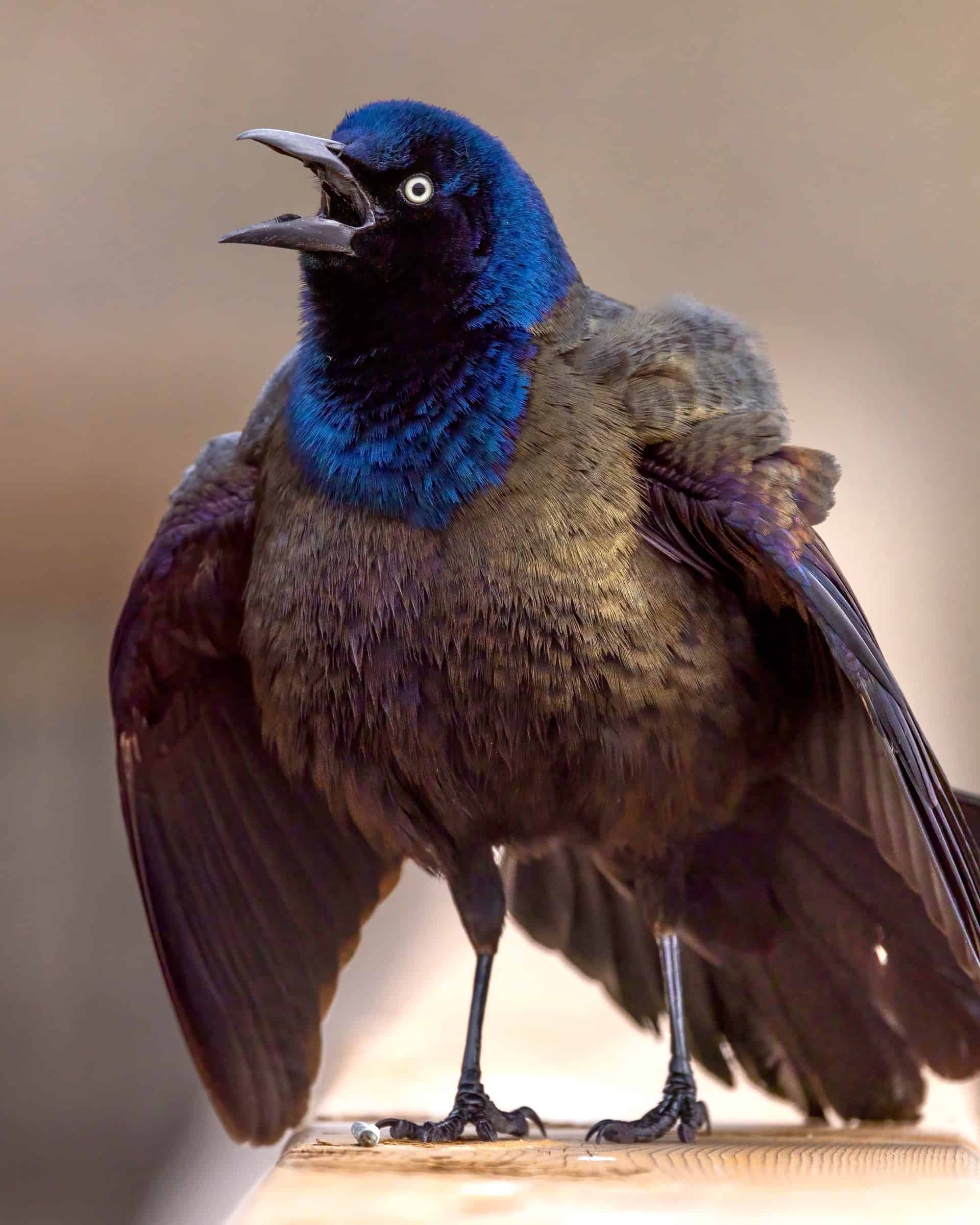
In the United States, the bird most often described as black with a blue head is the common grackle (Quiscalus quiscula). Adult males have glossy black bodies and an iridescent blue, purple, or green head that can shine in direct sunlight.
The color may look different as the bird moves. From one angle, the head may appear deep blue. From another, it may look violet, green, or nearly black. Size, eye color, tail shape, location, and habitat help confirm the identification.

The Common Grackle Is the Most Likely Answer
The common grackle is a large, dark songbird found across much of the eastern and central United States. It often visits lawns, farm fields, parks, parking lots, wetlands, and suburban yards.
The male has a long body, a long pointed bill, a pale yellow eye, and a long tail. His head and neck often show a blue or purple shine, while the body may look black, bronze, or green in bright light.
Key identification marks
Look for these features:
- Glossy black body
- Blue, purple, or green sheen on the head
- Pale yellow eye
- Long, pointed bill
- Long tail with a keel-like shape
- Large, slender body
- Strong, direct flight
- Loud calls that may sound harsh or creaky
A common grackle is larger and longer-tailed than a robin. It is also more slender than a crow. Its bright eye and shiny feathers make it easier to identify at close range.
Why the head looks blue
The blue color is usually structural color, not blue pigment. Tiny structures in the feathers reflect light in different ways. This creates an iridescent shine.
The effect changes with:
- Sun angle
- Viewing distance
- Feather condition
- Bird posture
- Background light
- Camera exposure
A grackle may therefore look black in shade and blue or purple in sunlight. This is normal and does not mean you saw two different birds.
Male, female, and young common grackles
Adult males show the strongest black-and-blue pattern. Females are often less glossy and may look more brown or gray, especially on the body.
Young birds usually have duller brown plumage. They may lack the rich blue shine seen on adult males. This difference can cause confusion when several grackles are feeding together.
How to Tell a Common Grackle From Similar Birds
The best way to identify a black bird with a blue head is to compare its size, tail, eye, and location. Color alone can be misleading because many dark birds have an iridescent sheen.
| Bird | Head color | Body and shape | Best clue |
|---|---|---|---|
| Common grackle | Blue, purple, or green | Large, slim body with a long tail | Yellow eye and long keel-shaped tail |
| Boat-tailed grackle | Blue or purple | Very large male with a broad, long tail | Coastal marshes and shorelines |
| Great-tailed grackle | Purple, blue, or green | Large male with an extremely long tail | Southwestern and central U.S. towns and open areas |
| Brewer’s blackbird | Purple or blue | Smaller and more compact | Smaller bill and shorter tail |
| European starling | Purple, blue, or green | Short tail and compact body | White spots, especially outside the breeding season |
| American crow | Usually black | Heavy body and broad wings | Larger bill, dark eye, and no clear blue head |
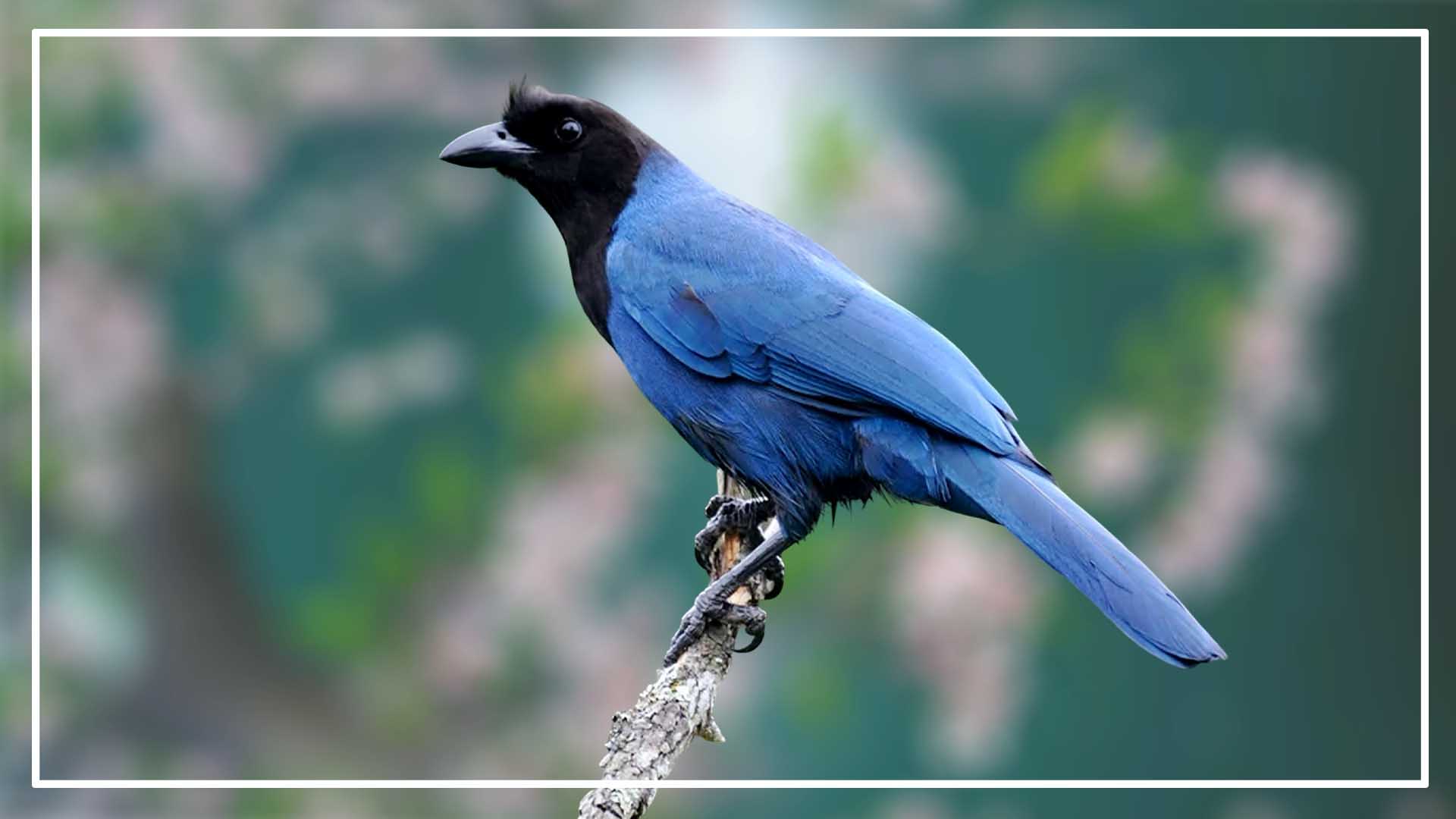
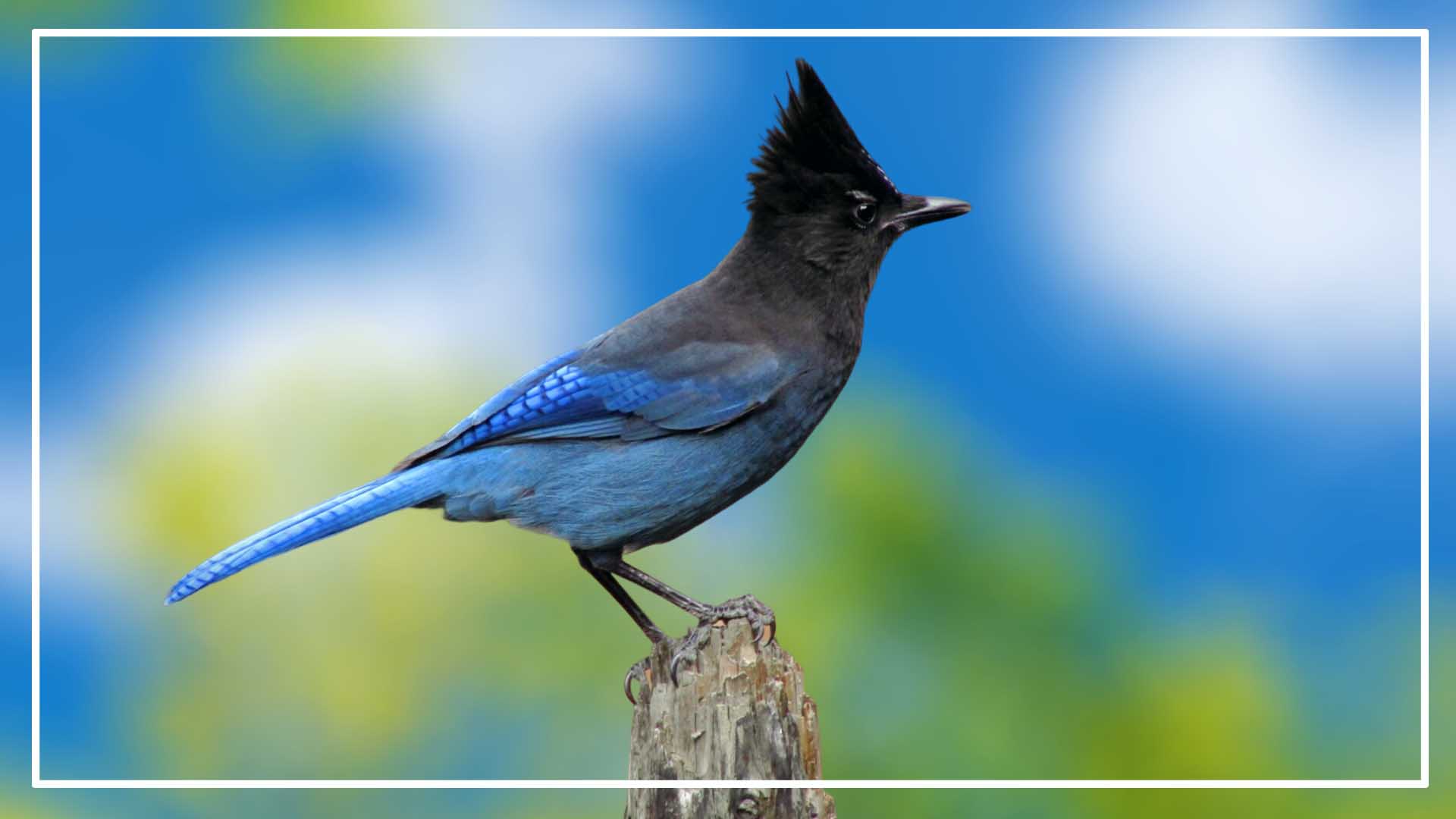
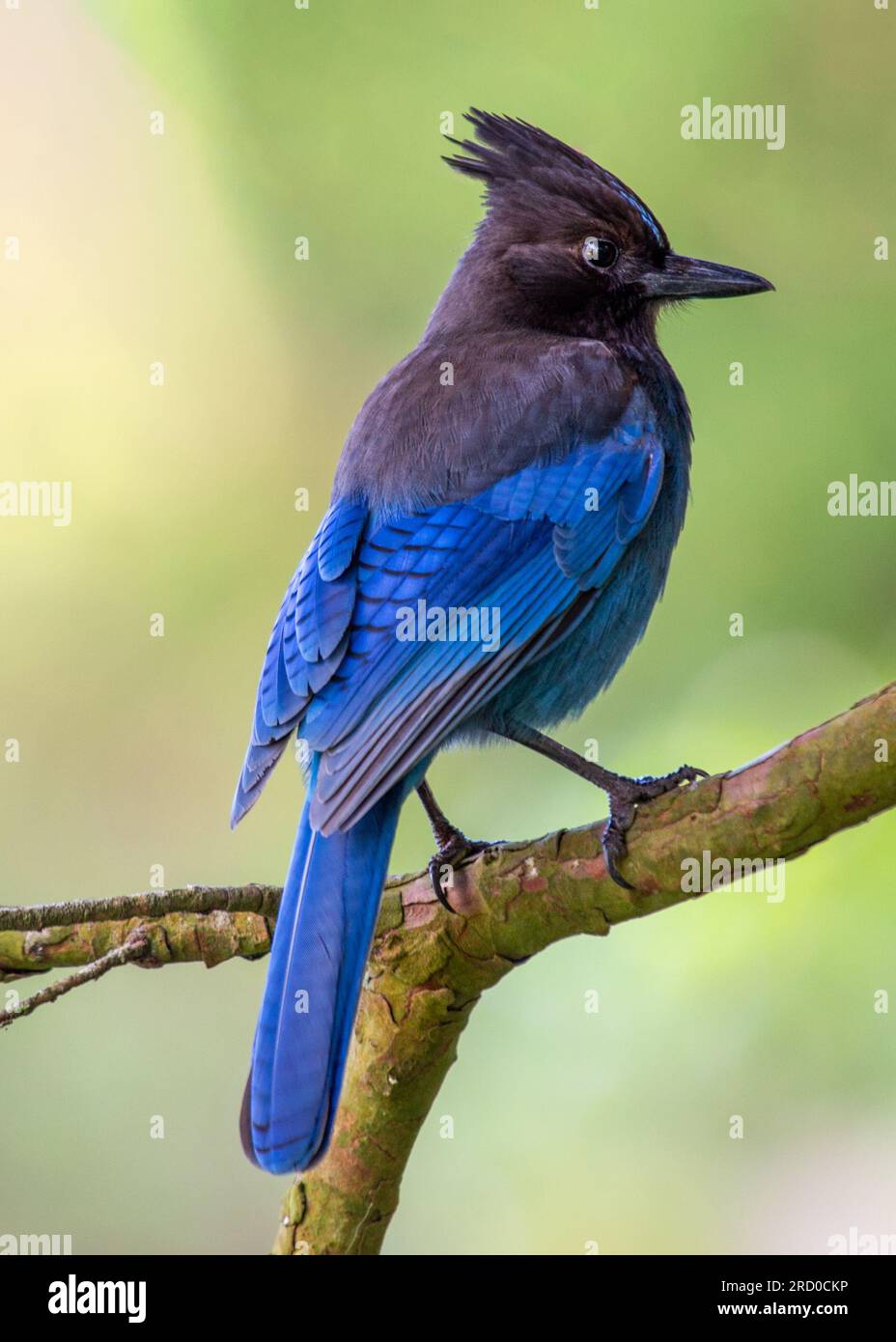
| Blue jay | Blue crest and back | Blue, white, and black pattern | White face and blue wings, not an all-black body |
Common grackle vs. boat-tailed grackle
A boat-tailed grackle is most likely near coastal marshes, beaches, docks, and tidal areas in the eastern and southern United States. Adult males are large, black, and glossy, with blue or purple on the head.
The boat-tailed grackle has a broader tail and a heavier appearance than the common grackle. If you saw the bird near salt water or a coastal marsh, consider this species.
Common grackle vs. great-tailed grackle
Great-tailed grackles occur widely in the Southwest and parts of the central United States. Adult males are black with a blue, purple, or green sheen. Their tails can be extremely long and deeply shaped.
A very long tail is the main clue. Great-tailed grackles also often gather in towns, parking lots, agricultural areas, and open desert landscapes.
Common grackle vs. Brewer’s blackbird
Brewer’s blackbirds are smaller than common grackles. Males may have a purple head and a greenish or blue-black body. Their eyes are pale, but their tails and bills look less dramatic.
If the bird is about robin-sized and has a shorter tail, Brewer’s blackbird may be the better match.
Common grackle vs. European starling
European starlings can look black with a blue or purple head in strong light. However, they usually have a short tail, a compact body, and a pointed bill. Many also show small white spots on the back and breast.
Starlings often move in dense flocks. Common grackles have longer bodies and tails and may walk with a more deliberate, upright posture.
Use Location and Behavior to Confirm the Bird
Location can narrow the answer, but it should support appearance rather than replace it. Several grackle species overlap in parts of the United States.
If you saw it in the eastern or central U.S.
A common grackle is a strong possibility. It is common around:
- Open woodlands
- Farm fields
- Wet meadows
- City parks
- Suburban lawns
- Cattail marshes
- Grain fields
- Parking lots
Common grackles often feed on the ground. They may search through grass, leaf litter, soil, or shallow water for insects, seeds, frogs, small fish, and other food.
If you saw it near the coast
Consider a boat-tailed grackle, especially if the bird was very large and had a broad, long tail. Coastal grackles often use salt marshes, beaches, docks, mangroves, and areas near restaurants or discarded food.
A common grackle can also occur near water, so the tail and body shape remain important.
If you saw it in Texas, Arizona, New Mexico, or nearby states
A great-tailed grackle may fit better, particularly when the bird has an exceptionally long tail. Great-tailed grackles are common in many urban and rural areas of the Southwest.
The exact range can change by season and local conditions. Use a current regional field guide or a trusted bird identification app if the location is near the edge of a species’ range.
Watch the bird’s behavior
Behavior can help separate the choices:
- Common grackles often walk across lawns and forage in groups.
- Boat-tailed grackles frequently stay near coastal water and marshes.
- Great-tailed grackles often gather around urban food sources and open spaces.
- Starlings commonly form tight, fast-moving flocks.
- Crows have a heavier flight style and a deeper, more familiar “caw.”
Do not rely on one behavior alone. Food, weather, season, and human activity can change how any bird acts.

A Simple Identification Checklist
Use this short process when you see a dark bird with a blue-looking head.
1. Check the size
Is it:
- About robin-sized?
- Larger and slimmer than a robin?
- Nearly crow-sized?
- Very large with a massive tail?
A large, sleek bird is more likely to be a grackle than a starling or Brewer’s blackbird.
2. Look at the tail
The tail is one of the best clues.
- Long and keel-shaped: common grackle
- Very broad and long: boat-tailed grackle
- Exceptionally long: great-tailed grackle
- Short: European starling
- Broad with a rounded or squared look: crow
Try to see the bird from the side or during flight. A perched bird may hide part of its tail.
3. Check the eye
A pale yellow eye strongly supports a grackle identification. Crows usually have dark eyes. Starlings also have pale eyes, so combine this clue with body shape and tail length.
4. Study the whole color pattern
Ask whether the bird is:
- All dark with a shiny head
- Speckled with white spots
- Blue and white
- Brown rather than black
- Black with a clear colored throat or breast
An all-dark bird with a blue or purple head is usually a grackle. A blue-and-white bird is more likely a blue jay.
5. Consider the season
Iridescent feathers can look brighter during certain lighting conditions. Fresh adult plumage may appear cleaner and more glossy, while worn feathers can look dull.
Season also affects where birds occur. Some grackles move south or gather in larger flocks during colder months.
6. Take a photo from a safe distance
A side view often shows the bill and tail. A rear view may reveal the tail shape. Avoid chasing the bird or entering private property to get a closer image.
A photo with natural light is more useful than a flash image. Flash can hide the true color and make black feathers look flat.
Common Identification Mistakes
Mistaking a blue jay for a black bird
A blue jay has blue upperparts, white underparts, a black necklace, and a blue crest. In poor light, the darker markings may stand out more than the blue areas.
If the bird has a white face or white belly, it is not an all-black grackle.
Calling every shiny black bird a crow
Crows are larger and heavier, with broad wings and thick bills. They may show a blue or purple shine in sunlight, but they usually do not have the sharp, pale yellow eye and long keel-shaped tail of a grackle.
Assuming blue color must be pigment
Iridescent feathers change color with light. A bird that looks blue in one photo may look green, purple, or black in another. This is especially common with grackles, starlings, and other glossy birds.
Ignoring the tail
Many identification errors happen because viewers focus only on the head. Tail length and shape often provide a clearer answer than color.
Using sound as the only clue
Grackle calls can be loud and unusual. They may include whistles, rattles, croaks, and harsh notes. Sound helps, but visual features should confirm the identification.
Are Common Grackles a Problem at Bird Feeders?
Common grackles are native North American birds, but they can be unwelcome at some feeders. Their large size and flocking behavior may allow them to dominate smaller birds.
They may eat:
- Seeds
- Grain
- Fruit
- Insects
- Small aquatic animals
- Food scraps
If grackles take over a feeder, use a selective feeder that limits access to large birds. Keep the feeding area clean, avoid scattering large amounts of food on the ground, and follow local wildlife rules.
Do not use poison or attempt to harm the birds. Nonlethal changes are safer for pets, children, and other wildlife.

Frequently Asked Questions
What is a black bird with a blue head called?
It is most often a common grackle in the United States. Adult males have glossy black bodies and blue, purple, or green iridescence on the head and neck.
Are grackles black or blue?
Grackles are generally dark or black birds, but their feathers can reflect blue, purple, green, or bronze light. The visible color depends on the angle of the sun and the bird’s position.
Is a black bird with a blue head a crow?
Usually not. A crow may have a slight blue or purple sheen, but a long tail, pale yellow eye, and slender body point more strongly to a grackle.
What bird is black with a blue head in Texas?
The answer may be a common grackle or a great-tailed grackle. A very long tail favors the great-tailed grackle. A shorter, keel-shaped tail and a smaller body favor the common grackle.
What black bird has a blue head near the ocean?
A boat-tailed grackle is a strong possibility near coastal marshes, beaches, docks, and tidal areas. Its large body and broad tail help separate it from the common grackle.
Reliable Identification Resources
For a confirmed identification, compare your sighting with current range maps, photos, and vocal recordings from trusted bird references:
- Cornell Lab of Ornithology: Common Grackle
- Cornell Lab of Ornithology: Boat-tailed Grackle
- Cornell Lab of Ornithology: Great-tailed Grackle
- Cornell Lab of Ornithology: Brewer’s Blackbird
- Cornell Lab of Ornithology: European Starling
These references are useful because they combine appearance, habitat, sound, behavior, and geographic range rather than relying on color alone.
Conclusion
The most likely answer to “what bird is black with a blue head?” is the common grackle. Look for its glossy black body, blue or purple head, pale yellow eye, long bill, and long keel-shaped tail.
If the bird is near the coast, consider a boat-tailed grackle. If it has an unusually long tail in the Southwest, consider a great-tailed grackle. A clear photo showing the bird’s side, eye, bill, and tail will usually settle the identification.