
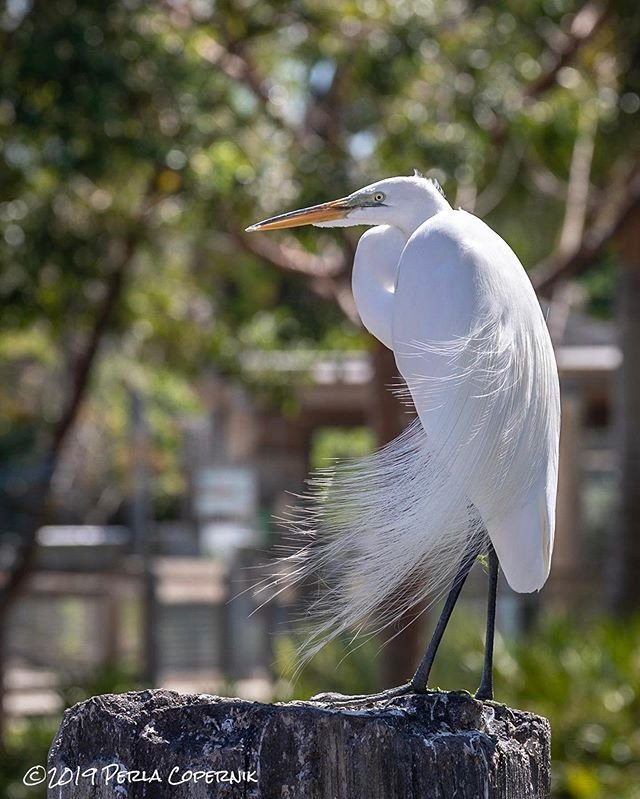
In the United States, a great egret (Ardea alba) usually lives about 15 years in the wild. Some survive much longer. The oldest documented great egret reached more than 22 years, based on bird-banding records.
That number describes a known record, not the normal life span. Many young egrets die before adulthood because of hunger, storms, predators, disease, and habitat loss. Great egrets that reach adulthood and find safe wetlands may live for more than a decade.

Great Egret Lifespan at a Glance
The best short answer is that great egrets commonly live around 10 to 15 years, while exceptional birds can live more than 20 years.
| Lifespan measure | What it means |
|---|---|
| About 15 years | A commonly reported wild life-span estimate |
| More than 20 years | Possible for a small number of surviving birds |
| Over 22 years | A documented longevity record for a banded great egret |
| Average population age | Usually lower than the record because many young birds do not survive |
The difference between an average life span and a record matters. A record bird shows what is biologically possible. It does not mean most great egrets reach that age.
The Cornell Lab of Ornithology reports that great egrets can live for around 15 years or more. The North American Bird Banding Program uses band recoveries to document the age of individual birds. These records provide stronger evidence for maximum age than casual wildlife observations.

What Is the Oldest Great Egret on Record?
The oldest known great egret lived for more than 22 years. Researchers identified its age through bird-banding data.
Bird banding gives scientists a way to track a bird over time. A young or adult bird receives a small, numbered band. If someone later reports that band, researchers can compare the dates. The time between banding and the last report helps establish the bird’s minimum age.
This method has limits:
- A banded bird may live longer than its last reported sighting.
- Many bands are never found or reported.
- Birds banded as adults may already be several years old.
- A record age applies to one bird, not the whole species.
For that reason, “22 years” is best treated as a documented minimum age for an exceptional individual. It is not a promise that a great egret in the wild will live that long.

Why Do Great Egrets Live for So Many Years?
Great egrets benefit from a large body, a broad diet, strong flight, and the ability to use many types of wetlands.
They hunt in shallow water, where they may catch fish, frogs, insects, crayfish, snakes, and small mammals. This varied diet helps them cope when one food source becomes scarce. Their long legs also let them feed in water that is too deep for many smaller wading birds.
Adult great egrets have few natural predators when they are healthy. Their size and ability to fly reduce the risk from many land predators. Still, eggs, chicks, and young birds face much greater danger.
A long life is not guaranteed. Survival depends on:
- Access to shallow wetlands and nesting sites
- Enough fish, frogs, and other prey
- Clean water and safe feeding areas
- Protection from storms and flooding
- Low exposure to pollution
- Reduced disturbance during nesting
- Avoidance of fishing line, vehicles, buildings, and other human hazards
The species’ success also depends on wetland protection. The U.S. Fish and Wildlife Service lists the great egret as a widely distributed North American wading bird. However, local populations can still suffer when marshes, ponds, and coastal feeding areas are drained or heavily disturbed.

Do Male or Female Great Egrets Live Longer?
There is no simple, well-established rule that male great egrets live longer than females, or that females consistently outlive males.
Male and female great egrets look very similar outside the breeding season. Both sexes face many of the same risks, including poor food supplies, disease, severe weather, habitat loss, and collisions.
Breeding can create different pressures for each sex. During nesting, adults must spend energy defending territory, building or maintaining a nest, incubating eggs, and feeding chicks. These demands may affect survival, but they do not provide a clear lifespan difference for the species as a whole.
A bird’s age, health, habitat, and luck usually matter more than its sex. Researchers would need long-term tracking of many individually identified birds to make a strong comparison.

How Long Do Great Egret Chicks Take to Become Adults?
Great egret chicks usually leave the nest at about three to four weeks of age, but leaving the nest does not mean they are fully independent.
Young egrets continue to depend on their parents while they learn to fly well and catch food. They may remain near the nest area for several more weeks. This early period is one of the most dangerous parts of their lives.
A typical breeding sequence looks like this:
- Adults build or repair a nest in a tree or shrub.
- The female lays several pale blue-green eggs.
- Both parents help incubate the eggs.
- Chicks hatch at different times because incubation begins before the full clutch is laid.
- Parents bring food to the nest.
- Young birds climb from the nest and then develop stronger flight.
- Juveniles gradually become independent.
Great egrets can breed when they are about two years old, although age at first breeding may vary. Birds that survive this vulnerable juvenile stage have a better chance of reaching the typical adult lifespan.

What Causes Great Egrets to Die?
The most common causes of death vary by age and location. Young birds face starvation, falls, predators, disease, and competition. Adults face habitat loss, storms, pollution, collisions, and human disturbance.
Threats to eggs and chicks
Nests may fail when:
- Severe weather knocks down branches
- Flooding reaches a low nest
- Food becomes scarce
- Predators reach the colony
- Human activity causes repeated disturbance
- Disease spreads among crowded nestlings
A chick that receives too little food may be pushed behind stronger nest mates. In some cases, it may die from weakness or exposure.
Threats to adult birds
Adult great egrets may die from:
- Hurricanes and other severe storms
- Wetland destruction
- Contaminated food or water
- Entanglement in fishing line
- Vehicle and aircraft strikes
- Collisions with power lines or buildings
- Illegal shooting or other human harm
- Serious infection or injury
Climate and weather can also affect survival. Drought may reduce shallow feeding water, while flooding can destroy nests or wash away prey. The same wetland may be useful during one season and unsuitable during another.

Does Pollution Affect Great Egret Lifespan?
Yes. Pollution can reduce great egret survival by damaging wetlands, lowering food quality, or directly harming birds.
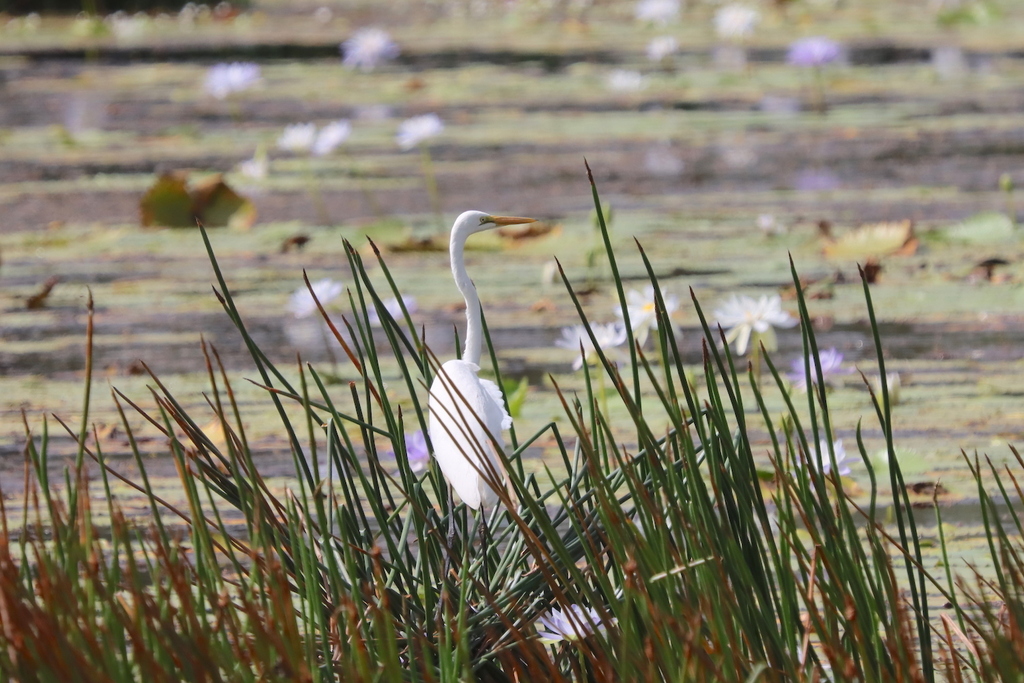
Great egrets feed high on wetland food chains. They may eat fish and other animals that have absorbed pollutants from water or sediment. Certain contaminants can build up in animal tissues over time. Exposure may affect growth, reproduction, behavior, or general health.
The impact depends on the contaminant, dose, exposure time, and local conditions. It is not accurate to assume that every great egret in a polluted area will have a shortened life. However, polluted wetlands can create long-term risks for both individual birds and breeding colonies.
People should never feed wild egrets, handle sick birds, or collect dead birds without guidance. If a great egret appears injured or contaminated, contact a licensed wildlife rehabilitator or a state wildlife agency in the United States.
How Can People Help Great Egrets Live Longer?
The most useful action is to protect wetlands and reduce disturbance around feeding and nesting areas.
You can help by:
- Keeping a safe distance from nesting colonies
- Following posted wildlife-viewing rules
- Keeping dogs away from nesting and feeding sites
- Disposing of fishing line and hooks properly
- Avoiding litter near ponds, marshes, and shorelines
- Supporting wetland conservation groups
- Preventing pesticides and other chemicals from entering waterways
- Using bird-safe practices around windows and structures
- Reporting injured birds to trained wildlife professionals
Do not try to rescue a great egret yourself. Its long bill can cause serious injury, even when the bird appears weak. A wildlife rehabilitator can decide whether the bird needs treatment and how to handle it safely.
Giving a bird food or water can also cause harm. An injured bird may have internal damage, and forced feeding can lead to choking or aspiration.

Great Egret Lifespan Compared With Other Wading Birds
Great egrets have a relatively long potential life span compared with many small birds, but they are not unusually long-lived when compared with some larger waterbirds.
| Bird | General lifespan pattern |
|---|---|
| Great egret | Often around 15 years; documented individuals can exceed 20 years |
| Snowy egret | Usually shorter than the great egret, though records vary |
| Great blue heron | Can also live for more than 20 years |
| American white pelican | Some individuals reach several decades |
| Green heron | Often has a shorter life span than larger herons |
These comparisons are broad. Different studies use different methods, regions, and sample sizes. A maximum record, a reported typical age, and a calculated population average are not interchangeable.
Body size is only one factor. Migration, habitat quality, breeding success, food supply, and exposure to human hazards can change survival rates from one population to another.

How Can You Estimate a Great Egret’s Age?
You usually cannot determine the exact age of a wild great egret by looking at it.
Adults have white feathers, long black legs, a long yellow bill, and a yellow facial area. During the breeding season, adults may develop long ornamental plumes and brighter facial colors. These features help identify breeding condition, but they do not provide a precise age.
A juvenile may look less sharply marked than an adult, but age estimates remain limited. Once a bird reaches adult plumage, visual aging becomes especially difficult.
A band, tag, or tracking record is more useful. If you see a marked bird:
- Keep your distance.
- Do not approach or attempt to capture it.
- Record the date and location.
- Take a clear photo only if you can do so without disturbing the bird.
- Report the band or tag through the appropriate North American bird-banding reporting system.
A report can help researchers learn about movement, survival, and habitat use.

Key Takeaways
- Great egrets usually live about 15 years in the wild.
- Some individuals live more than 20 years.
- The oldest documented birds have reached over 22 years.
- Most deaths occur during the vulnerable egg, chick, and juvenile stages.
- Wetland loss, pollution, storms, human disturbance, and collisions can shorten survival.
- The best way to help great egrets is to protect wetlands and avoid disturbing nesting or injured birds.
Frequently Asked Questions
Is 15 years the average life span of a great egret?
Not necessarily. Fifteen years is a commonly reported wild lifespan estimate, but it should not be treated as a precise population average for every region. Many young birds die early, while some adults survive for more than 20 years.
Can great egrets live longer in captivity?
They may live for many years under professional care, but reliable captive-lifespan figures are not as widely documented as wild banding records. Captive conditions also differ from the natural risks faced by wild birds, so the two figures should not be compared without matching data.
Do great egrets return to the same place every year?
Some great egrets return to familiar breeding or feeding areas, but movements vary by age, season, weather, and food supply. A return to the same wetland does not prove that the same individual has lived there continuously.
What should I do if I find an injured great egret?
Keep people and pets away, avoid touching the bird, and contact a licensed wildlife rehabilitator or state wildlife agency. Do not give it food or water unless a trained professional instructs you to do so.
Are great egrets endangered in the United States?
Great egrets are not generally listed as endangered across the United States. However, local populations can face serious risks when wetlands are drained, polluted, or disturbed. Legal protections still apply to wild birds, their nests, eggs, and feathers under federal and state rules.
Conclusion
Great egrets can live about 15 years in the wild, and exceptional individuals can survive for more than two decades. Their greatest risks come early in life, when eggs, chicks, and young birds are vulnerable to hunger, storms, predators, and habitat problems.
For people in the United States, protecting marshes, ponds, rivers, and coastal wetlands is the most direct way to support long-term great egret survival. When observing one, give it space, keep pets away, and contact trained wildlife professionals if the bird appears injured.