
In the United States, great egrets are not endangered under the federal Endangered Species Act. The species is listed as Least Concern on the International Union for Conservation of Nature (IUCN) Red List. Great egrets are also protected in the U.S. under the Migratory Bird Treaty Act, which makes it illegal to harm, capture, sell, or possess them, their eggs, or their nests without legal authorization.
That does not mean great egrets face no risks. Habitat loss, polluted wetlands, human disturbance, severe weather, and changing water conditions can harm local populations. Some states may also classify great egrets as species of concern or protect important nesting colonies.

What Is the Conservation Status of the Great Egret?
The great egret (Ardea alba) is not currently considered endangered in the United States or worldwide.
Key status facts include:
- U.S. federal status: Not listed as threatened or endangered under the Endangered Species Act.
- Global IUCN status: Least Concern.
- U.S. legal protection: Protected by the Migratory Bird Treaty Act.
- Main habitat: Marshes, ponds, lakes, rivers, coastal wetlands, rice fields, and shallow waters.
- Population trend: Broadly stable or increasing in many areas, although local declines can occur.
- Main conservation concern: Loss and degradation of wetlands.
“Least Concern” does not mean a species is immune to decline. It means that, based on its global range, population, and known threats, the species does not currently meet the criteria for a higher-risk category such as Vulnerable, Endangered, or Critically Endangered.
The IUCN status applies to the species across its full range. It does not guarantee that every U.S. population is healthy. A bird can be common across North America while becoming scarce in one county, state, or wetland system.
Why Were Great Egrets Once at Risk?
Great egrets suffered severe losses in the United States during the late 1800s and early 1900s because people hunted them for their breeding feathers.
These long, white plumes were used to decorate hats and clothing. During breeding season, plume hunters often killed adult birds at nesting colonies. The loss was especially harmful because adult birds were taken while caring for eggs or young.
Public concern over this trade helped drive early bird-protection efforts. The Audubon Society used the great egret as a symbol of the campaign against plume hunting. In 1905, the organization adopted the great egret as its emblem.
Several legal changes then helped protect the species:
- The Lacey Act of 1900 restricted interstate trade in illegally taken wildlife.
- The Migratory Bird Treaty Act of 1918 provided broad federal protection for migratory birds.
- State and federal wetland protections reduced some forms of habitat destruction.
- Hunting controls helped stop the commercial killing of egrets for feathers.
This history explains why conservation status matters. Great egrets are not endangered today partly because earlier protection allowed populations to recover. Their recovery also shows how quickly wildlife can suffer when a profitable trade targets breeding adults.

What Threats Do Great Egrets Face Today?
The greatest current threat to great egrets is the loss of healthy wetland habitat. Great egrets need shallow water and nearby nesting cover. When wetlands are drained, filled, polluted, or cut off from natural water flows, the birds lose places to feed and raise young.
Wetland loss and development
Housing, roads, farms, ports, and industrial sites can replace marshes and shallow-water habitat. Development can also divide wetlands into smaller areas. A wetland may remain on a map but become less useful if water levels change or prey fish disappear.
Great egrets often feed in:
- Freshwater marshes
- Coastal marshes
- River edges
- Farm ponds
- Reservoir margins
- Flooded fields
- Shallow bays and estuaries
Protecting only the nesting trees is not enough. A colony also needs nearby feeding areas. If adults must travel farther for food, chicks may receive fewer meals and face greater exposure to predators or bad weather.
Human disturbance near nesting colonies
Great egrets often nest in groups called colonies, or rookeries. Repeated disturbance from boats, drones, photographers, construction, dogs, or people can cause adults to leave nests.
Disturbance is most harmful during the breeding season. Eggs and young birds can become exposed to heat, cold, predators, or other birds when adults are forced away.
People should keep a respectful distance from active colonies. Never enter a rookery, climb a nesting tree, or use a drone near nesting birds.
Water pollution
Pollutants can harm great egrets in two ways. They may injure the bird directly, or they may reduce the number and health of fish, frogs, insects, and other prey.
Potential pollutants include:
- Pesticides and herbicides
- Oil and fuel
- Heavy metals
- Sewage
- Excess fertilizer
- Plastic and fishing line
Great egrets stand high in wetland food webs. This means contaminants in water or prey can build up in their bodies over time. A single bird may not show an obvious sign of poisoning, but pollution can still affect growth, reproduction, or survival.
Climate and extreme weather
Floods, droughts, heat waves, hurricanes, and winter storms can affect great egrets. Climate change may also alter the timing and location of water, fish, and other prey.
The effect is not the same everywhere. More water can help in one wetland and harm nesting birds in another. A storm may destroy a colony but leave other sites untouched. For this reason, researchers often study local trends rather than applying one result to the entire species.
Entanglement and accidental injury
Fishing line, hooks, plastic bands, and other debris can injure or trap wading birds. Great egrets may also collide with vehicles, utility structures, or windows, although the risk varies by location.
If you see an injured egret, do not chase or handle it unless a trained wildlife professional tells you how. Contact a licensed wildlife rehabilitator, local animal control office, or state wildlife agency.

Are Great Egrets Protected by Law in the United States?
Yes. The Migratory Bird Treaty Act protects great egrets throughout the United States.
Without a permit, people generally may not:
- Kill or capture a great egret
- Possess a live or dead bird
- Take eggs
- Remove an active nest
- Sell or buy the bird or its parts
- Collect feathers
- Intentionally harm the bird
The law can apply even if the bird is common in your area. Finding a naturally shed feather does not create a general right to keep it. Many native bird feathers are protected, and possession rules can be complex.
Great egrets are also protected by state laws. Rules may differ by state and may include special protection for rookeries, wetlands, or colonial waterbirds. Federal and state agencies may issue permits for scientific work, wildlife rehabilitation, habitat management, or other limited activities.
If an egret nest is near a construction site, marina, or property project, contact the U.S. Fish and Wildlife Service or your state wildlife agency before disturbing the area.
How Can You Tell a Great Egret From Other White Herons?
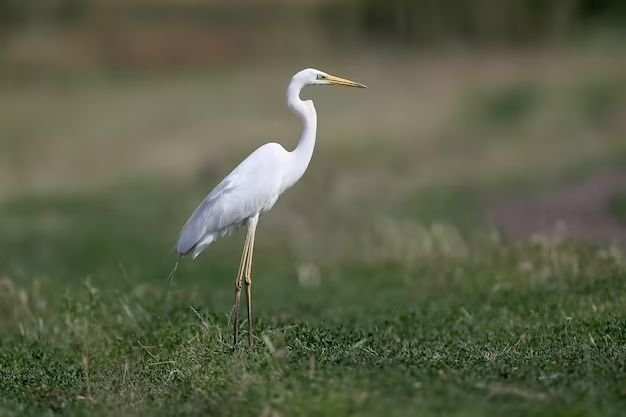
Great egrets are large, white wading birds with long necks, long black legs, and a long, pointed yellow bill.
Useful identification features include:
| Feature | Great egret |
|---|---|
| Body color | Entirely white |
| Size | Tall and slender; larger than a snowy egret |
| Bill | Yellow in most adults |
| Legs | Black |
| Neck | Long and held in an S-shaped curve |
| Feet | Black |
| Breeding feathers | Long plumes on the back |
| Typical behavior | Walks slowly through shallow water and strikes prey with its bill |
A snowy egret is smaller and usually has a black bill, black legs, and bright yellow feet. A cattle egret has a shorter, thicker bill and a more compact body. The white form of the great blue heron can look similar from a distance, but it is usually larger and has different proportions and regional patterns.
Correct identification matters because “white egret” is not always a precise species name. Several white herons and egrets occur in the United States.

What Should You Do if a Great Egret Is on Your Property?
Give the bird space and remove hazards from the area. A great egret that stands still for a long time may be resting, hunting, or conserving energy. It does not always need help.
Use these steps:
- Keep children, dogs, and cats away.
- Do not feed the bird.
- Do not try to make it fly.
- Remove fishing line, hooks, plastic, and other hazards only if you can do so safely without approaching the bird.
- Watch from a distance for signs of injury.
- Contact a licensed wildlife rehabilitator if the bird cannot stand, has a drooping wing, is bleeding, is tangled, or has fishing gear attached.
A healthy egret may fly away when approached. That reaction alone does not mean it is injured.
If you find an active nest, do not trim the nesting tree or remove branches around it without checking applicable rules. Even an empty-looking nest may still be part of an active colony.
How Can People Help Great Egrets?
The most useful action is to protect wetlands and reduce disturbance.
You can help by:
- Supporting local wetland conservation projects.
- Keeping trash, fishing line, and hooks out of waterways.
- Using lead-free fishing tackle where practical.
- Keeping pets away from nesting and feeding birds.
- Staying on marked trails near marshes.
- Following posted wildlife-viewing distances.
- Avoiding drones near birds and colonies.
- Using pesticides and fertilizers carefully.
- Reporting pollution or illegal bird killing to the proper agency.
- Joining a local bird count or habitat-monitoring project.
Property owners can also help by keeping natural vegetation along ponds and streams. A shallow, quiet shoreline with native plants can provide food and cover for many wetland birds.
Do not create artificial feeding areas for great egrets. Feeding can change natural behavior, attract predators, spread disease, and cause birds to gather in unsafe places.

Frequently Asked Questions About Great Egrets
Are great egrets endangered in Florida?
Great egrets are not federally endangered in Florida. They are common in many Florida wetlands, lakes, marshes, and coastal areas. However, local colonies can still be affected by development, disturbance, pollution, and changes in water levels. Florida wildlife rules may provide additional protection beyond federal law.
Are great egrets endangered in Texas?
No. Great egrets are not federally endangered in Texas. They occur in wetlands, ponds, coastal areas, rivers, and agricultural landscapes. Local habitat loss and disturbance can still affect breeding colonies and feeding sites.
Can I keep a great egret feather?
You generally should not keep a great egret feather. Great egrets are protected migratory birds, and possession of feathers from native birds may violate federal or state law. Leave feathers where you find them unless an authorized agency gives you specific guidance.
Do great egrets attack people?
Great egrets normally avoid people. They may defend a nest with a bill if someone gets too close, but attacks are uncommon. Keep away from nesting colonies, and never corner or handle a wild egret.
What is the difference between a great egret and a heron?
A great egret is a type of heron. “Heron” is the broader group, while “great egret” refers to one species, Ardea alba. Great egrets are identified by their white body, black legs, yellow bill, and tall, narrow shape.

Sources and Evidence
This article’s conservation summary is based on the scope of the following sources:
- U.S. Fish & Wildlife Service: Migratory Bird Treaty Act
- U.S. Fish & Wildlife Service: Endangered Species Act
- IUCN Red List: Great Egret (Ardea alba)
- Cornell Lab of Ornithology: Great Egret
- National Audubon Society: Great Egret
The sources support the distinction between global conservation status, U.S. federal listing, and legal protection. They do not mean that every local population is stable or that every wetland is safe.
Conclusion
Great egrets are not endangered in the United States or globally. Their recovery from plume hunting shows that strong laws and habitat protection can work. Still, the species depends on healthy wetlands, clean water, safe nesting colonies, and limited human disturbance.
If you see a great egret, observe it from a distance, protect the habitat around it, and contact wildlife professionals if the bird appears injured.