
Feeding your cat the right amount of dry food is essential for their long-term health and weight management. By calculating daily caloric needs based on age and activity level, you can ensure your feline stays fit and happy while avoiding common health issues like obesity.
Bringing a cat into your home is one of the most rewarding experiences a pet parent can have. As we navigate 2026, we have more access to nutritional information than ever before, yet many owners still struggle with one fundamental question: how much dry food should you feed a cat? It seems like it should be simple, but the reality involves a balance of science, observation, and individual personality.
If you have ever stared at the back of a kibble bag, you know the confusion that sets in. The charts are often broad, covering a wide range of weights and activity levels. However, every cat is an individual.
A high-energy tabby living in a house with multiple cat trees has different needs than a laid-back senior who spends most of the day napping in a sunbeam. Getting the portion size right is the single most important step in preventing obesity and keeping your furry friend in peak health.
Key Takeaways
- Calculate Calories First: Don’t rely solely on bag guidelines; calculate your cat’s unique resting energy requirement based on their weight.
- Monitor Body Condition: Use the “hands-on” test to check for ribs and waistline, as weight numbers don’t tell the whole story.
- Factor in Treats: Remember that treats count toward the daily total; subtract them from your main meal portions to prevent overfeeding.
- Hydration Matters: Because dry food lacks moisture, ensure your cat has constant access to fresh water or consider a wet/dry mix.
- Life Stage Adjustments: Kittens, adults, and seniors have vastly different metabolic needs that change as they age.
- Consult Your Vet: Always verify your feeding plan with a professional, especially if your cat has pre-existing health conditions.
The Basics of Feline Caloric Requirements
To understand how much dry food should you feed a cat, we first need to understand calories. Calories are units of energy. Just like humans, cats need a certain amount of energy to fuel their heart, lungs, and brain. This is known as the Resting Energy Requirement (RER). When we add in the energy needed for playing, hunting, and moving around, we arrive at the Maintenance Energy Requirement (MER).
Calculating the Magic Number
The math can sound intimidating, but it is actually quite straightforward. For an average adult, indoor cat, a simple formula exists. Most healthy, neutered adult cats require roughly 20 to 30 calories per pound of body weight daily.
For example, a 10-pound cat that is relatively active might need about 200 to 250 calories per day. However, if your cat is prone to weight gain, you might lean toward the lower end of that spectrum.
Always check the label of your specific dry food brand. Manufacturers are now required to list the caloric density, usually expressed as kilocalories per cup (kcal/cup). If your cat needs 200 calories a day and your food has 400 calories per cup, your cat should receive exactly half a cup of food per day. It is a simple equation that takes the guesswork out of feeding time.
Adjusting for Activity Level
The “activity factor” is where most people make mistakes. We tend to view our cats as more active than they actually are. If your cat spends 18 hours a day sleeping, their caloric requirement is much lower than the average. If your cat is a young, energetic hunter who chases toys for an hour every night, you might need to bump those calories up slightly to maintain their muscle mass.
Why Portion Control Matters in 2026?
In the modern era of pet care, we are seeing a rise in feline obesity. This is often called the “hidden epidemic.” When you ask how much dry food should you feed a cat, you aren’t just asking about hunger; you are asking about disease prevention. Overweight cats are at a much higher risk for diabetes, arthritis, and kidney issues.
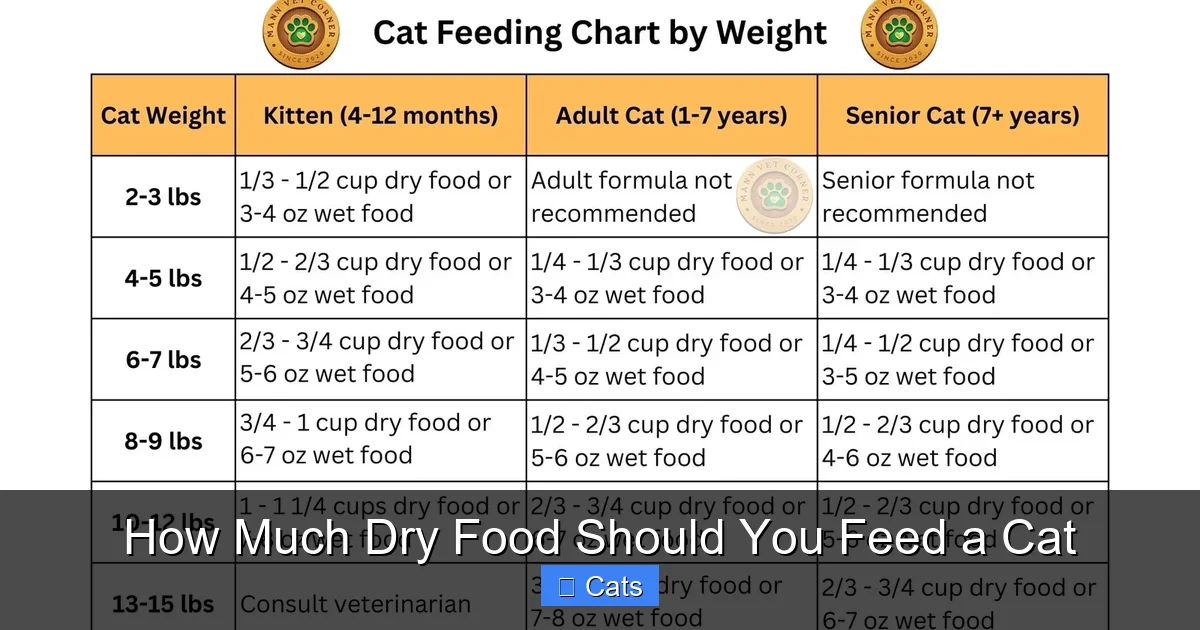
Visual guide about How Much Dry Food Should You Feed a Cat
Image source: mannvetcorner.com
The Danger of Free-Feeding
Free-feeding—the practice of leaving a bowl of dry food out 24/7 is one of the primary drivers of weight gain. In the wild, cats eat small, frequent meals throughout the day. While this sounds natural, domestic cats often treat a full bowl as an invitation to graze out of boredom. By transitioning to measured, scheduled meals, you gain total control over exactly how much your cat consumes.
Using Tools for Precision
In 2026, we have better tools than ever to manage portions. Using a standard measuring cup is a good start, but food scales are even better. Dry food kibble size and density can vary, even within the same bag. A digital scale allows you to measure by weight rather than volume, which is far more accurate. If you feed your cat 50 grams of food, you are giving them 50 grams every single time, regardless of how the kibble settles in a cup.
Life Stages: From Kitten to Senior
The question of how much dry food should you feed a cat changes dramatically as they grow. A kitten, for instance, is in a state of rapid development. They need calorie-dense food and, in many cases, can be fed more frequently because their stomachs are tiny and their energy needs are massive.
Kitten Growth Spurts
Kittens generally require about double the calories per pound compared to adults. They are building bones and developing brain function, which requires a significant amount of fuel. During the first six months, it is often recommended to feed them three to four small meals a day. By the time they reach adulthood, usually around 12 months, you should begin the slow transition to an adult feeding schedule.
The Needs of the Senior Cat
Senior cats (usually age 10 and older) often have a slower metabolism. Just like humans, their bodies become more efficient at storing energy and less efficient at burning it. You may notice your older cat has less muscle mass or is less interested in running.
This is the time to watch the scale closely. You might need to adjust their portions downward to account for their lower activity levels. However, if your senior cat is losing weight unexpectedly, always consult a veterinarian, as this can be a sign of underlying health issues like hyperthyroidism.
Dry Food and Hydration
One of the most common concerns regarding dry food is water intake. Because dry kibble typically contains only about 10% moisture, compared to the 75-80% moisture found in wet food, your cat needs to drink more water to stay hydrated. If you strictly feed dry food, you must ensure your cat has multiple water sources.
Encouraging Healthy Drinking Habits
Some cats are naturally picky about their water. If you notice your cat isn’t drinking enough, consider a filtered water fountain. Many cats prefer running water, which mimics the fresh, moving water they would seek in nature. You can also try placing water bowls in different areas of the house—cats often dislike drinking right next to their food bowl, as their instincts tell them that water near a “kill” might be contaminated.
The Hybrid Feeding Strategy
Many veterinarians in 2026 suggest a “mixed feeding” approach. By feeding a portion of wet food in the morning and a portion of dry food in the evening, you get the best of both worlds. The wet food helps boost hydration, while the dry food provides the convenience and dental benefits of crunching. This also allows you to be more flexible if you have a busy schedule.
Monitoring Your Cat’s Body Condition
Numbers on a bag or a scale are only half the battle. The most important metric is your cat’s Body Condition Score (BCS). This is a visual and tactile assessment of how your cat looks and feels. You don’t need a medical degree to do it; you just need to feel your cat’s ribcage.
The Hands-On Test
Run your hands gently along your cat’s sides. You should be able to feel their ribs under a thin layer of muscle and fat. If you can’t feel the ribs at all, your cat is likely overweight. If the ribs are sharp and clearly visible with no fat covering, your cat may be underweight. Ideally, you want a “slight” feeling of ribs, similar to how your knuckles feel when you make a fist.
Recognizing the Waistline
When looking at your cat from above, they should have a visible waistline behind their ribs. If the body is a straight line or curves outward, it is time to reassess the portions. Weight gain can happen very gradually often just a few ounces at a time which makes it easy to miss until it becomes a real health problem. Taking a photo of your cat from above once a month is a great way to track subtle changes over time.
The Final Verdict: Consistency and Love
So, how much dry food should you feed a cat? There isn’t one single answer that fits every feline. It is a dynamic process that starts with a calculation, is verified by the scales, and is perfected by your own careful observation.
Start with the guidelines on the packaging, but treat them as a starting point rather than a rigid rule. Remember that feeding time is also a time for bonding. Instead of just dumping a bowl, use that time to talk to your cat or engage in a quick play session.
By staying proactive about their nutrition, you are doing more than just filling a bowl; you are investing in years of health, comfort, and companionship. If you ever feel uncertain, your veterinarian is your best partner. With regular check-ups and a mindful approach to portion control, your cat will be thriving for years to come.
Frequently Asked Questions
How do I know if I am feeding my cat too much?
You can check if your cat is overfed by feeling their ribs; if you cannot feel them easily under a thin layer of fat, they are likely carrying extra weight. Additionally, monitoring their weight regularly and checking for a defined waistline from above are great ways to gauge if you need to reduce their portions.
Can I leave dry food out all day?
While convenient, leaving food out all day can lead to overeating and obesity because cats often graze out of boredom. It is much healthier to serve measured portions at specific times of the day to ensure you know exactly how much your cat is consuming.
Should I adjust portions if I give my cat treats?
Yes, treats should be included in your cat’s total daily calorie budget. If you give your cat treats during the day, make sure to subtract those calories from their main meal portions to prevent accidental weight gain.
Why does my cat act hungry even after I feed them?
Cats are natural opportunists and often “beg” for food even when they have been fed their full daily requirement. If you are confident you are providing the right amount of calories, try using puzzle feeders or interactive toys to satisfy their instinct to hunt rather than simply giving them more food.
Does the quality of the dry food change how much I should feed?
Absolutely, as higher-quality foods are often more nutrient-dense and contain fewer “fillers,” meaning your cat may actually need less food to feel full. Always check the caloric density on the bag whenever you switch brands, as the feeding amounts will almost certainly change.
How often should I weigh my cat?
For most adult cats, weighing them once a month is sufficient to catch any major trends in weight gain or loss. If your cat is on a specific diet plan to lose weight, your veterinarian may recommend weighing them every two weeks to ensure the progress is safe and steady.