
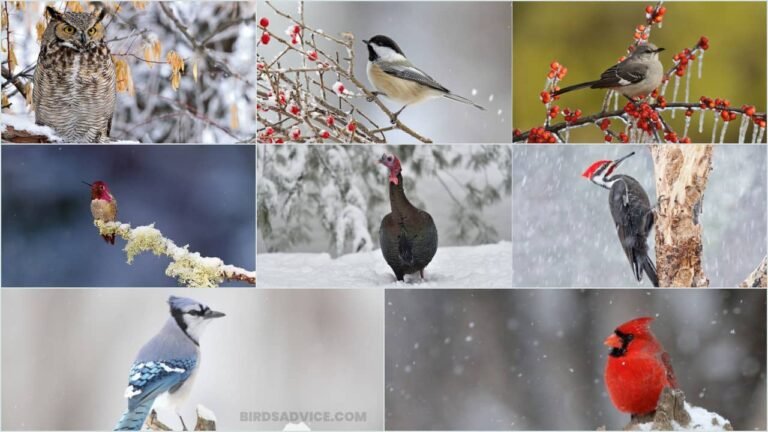
Many birds in the United States do not migrate. They stay in the same general area all year and are called resident birds, nonmigratory birds, or year-round birds. Common examples include Northern cardinals, wild turkeys, California quail, great horned owls, barred owls, and many house sparrows.
However, migration is not always an all-or-nothing trait. A bird species may remain year-round in one part of the country but migrate in another. Food supply, temperature, daylight, age, sex, and breeding needs can all affect whether a population moves.
What Does It Mean When a Bird Does Not Migrate?
A nonmigratory bird stays within the same broad home range throughout the year. It may still move several miles—or even farther—to find food, water, shelter, or a mate. These short trips are normal movement, not seasonal migration.
Migration usually means a repeated, seasonal journey between breeding and wintering areas. The trip may cover hundreds or thousands of miles. Resident birds avoid this long seasonal journey because their local habitat can meet their needs throughout the year.
The term resident bird does not mean that every individual stays in one exact spot. A Northern cardinal may leave a backyard to find food nearby, while a wild turkey may walk across a large area. The key difference is that the bird does not make a regular seasonal trip to a distant region.
Resident, migratory, and partially migratory birds
| Type of bird | Seasonal behavior | Example |
|---|---|---|
| Resident | Stays in the same general region all year | Northern cardinal |
| Migratory | Travels between breeding and wintering areas | Barn swallow |
| Partially migratory | Some populations migrate while others stay | American robin |
| Irruptive | Moves in irregular years when food supplies change | Red crossbill |
The American Bird Conservancy and Cornell Lab of Ornithology both describe migration as a flexible behavior that can vary by species, population, and location. For that reason, a bird guide should not label an entire species as permanently nonmigratory without a regional qualification.

Common Birds That Usually Do Not Migrate in the United States
The following birds are common year-round residents in at least part of the United States. Some remain in place across most of their range. Others are resident only in warmer regions or in areas with reliable food.
Northern Cardinal
The Northern cardinal is one of the best-known nonmigratory birds in the United States. It lives year-round across much of the eastern and central United States, as well as parts of the Southwest.
Both male and female cardinals defend territories and often remain near the same nesting area through winter. Their strong bills allow them to eat seeds, fruit, and some insects when conditions change.
Cardinals may move locally when food is scarce. They do not usually make a long-distance seasonal migration.
Mourning Dove
Mourning doves are year-round residents across much of the continental United States. Some northern birds move south in winter, so this species is not entirely nonmigratory.
A mourning dove may remain in a neighborhood if it has access to seeds, water, and shelter. Its soft call can be heard in every season, including winter in many southern and central states.
Wild Turkey
The wild turkey generally does not migrate. It may travel over a broad home range while searching for acorns, seeds, insects, and other food, but these movements are not seasonal migrations.
Winter weather can change where turkeys feed and roost. Deep snow may force them to use lower ground or seek food near farms and woodland edges. Even so, most wild turkeys remain in the same region throughout the year.
California Quail
The California quail is a nonmigratory bird found mainly in the western United States. It may shift its location during periods of drought, heavy rain, or food shortage.
These quail often live in groups called coveys. They use brush, grass, and low shrubs for cover. Their ability to eat seeds and plant matter helps them remain in one area year-round when habitat conditions are suitable.
Gambel’s Quail
Gambel’s quail usually stays in the desert Southwest. It is common in parts of Arizona, New Mexico, Nevada, Utah, California, and Texas.
This bird can survive in hot, dry areas by using shade, plant foods, and available water. It may travel to find resources, but it does not normally migrate to a separate wintering range.
Great Horned Owl
The great horned owl is a widespread resident of the United States. Adults usually defend a territory throughout the year.
Young owls may disperse after leaving the nest. This movement can cover a significant distance, but it is different from the regular seasonal migration seen in many songbirds.
Great horned owls are adaptable predators. They hunt mammals, birds, and other prey in forests, deserts, suburbs, farmland, and open country.
Barred Owl
The barred owl is usually nonmigratory. It lives year-round in much of the eastern United States and parts of the Pacific Northwest.
Barred owls depend on mature trees, nesting cavities, and nearby hunting areas. They may move when forests are cleared or when young birds establish new territories, but adults commonly remain in the same general area.
Northern Mockingbird
The Northern mockingbird is a year-round resident in most of the United States. It is especially common in the South, Southwest, and along the Atlantic coast.
Some mockingbirds in the northern part of their range may move south during winter. In warmer regions, they usually stay near their breeding territory.
House Sparrow
The house sparrow does not usually migrate in the United States. It lives close to people and uses buildings, farms, parks, and urban areas for nesting and feeding.
House sparrows can find seeds, discarded grain, and shelter in human-dominated areas. Their close association with towns helps them survive winter without traveling long distances.
Rock Pigeon
The rock pigeon is another common nonmigratory bird. In the United States, it often lives in cities, industrial areas, bridges, and farm buildings.
Pigeons may fly several miles each day to feed or return to a roost. These daily flights are not migration because they do not involve a regular seasonal change between distant regions.
California Scrub-Jay
The California scrub-jay generally remains in the same region year-round. It stores acorns and other food, which helps it survive periods when fresh food is limited.
Some scrub-jays may move locally after breeding or when habitat conditions change. Most do not make a predictable long-distance migration.
Common Ravens
Common ravens are generally resident birds across much of the United States. They may travel widely while searching for food, but adults often maintain a familiar territory.
Young ravens can disperse after leaving their parents. This is a life-stage movement, not the same as a seasonal migration.

Birds That May Stay or Migrate Depending on Location
The hardest birds to classify are partial migrants. A species may include both resident and migratory populations. The same species can behave differently in Maine, Texas, California, and Alaska.
American Robin
American robins are often described as spring and summer birds in northern states. Yet many robins remain in the United States all winter, especially in the South and along the Pacific Coast.
Robins form loose winter groups and search for berries and fruit. Their presence in winter does not prove that all robins stayed in the same place. Some local birds may have moved in from farther north.
Blue Jay
Many blue jays remain in the same area all year. Others migrate short or moderate distances, especially in the northern part of the range.
Blue jay migration is irregular. Numbers may change from one autumn to the next. Food crops, weather, and the age of the birds can influence movement.
Red-Tailed Hawk
The red-tailed hawk is a year-round resident in much of the United States. Northern populations may move south for winter, while many adults in the lower 48 states stay near their territories.
A red-tailed hawk seen in winter may be a local bird or a visitor from farther north. Field marks alone may not reveal where that individual came from.
Bald Eagle
Bald eagles often remain near permanent water sources throughout the year. However, young eagles and birds from northern areas may travel south during winter.
Adults may also move if lakes freeze or food becomes hard to find. This makes the bald eagle a flexible species rather than a strictly nonmigratory one.
Canada Goose
Some Canada geese migrate long distances. Others live year-round in parks, reservoirs, golf courses, and urban wetlands.
Reliable food and open water allow many geese to remain in one area. These resident flocks can create conflicts when they gather in large numbers near homes or public spaces.
House Finch
House finches usually remain year-round in much of the western and central United States. Birds in the northern part of the range may move south during winter.
Urban bird feeders can also change local movement. A steady food source may allow house finches to remain in areas where natural winter food is less available.

Why Do Some Birds Stay in One Place All Year?
Birds remain resident when the benefits of staying outweigh the benefits of migration. A stable food supply, mild winter, safe nesting area, and lack of strong competition can all favor year-round residence.
Food remains available
Birds can stay when they can find food in every season. Seeds, berries, nuts, insects, small mammals, and human-provided foods may support resident populations.
For example, cardinals eat seeds and fruit, while owls hunt mammals that remain active during winter. A bird that depends on insects in trees may face more pressure to migrate when cold weather removes its food supply.
Winters are mild
Cold weather does not affect every part of the United States in the same way. A bird may survive winter in Florida, Texas, or coastal California but face extreme cold farther north.
Mild temperatures reduce the energy a bird needs to stay warm. They also keep water, plants, and some insects available for longer periods.
The habitat supports nesting and shelter
Resident birds need more than food. They also need safe places to sleep, raise young, and avoid predators.
Woodlands, dense shrubs, cliffs, farms, wetlands, and buildings can provide shelter. A bird may stay when its habitat offers enough protection throughout the year.
Migration has risks
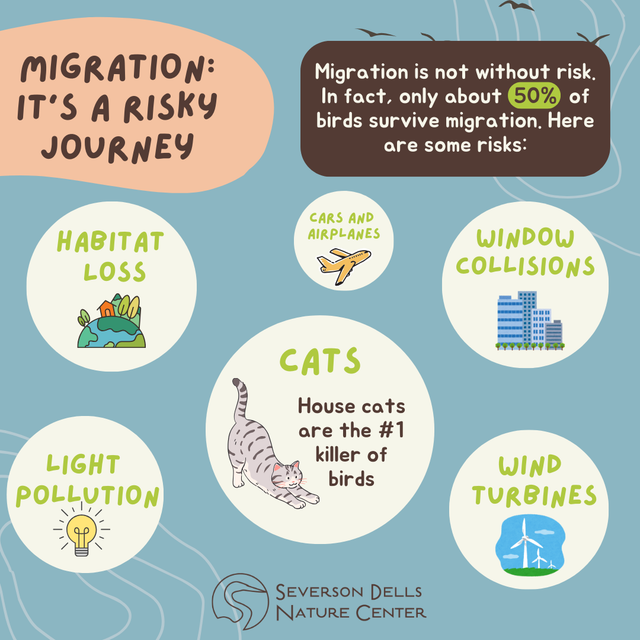
Migration can help birds reach better seasonal resources, but it also has costs. Birds must spend energy on flight, cross unfamiliar areas, avoid predators, and locate food along the route.
Storms, tall buildings, glass, vehicles, and habitat loss can make travel dangerous. A bird may benefit from staying if its local habitat remains suitable.
Resident birds adapt to local seasons
Nonmigratory birds often change their behavior rather than their location. They may:
- Eat different foods in winter
- Grow denser feathers
- Form winter groups
- Use sheltered roosts
- Reduce activity during cold periods
- Move to lower elevations
- Store food for later use
Staying does not mean conditions are easy. It means the bird has traits and resources that make local survival possible.

How to Tell Whether a Bird Is Migratory
A bird’s presence in winter does not always show that it is a year-round resident. Use location, date, population patterns, and behavior together.
Check a trusted range map
The Cornell Lab of Ornithology’s All About Birds provides species accounts and range information. The National Audubon Society and U.S. Fish and Wildlife Service also provide useful information about birds and seasonal movement.
Look for map colors that mark:
- Year-round range
- Breeding range
- Winter range
- Migration routes
- Occasional or rare records
A range map often gives a better answer than a simple label such as “migratory” or “nonmigratory.”
Consider the bird’s location
The same species may behave differently in different states. A Northern cardinal in Georgia is more likely to stay through winter than one in Minnesota. A Canada goose in an urban park may remain while another flock migrates from Canada to the southern United States.
Location is one of the most useful clues when deciding whether a bird is a resident.
Watch for seasonal changes
A sharp rise in the number of birds during spring or fall may indicate migration. However, local breeding can also increase bird numbers.
Useful clues include:
- A species appears only during one season
- Large groups arrive within a short period
- The birds disappear after breeding
- Bird banding or tracking shows long-distance movement
- A winter flock contains birds from several regions
Use bird-count data
Community science programs can reveal seasonal patterns. eBird records, Christmas Bird Counts, and local bird surveys can show whether a species occurs in one area throughout the year.
These records have limits. A lack of reports does not prove that a bird is absent. Weather, observer effort, access, and identification skill can affect the data.
Do not rely on one sighting
Seeing a robin in January does not prove that the entire local population is resident. It only proves that at least one robin was present at that time.
Likewise, not seeing a cardinal in winter does not mean the species migrated. The bird may be nearby but using dense cover or a different food source.

Do Nonmigratory Birds Still Move?
Yes. A nonmigratory bird may move locally, disperse as a young bird, or shift its range when conditions change.
Daily movement
Many resident birds travel every day to feed, drink, roost, or defend territory. A pigeon may fly from a city building to a food source. A hawk may patrol several miles of open land.
These trips are part of normal behavior, not migration.
Juvenile dispersal
Young birds often leave their parents after the breeding season. This movement reduces competition and helps young birds find their own territory.
Juvenile dispersal can be longer than an adult’s normal movement. It still differs from migration because it is usually a one-time or irregular event.
Elevation changes
Some birds move uphill in warm months and downhill in winter. This pattern is called altitudinal migration.
A bird can therefore be “nonmigratory” in a broad regional sense while still changing elevation with the seasons.
Weather-related movement
Severe storms, drought, wildfire, ice, and heavy snow can cause birds to leave a local area. These movements may be temporary and unpredictable.
A bird that leaves because a food source failed is not necessarily a regular migrant. It may return when conditions improve.
Common Misunderstandings About Birds That Do Not Migrate
“Nonmigratory” does not mean “never moves”
Resident birds may travel daily or move across a large home range. The term refers to the absence of regular, long-distance seasonal migration.
A bird’s species name is not enough
Species labels can hide regional differences. Always check the bird’s location and the population involved.
Winter sightings do not identify the bird’s origin
A winter bird may be:
- A local resident
- A bird from a nearby region
- A migrant from farther north
- A young bird dispersing for the first time
- A bird pushed by weather
Without banding or tracking data, its exact origin may be unknown.
Bird feeders can change what people see
Feeders attract birds that might otherwise spread out across a larger area. They can also make a species seem more common or more sedentary than it is.
Feeders do not necessarily stop migration. A migratory bird may visit a feeder before continuing its journey.
Urban birds are not always permanently resident
Cities can provide food, warmth, and shelter. These conditions allow some birds to stay through winter. But urban birds may still move when food supplies, weather, or nesting conditions change.

How to Help Year-Round Birds in Your Yard
You can support resident birds by improving habitat rather than relying only on feeders.
Plant native trees and shrubs
Native plants provide seeds, berries, insects, and shelter. Choose plants suited to your soil, climate, and local wildlife needs.
Dense shrubs can protect small birds from wind and predators. Mature trees provide nesting sites, roosts, and cover.
Provide clean water
A shallow birdbath can help birds drink and bathe. Change the water often and clean the basin to reduce the chance of disease spread.
In freezing weather, place the bath where it receives sunlight or use a properly designed heated birdbath. Keep electrical devices outdoors only when they are rated for outdoor use and connected safely.
Prevent window collisions
Glass can reflect sky and trees, causing birds to strike windows. Use exterior screens, closely spaced decals, cords, or other visible patterns.
Place feeders either very close to a window—within about 3 feet—or more than 30 feet away. This setup can reduce the speed of collisions compared with placing a feeder at an intermediate distance.
Keep cats indoors
Outdoor cats kill large numbers of birds and other wildlife. Keeping cats indoors protects birds and also reduces risks to cats from vehicles, disease, and predators.
Clean feeders and avoid crowding
Clean seed feeders regularly. Remove wet or moldy food. If sick birds appear, pause feeding and clean the area before putting feeders back.
Use several feeding stations to reduce crowding. This advice supports bird health but cannot prevent every disease risk.

Key Takeaways
- Birds that stay in the same general region all year are called resident or nonmigratory birds.
- Common examples in the United States include Northern cardinals, wild turkeys, California quail, great horned owls, barred owls, Northern mockingbirds, house sparrows, and rock pigeons.
- Some species, such as American robins, blue jays, bald eagles, and Canada geese, include both resident and migratory populations.
- A resident bird can still travel daily, disperse as a young bird, or move during severe weather.
- The best way to identify a bird’s migration status is to consider its species, location, season, and population—not one sighting alone.
Frequently Asked Questions
What is the most common nonmigratory bird in the United States?
There is no single answer for every state. Northern cardinals, house sparrows, rock pigeons, and mourning doves are among the most familiar year-round birds in many parts of the country.
Do robins migrate or stay all year?
Both behaviors occur. Many robins migrate from northern breeding areas, while others remain year-round in the South, along the Pacific Coast, and in suitable urban or suburban habitats.
Do birds migrate within the United States?
Yes. Many birds move between northern breeding grounds and southern wintering areas within the United States. Others travel between the United States, Canada, Mexico, Central America, and South America.
Do birds that do not migrate get cold?
They can survive cold weather through insulation, shelter, food changes, and behavioral adjustments. Severe cold can still be dangerous, especially when food and water are hard to find.
Are blue jays nonmigratory birds?
Many blue jays stay year-round, but some migrate or move seasonally. The pattern varies by region and by year.
How can I find out whether a bird in my state migrates?
Check a current range map from Cornell Lab of Ornithology, compare local eBird records across seasons, and consult a regional bird guide. State wildlife agencies and local Audubon chapters can also provide regional information.
Conclusion
Many birds in the United States do not migrate. Northern cardinals, wild turkeys, quail, owls, mockingbirds, house sparrows, and pigeons can often find enough food and shelter to remain in the same region all year.
The most accurate answer depends on geography. A species may be resident in one state, migratory in another, or partly migratory across its range. When identifying a bird’s seasonal habits, check the local population, not just the species name.