
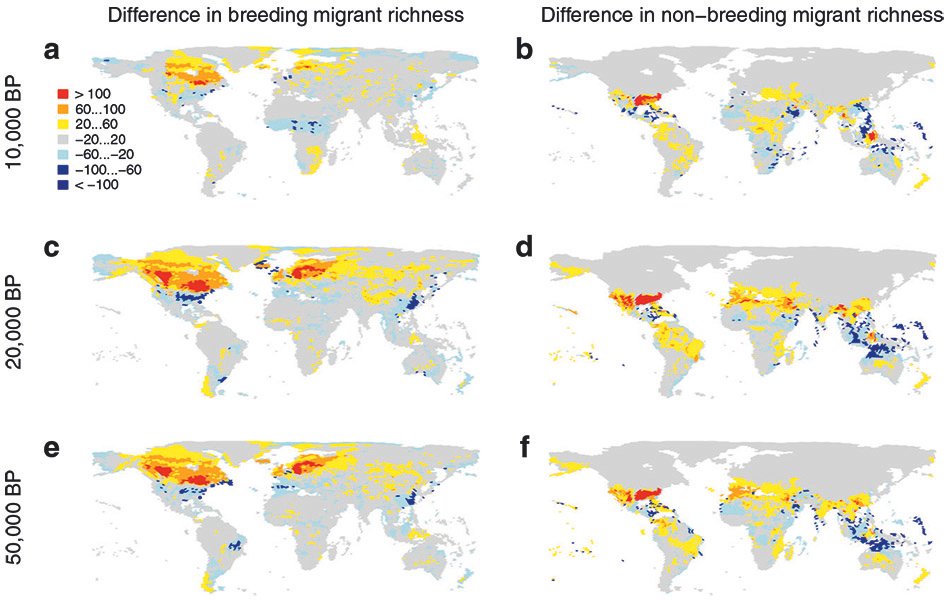
Across the United States, migration is easy to see each spring and fall. Warblers, geese, shorebirds, hawks, and many other species move between breeding and wintering areas. About 40% of the world’s bird species migrate regularly, according to widely used estimates from bird research organizations. In the United States, the share varies by region and bird group, so there is no single percentage for every American bird population.
The 40% figure refers to bird species, not the percentage of individual birds alive at one time. It also includes different forms of migration, such as long-distance travel, short movements, and seasonal shifts within a continent.

The short answer: about 40% of bird species migrate
Scientists commonly estimate that roughly 4,000 of the world’s approximately 10,000 bird species migrate. That works out to about 40%.
The estimate is not an exact global census. Researchers define migration in slightly different ways, and bird classifications change as scientists revise species lists. Still, 40% is a useful, evidence-based estimate for explaining the global scale of bird migration.
A simple calculation looks like this:
4,000 migratory species ÷ 10,000 total bird species × 100 = 40%
This estimate is based on species, not individual birds. One migratory species may contain millions of birds, while another may have only a small population. Therefore, the percentage of individual birds that migrate could differ greatly from the percentage of species.
The widely cited estimate of about 4,000 migratory bird species is reported by organizations such as Cornell Lab of Ornithology and the Convention on Migratory Species.
What counts as a migrating bird?
A migrating bird moves from one area to another at a predictable time or during a repeated part of its life cycle. Most migration helps birds reach better conditions for breeding, feeding, or surviving winter.
Migration can take several forms:
- Long-distance migration: A bird travels between North America and Central or South America, or between other continents.
- Short-distance migration: A bird moves a few hundred miles to find food or avoid severe weather.
- Altitudinal migration: A bird moves up or down a mountain rather than traveling mainly north or south.
- Partial migration: Some birds in a population migrate while others remain in the same area.
- Irruptive movement: Birds move in irregular years when food supplies change. This is common in some northern finches and other species.
This range of behaviors explains why the word “migrate” does not always mean a dramatic trip across continents. A bird that moves from a mountain forest to a low valley for winter may still be a migrant.
Birds may also use different routes in spring and fall. This is called loop migration. The return trip may follow a different path because wind, food, weather, and stopover sites change by season.
How many birds migrate in the United States?
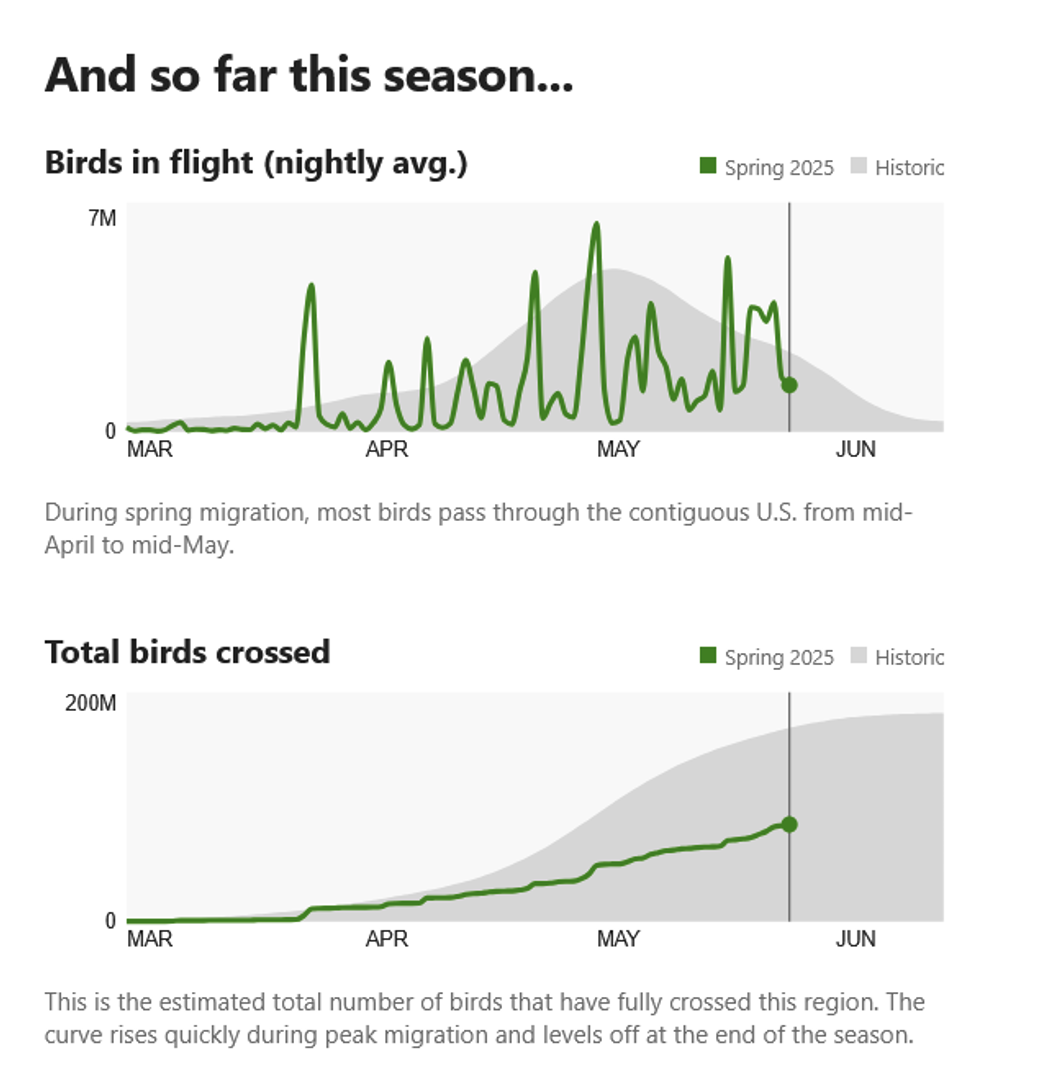
The United States does not have one fixed migration percentage for all birds. The result changes based on the location, season, and group of birds being measured.
For example:
- Many Arctic-breeding shorebirds pass through the United States during migration.
- A large share of warblers, vireos, flycatchers, and tanagers leave the United States for winter.
- Many ducks, geese, and other waterbirds migrate, although some populations remain year-round.
- Some hawks and eagles move south in fall and return north in spring.
- Several common birds, including some chickadees, cardinals, and resident woodpeckers, often stay in the same broad area all year.
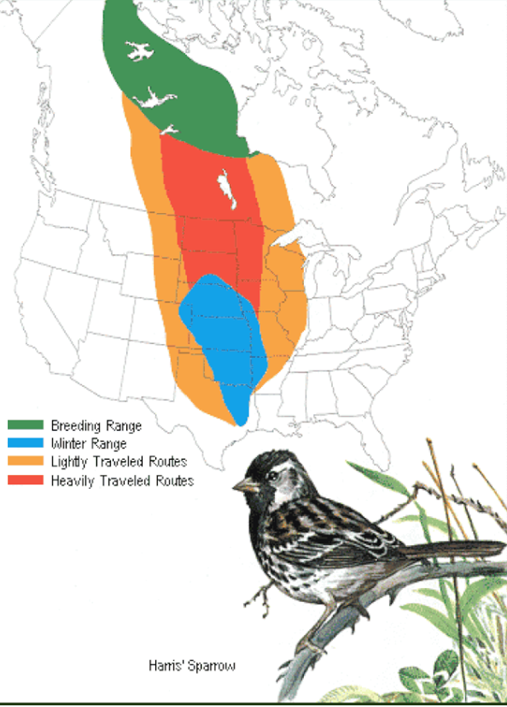
The United States sits along major migration routes called flyways. The four main U.S. flyways are:
- Atlantic Flyway
- Mississippi Flyway
- Central Flyway
- Pacific Flyway
These routes are not narrow highways. They are broad geographic regions with many paths, stopover sites, and wintering areas.
The U.S. Fish and Wildlife Service manages information and conservation programs for migratory birds in the United States. Its work covers many species protected under the Migratory Bird Treaty Act, but the protected-species list should not be treated as a direct percentage of all birds that migrate.
Why do birds migrate?
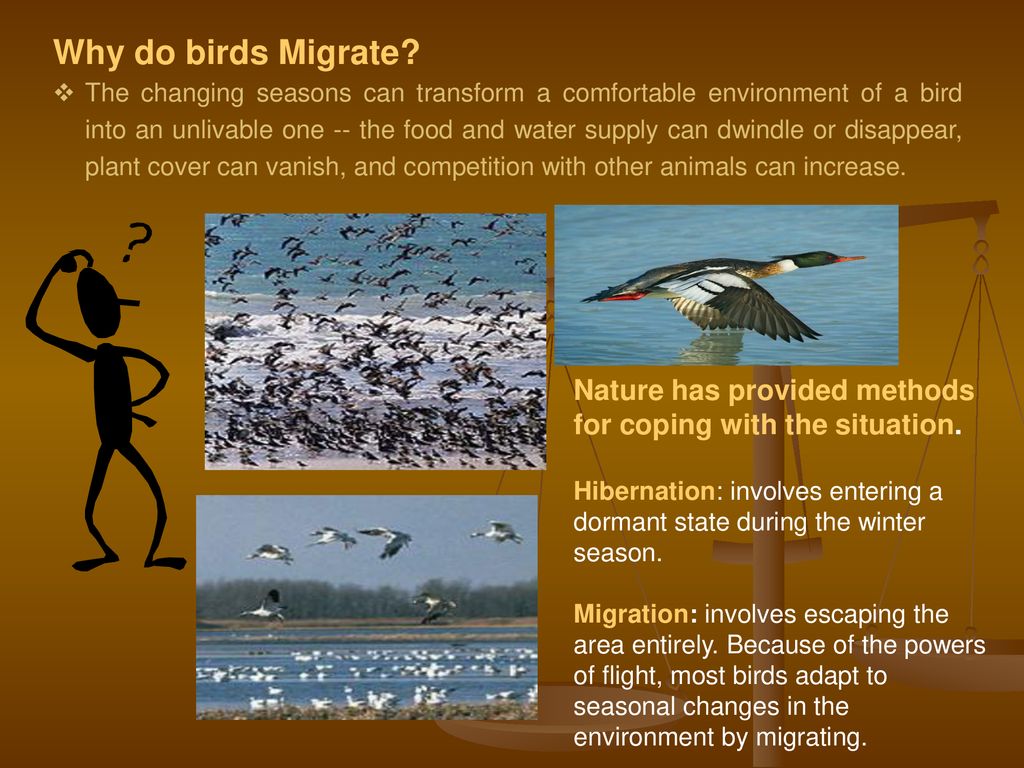
Birds migrate mainly because seasonal conditions affect food, nesting space, and survival. Migration lets them use resources that are available only during part of the year.
Food supply
Insects, berries, seeds, fish, and nectar can become scarce during winter. A bird may leave a cold region when food is hard to find and return when spring produces a new supply.
For example, many insect-eating birds breed in North America when insect numbers are high. They then travel south when cold weather reduces insect activity.
Breeding opportunities
Northern regions may offer long summer days and abundant food during the breeding season. These conditions can help birds feed chicks quickly and raise more young.
Weather and survival
Cold temperatures, snow, ice, drought, and storms can make survival harder. Migration does not remove all risks, but it can move birds toward better conditions.
Migration is therefore a trade-off. Travel requires energy and exposes birds to storms, predators, disease, and habitat loss. Birds migrate when the likely benefit is greater than the cost.

Do all birds of one species migrate?
No. Some species show partial migration, which means only part of the population migrates.
A population may include:
- Birds that migrate long distances
- Birds that move a short distance
- Birds that remain in the same area
- Young birds that migrate differently from adults
The pattern can depend on age, sex, body condition, weather, food, and genetics. In some species, larger or more dominant birds may stay farther north, while smaller birds move south. In other species, nearly every individual migrates.
Migration can also change over time. A warmer winter may allow more birds to remain in northern areas. A drought may push birds farther south or cause them to stop in different places.
This is why statements such as “all robins migrate” or “robins never migrate” are too simple. American Robins may stay year-round in parts of the United States, while others move south or shift to lower elevations.
How is the percentage of migrating birds estimated?
Researchers estimate migration in several steps. They first define the group being studied, then compare known migratory species with the total number of species in that group.
A basic species-based estimate is:
| Measurement | Example value |
|---|---|
| Estimated migratory bird species | 4,000 |
| Estimated total bird species | 10,000 |
| Calculation | 4,000 ÷ 10,000 |
| Estimated share | 40% |
This method gives a broad global estimate. It does not measure every bird in the sky.
Scientists use several tools to study migration:
- Bird banding and recapture records
- Radio and satellite tracking
- Weather radar
- Stable-isotope analysis
- Field observations
- Acoustic monitoring
- Community reporting platforms such as eBird
- Population surveys and breeding bird counts
Each tool answers a different question. Radar can show large movements, while tracking devices can reveal an individual bird’s route. Field surveys can show when a species appears in a location, but they may miss birds that migrate at night or pass through quickly.
The estimate also depends on the bird classification system used. If scientists split one species into several species, or combine species, the percentage can change.

Is 40% the percentage of individual birds that migrate?
No. The 40% figure is generally used for species, not individual birds.
This distinction matters because bird species differ greatly in population size. A single migratory species may include millions of individuals. A nonmigratory species may have a much smaller population, or the reverse may be true.
For example, imagine a region with:
- 100 bird species
- 40 migratory species
- 1 million individual birds
The 40 migratory species might include 700,000 individual birds—or only 100,000. The species percentage alone cannot tell us the percentage of individual birds.
To calculate the percentage of individual birds, researchers would need reliable population estimates for every species and accurate information about how many individuals migrate. That type of global calculation is much harder and is not represented by the common 40% estimate.
What percentage of North American birds migrate?
A single percentage for North American birds depends on the boundary and group used. North America includes breeding areas in the United States, Canada, Greenland, Mexico, and the Caribbean, while many species cross those boundaries during the year.
A more useful way to think about the region is by bird group:
| Bird group | Typical migration pattern |
|---|---|
| Arctic shorebirds | Often long-distance migrants |
| Neotropical songbirds | Many breed in the U.S. or Canada and winter farther south |
| Waterfowl | Many migrate, but some populations stay year-round |
| Raptors | Many migrate along major flyways |
| Backyard resident birds | Some remain local; others shift seasonally |
| Mountain birds | Some move by elevation rather than latitude |
The share of migrants is often higher in northern breeding regions than in tropical regions. In the tropics, food and temperature may remain suitable throughout the year, although tropical birds can still move in response to rainfall, fruit crops, or local conditions.
A national or continental percentage should therefore identify the species list, geographic boundary, season, and definition of migration before it is treated as precise.
Which U.S. birds migrate the farthest?
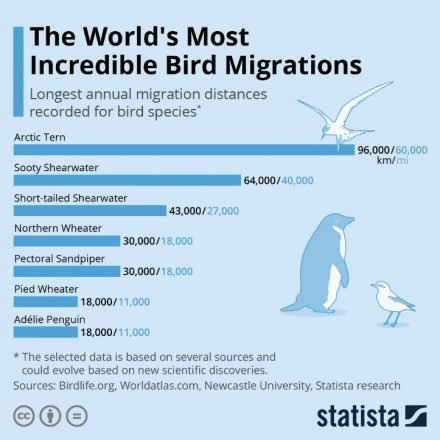
Some birds that occur in the United States make extremely long annual journeys.
Examples include:
- Arctic Terns, which travel between Arctic breeding grounds and Antarctic waters. They are among the world’s longest-distance migrants.
- Bar-tailed Godwits, which make very long nonstop flights across the Pacific, although their main route does not center on the continental United States.
- Red Knots, which move between Arctic breeding areas and southern wintering grounds and depend on key coastal stopovers.
- Blackpoll Warblers, known for long migrations between northern breeding areas and South America.
- Ruby-throated Hummingbirds, many of which travel between the eastern United States or Canada and Mexico or Central America.
Distance is only one measure of migration. A shorter trip can still be difficult if it crosses deserts, mountains, open water, or areas with few safe places to rest.
When do birds migrate in the United States?
Most U.S. bird migration occurs in two broad seasons:
- Spring migration: Birds move toward breeding grounds, often from late winter through spring.
- Fall migration: Birds move toward wintering grounds, often from late summer through fall.
The exact timing differs by species and location. Hummingbirds may arrive before some songbirds. Shorebirds may pass through in waves. Hawks often move when winds and thermal conditions help them save energy.
Migration also occurs at night. Many small songbirds travel after dark, guided by stars, Earth’s magnetic field, landscape features, and wind patterns. This is one reason people may hear or see migration without noticing large flocks.
The best local information comes from seasonal bird reports, migration counts, and birding records for the specific state or region. A national calendar can provide a general guide, but it cannot predict the exact arrival date for every species.
Why does the percentage vary by region?
Migration is shaped by climate, geography, food, and breeding history. Regions near the poles often have more seasonal changes in daylight and food, which can favor migration. Tropical regions may support more year-round residents, but they also contain many seasonal migrants.
Geography creates strong local differences:
- Coastal areas may receive large numbers of shorebirds.
- Wetlands may concentrate ducks, geese, and wading birds.
- Mountain passes may funnel raptors.
- Forest edges may attract migrating songbirds.
- Desert oases can become essential stopover sites.
A bird may also be migratory in one part of its range but resident in another. This pattern occurs when populations face different weather and food conditions.
For this reason, the question “What percentage of birds migrate?” needs a qualifier. The most defensible general answer is about 40% of bird species worldwide, while a local answer requires a defined region and bird community.
Common mistakes when interpreting migration statistics
Several mistakes can make a migration statistic sound more precise than it is.
Mistake 1: Treating 40% as a count of individual birds
The estimate usually describes species. It does not mean that 40% of every bird seen in the United States is moving south or north.
Mistake 2: Counting seasonal visitors as the whole population
A bird seen during migration may represent only part of its species’ population. Other individuals may breed locally, winter nearby, or use a different route.
Mistake 3: Assuming every bird follows the same schedule
Weather, food, age, sex, and location can shift migration dates. A late arrival does not always mean that migration has stopped.
Mistake 4: Treating a flyway as a narrow path
Flyways cover broad regions. Birds may use different routes within the same flyway and may change routes from year to year.
Mistake 5: Comparing incompatible studies
One study may measure species. Another may measure individual birds, migration events, or birds passing a single station. Those results cannot be averaged without checking their methods.
How can you help migrating birds in the United States?
The most useful steps are to protect food, shelter, and safe travel conditions.
You can help by:
- Keeping cats indoors, especially during peak migration.
- Using window markers or screens to reduce collisions.
- Turning off unnecessary outdoor lights at night.
- Planting native flowers, shrubs, and trees that provide food.
- Avoiding pesticides where safer methods are available.
- Providing clean water and shelter.
- Keeping dogs away from sensitive shorebird and nesting areas.
- Supporting habitat protection along wetlands, forests, coasts, and grasslands.
- Reporting sightings through reliable bird-monitoring programs.
Window collisions are a major human-caused threat to birds in the United States. The American Bird Conservancy provides guidance on making glass safer. For night lighting, the Lights Out program explains how reducing light can help birds that migrate after dark.
Do not handle an injured wild bird unless needed for immediate safety. Keep people and pets away, and contact a licensed wildlife rehabilitator or local wildlife agency for instructions.
Frequently asked questions
What is the simplest answer to how many birds migrate?
The simplest global answer is about 40% of bird species. This means roughly 4,000 of about 10,000 bird species are considered regular migrants. It does not mean 40% of all individual birds migrate.
Do birds migrate every year?
Many migratory birds move every year as part of their normal life cycle. However, timing and distance can change with weather, food, age, health, and population. Some birds are partial migrants, so only part of the population travels.
Do all birds in the United States migrate south?
No. Some birds remain in the same region, some move short distances, and others migrate north, south, or by elevation. Migration patterns vary by species and population.
Are birds that fly south always escaping cold weather?
Cold weather can be one factor, but food supply is often just as important. A bird may leave because insects, nectar, fruit, or open water become scarce, even before temperatures become extreme.
How can I tell whether a bird near me is migrating?
Look for a sudden increase in species that are not present year-round, large flocks, active feeding, and changes in timing during spring or fall. A local bird guide, migration count, or verified birding database can help identify seasonal visitors.
Bottom line
About 40% of the world’s bird species migrate regularly. The figure describes species, not individual birds. In the United States, the percentage changes by region, habitat, season, and bird group, so local migration rates can be much higher or lower than the global estimate.
For the most accurate local answer, identify the species and population being studied, define the area, and check records from a trusted source such as the U.S. Fish and Wildlife Service, Cornell Lab of Ornithology, or a regional bird observatory.