
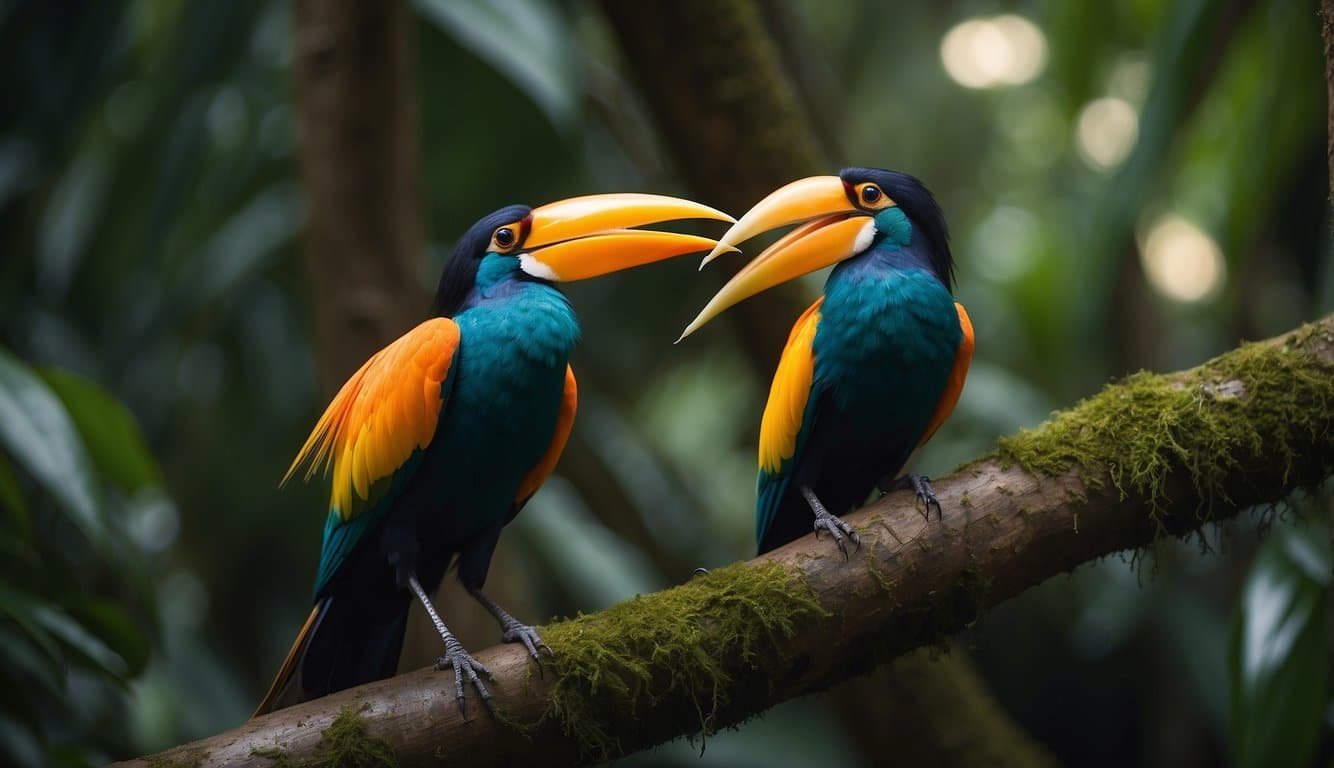
For readers in the United States, the name “birds of paradise” appears in bird guides, natural history museums, zoos, and tropical plant labels. The name sounds poetic, but it began with a real historical mistake: early European traders saw preserved specimens with missing feet and believed the birds lived in the sky.
Birds of paradise are not named because they belong to a place called Paradise. Their name comes from a mix of striking feathers, old trade stories, incomplete specimens, and the belief that such beautiful birds must come from heaven.

The short answer
Birds of paradise are called birds of paradise because early European observers thought the birds were heavenly creatures that floated through the air and never landed.
The belief grew from preserved specimens brought from New Guinea and nearby islands. Some specimens had their legs and feet removed before sale. Without feet, the birds seemed unable to perch or walk. European writers then described them as birds that lived in the sky and fed on heavenly food.
Their bright plumage strengthened the idea. Many species have long tail plumes, bold colors, metallic feathers, or elaborate displays. To European audiences in the 1500s, these unusual birds looked less like ordinary birds and more like creatures from paradise.
The story was later shown to be false. Birds of paradise have legs, feet, and normal perching habits. They spend much of their lives in trees and use their feet to grip branches.
What are birds of paradise?
Birds of paradise are a family of birds called Paradisaeidae. Most species live in New Guinea, with others found in nearby islands and parts of northern Australia.
Scientists recognize about 40 species in the family, although the exact count can change as researchers revise bird classifications. Well-known examples include:
- Greater bird-of-paradise
- King of Saxony bird-of-paradise
- Wilson’s bird-of-paradise
- Raggiana bird-of-paradise
- Twelve-wired bird-of-paradise
- Superb bird-of-paradise
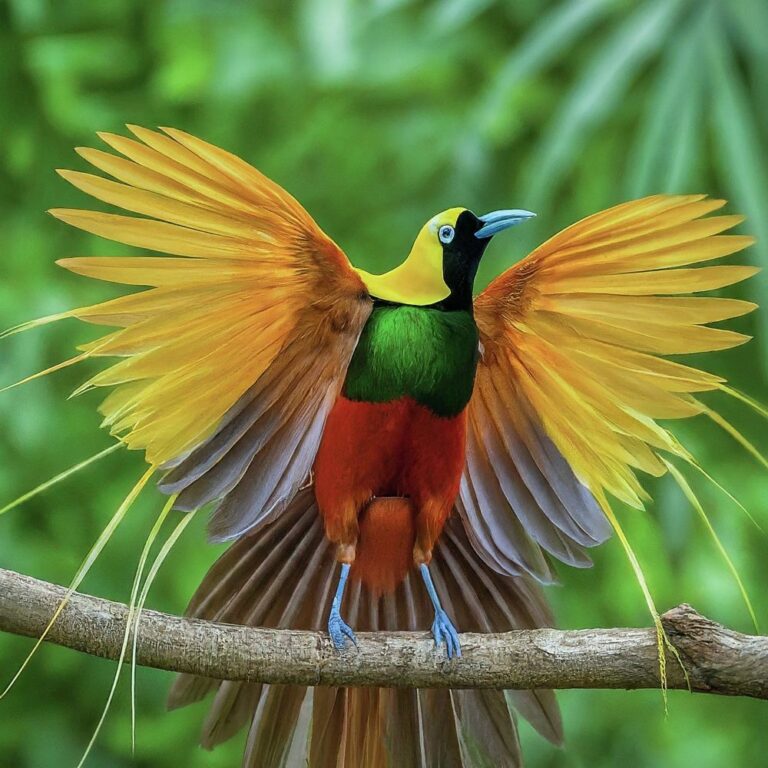
Many male birds of paradise have more striking feathers than females. Males may use bright colors, long plumes, wire-like feathers, fans, or breast shields during courtship. They also perform dances, calls, and carefully timed movements to attract mates.
The family name, Paradisaeidae, comes from the same “paradise” idea. The genus name Paradisaea also reflects this history.
Birds of paradise are not the same as the bird-of-paradise flower
The bird-of-paradise plant commonly sold in the United States is usually Strelitzia reginae. Its orange and blue flowers resemble the head and feathers of a bird, which explains its common name.
The plant and the bird are not closely related. They belong to different branches of life:
| Name | What it is | Why it has the name |
|---|---|---|
| Birds of paradise | A family of birds | Historical beliefs about heavenly birds |
| Bird-of-paradise plant | A flowering plant | The flower looks like a bird’s head |
| Strelitzia reginae | A species of plant | Named for its distinctive flower shape |
This difference matters when searching for information. A query about “bird of paradise” may lead to gardening advice, while “birds of paradise” usually refers to the bird family.

How did the name begin?
The name developed after Europeans received preserved birds from the islands around New Guinea. At the time, natural history was based heavily on specimens, travel reports, and merchant accounts. European buyers often did not see the birds alive in their native forests.
Some specimens were prepared with their legs and feet removed. This may have been done to preserve the skins, make them easier to transport, or meet local trade practices. The exact reason likely varied by specimen and region.
To observers who had never seen a living bird of paradise, a skin without feet created a strange puzzle. If the bird had no feet, how could it land? A supernatural answer seemed plausible to some people.
Early accounts described the birds as birds of heaven or paradise. These stories claimed that they remained in the air, lived on dew, or died only when they touched the ground. The accounts were not based on careful observations of living birds.
The missing-feet story
The missing-feet story explains the scientific name of one famous species: the greater bird-of-paradise.
Its scientific name is Paradisaea apoda. The word apoda means “without feet.” The name records the old error that the bird lacked feet, even though living birds clearly have functional legs and feet.
This does not mean every historical specimen lacked its feet. It means that footless specimens and repeated stories helped shape the name used by European collectors and scientists.
Why the story spread
Several conditions helped the myth survive:
- The birds were unfamiliar. Europeans had limited direct knowledge of New Guinea and its wildlife.
- The specimens were prepared for trade. A dried skin does not show how a living bird moves.
- The feathers were unusually ornate. Their appearance encouraged imaginative explanations.
- Travel information moved slowly. Incorrect reports could circulate for years.
- The idea matched older beliefs. Many cultures used “paradise” to describe a perfect or heavenly place.
The name was therefore built from both evidence and error. The feathers were real. The missing feet were real on some specimens. The idea that the birds never landed was not.
What do birds of paradise really do?
Birds of paradise live ordinary bird lives, although their courtship behavior is far from ordinary. They perch, fly, feed, rest, nest, and raise young. Their feet help them hold onto branches and move through forest vegetation.
Male courtship displays are the main reason these birds became famous. In many species, the male performs in a chosen area called a display court or lek. A lek is a gathering place where males display to visiting females.
The female often chooses a mate after watching several males. This helps explain why male feathers and movements became so elaborate over time. The birds were not “heavenly” in a literal sense, but their displays can look almost unreal.
Their feathers serve a purpose
The unusual feathers are not just decoration. They can help males:
- Attract potential mates
- Stand out against forest backgrounds
- Produce specific shapes during displays
- Direct attention toward the face or body
- Signal age, condition, or species identity
Some males raise feathers into fans. Others swing long plumes, bow, hop, call, or hold a rigid pose. The display must happen at the right angle and distance for the female to judge it.
Their feet are important
A bird of paradise’s feet help it:
- Grip tree branches
- Balance during displays
- Move along trunks and limbs
- Hold stable positions while calling
- Navigate dense forest habitats
The feet are often hidden by feathers in illustrations or museum mounts. That visual effect may have helped the old “footless bird” story seem believable to people who had only seen prepared skins.

Who first used the “paradise” idea?
The exact first use of the English phrase is difficult to assign to one person. European records from the age of exploration contain several related names and descriptions.
The birds entered European awareness through trade routes connected with the Moluccas, New Guinea, and nearby islands. Portuguese and Spanish travelers, merchants, and collectors helped circulate specimens and stories. Later writers repeated descriptions of birds that supposedly lived in the air.
The Italian explorer Antonio Pigafetta is often linked with an early written description of birds of paradise from the expedition associated with Ferdinand Magellan. His account helped spread the idea that these birds came from heaven and did not touch the earth.
However, historical sources do not always agree on the exact route, date, or local explanation behind each specimen. The safest conclusion is that the name grew through several reports rather than one single naming event.
Why “paradise” was a useful label
“Paradise” worked as a label because it captured three things at once:
- The birds came from distant, poorly known lands.
- Their feathers looked extraordinary to European observers.
- Stories connected them with the sky and heaven.
The word was memorable. Once traders, collectors, and naturalists used it, the name became part of scientific and popular language.
The role of scientific naming
Carl Linnaeus formalized many animal names in the 18th century. Scientific names helped organize species, but they sometimes preserved older misunderstandings.
The name Paradisaea apoda is a good example. Scientific names can preserve a historical clue without proving that the original belief was correct. In this case, “without feet” tells us about the specimen and the story that influenced naming, not about the animal’s anatomy.
Was the name based on a myth or a real observation?
It was based on a real observation that was interpreted incorrectly.
European observers did receive real bird specimens. Some specimens did have their feet removed. The mistake came when people treated a trade specimen as proof of the bird’s entire way of life.
This is a common problem in natural history. A specimen can answer some questions while creating errors about others.
For example, a feather can show color and structure. It cannot show whether the bird flies, nests, climbs, or feeds unless researchers also observe the living animal. Early writers had the feathers but lacked reliable field observations.
What was true?
These parts were true:
- The birds came from tropical islands near New Guinea.
- Their feathers were unusually bright or elongated.
- Some traded skins lacked feet.
- The birds were difficult for Europeans to observe directly.
What was false?
These parts were false or unsupported:
- The birds had no feet.
- They never landed.
- They lived permanently in the air.
- They fed only on dew or heavenly food.
- They died when they touched the ground.
Modern field observations show that birds of paradise perch, fly between trees, feed in forests, and use their feet like other birds.
Why are birds of paradise so colorful?
Their color and feather shape are linked mainly to courtship and sexual selection. Sexual selection occurs when traits help an animal attract a mate, even if those traits do not directly help it find food or avoid predators.
In birds of paradise, females often select mates based on displays. Over many generations, males with features that attracted females were more likely to reproduce. This process helped produce long feathers, vivid colors, unusual shapes, and complex dances.
The result can look excessive from a human point of view. But the feathers are part of a communication system. A male is not simply “wearing beautiful feathers.” He is using his body to send signals.
Why females are often less colorful
In many species, females have duller colors than males. A less conspicuous appearance may help a female remain hidden while nesting or caring for young.
This pattern is not universal in every bird of paradise. Species differ, and both sexes may have distinctive markings. Still, the contrast between highly decorated males and more camouflaged females is common in the family.
Beauty can carry costs
Large feathers and complex displays can make movement harder or increase visibility to predators. They may also require time and energy.
That trade-off helps explain why such traits can be useful only in certain conditions. A male’s display must attract a mate often enough to outweigh its costs. The bird’s environment, behavior, predators, and social system all matter.

Where do birds of paradise live?
Most birds of paradise live in forests of New Guinea, which includes the independent country of Papua New Guinea and the Indonesian provinces of Papua. Other species occur on nearby islands and in northern Australia.
Their habitats may include:
- Lowland rainforest
- Mountain forest
- Cloud forest
- Forest edges
- Swamps and wet woodland
- Small offshore islands
The exact habitat depends on the species. Some live in lowland areas, while others occupy higher mountain forests. This geographic range is one reason people in the continental United States rarely see wild birds of paradise outside zoos, aviaries, or specialized collections.
Birds of paradise are also important to conservation scientists because habitat loss can affect species with small ranges. Protecting forests protects not only the birds but also the plants, insects, and other animals that share those ecosystems.
Common misunderstandings about the name
Several popular explanations are close to the truth but need more care.
“They are called birds of paradise because they live in Paradise.”
No. “Paradise” is a descriptive and historical term. It does not identify a country or island where the birds live.
“They have no feet.”
No. The species name apoda reflects an old mistake involving prepared specimens. Living birds have feet.
“All birds of paradise have huge, colorful feathers.”
No. The family includes species with different body sizes, colors, and feather forms. Some are dramatic, while others are comparatively subdued.
“The name refers to the bird-of-paradise plant.”
No. The plant received its common name because its flower resembles a bird. The bird family’s name came from historical stories about heavenly birds.
“The birds are called paradise birds because they are harmless.”
There is no sound basis for that explanation. The name refers to appearance and old beliefs, not temperament.
A simple timeline of the name
| Period | Development |
|---|---|
| 1500s | European travelers and traders encounter preserved specimens from the New Guinea region |
| Early records | Some accounts describe the birds as heavenly or airborne creatures |
| Later trade | Footless skins and dramatic feathers reinforce the story |
| 1700s | Scientific names such as Paradisaea apoda preserve the old idea |
| Modern era | Field research confirms that birds of paradise have feet and live normal bird lives |
The dates and details of early reports vary among historical sources. The broad pattern is clear: trade specimens came first, stories spread next, and scientific names later preserved parts of those stories.

Frequently asked questions
Are birds of paradise real birds?
Yes. Birds of paradise are a real family of birds in the family Paradisaeidae. They are native mainly to New Guinea and nearby regions.
Do birds of paradise have feet?
Yes. They have legs and feet that help them perch, balance, climb, and perform courtship displays. The idea that they were footless came from specimens whose feet had been removed.
What does Paradisaea apoda mean?
Paradisaea apoda can be translated as “footless bird of paradise.” The name reflects an old interpretation of preserved specimens, not the true anatomy of the living bird.
Are birds of paradise related to parrots?
No. Birds of paradise are not parrots. They belong to their own family, Paradisaeidae, within the order Passeriformes, the large group that includes perching birds.
Are birds of paradise endangered?
Conservation status varies by species. Some populations face pressure from forest loss, hunting, or small geographic ranges. The status of a particular species should be checked through a current source such as the International Union for Conservation of Nature (IUCN) Red List or a national wildlife authority.
Can people see birds of paradise in the United States?
Yes. Some U.S. zoos, museums, and aviaries display birds of paradise, although availability varies. A visitor should check the institution’s current animal list before planning a trip.
Key takeaways
- Birds of paradise received their name from old European stories about heavenly birds.
- Early preserved specimens sometimes had their feet removed.
- The missing feet helped create the false belief that the birds never landed.
- Their brilliant feathers and elaborate courtship displays made the “paradise” name seem fitting.
- Living birds of paradise have feet, perch in trees, fly, feed, and nest like other birds.
- The bird family is not related to the bird-of-paradise plant.
- The scientific name Paradisaea apoda preserves the old “footless” error.
Conclusion
Birds of paradise are called birds of paradise because early European observers combined real feathers with incomplete specimens and imaginative stories. The birds looked extraordinary, and some traded skins had no visible feet. From that mix came the belief that the birds lived in the sky and belonged to paradise.
Modern biology gives a clearer picture. Birds of paradise are forest birds with feet, normal bird anatomy, and some of the most complex courtship displays in the animal world. Their name survives not because the old story was true, but because it records how people first tried to understand animals they had never seen alive.