
Introduction
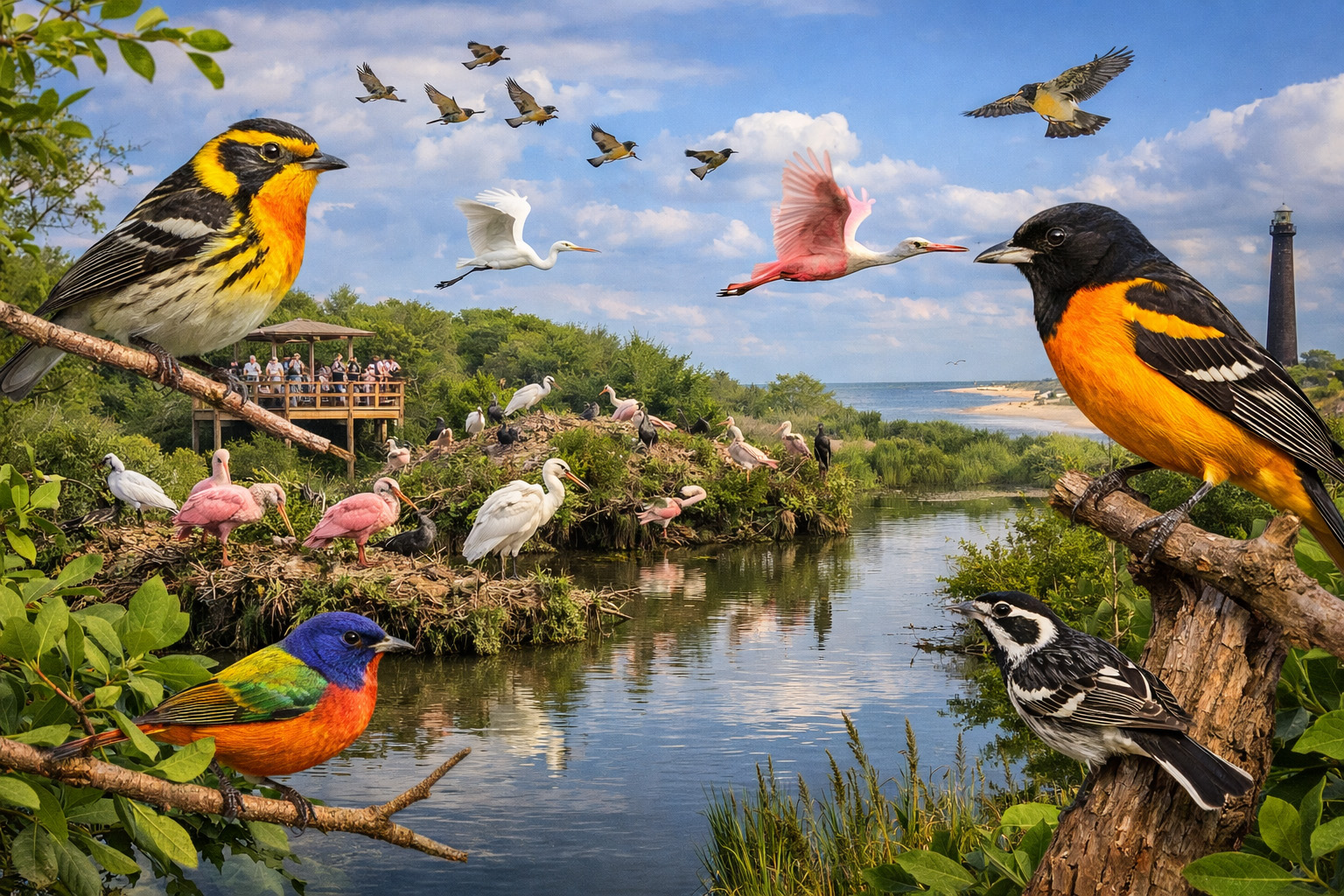
The birds near you depend on your location, season, habitat, weather, and time of day. In the United States, the fastest way to find them is to enter your location into Merlin Bird ID or check recent sightings on eBird Explore. These tools can show birds reported near your home, park, school, or workplace.
Common birds in many U.S. neighborhoods include American Robins, Northern Cardinals, Mourning Doves, Blue Jays, House Finches, American Crows, and Red-tailed Hawks. The exact list changes by region. A yard in Florida may have a Northern Mockingbird and a Brown Thrasher, while a yard in Oregon may have an Anna’s Hummingbird and a Steller’s Jay.
This guide explains how to identify birds near you, where to look, what you may see by habitat and season, and how to observe birds safely.
How to Find Birds Near You
The most reliable way to find local birds is to combine a bird identification app with recent location-based sightings.
1. Use Merlin Bird ID
Merlin Bird ID, from the Cornell Lab of Ornithology, can suggest bird species from:
- A photo
- A recorded bird song
- Your answers to simple questions
- Your location and the date
Merlin can help narrow down the bird’s size, color, behavior, habitat, and likely species. Its suggestions are useful, but no app is perfect. Poor light, background noise, young birds, and similar-looking species can lead to errors.
For the best result:
- Open Merlin Bird ID.
- Choose Photo ID, Sound ID, or Identify Bird.
- Allow the app to use your U.S. location.
- Add the date and habitat when asked.
- Compare the suggested species with the bird’s shape, markings, call, and behavior.
Do not rely on a single feature. A red bird is not always a Northern Cardinal, and a bird with a red breast is not always an American Robin.
2. Check eBird Explore
eBird Explore, also from the Cornell Lab of Ornithology, uses submitted bird checklists to show species reported in an area. You can search by:
- City
- County
- State
- Park
- Wildlife refuge
- eBird hotspot
Use recent records when you want to know what people are seeing now. A checklist from last week is usually more useful for a current birding trip than one from several years ago.
Still, eBird data has limits. A bird may be present but unreported. Some places have many active birders, while other areas have few observers. A species listed for a county does not guarantee that it is in your yard.
3. Search local bird lists
State Audubon organizations, state wildlife agencies, national wildlife refuges, and local bird clubs often publish regional bird checklists. These lists can show:
- Birds that breed in the area
- Migrant birds
- Winter visitors
- Rare or unusual records
- Birds found in specific habitats
Search for terms such as:
- “birds of [your state]”
- “birds of [your county]”
- “local bird checklist”
- “birding hotspots near me”
- “state wildlife bird guide”
Use official state agencies and established conservation groups when possible. A local checklist is helpful for learning what is possible, but it may not show what is present today.
4. Ask a local birding group
local Audubon chapters, nature centers, park staff, and birding clubs can help with difficult identifications. Many groups offer free walks or public checklists.
When asking for help, include:
- Your city or county
- The date and time
- The habitat
- The bird’s size
- Its colors and markings
- Its behavior
- A photo or sound recording, if available
Avoid sharing your exact home address when posting a bird photo online.

Common Birds You May See in the United States
The following birds are common in many parts of the country, though range and abundance vary. “Common” does not mean every species occurs in every state.
| Bird | Where you may see it | Useful clues |
|---|---|---|
| American Robin | Lawns, parks, gardens, woodland edges | Orange breast, upright stance, often searches lawns for worms |
| Northern Cardinal | Shrubs, woodland edges, backyards | Red male, reddish-brown female, strong crest |
| Mourning Dove | Open yards, roadsides, farms, parks | Long pointed tail, soft coo, steady wingbeats |
| Blue Jay | Woodlands, suburbs, parks | Blue crest, bold call, white and black wing pattern |
| American Crow | Towns, farms, parking lots, open woods | Large black bird with a strong, even flight |
| American Goldfinch | Weedy fields, gardens, feeders | Small finch with a pointed bill; bright yellow in breeding plumage |
| House Finch | Suburbs, towns, feeders | Small finch; males may have red on the head and breast |
| House Sparrow | Buildings, city streets, farms | Small, social bird often near people |
| Red-tailed Hawk | Roadsides, fields, farms, open suburbs | Broad wings; often perches on poles |
| Turkey Vulture | Open land, roads, wooded edges | Large dark bird that often soars with raised wings |
| Northern Mockingbird | Yards, parks, city edges | Gray and white; repeats sounds from other birds |
| European Starling | Lawns, towns, farms, parking areas | Dark, glossy body with pale spots; often travels in groups |
Some birds are easy to recognize by color. Shape often gives a better clue. Notice the bill, tail length, wing shape, posture, and flight pattern before focusing on plumage.

Birds Near You by Habitat
Your nearby habitat can predict the birds you are most likely to find.
Backyards and Suburbs
Residential areas often attract birds that use trees, shrubs, lawns, bird feeders, and buildings. Possible species include:
- Northern Cardinal
- Mourning Dove
- American Robin
- Blue Jay
- House Finch
- House Sparrow
- American Goldfinch
- Carolina Wren
- Northern Mockingbird
- Downy Woodpecker
A yard with native shrubs may attract more birds than a yard with only mowed grass. Dense plants provide cover, nesting sites, insects, berries, and seeds.
City Streets and Buildings
Urban birds often adapt well to noise, traffic, lights, and people. Look for:
- Rock Pigeons
- House Sparrows
- European Starlings
- American Crows
- Mourning Doves
- Chimney Swifts
- Peregrine Falcons near tall buildings or bridges
Check rooflines, wires, parking lots, parks, and small patches of vegetation. Birds may be easier to spot early in the morning before traffic becomes heavy.
Woodlands
Forests and wooded parks can support a wide range of birds. Depending on the region, you may find:
- Tufted Titmice
- White-breasted Nuthatches
- Chickadees
- Woodpeckers
- Warblers
- Vireos
- Owls
- Thrushes
- Jays
Listen for calls before searching the trees. Many woodland birds stay high in the canopy or move behind leaves.
Grasslands, Farms, and Open Fields
Open habitats attract birds that hunt, feed, or nest on the ground. Examples include:
- Eastern Meadowlarks
- American Kestrels
- Red-tailed Hawks
- Northern Harriers
- Horned Larks
- Bobolinks during migration
- Mourning Doves
- Turkey Vultures
Scan fence posts, utility poles, shrubs, and tall grass. Hawks and kestrels often use elevated perches to watch for prey.
Wetlands, Lakes, and Rivers
Water habitats support birds that feed on fish, insects, plants, or aquatic animals. You may see:
- Canada Geese
- Mallards
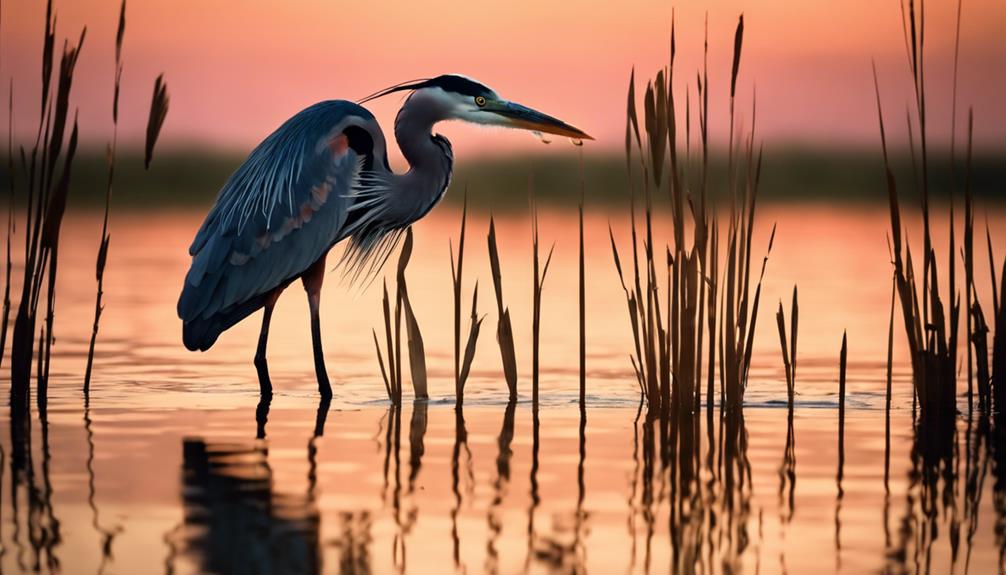
- Great Blue Herons
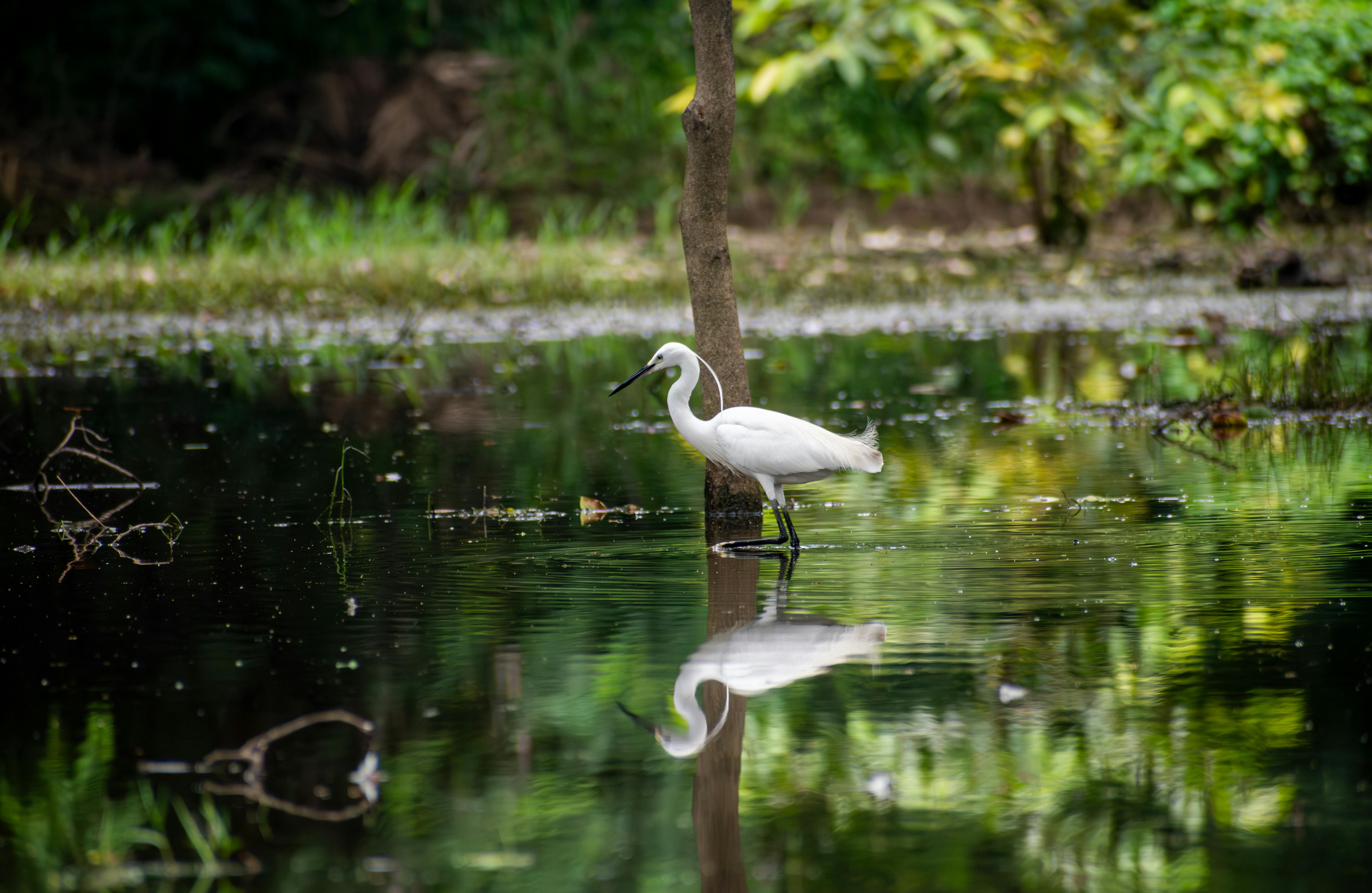
- Great Egrets
- Belted Kingfishers
- American Coots
- Wood Ducks
- Ospreys
- Gulls and terns
Bring binoculars if possible. Water birds may stay far from the shore, especially where people and dogs approach the water.
Beaches and Coastal Areas
Along the U.S. coast, look for:
- Brown Pelicans
- Gulls
- Terns
- Sanderlings
- Willets
- Black Skimmers
- Cormorants
- Oystercatchers
- Snowy Egrets
Shorebirds can be hard to identify because many have similar colors. Pay attention to leg color, bill shape, body size, and feeding behavior.
Birds Near You by U.S. Region
Bird ranges overlap, so regional examples are only a starting point.
Northeast
In states such as Maine, New York, Pennsylvania, and Massachusetts, common birds may include:
- Black-capped Chickadees
- American Robins
- Northern Cardinals
- Blue Jays
- White-breasted Nuthatches
- Red-bellied Woodpeckers
- Song Sparrows
- Canada Geese
During migration, warblers and other songbirds may appear in parks and wooded areas.
Southeast
In states such as Florida, Georgia, Alabama, and the Carolinas, you may find:
- Northern Cardinals
- Carolina Wrens
- Northern Mockingbirds
- Tufted Titmice
- Red-bellied Woodpeckers
- Brown Thrashers
- Eastern Bluebirds
- Anhingas near freshwater
- Great Egrets in wetlands
Florida also has tropical and subtropical species that do not occur across much of the northern United States.
Midwest and Great Plains
In states such as Ohio, Illinois, Minnesota, Kansas, and Nebraska, look for:
- American Robins
- Red-winged Blackbirds
- House Finches
- Northern Cardinals
- Eastern Bluebirds
- Mourning Doves
- Eastern Meadowlarks
- American Kestrels
- Canada Geese
Wetlands and farm fields can be especially productive during spring and fall migration.
Mountain West
In states such as Colorado, Utah, Montana, and Idaho, possible species include:
- Mountain Bluebirds
- Western Meadowlarks
- Black-billed Magpies
- Steller’s Jays
- American Robins
- Red-tailed Hawks
- Clark’s Nutcrackers
- Golden Eagles in suitable mountain and open-country habitat
Elevation can change the bird list quickly. A foothill park may have very different birds from a high mountain trail.
Southwest
In Arizona, New Mexico, Nevada, and parts of west Texas, watch for:
- Gambel’s Quail
- Cactus Wrens
- Greater Roadrunners
- Costa’s Hummingbirds
- Gila Woodpeckers
- Curve-billed Thrashers
- Harris’s Hawks
- Turkey Vultures
Water sources can draw birds into dry areas. Desert birds may be most active in the cooler morning hours.
Pacific Northwest
In Washington, Oregon, and northern California, common birds may include:
- American Robins
- Anna’s Hummingbirds
- Steller’s Jays
- Chestnut-backed Chickadees
- Dark-eyed Juncos
- Northwestern Crows in coastal areas
- Great Blue Herons
- Varied Thrushes
Conifer forests, shorelines, gardens, and wetlands each support different bird groups.
Alaska and Hawaii
Alaska has species linked to boreal forest, tundra, mountains, rivers, and coastlines. Examples include:
- Bald Eagles
- Common Ravens
- Black-capped Chickadees
- Sandhill Cranes
- Ptarmigans
- Various seabirds
Hawaii has many unique native birds, but each island has a different mix. Some native Hawaiian birds have restricted ranges and require careful habitat protection. Do not approach nesting birds or enter closed areas.

How Seasons Change the Birds Near You
The bird near your home today may not be there next month. Migration, breeding, weather, food, and daylight all affect local sightings.
Spring
Spring migration can bring warblers, vireos, thrushes, flycatchers, and other songbirds. Many birds sing more often because they are defending territories or seeking mates.
Look in:
- Leafing trees
- Flowering shrubs
- Freshwater edges
- Wooded parks
- Native gardens
Summer
Summer birds often include local breeding species and their young. Birds may be less visible during the heat of the day, especially in hot regions.
Search early in the morning near:
- Nesting habitat
- Native plants
- Streams
- Shaded woodland
- Open fields
Never handle a young bird unless it is clearly injured or in immediate danger. A fully feathered fledgling on the ground is often being watched and fed by its parents.
Fall
Fall migration may produce large changes in the local bird list. Some birds move south, while others arrive from farther north for the winter.
Weather affects migration. After a night with favorable winds, parks and tree-filled areas may hold many migrants. After storms, birds may seek shelter in shrubs and dense vegetation.
Winter
Winter brings northern visitors to some parts of the United States. Depending on your region, you may see:
- Dark-eyed Juncos
- White-throated Sparrows
- Snow Buntings
- Cedar Waxwings
- Purple Finches
- Red Crossbills
- Waterfowl
Some species remain year-round but become easier to see when leaves fall from trees.
How to Identify a Bird Correctly
A good identification uses several clues instead of one color or feature.
Observe the bird’s shape
Start with the overall form:
- Is it round or slender?
- Is the tail long, short, forked, or pointed?
- Is the bill thick, curved, or narrow?
- Are the wings broad or pointed?
- Does it stand upright or crouch low?
Shape can separate birds that share similar colors.
Watch its behavior
Behavior can be highly useful. Ask:
- Is it hopping on the ground?
- Is it climbing a tree trunk?
- Is it hovering at flowers?
- Is it diving into water?
- Is it soaring in circles?
- Is it flicking its tail?
- Is it feeding alone or in a flock?
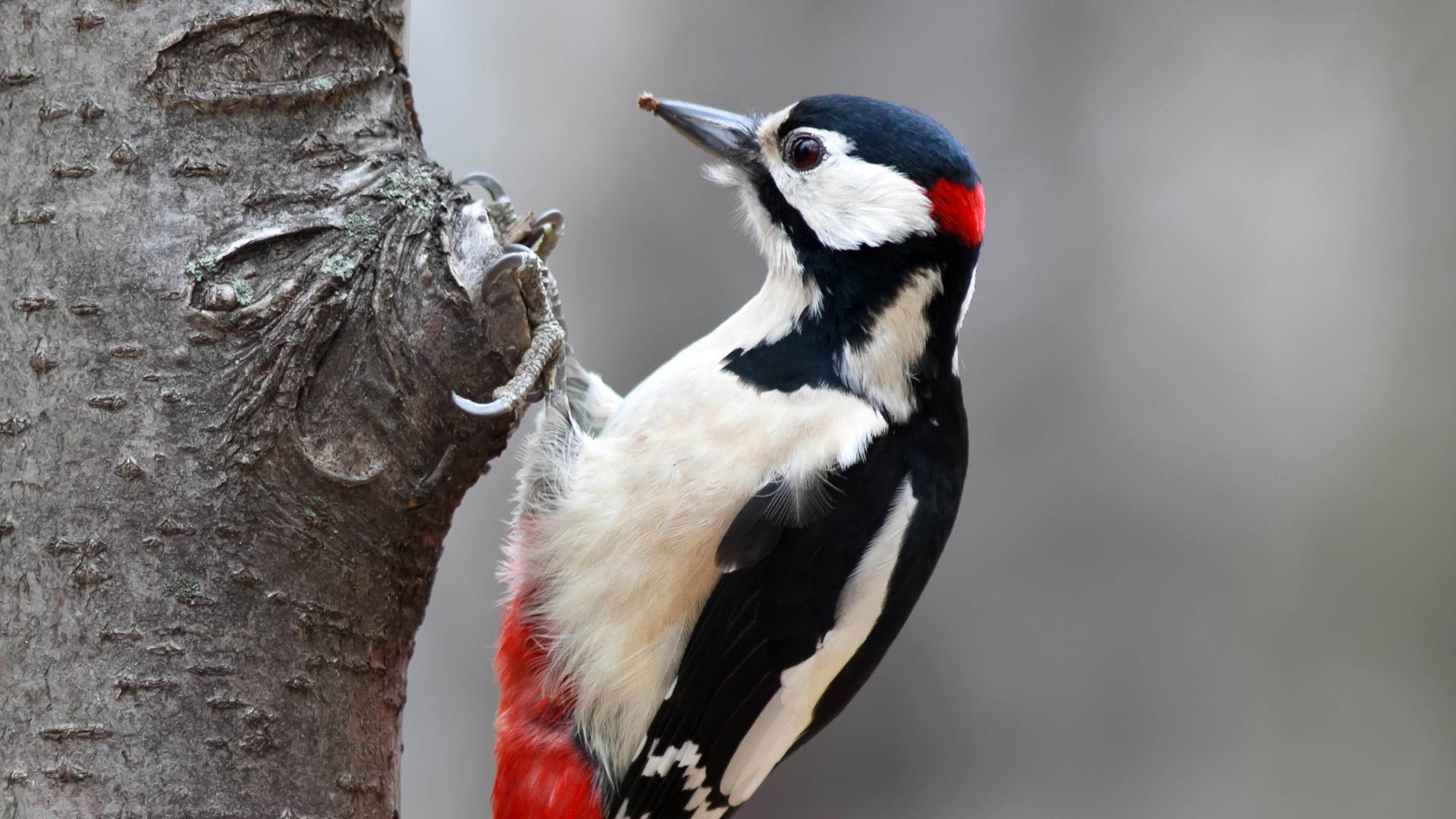
For example, a woodpecker may climb a trunk, while a nuthatch may move headfirst down the bark.
Listen to the call
Bird calls can identify species that remain hidden. Record the sound when possible, but avoid playing recorded calls to attract a bird. Playback can disturb birds, interrupt feeding, or expose a nest to predators.
Sound identification apps work best when:
- The bird is calling clearly
- Wind and traffic are limited
- Several birds are not calling at once
- The recording is long enough to capture a pattern
Note the habitat and location
Write down where you saw the bird:
- City street
- Backyard
- Pine forest
- Deciduous woodland
- Marsh
- Beach
- Desert
- Farm field
- Mountain slope
A habitat clue can rule out many unlikely species.
Take a safe photo
Use your phone or camera from a distance. Avoid chasing birds, flushing them from cover, or approaching a nest. A side view that shows the bill, wing pattern, tail, and legs is often more useful than a close photo of the bird’s head.

How to Attract More Birds Safely
You can make your yard more useful to birds without depending on feeders.
Plant native vegetation
Native trees, shrubs, flowers, and grasses can provide:
- Insects for nestlings
- Seeds
- Fruit
- Cover
- Nest sites
- Shade
Choose plants suited to your local soil, climate, and water conditions. A state native plant society or county extension office can help with local choices.
Add clean water
A shallow birdbath can attract birds, especially during hot or dry weather. Change the water often and scrub the basin to reduce algae and mosquito growth.
Place the bath where birds have nearby cover but can still see approaching cats and predators. Keep it away from places where pets can easily ambush birds.
Use feeders with care
Feeders can help you see birds, but they also bring birds into close contact. To reduce risk:
- Clean feeders on a regular schedule.
- Remove wet or moldy seed.
- Use fresh food.
- Keep cats indoors.
- Place feeders away from areas where predators hide.
- Follow local rules and disease advisories.
- Take feeders down if sick birds gather.
Bird-feeding guidance can change during disease outbreaks. Check current information from your state wildlife agency or the U.S. Fish and Wildlife Service.
Reduce window collisions
Birds may strike windows because they see reflected trees or open sky. Effective steps include:
- Applying closely spaced exterior window markers
- Using screens
- Closing blinds during high-risk periods
- Moving feeders either very close to windows or well away from them
- Treating the outside of glass rather than only the inside
The American Bird Conservancy’s bird-safe glass guidance provides practical information on collision prevention.
Birding Safety and Wildlife Etiquette
Bird watching is low risk when you keep distance and respect wildlife.
Do not:
- Touch wild birds
- Feed birds by hand
- Enter closed nesting areas
- Climb into trees to reach nests
- Use loud playback near nesting birds
- Chase birds for a photograph
- Handle injured wildlife without guidance
- Share the exact location of a rare or vulnerable bird publicly
If you find an injured bird, keep people and pets away. Do not give it food or water unless a licensed wildlife rehabilitator tells you to do so. Contact a permitted wildlife rehabilitator, animal control office, or state wildlife agency.
A sick or dead bird may require additional precautions. Avoid bare-hand contact, keep pets away, and follow current instructions from public health and wildlife officials.

Common Mistakes When Searching for Birds Near You
Mistake 1: Treating an app result as proof
An app gives a suggestion, not a guaranteed identification. Compare the result with the bird’s field marks, range, season, and habitat.
Mistake 2: Ignoring distance and light
Colors change in shade, glare, and sunset light. Binoculars can help, but they do not replace a clear view of the bird’s shape and behavior.
Mistake 3: Using an old sighting as a current report
Birds migrate. Check the date of every sighting, especially when searching for unusual or seasonal species.
Mistake 4: Confusing a possible bird with a likely bird
A species may have been recorded in your county but still be rare in your neighborhood. Start with common birds that match the habitat and season.
Mistake 5: Looking only at feeders
Many birds do not visit feeders. Search trees, shrubs, lawns, water edges, utility wires, and open fields.
Mistake 6: Overlooking young birds
Juvenile birds may have duller colors, streaked breasts, shorter-looking tails, or different behavior. Young birds can be difficult to identify until they develop adult plumage.

A Simple 15-Minute Birding Method
You can begin without special equipment.
- Choose a safe place with trees, shrubs, open ground, or water.
- Stand still for two minutes.
- Listen before looking.
- Scan from ground level to the highest branches.
- Watch one bird at a time.
- Note size, shape, color, behavior, sound, and habitat.
- Take a photo or short recording if it does not disturb the bird.
- Check Merlin or a field guide.
- Compare the sighting with recent eBird reports.
- Record the date, place, and species only when you feel reasonably sure.
The sign of a good identification is not speed. It is a match between several clues.
A pair of binoculars can help, but a phone camera and a notebook are enough to start. Early morning often offers the most bird activity, though wetlands and coastal areas may be productive at other times because of tides and feeding patterns.

Key Takeaways
- The birds near you depend on location, habitat, season, weather, and time of day.
- Use Merlin Bird ID for photo and sound suggestions.
- Use eBird Explore for recent reports and nearby birding locations.
- Begin with shape, behavior, sound, habitat, and range rather than color alone.
- Common U.S. birds include robins, cardinals, mourning doves, blue jays, finches, crows, and hawks.
- Keep distance from nests, young birds, and injured wildlife.
- Clean feeders, provide safe water, keep cats indoors, and reduce window collisions.
Frequently Asked Questions
What is the best app to find out what birds are near me?
Merlin Bird ID is useful for identifying a bird from a photo or sound. eBird Explore is better for finding species recently reported in a specific city, county, park, or hotspot. Using both gives you identification help and local sighting information.
How do I find birds near me today?
Search your location in eBird Explore and filter for recent observations. Then visit a nearby park, wetland, trail, or nature preserve during a time when birds are active. Check the date of each report because older sightings may no longer reflect local conditions.
What birds are most common in U.S. backyards?
Many U.S. backyards have American Robins, Northern Cardinals, Mourning Doves, Blue Jays, House Finches, House Sparrows, American Goldfinches, and American Crows. The exact mix depends on your region and the plants around your home.
How can I identify a bird without a picture?
Note its size, shape, colors, bill, tail, movement, call, habitat, and location. A written description can be enough for a field guide or birding group to suggest likely species.
What should I do if I find an injured bird?
Keep people and pets away and contact a licensed wildlife rehabilitator or your state wildlife agency. Do not provide food, water, or home treatment unless a qualified rehabilitator gives specific instructions.
Is it safe to feed birds?
Feeding can be safe when you use clean feeders, fresh food, and good spacing from windows and predators. Stop feeding if sick birds gather or if local wildlife officials issue a disease-related advisory. Native plants and clean water can support birds without feeders.
Conclusion
To find out what birds are near you, begin with your location and habitat. Check recent eBird reports, use Merlin to identify birds, and observe shape, behavior, sound, and season together.
Your next step is simple: spend 15 quiet minutes outside today, record the birds you see, and verify each one with a trusted field guide or birding app. Over time, your own notes will reveal which birds visit your area throughout the year.