
Introduction
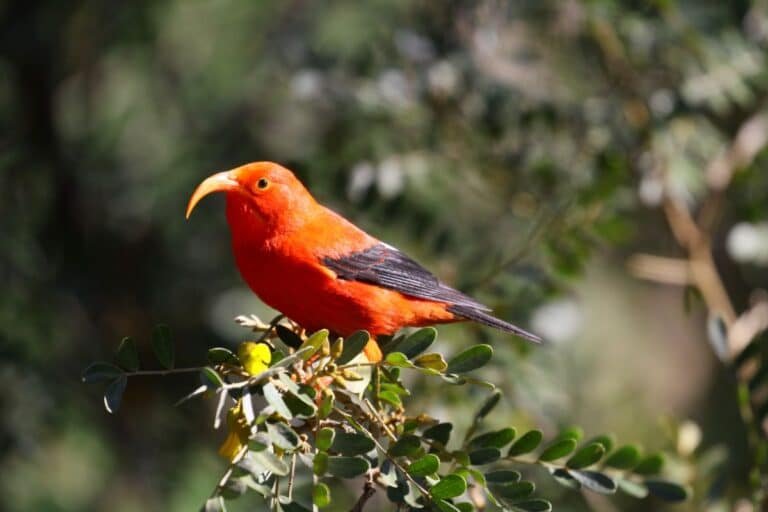
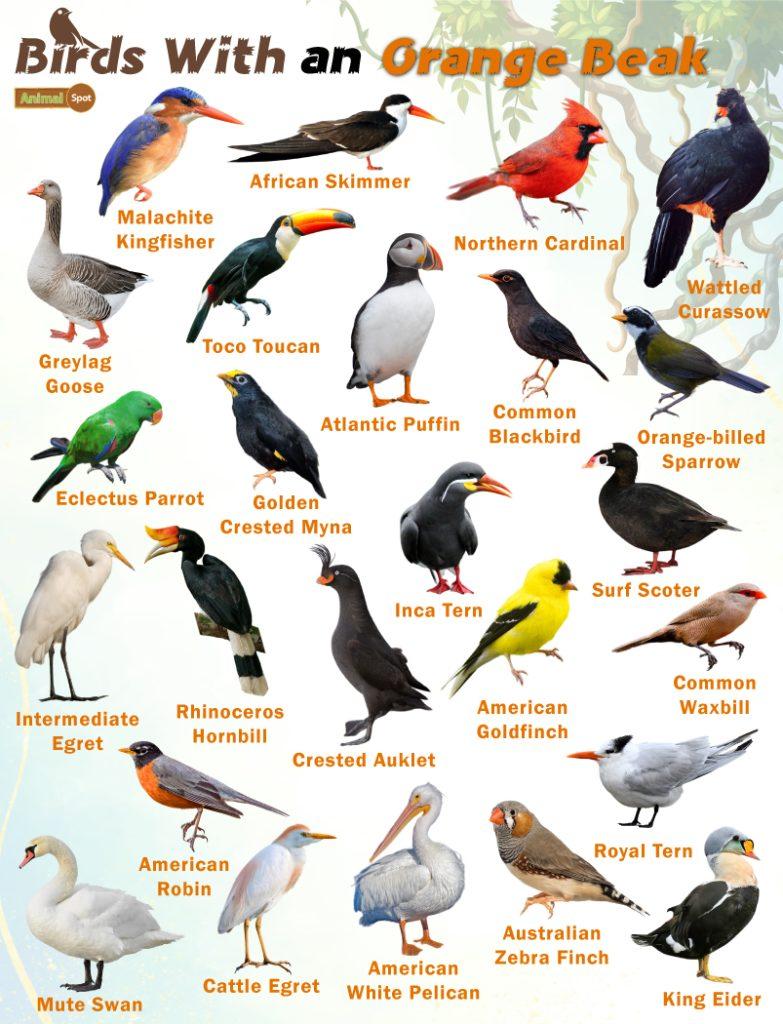
Many birds in the United States have an orange beak, but no single species owns this feature. The Northern Cardinal, American Oystercatcher, Black Skimmer, White Ibis, Common Merganser, and Toco Toucan are among the best-known examples.
The right answer depends on the bird’s size, body color, habitat, and the shape of its beak. A bright orange bill on a beach bird points to a different species than a small orange bill on a backyard bird.
Birds With Orange Beaks in the United States
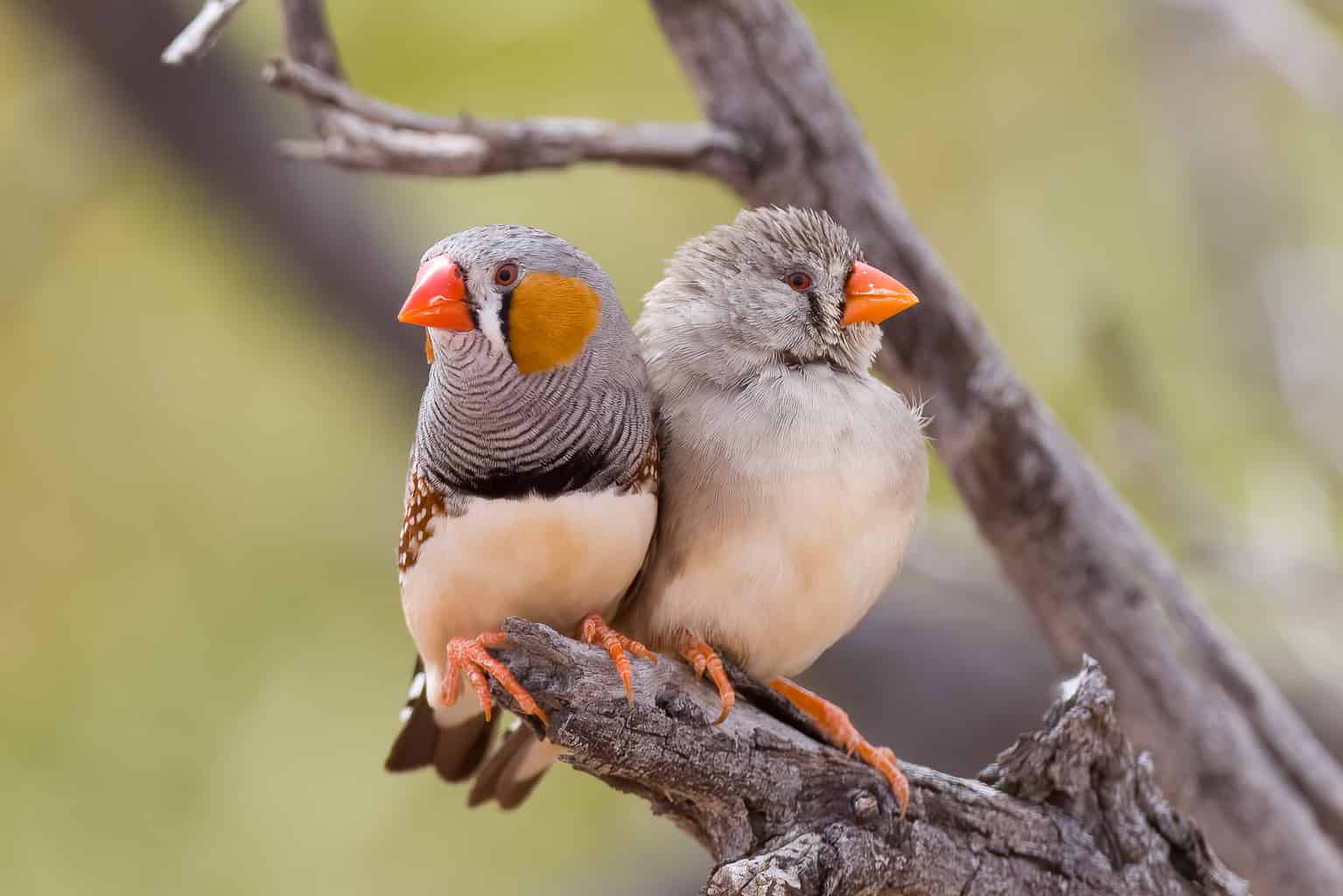
The most useful way to identify a bird with an orange beak is to compare the bill with the bird’s full appearance.
| Bird | Beak color and shape | Where you may see it in the USA | Key ID clue |
|---|---|---|---|
| Northern Cardinal | Orange-red, short, and thick | Most of the eastern and central United States | Red male or brown female with a pointed crest |
| American Oystercatcher | Bright orange-red with a dark tip | Atlantic, Gulf, and Pacific coasts | Large shorebird with a long, straight bill |
| Black Skimmer | Orange-red near the face with a black tip | Coastal beaches, bays, and estuaries | Lower bill extends beyond the upper bill |
| White Ibis | Orange-red, long, and curved | Florida, the Gulf Coast, and parts of the Southeast | White body, black wing tips, and curved bill |
| Common Merganser | Red-orange, long, and narrow | Lakes and rivers across much of North America | Sleek duck with a thin, serrated bill |
| Wood Duck | Multicolored, often red, orange, and yellow | Wooded ponds and wetlands | Male has a colorful head and patterned body |
| Roseate Spoonbill | Pale orange to pinkish, broad, and spoon-shaped | Coastal Texas, Louisiana, Florida, and parts of the Southeast | Flat bill and bright pink body |
| American Flamingo | Pink-orange and strongly curved | Rare visitor to southern Florida | Tall pink bird with a bent bill |
| Atlantic Puffin | Bright orange, blue, and yellow | Rarely seen off the northeastern US coast | Black-and-white seabird with a large triangular bill |
| Toco Toucan | Large orange bill with a black tip | Not a wild native bird in the continental USA | Tropical species often seen in zoos |
The Northern Cardinal is the most likely answer for a backyard bird in the eastern United States. The American Oystercatcher is a stronger match for a large shorebird on a US beach. A bird with a huge orange bill is more likely to be a toucan or puffin, although those birds are not common wild species in most of the country.
Northern Cardinal: The Common Backyard Answer
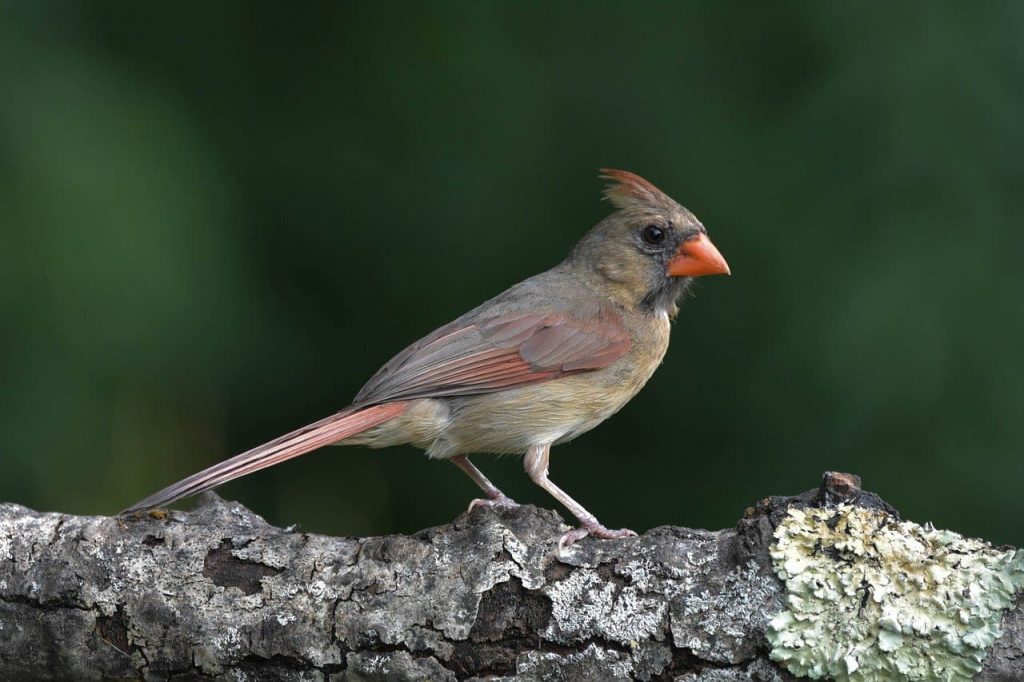
The Northern Cardinal has a strong orange-red bill that stands out against its feathers. Adult males are bright red, while adult females are mostly warm brown with red highlights on the wings, crest, and tail.
Northern Cardinals live across much of the eastern and central United States. They also occur in parts of the Southwest and along the Pacific Coast. They often visit bird feeders, shrubs, woodland edges, and suburban yards.
The bill is short, thick, and cone-shaped. This shape helps the cardinal crack and eat seeds. If you see a crested bird with a heavy orange or red bill, the Northern Cardinal is a strong possibility.
Male and female differences
- Male: Bright red body, black face, and orange-red bill.
- Female: Brown body with red accents, a reddish crest, and orange-red bill.
- Young bird: Duller feathers and a less vivid bill.
The bill may look brighter during good light and duller in shade. A photo taken through a window can also change the color.
Coastal Birds With Orange Bills
Several US shorebirds have orange bills. Their bill shape often gives a better clue than color alone.
American Oystercatcher
The American Oystercatcher has a long, bright orange-red bill with a darker tip. It is a large shorebird with a black head and back, a white underside, and pinkish legs.
It lives on sandy beaches, mudflats, coastal islands, and tidal areas. The species uses its strong bill to open shellfish such as oysters, clams, and mussels.
Look for these signs:
- Long, straight bill
- Black upper body
- White belly
- Pink or pale legs
- Loud calls near the shore
The American Oystercatcher is found along the Atlantic, Gulf, and Pacific coasts of the United States. It is not a typical backyard bird.
Black Skimmer
The Black Skimmer has a striking orange-red bill with a black tip. Its lower bill is longer than its upper bill, which gives the species its name.
Black Skimmers fly low over calm water. They skim the surface with the lower bill open and catch small fish and other prey. Their black-and-white body makes them easy to separate from oystercatchers.
They are most common along coastal beaches, bays, lagoons, and estuaries. In the United States, large groups can occur along the Atlantic and Gulf coasts.

Wetland Birds With Orange or Orange-Red Bills
Wetland species often have long bills that may appear orange, red, pink, or yellow-orange.
White Ibis
The White Ibis has a long, curved orange-red bill. Adults have white feathers with black wing tips and red or pink skin around the face.
White Ibises feed in shallow water and soft mud. They probe with the bill for crayfish, insects, worms, and other small animals. They are common in Florida and can also be seen along the Gulf Coast and in other southeastern states.
Young White Ibises look different. Juveniles are mostly brown, and their bills may be gray or dull pink rather than bright orange.
Common Merganser
The Common Merganser is a large diving duck with a long, narrow red-orange bill. The bill has small saw-like edges that help the bird hold slippery fish.
Males have a dark green head, a white body, and a clean, narrow shape. Females have a gray body and a reddish-brown head with a noticeable crest.
Common Mergansers use lakes, rivers, and coastal waters. They can occur across much of North America, especially in areas with clear water and fish.
Wood Duck
The male Wood Duck has a colorful bill with red, orange, yellow, and black tones. Its head is green and purple with white markings, and its body has bold patterns.
Wood Ducks live around wooded ponds, slow rivers, swamps, and wetlands. The bill is not always plain orange, so the bird’s full pattern matters.
Females are less colorful. They have a gray-brown body, a white eye ring, and a smaller bill that may look gray or brown.
Large Birds With Orange Bills
Some large birds have orange bills that are easy to see from a distance.
Roseate Spoonbill
The Roseate Spoonbill has a long, flat bill that widens at the end. The bill may look pale orange, pink, or grayish depending on age, light, and season.
Its body is pink, with darker pink wings and a pale head. The spoon-shaped bill sweeps through shallow water as the bird searches for small fish, shrimp, and other prey.
In the United States, Roseate Spoonbills are most closely linked with coastal Texas, Louisiana, and Florida. They also occur in other parts of the Southeast.
American Flamingo
The American Flamingo has a large bill that curves sharply downward. Its bill is mostly pink or orange near the base and black near the tip.
This species is rare in the United States. Sightings are most associated with southern Florida and the Florida Keys. A tall pink bird with a strongly bent orange-and-black bill is not a common backyard species.
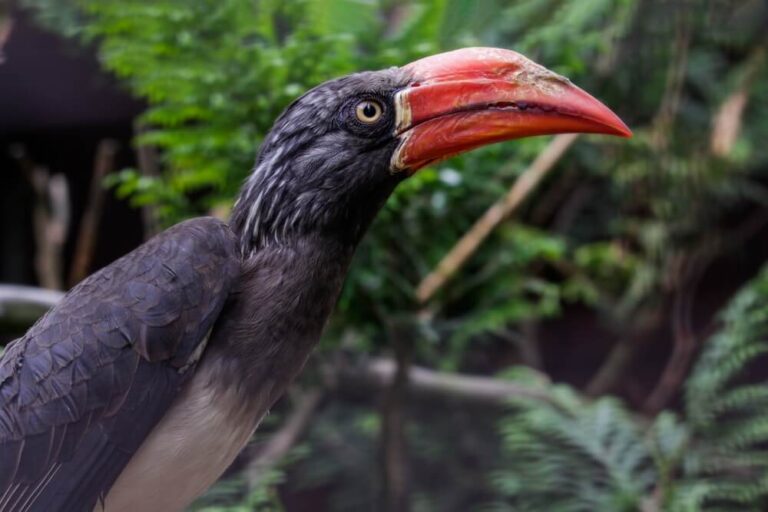
Toco Toucan
The Toco Toucan is famous for its huge orange bill with a black tip. It has black feathers, a white throat, and red feathers under the tail.
Toco Toucans are native to South America, not the wild continental United States. In the USA, people usually see them in zoos, aviaries, wildlife parks, or photographs.
A large orange bill alone does not mean the bird is a toucan. The bill must also be oversized compared with the head and body.

How to Identify a Bird With an Orange Beak
Start with the bird’s location, then check its size, body color, and bill shape. Color can change with lighting, age, breeding condition, and camera settings.
1. Note the habitat
Habitat quickly narrows the choices:
- Backyard or feeder: Northern Cardinal
- Open beach: American Oystercatcher or Black Skimmer
- Shallow marsh: White Ibis or Roseate Spoonbill
- Lake or river: Common Merganser or Wood Duck
- Zoo or tropical exhibit: Toco Toucan
- Open ocean or rocky coast: Atlantic Puffin may be possible, but it is uncommon in the United States
2. Study the bill shape
Bill shape often matters more than the exact shade of orange.
- Short and thick: Northern Cardinal
- Long and straight: American Oystercatcher
- Uneven upper and lower parts: Black Skimmer
- Long and curved: White Ibis
- Long and narrow: Common Merganser
- Flat and spoon-shaped: Roseate Spoonbill
- Very large compared with the head: Toco Toucan
- Large and triangular with several colors: Atlantic Puffin
3. Check the body pattern
Ask simple questions:
- Is the bird red, brown, white, black, pink, or multicolored?
- Does it have a crest?
- Does it have a long neck?
- Is it standing on a beach or swimming in a lake?
- Is the bird larger than a robin, goose, or duck?
4. Consider age and sex
Young birds may not show adult colors. Female birds may also look very different from males.
For example, a female Northern Cardinal is brown rather than bright red. A young White Ibis is brown instead of white. A female Wood Duck has muted brown feathers instead of the male’s bright pattern.
5. Use several clues together
Do not identify a bird from its bill color alone. A red-orange bill, coastal habitat, black back, and white belly together provide a much stronger match than any single clue.
If possible, take a photo from a safe distance. Do not approach nests, roosts, or feeding groups to get a closer view.
Orange Beak vs. Orange Face or Legs
A bird may appear to have an orange beak when the color actually comes from nearby skin or legs. Bright sunlight can also make a yellow bill look orange.
The American Robin, for example, usually has a yellow bill, not an orange one. Its warm brown body and red-orange breast can make the bill seem darker in some photos.
The Common Loon has a black bill, while its red eyes and black-and-white pattern may create a strong color contrast. The Ruddy Duck has a blue bill during breeding season, even though its body may look reddish-brown.
When checking a photo, zoom in on the bill itself. Compare it with the bird’s legs and facial skin. This small step can prevent a wrong identification.

Common Mistakes When Identifying Orange-Beaked Birds
Mistaking a juvenile for an adult
Young birds often have duller bills and plain feathers. Check whether the bird has an adult crest, body pattern, or eye color before making an identification.
Ignoring the location
A Toco Toucan is a reasonable match in a zoo but not in a typical US backyard. Habitat and region should always support the identification.
Confusing bill color with bill shape
Many birds have yellow-orange or red-orange bills. Shape helps separate them:
- Cardinals have thick seed-cracking bills.
- Ibises have long curved bills.
- Skimmers have mismatched bill lengths.
- Spoonbills have wide, flat bill tips.
Trusting color from one photo
Camera exposure, shadows, glass, and seasonal plumage can change color. Use the bird’s size, shape, behavior, and habitat as well.
Approaching wildlife
Do not touch or feed wild birds to confirm their identity. Keep a respectful distance, especially near shorebird nests and colonies. A field guide or birding app can help without disturbing the bird.
Frequently Asked Questions
What is the most common bird with an orange beak?
The Northern Cardinal is one of the most common backyard birds with an orange-red bill in the eastern and central United States. Its crest and thick, cone-shaped bill make it easy to recognize.
What beach bird has an orange beak?
The American Oystercatcher has a long orange-red bill, while the Black Skimmer has an orange-red bill with a black tip. A skimmer’s lower bill extends farther than the upper bill.
What white bird has an orange beak?
The White Ibis has a long, curved orange-red bill. The American Oystercatcher also has a white underside, but it has a black back and a straighter bill.
What bird has a huge orange beak?
The Toco Toucan is known for its very large orange bill with a black tip. It is native to South America and is usually seen in the United States in zoos or aviaries.
Can a female cardinal have an orange beak?
Yes. Female Northern Cardinals have an orange-red bill, brown feathers, red wing and tail markings, and a crest. The bill may look less vivid in poor light or outside the breeding season.
Conclusion
The answer to “what bird has an orange beak?” depends on where you saw the bird and what its bill looks like. For a backyard sighting, start with the Northern Cardinal. For a coastal bird, compare the American Oystercatcher and Black Skimmer. For wetlands, consider the White Ibis, Common Merganser, or Roseate Spoonbill.
Use three clues together: habitat, bill shape, and body pattern. That method is more reliable than judging the color alone.
For a closer identification, record the state, habitat, bird size, body colors, and bill shape. Then compare the sighting with a regional field guide or a trusted source such as Cornell Lab of Ornithology’s All About Birds.