
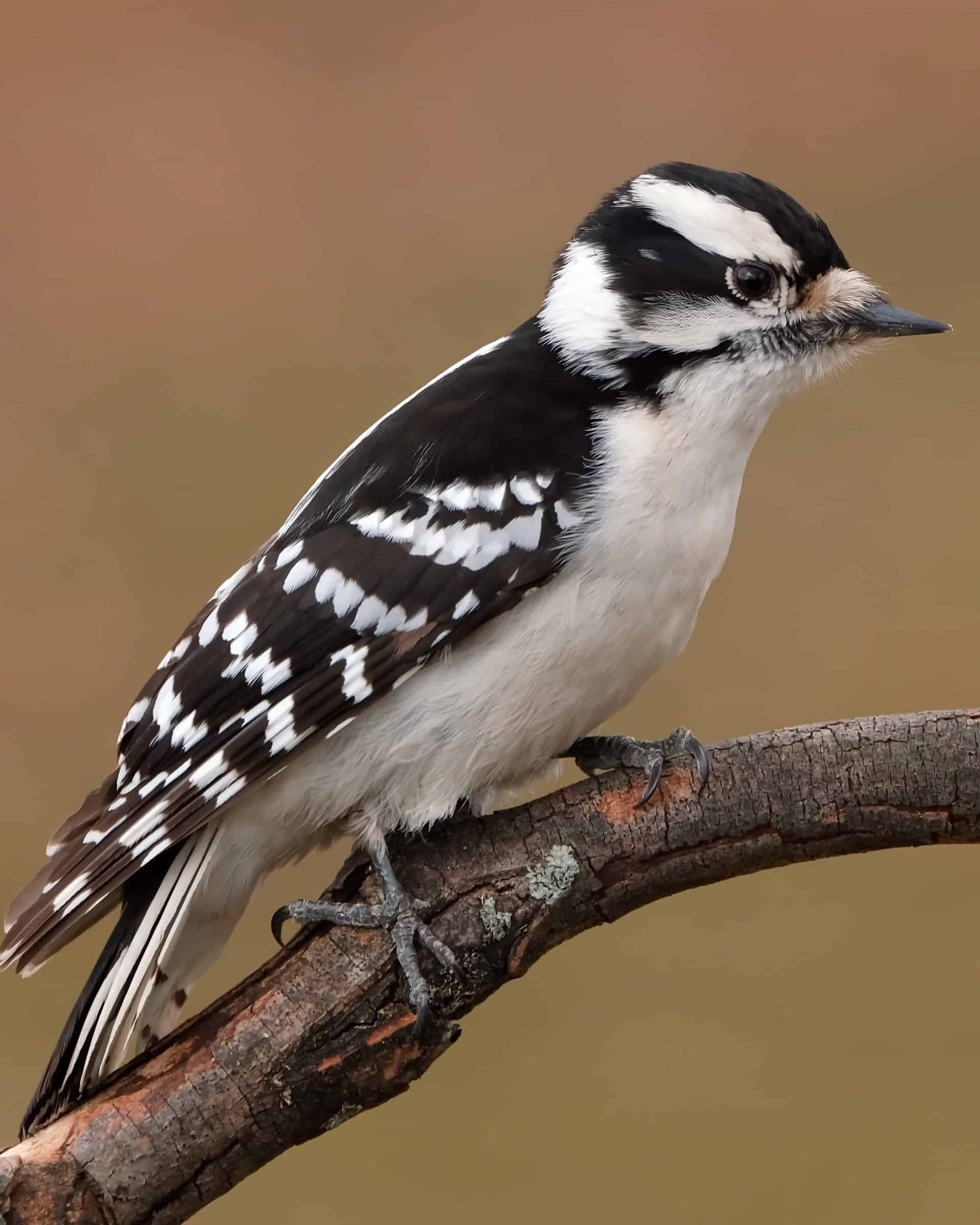
If you saw a black bird with a white back in the United States, the most likely match is a Black-billed Magpie. It has a black head, chest, and back, with large white patches on its wings and belly. From some angles, those white wing patches can look like a white back.
The exact answer depends on the bird’s size, shape, habitat, and flight pattern. Other possible matches include the Black-and-white Warbler, White-breasted Nuthatch, and Dark-eyed Junco. Use the guide below to narrow it down.

The Most Likely Answer: Black-billed Magpie
The Black-billed Magpie (Pica hudsonia) is the best match for a large black-and-white bird seen in the western United States. It is common in open areas, farms, parks, towns, and foothills.
A Black-billed Magpie does not have a fully white back. Instead, it has:
- A black head and chest
- A long black tail
- White patches on the wings
- White areas on the belly and lower body
- Blue or green shine on the wings and tail in bright light
- A long, pointed black bill
The white wing patches show well when the bird flies. When the wings are folded, the white area may look like a white stripe or patch across the back.
Where Black-billed Magpies live
In the United States, Black-billed Magpies occur mainly in the West. You may see them in:
- Montana
- Wyoming
- Colorado
- Utah
- Idaho
- Nevada
- Oregon
- Washington
- Northern California
- Parts of New Mexico and Arizona
They often walk on the ground and feed in open places. Their long tail is one of the easiest clues.
How to tell a magpie from a crow
A Black-billed Magpie is smaller and slimmer than a crow. It also has a much longer tail and clear white wing patches.
| Feature | Black-billed Magpie | American Crow |
|---|---|---|
| Main color | Black and white | All black |
| Tail | Very long | Medium length |
| Wings | White patches | No white patches |
| Bill | Long and pointed | Thick and strong |
| Habitat | Open country and towns | Many habitats |
| Flight | White wing areas show | Even black wings |
If the bird had a long tail and bold white wing patches, a Black-billed Magpie is a strong choice.
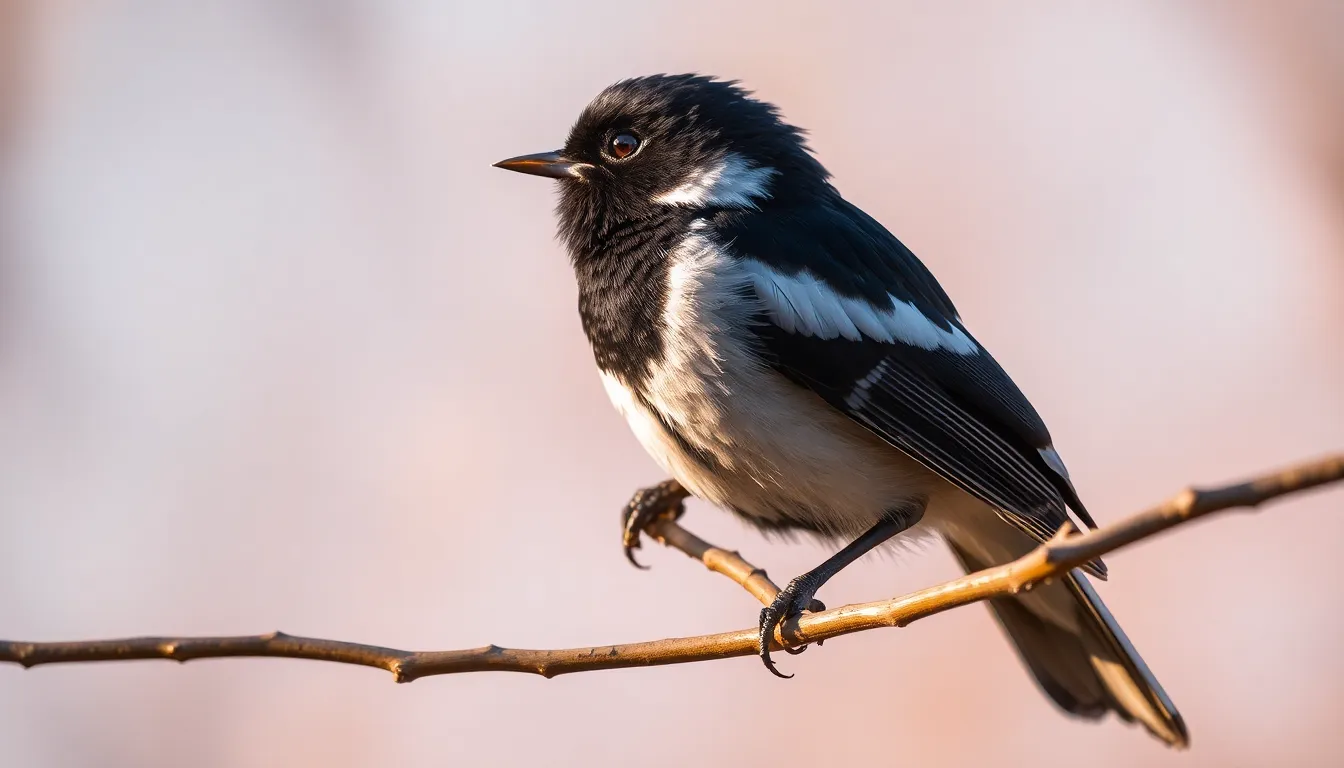
Other Black-and-White Birds You May Have Seen
Several US birds can look black and white. The bird’s size and behavior can help you separate them.
Black-and-white Warbler
The Black-and-white Warbler is a small songbird with bold black-and-white stripes. It does not have a plain white back. Its back, wings, head, and underside all show narrow stripes.
Look for these clues:
- Small body, close to sparrow size
- Black-and-white striped plumage
- Short tail
- Thin, pointed bill
- Creeps along tree trunks and large branches
- Often found in wooded areas
This warbler may look like it is wearing black-and-white feathers from head to tail. It is much smaller than a magpie.
White-breasted Nuthatch
A White-breasted Nuthatch can look black, white, and gray at a quick glance. It has:
- A white face and breast
- A black crown
- A blue-gray back
- A short tail
- A compact body
- A long, straight bill
It often moves headfirst down tree trunks. This behavior is a useful clue. The back is usually gray, not bright white.
Dark-eyed Junco
The Dark-eyed Junco is a small, common bird with a dark head and upper body. Some forms have a gray back and a white belly. Its outer tail feathers flash white when it flies.
Look for:
- Sparrow-sized body
- Short, conical bill
- Gray or black upper body
- White belly
- White outer tail feathers
- Frequent visits to yards and ground feeders
A junco usually looks gray and white rather than sharply black and white.
Eastern Kingbird
The Eastern Kingbird has a dark gray head and back, a white throat and underside, and a white band at the tip of its black tail.
It is a slender flycatcher. You may see it:
- Sitting on fence posts or wires
- Flying out to catch insects
- Returning to the same perch
- In open fields, wetlands, and woodland edges
The Eastern Kingbird does not have a white back. Its white markings are mainly on the underside and tail.
American Avocet
An American Avocet can look black and white from a distance because of its white body and dark wings. It also has long blue-gray legs and a long, upturned bill.
It is much larger and taller than a songbird. Look for it near:
- Shallow lakes
- Salt marshes
- Mudflats
- Wetlands
- Prairie ponds
If the bird had long legs and a long curved bill, it was not a magpie or warbler.

Use Size, Shape, and Location to Identify the Bird
Color alone is not enough. Bird watchers often identify a species by combining several clues.
Start with these four questions:
- How large was the bird?
- Did it have a long tail or short tail?
- Was it on the ground, in a tree, or in water?
- Did the white area stay visible when the bird moved?
Quick identification table
| What you noticed | Most likely bird |
|---|---|
| Large black-and-white bird with a long tail | Black-billed Magpie |
| Tiny bird with bold black-and-white stripes | Black-and-white Warbler |
| Small bird with a black cap and white breast | White-breasted Nuthatch |
| Sparrow-sized bird with white tail flashes | Dark-eyed Junco |
| Dark bird on a fence with a white tail band | Eastern Kingbird |
| Tall wading bird with long legs | American Avocet |
If the bird was in the western United States
A Black-billed Magpie becomes more likely if the bird was:
- Larger than a robin
- Walking across a lawn or field
- Carrying food in its bill
- Sitting on a fence or roof
- Showing a long tail
- Flying with bright white wing patches
A Clark’s Nutcracker is another western bird worth considering. It is mostly gray and black, with white wing and tail areas. It has a strong bill and often lives in mountain forests.
If the bird was in the eastern United States
A Black-billed Magpie is uncommon across most of the East. Consider a Black-and-white Warbler, White-breasted Nuthatch, junco, or kingbird instead.
A bird that looked fully black with a small white patch may also have been:
- A Common Grackle with light reflecting from its body
- A European Starling with white spots
- A Red-winged Blackbird showing pale wing markings
- A blackbird seen from an unusual angle
Lighting can change how dark feathers look. Wet feathers can also make gray or brown birds appear nearly black.
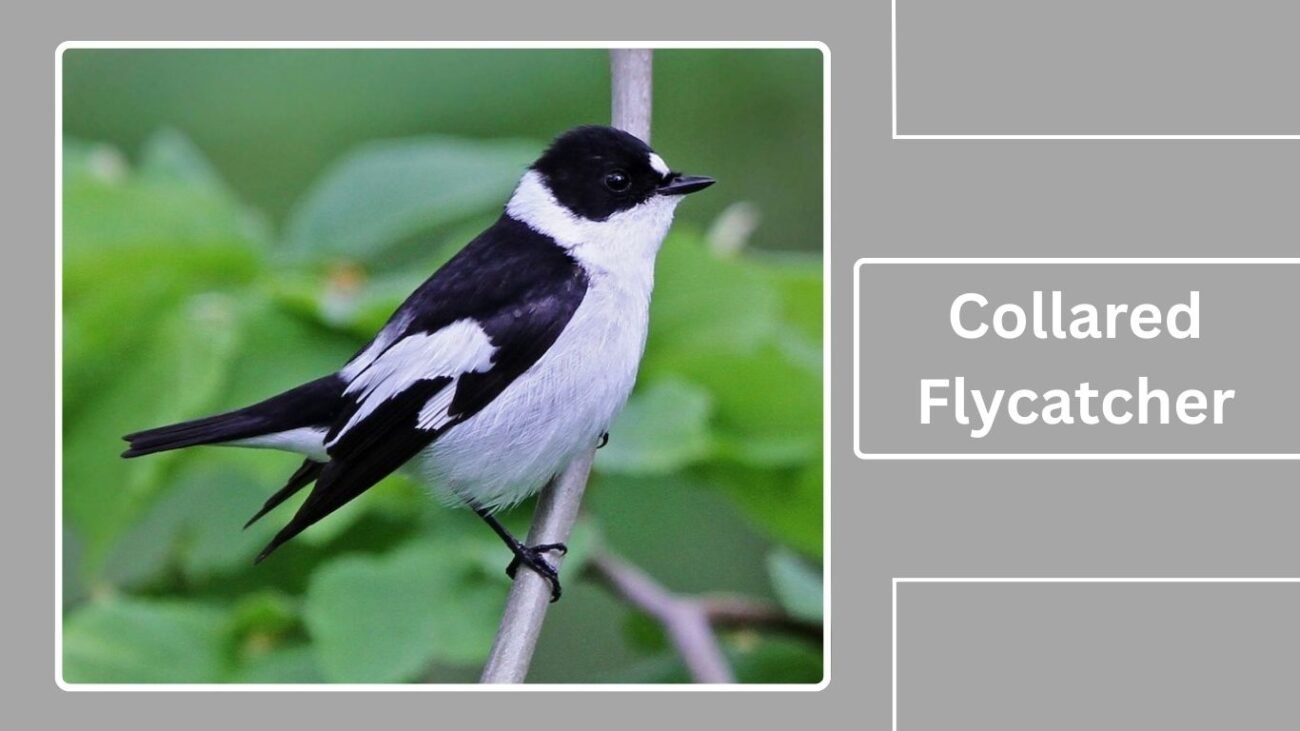
How to Identify a Black-and-White Bird Step by Step
You can usually narrow down the bird without special equipment. Watch it from a safe distance and record the clearest traits.
1. Estimate the size
Compare the bird with familiar birds:
- Sparrow-sized: junco or warbler
- Robin-sized: kingbird or nuthatch
- Crow-sized: magpie
- Much taller than a crow: avocet or another wader
Size can be hard to judge when the bird is far away. Use nearby objects, such as fence posts or tree branches, as rough references.
2. Check the tail
The tail is one of the best clues.
- Very long tail: Black-billed Magpie
- Short tail: White-breasted Nuthatch
- White outer tail feathers: Dark-eyed Junco
- White tail band: Eastern Kingbird
- Short, square tail: Black-and-white Warbler
3. Watch how it moves
Behavior often reveals more than color.
- Walks on the ground: Magpie or junco
- Creeps down tree trunks: White-breasted Nuthatch
- Climbs along branches: Black-and-white Warbler
- Catches insects from a perch: Eastern Kingbird
- Wades in shallow water: American Avocet
4. Note the habitat
Habitat helps confirm the first guess.
- Open western land: Black-billed Magpie
- Mature woods: Black-and-white Warbler
- Backyards with large trees: White-breasted Nuthatch
- Lawns and feeders: Dark-eyed Junco
- Fields and fence lines: Eastern Kingbird
- Lakes and marshes: American Avocet
5. Look for the bill
Bills can separate similar birds.
- Long, pointed bill: Magpie
- Short, pointed bill: Warbler
- Straight, narrow bill: Nuthatch
- Short, cone-shaped bill: Junco
- Broad, flat flycatcher bill: Kingbird
- Long, upturned bill: Avocet
Do not approach the bird to get a better view. Use binoculars or a camera with a zoom lens if you have one.
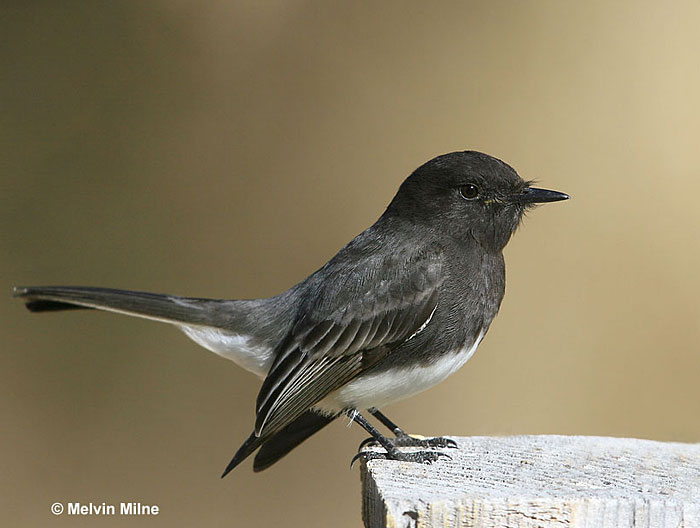
Common Identification Mistakes
The most common mistake is treating every black-and-white bird as the same species. White may appear on the belly, wings, tail, or back, and each location has a different meaning.
Mistake 1: Calling every black-and-white bird a magpie
Magpies are large birds with long tails. A small striped bird in a tree is more likely to be a Black-and-white Warbler.
Mistake 2: Confusing white wing patches with a white back
A magpie’s white wing patches can appear to cover the back when the bird is flying or turning. Check the wings and tail before calling the back white.
Mistake 3: Ignoring the region
A bird common in Montana may be rare or absent in Florida. Location can greatly change the odds.
Mistake 4: Using color without shape
A dark bird with a white patch may be a grackle, starling, or blackbird. Body shape, bill shape, and movement provide stronger clues.
Mistake 5: Relying on one blurry photo
Blur can hide stripes and change colors. If possible, take several photos from different angles. Record the date, location, habitat, and behavior.

Is a Black Bird With a White Back Rare?
Usually, no. The bird may have white wing patches, a white belly, or a pale back that looked white in bright light. A truly black bird with a completely white back is not a standard description for one widespread US species.
A Black-billed Magpie is the most likely answer when the bird is large, has a long tail, and shows white on its wings. A Black-and-white Warbler is more likely when the bird is small and covered in narrow stripes.
Feather color can also vary due to:
- Bright sunlight
- Wet feathers
- Seasonal wear
- Young plumage
- A partial feather abnormality
- A rare color mutation
A single unusual feather does not always mean the bird belongs to a different species.

Best Way to Confirm the Identification
The fastest way to confirm the bird is to compare a clear photo with a trusted US bird guide. Record these details first:
- State or region
- Date and season
- Estimated size
- Tail length
- Bill shape
- Habitat
- Main colors
- Flight pattern
- Any call or song
The Cornell Lab of Ornithology’s All About Birds guide is useful for species accounts, range maps, photos, calls, and behavior. The National Audubon Society also provides bird identification resources. For range and population information, the USGS Patuxent Wildlife Research Center and eBird can provide helpful reference data.
Treat an online identification as a suggestion when the image is unclear. A strong identification should fit the bird’s appearance, behavior, habitat, and location.
Frequently Asked Questions
What is a black bird with a white patch on its back?
A Black-billed Magpie is a strong possibility, especially in the western United States. Its white wing patches can look like a white back from some angles. A starling, grackle, or other blackbird may also show pale feathers.
What small bird is black and white?
The Black-and-white Warbler is a common small black-and-white bird in the United States. It has bold stripes and often climbs along tree trunks. A junco or White-breasted Nuthatch may also look black and white at a distance.
Is a magpie a crow?
A magpie belongs to the crow family, Corvidae. However, it is not the same species as an American Crow. Magpies have longer tails, slimmer bodies, and clear white wing patches.
What bird is black with a white belly?
Several birds fit that description. Possible species include the White-breasted Nuthatch, Dark-eyed Junco, Black-and-white Warbler, and Eastern Kingbird. Size, habitat, and movement are needed for a reliable answer.
Do Black-billed Magpies live across the United States?
No. In the United States, Black-billed Magpies are mainly found in the West. Their range includes much of the northern Rocky Mountain region and nearby western states. They are not a regular bird across most of the eastern states.
Conclusion
The most likely answer to “what bird is black with a white back?” is the Black-billed Magpie, particularly in the western United States. Look for a large bird with a long tail, black head, and white wing patches.
If the bird was small and striped, consider a Black-and-white Warbler. If it had a black cap and white breast, check the White-breasted Nuthatch. The best next step is to compare the bird’s size, tail, bill, habitat, and behavior with a trusted US bird guide.