
Introduction
Great egrets (Ardea alba) have few predators once they reach full size. In the United States, the greatest danger usually falls on their eggs and young in nesting colonies. Raccoons, crows, snakes, large birds, and American alligators may raid nests or attack young birds, while severe weather, habitat loss, and human disturbance can also reduce nesting success.
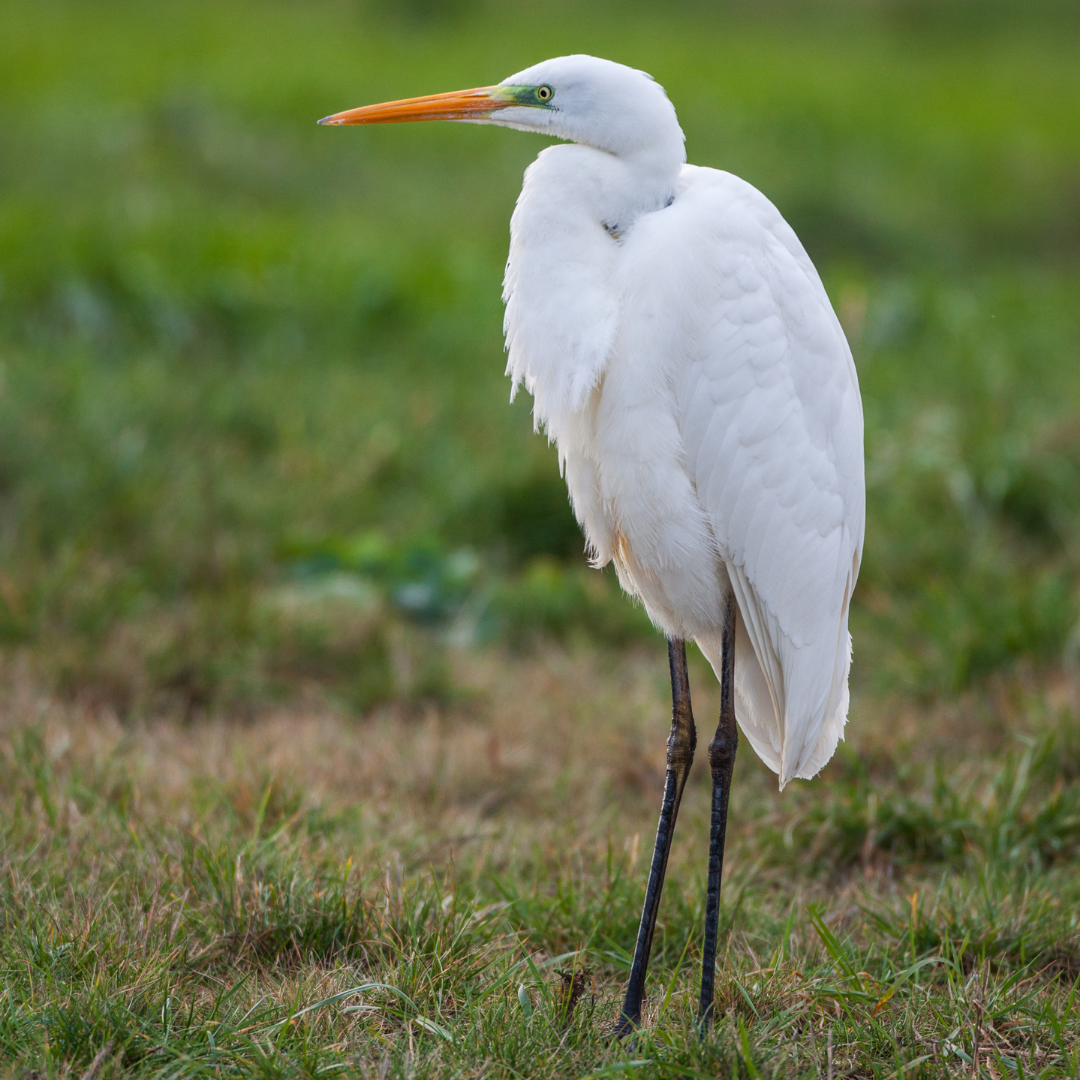
Adult great egrets are large, alert wading birds. Their size, long bill, sharp reflexes, and ability to fly away from danger protect them from many animals. Still, a vulnerable adult may be attacked by a large raptor, owl, alligator, or other powerful predator, especially near a nest or while feeding.

The Main Predators of Great Egrets
The main great egret predators depend on the bird’s age, location, and nesting stage. Eggs and chicks face the most risk because they cannot escape and often remain in exposed nests.
| Great egret life stage | Main predators or threats in the U.S. | Why the stage is vulnerable |
|---|---|---|
| Eggs | Raccoons, crows, ravens, snakes, vultures, and other nest raiders | Eggs cannot move or defend themselves |
| Small chicks | Raccoons, crows, ravens, snakes, large birds, and alligators | Chicks are weak, exposed, and unable to fly |
| Older chicks | Large raptors, owls, alligators, and aggressive birds | They can move but may still be unable to escape |
| Adult birds | Large raptors, great horned owls, alligators, and occasionally other large predators | Adults are strong but may be caught by surprise |
| All age groups | Habitat loss, storms, pollution, fishing line, and human disturbance | These are not predators, but they can reduce survival |
These predators do not pose the same level of danger in every colony. A nest in a cypress swamp in Florida may face different threats from a nest in a coastal marsh in Texas or a freshwater wetland in California.
Raccoons
Raccoons are among the most important nest predators for wading birds in parts of the United States. They can climb trees, cross shallow water, and search colonies for eggs and young birds. A raccoon may raid a nest at night when adult egrets are less active.
Raccoons are especially dangerous where wetlands are close to roads, homes, campgrounds, or other areas with high raccoon numbers. Human food waste can increase raccoon populations near bird habitat, which may raise pressure on nesting colonies.
Crows and ravens
American crows and common ravens can take eggs and very young chicks. These intelligent birds often search for unattended nests. They may also benefit when people disturb a colony and adult egrets leave their nests.
Crows and ravens are not always major predators at every site. Their effect depends on colony size, tree cover, food supply, and how well adult birds can defend the nesting area.
Snakes
Some snakes can climb into trees and eat eggs or small chicks. The risk is higher in warm wetland regions, including parts of the Southeast and Gulf Coast. Snake predation is difficult to observe because it may happen quickly and without leaving clear evidence.
A snake is more likely to threaten a nest than a healthy adult great egret. Adult birds are too large for most snakes to overpower.
Vultures and other birds
Vultures may eat eggs, chicks, or dead young birds. Their role can be hard to separate from scavenging because they often take animals that are already weak or dead.
Other large birds may also attack nests or young birds. Great blue herons, gulls, and large raptors can sometimes threaten eggs or chicks, although the level of risk varies by region. Competition and conflict between nesting birds may also cause chicks to fall from nests.
American alligators
American alligators can prey on young or adult wading birds in the southeastern United States. They may wait beneath roosts or nesting trees and strike birds that fall, land close to the water, or move through shallow wetlands.
Alligators are more likely to be a local threat in Florida, Louisiana, Georgia, South Carolina, and other parts of the Southeast. They are not a major predator of great egrets across the entire United States.
Large raptors and owls
Bald eagles, golden eagles in some western areas, and great horned owls are powerful enough to attack great egrets. These events are not thought to be the main source of mortality for most adult egrets, but they may occur when birds are nesting, roosting, sick, or caught in poor weather.
Large raptors may also take eggs or young birds. A nestling has little protection if an adult leaves the nest or cannot drive the attacker away.

Are Adult Great Egrets at Risk From Predators?
Adult great egrets are relatively safe from most predators because they are tall, strong, and able to fly. They can stand more than 3 feet tall, use their pointed bills as weapons, and strike quickly when threatened.
Their long legs also help them see danger across open water or marsh vegetation. When a predator approaches, an adult often flies away rather than fights. This strategy works well against ground predators but may not protect a bird from a fast or airborne attacker.
Adult great egrets are most vulnerable in a few situations:
- When they are guarding a nest
- When they are feeding in deep or thick vegetation
- When they are sick, injured, or exhausted
- When they are roosting at night
- When they are young and inexperienced
- When they are trapped by fishing line or other debris
- When they are close to an alligator or large predator near water
A healthy adult great egret is not a normal prey item for raccoons, snakes, or crows. Those animals mainly target eggs and young birds. This distinction matters because a list of “great egret predators” may include animals that rarely, if ever, kill a healthy adult.

Why Great Egret Nests Are Vulnerable
Great egrets often nest in colonies called rookeries or heronries. A colony can contain many nests in trees, shrubs, or other vegetation near water. Nesting together provides some protection because many adult birds can detect and challenge an approaching predator.
Colonies also create risks. A large group of nests can attract predators and make the location easier to find. If adults are frightened away, many eggs and chicks may be exposed at the same time.
Great egrets build relatively open nests from sticks. The nests are often high above water or ground, but height does not stop tree-climbing raccoons, snakes, or large birds. Wind can also break branches or cause young birds to fall.
Eggs
Great egret eggs are vulnerable because they cannot escape and are usually left exposed if an adult is forced away. A nest predator may eat one or more eggs during a single visit.
The white color of the eggs may make them easier to see in an open nest. Adult birds reduce this risk by staying near the nest, changing positions, and defending the nesting area. Protection is not constant, however, because adults must also feed and avoid danger.
Chicks
Small chicks face the highest biological risk. They cannot fly, have limited defenses, and may be pushed aside by stronger nest mates. If an adult bird does not return quickly, a chick may be exposed to heat, cold, rain, or predators.
Older chicks can stand, climb on branches, and move away from danger. They may still be unable to fly well enough to escape a raccoon, owl, eagle, or alligator.
Nestlings that fall
A young great egret that falls from a nest may be exposed to predators on the ground. It may also suffer from heat, dehydration, traffic, dogs, or people. A fallen chick is not automatically abandoned, because adult egrets may continue to feed young birds outside the nest.
People should not handle a wild egret chick unless a licensed wildlife rehabilitator or wildlife agency gives specific instructions.

Predators Versus Other Threats to Great Egrets
Predation is only one part of great egret survival. In many areas, habitat loss and human disturbance may have a broader effect than natural predators.
Important nonpredator threats include:
- Loss of wetlands and shallow feeding areas
- Drainage or development near nesting colonies
- Water pollution and reduced fish or amphibian populations
- Severe storms and flooding
- Drought and changing water levels
- Fishing hooks, line, and other discarded gear
- Dogs and people entering nesting areas
- Aircraft, boats, and loud activity near roosts
- Historic hunting for ornamental feathers
Great egrets are protected under the federal Migratory Bird Treaty Act. The law generally prohibits taking, possessing, selling, or harming protected migratory birds, their nests, or their eggs without authorization. Rules can vary by situation, so people should contact the U.S. Fish and Wildlife Service or a state wildlife agency before removing a nest or handling a bird.
Protection does not mean every nest will survive. Natural predators remain part of wetland ecosystems. The practical goal is to reduce preventable human disturbance while allowing natural wildlife behavior to continue.

How Great Egrets Defend Themselves
Great egrets use several defenses against predators. Their first response is often alertness and flight. Adults may also spread their wings, raise their feathers, jab with the bill, or make harsh calls when a predator approaches the nest.
A group of nesting birds can produce a strong defense called mobbing. Several adults may fly toward an intruder, call loudly, or dive at it. This behavior can discourage some predators, but it may not stop a raccoon, snake, eagle, or alligator.
Great egrets also choose nesting sites that offer some protection. Trees over water can make access harder for ground predators. Islands and isolated wetlands may reduce contact with raccoons and people. These benefits depend on local conditions and can change when water levels drop or predators gain access.
The bird’s long bill is both a feeding tool and a defense weapon. It can cause serious injury to a predator or person who approaches too closely. For this reason, people should never attempt to catch or corner a great egret.

What to Do If You See a Great Egret Nest or Chick
The safest action is to watch from a distance and leave the colony undisturbed. Do not approach a nest to check eggs, move branches, scare off a predator, or photograph a chick at close range.
If you see a great egret in immediate danger:
- Keep people, pets, and vehicles away from the area.
- Do not feed, chase, touch, or capture the bird.
- Look for fishing line, hooks, netting, or other human-made hazards.
- Contact a licensed wildlife rehabilitator, state wildlife agency, or local animal control office.
- Follow professional instructions before taking any action.
A great egret standing still may be hunting, resting, or watching for danger. It does not always need help. A bird that is tangled, bleeding, unable to stand, or repeatedly struck by vehicles needs professional assistance.
Do not try to remove a raccoon, snake, alligator, or bird of prey from a natural nesting site. Wildlife removal can be dangerous and may violate state or federal rules. Report a serious problem instead.

Frequently Asked Questions About Great Egret Predators
What is the biggest predator of great egret eggs?
There is no single biggest predator across the United States. Raccoons are important nest predators in many areas, while crows, ravens, snakes, vultures, and other animals may also take eggs. Local habitat determines which predator poses the greatest risk.
Do alligators eat great egrets?
Yes. American alligators can eat great egrets, especially birds that feed, nest, or roost near water in the Southeast. They are a regional predator, not a major threat to great egrets throughout the country.
Can a great egret defend itself from a hawk?
A great egret may defend itself with its bill, wings, and calls, but flight is usually its best defense. A large hawk or eagle may still attack an egret under the right conditions. Adult egrets are difficult prey, but eggs and chicks are much easier targets.
Do raccoons eat adult great egrets?
Raccoons mainly threaten great egret eggs and young birds. They are unlikely to kill a healthy adult egret because the adult is large, mobile, and capable of delivering a dangerous bill strike.
Are great egrets dangerous to people?
Great egrets usually avoid people, but they can defend themselves if cornered or handled. Their sharp bill can cause a serious puncture wound. Watch from a distance and contact trained wildlife professionals if the bird is injured.
Are humans predators of great egrets?
People are not natural predators in the usual ecological sense, but human actions have harmed great egret populations. Habitat destruction, disturbance, pollution, discarded fishing gear, and illegal killing can affect survival. Great egrets and their nests receive legal protection in the United States.

Key Takeaways
- Great egret predators mainly threaten eggs and chicks, not healthy adults.
- Raccoons, crows, ravens, snakes, vultures, large birds, owls, and alligators may attack nests or young birds.
- Adult great egrets rely on flight, alertness, group defense, and their sharp bills.
- Predator risk changes by region, habitat, water level, and nesting site.
- Human disturbance and habitat loss can be as important as natural predation.
- Do not approach nests or handle injured birds without guidance from a licensed wildlife professional.
Conclusion
Great egrets have few predators once they become healthy adults, but their eggs and young face many dangers. In the United States, raccoons, crows, ravens, snakes, large birds, owls, and alligators are among the predators that may affect nesting birds in suitable habitats.
The best way to protect a great egret is to keep a respectful distance, protect wetlands, prevent pets from entering nesting areas, and report injured or entangled birds to trained wildlife professionals.