
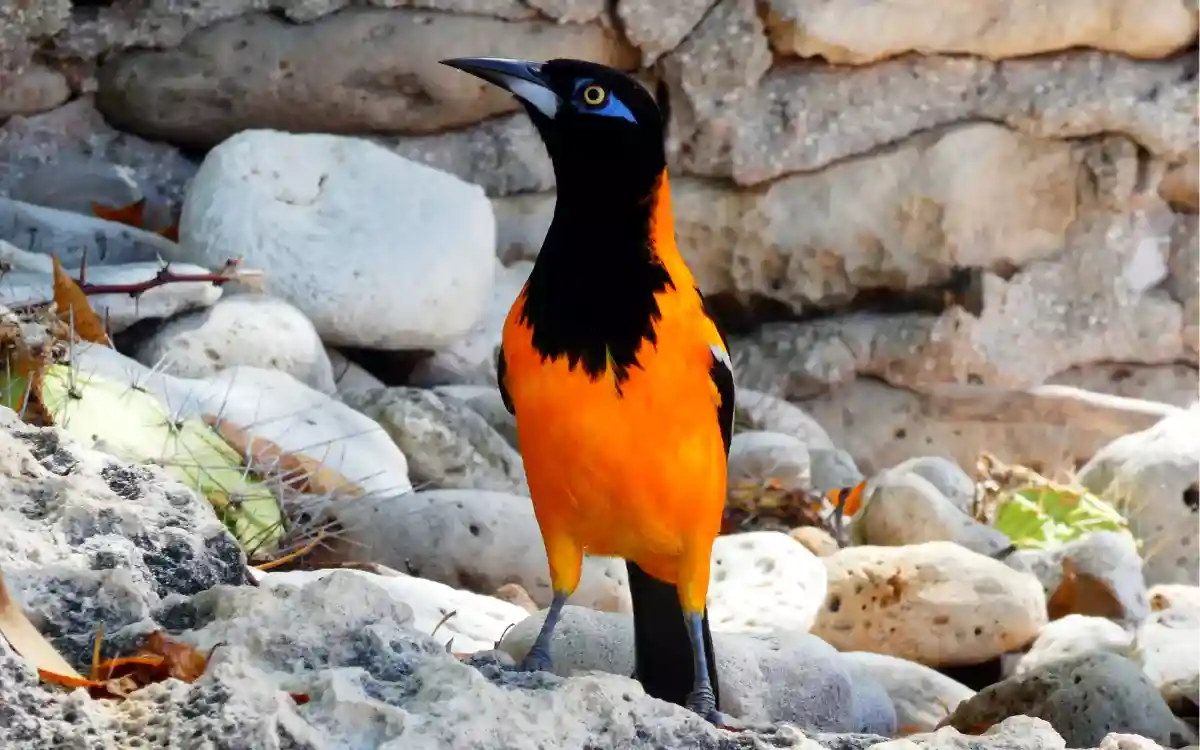
In the United States, a black and orange bird with a long tail is most often a Baltimore Oriole, American Redstart, Eastern Towhee, or Spotted Towhee. The best match depends on the bird’s size, habitat, behavior, and the location of its orange feathers.
Start with the bird’s shape. A bright orange body with a black head usually points to a Baltimore Oriole. A small black songbird with orange patches in the wings and tail is more likely an American Redstart. A ground bird with rusty orange sides may be an Eastern Towhee or Spotted Towhee.
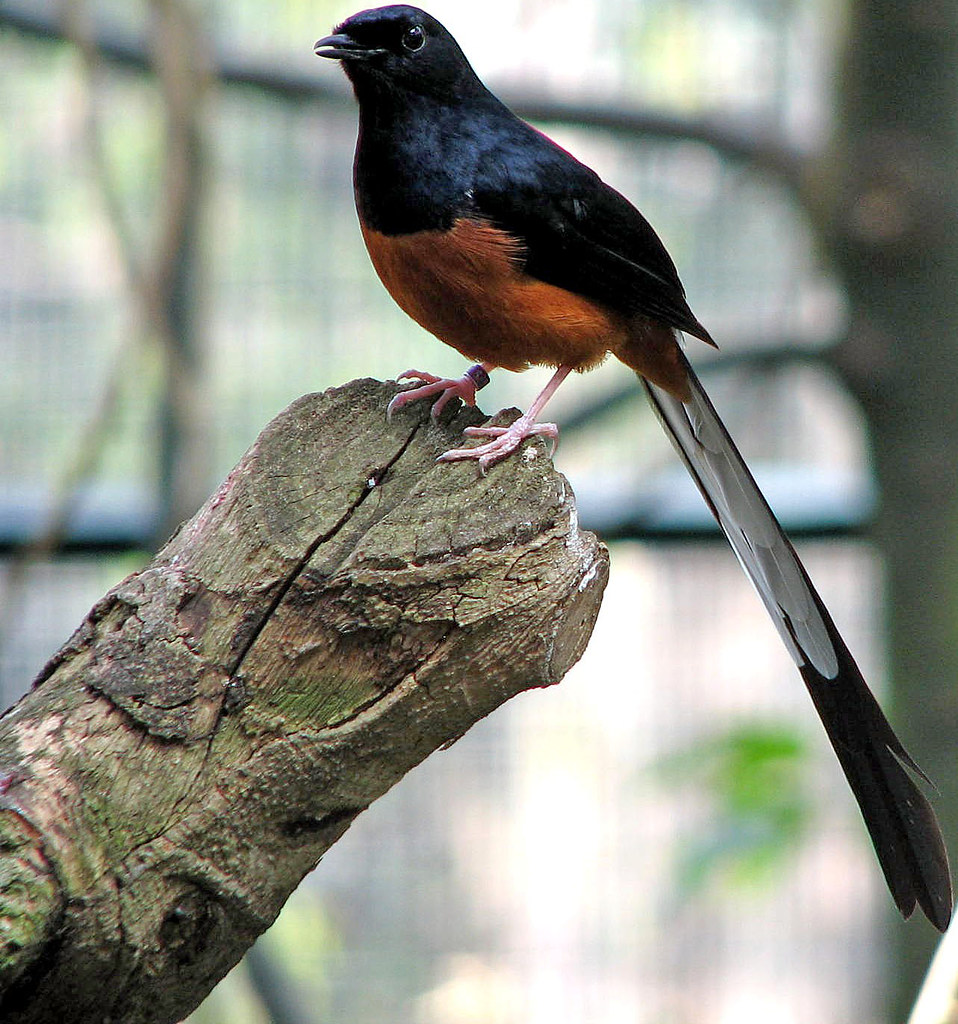
Quick Answer: Which Black and Orange Bird Did You See?
Use this quick guide to narrow down the bird:
| Bird | Main black-and-orange pattern | Tail | Typical behavior |
|---|---|---|---|
| Baltimore Oriole | Orange belly, black head and back | Long, pointed, black | Feeds high in trees |
| American Redstart | Black body with orange wing and tail patches | Medium and often fanned | Flicks wings and tail |
| Eastern Towhee | Black upper body with rusty orange sides | Long and dark | Scratches in leaf litter |
| Spotted Towhee | Black upper body, orange sides, white spots | Long and dark | Forages on the ground |
| Black-headed Grosbeak | Orange breast and belly with a dark head and wings | Medium length | Eats seeds, fruit, and insects |
| Scissor-tailed Flycatcher | Pale body with salmon or orange underwings | Extremely long and forked | Perches in open country |
The Baltimore Oriole is the most likely answer when the bird looks strongly black and orange from a distance. The American Redstart is more likely when the bird is small and repeatedly flashes orange patches as it moves.
Baltimore Oriole: The Classic Black and Orange Bird
The Baltimore Oriole is a leading match for a black and orange bird with a long tail. The adult male has a black head, back, wings, and upper breast. Its lower breast, belly, and rump are bright orange or orange-yellow.
The tail is long enough to stand out, especially when the bird flies between trees. It is mostly black, with orange or yellow-orange edges on some outer feathers. The bill is pointed, which helps the bird reach nectar, fruit, and insects.
Baltimore Orioles usually stay in deciduous trees, parks, wooded neighborhoods, and river edges. They often feed high above the ground, so you may see them as a bright flash moving through leaves.
Signs you saw a Baltimore Oriole
Look for these combined traits:
- Bright orange belly and lower body
- Solid black head and back
- White wing bars
- Long, dark tail
- Pointed, narrow bill
- High activity in mature trees
- Interest in nectar, fruit, or flowering plants
Male Baltimore Orioles are most vivid in spring and summer. Females and young birds are usually duller, with yellow-orange underparts and gray-brown upperparts. A dull bird may still be an oriole even when it does not show a strong black-and-orange pattern.
The species breeds across much of the eastern and central United States. It also occurs in parts of the West during migration or winter. Its exact presence depends on season and region.

American Redstart: Small Bird With Orange Tail Patches
The American Redstart is another common answer to this bird identification question. The adult male is mostly black, with bright orange patches on the sides of the breast, wings, and tail. Some populations show yellow instead of orange, especially in females and young birds.
The American Redstart has a long-looking tail for its body size. It often spreads or fans the tail while moving through shrubs and low tree branches. The orange patches may appear and disappear quickly, almost like small signal flags.
This bird is much smaller than a Baltimore Oriole. It is usually about the size of a chickadee or warbler rather than a robin. It catches insects by making short flights from a perch.
How to separate a redstart from an oriole
| Feature | American Redstart | Baltimore Oriole |
|---|---|---|
| Body size | Small songbird | Medium-sized songbird |
| Orange pattern | Small side, wing, and tail patches | Large orange belly |
| Movement | Quick, active, wing and tail flashing | Slower movement through tree crowns |
| Bill | Short and narrow | Longer and more pointed |
| Habitat | Shrubs, woodland edges, lower branches | Mature trees and open woodland |
| Main food | Insects and other small invertebrates | Insects, fruit, and nectar |
If the bird keeps flicking its wings and tail, the American Redstart deserves close attention. If the whole underside looks orange, an oriole is more likely.

Eastern Towhee: Black Upperparts and Rusty Orange Sides
The Eastern Towhee is a large sparrow with a long tail. The adult male has a black head, throat, back, and upper breast. Its sides are warm rusty orange, and its belly is usually white.
This bird often appears black and orange when it turns sideways. It does not usually have an orange belly like a Baltimore Oriole. Instead, the orange is concentrated on the flanks, or sides of the body.
Eastern Towhees spend much of their time near the ground. They scratch through leaves with both feet, searching for seeds, insects, and other food. Their habitat often includes brush, forest edges, thickets, and overgrown yards.
Clues that point to an Eastern Towhee
- Long, dark tail
- Black head and upper body
- Rusty orange sides
- White belly
- Frequent ground feeding
- Habit of scratching in leaves
- Clear, repeated “drink-your-tea” song in some regions
The female Eastern Towhee is brown rather than black. Young birds are also less sharply marked. If the bird has the same body shape but looks brown, age or sex may explain the difference.
The Eastern Towhee is mainly found in the eastern United States. Its range reaches parts of the central United States, but it is not the usual choice in the western states.
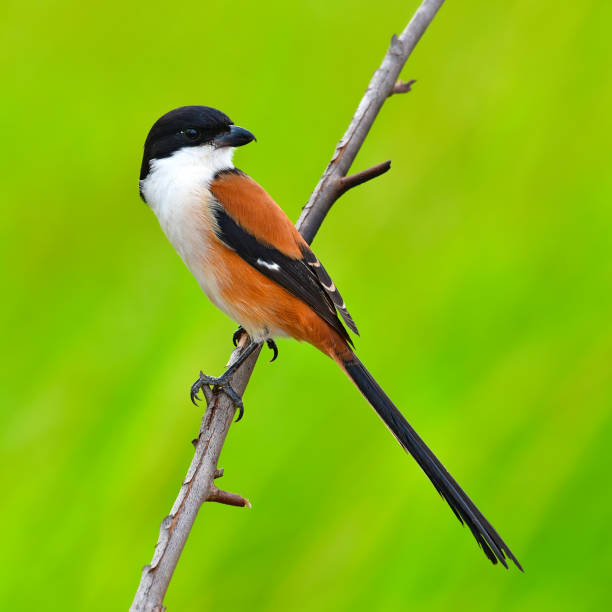
Spotted Towhee: A Western Black and Orange Look-Alike
The Spotted Towhee resembles the Eastern Towhee but is more common in the western United States. The male has a black head, back, and chest, rusty orange sides, and a white belly. White spots appear on the wings and back.
Those white spots are the fastest way to separate a Spotted Towhee from an Eastern Towhee. The bird also has a long tail and often feeds on the ground under shrubs.
Spotted Towhees use brushy habitats, dry woodland, chaparral, and forest edges. They may visit yards with dense cover, but they are less likely to sit in the open for long periods.
Eastern Towhee or Spotted Towhee?
Use location and plumage together:
- Eastern United States: Eastern Towhee is more likely.
- Western United States: Spotted Towhee is more likely.
- White spots on the back and wings: Spotted Towhee.
- Plain black back without strong white spotting: Eastern Towhee.
- Rusty sides and ground feeding: Either towhee may fit.
Lighting can hide the white spots. Try to view the bird from more than one angle before making an identification.

Other Black and Orange Birds to Consider
Several less common or less exact matches may also fit the description. These birds become more likely when the size, habitat, or tail shape does not match the main choices.
Black-headed Grosbeak
The male Black-headed Grosbeak has an orange or cinnamon-colored breast and belly, a dark head, black wings, and white wing markings. Its tail is fairly long but not as striking as the tail of a towhee or scissor-tailed flycatcher.
This species is especially relevant in the western United States. It often visits woodland, streamside habitat, parks, and feeding stations. Its large, thick bill is a useful clue because it looks unlike the small bill of a redstart.
Orchard Oriole
The male Orchard Oriole is darker and slimmer than a Baltimore Oriole. It may look chestnut, rust, and black rather than bright orange and black. The tail is dark, and the bird often stays in open woodland, orchards, and stream corridors.
Females and young Orchard Orioles are yellow-green or olive-yellow. This can make them difficult to match with a search image that shows an adult male.
Scissor-tailed Flycatcher
The Scissor-tailed Flycatcher has an exceptionally long, forked tail. Adult males often show salmon-pink or orange tones under the wings and on the sides. The body is mostly pale gray, not black.
This bird is a strong possibility only if the tail is far longer than the body and the bird lives in open grassland, pasture, or roadside habitat. It is most associated with the south-central United States.
Vermilion Flycatcher
The male Vermilion Flycatcher has a bright red-orange head and underparts with a dark brown back and wings. From far away, it may look black and orange. Its tail is medium length rather than extremely long.
It favors open country and often perches on fences, wires, and low branches. It is more likely in the southern and southwestern United States than in the Northeast.

How to Identify the Bird From a Photo or Sighting
The most reliable identification comes from several traits, not color alone. Black can look brown in shade, and orange can look yellow in bright sun.
1. Estimate the bird’s size
Compare it with a familiar bird:
- Sparrow-sized: American Redstart may fit.
- Robin-sized: Towhee or Black-headed Grosbeak may fit.
- Larger than a robin with a long tail: Baltimore Oriole or Scissor-tailed Flycatcher may fit.
- Very small and restless: American Redstart becomes more likely.
Size estimates are easier when the bird is near a known object, such as a feeder, fence, or branch.
2. Find where the orange occurs
The orange pattern often solves the mystery:
- Entire belly orange: Baltimore Oriole
- Small orange patches on wings and tail: American Redstart
- Rusty orange sides with white belly: Eastern or Spotted Towhee
- Orange breast with large bill: Black-headed Grosbeak
- Orange or salmon underwings with very long forked tail: Scissor-tailed Flycatcher
3. Watch how the bird moves
Behavior is a major field mark:
- Flicks wings and tail: American Redstart
- Feeds high in trees: Baltimore Oriole
- Scratches through leaves: Towhee
- Perches on wires over open land: Flycatcher
- Cracks seeds with a thick bill: Black-headed Grosbeak
4. Check the habitat
Habitat can remove several possibilities at once. Dense shrubs favor a towhee or redstart. Tall leafy trees favor an oriole. Open pasture favors a flycatcher.
5. Listen for the call
A sound recording can support a visual identification, but do not use a call alone. Many birds give different calls during migration, alarm, courtship, and contact.
For the most accurate result, note the date, state, habitat, approximate size, tail shape, and exact orange pattern. Then compare the bird with a regional guide from the Cornell Lab of Ornithology, National Audubon Society, or a local bird records group.
Seasonal and Regional Clues in the United States
Location and season can change the likely answer. A black and orange bird seen in Maine may not be the same species most likely in Arizona.
| Region or setting | More likely possibilities |
|---|---|
| Northeast in warm months | Baltimore Oriole, American Redstart, Eastern Towhee |
| Southeast woodland edge | Baltimore Oriole, Eastern Towhee, Orchard Oriole |
| Midwest parks and forests | Baltimore Oriole, American Redstart, Eastern Towhee |
| Pacific Northwest or Great Basin | Spotted Towhee, Black-headed Grosbeak |
| Southwest desert edge | Vermilion Flycatcher, Scott’s Oriole, migrating species |
| Texas and Oklahoma grassland | Scissor-tailed Flycatcher, Orchard Oriole |
| Dense summer woodland | American Redstart or Black-headed Grosbeak |
| Brushy ground cover | Eastern Towhee or Spotted Towhee |
Migration can make an unusual species appear outside its usual breeding range. A single sighting should therefore be judged by several clues rather than range maps alone.
Plumage also changes with age and sex. A female, immature, or worn bird may have muted orange, yellow, olive, or brown tones. That is why shape and behavior remain useful when color is unclear.

Common Identification Mistakes
The most common mistake is treating “black and orange” as a complete identification. Many birds share those colors, but they place them in different areas of the body.
Another mistake is overlooking female and immature birds. The male Baltimore Oriole is bright and easy to recognize, while females and young birds may look yellowish and gray. The same issue affects towhees, grosbeaks, and orioles.
Distance also causes errors. A long tail may appear shorter when folded, while a short tail may appear long when spread during flight. Take several observations if possible.
Avoid relying on a single color word from a quick sighting. Ask:
- Was the orange on the belly, sides, wings, or tail?
- Was the bird on the ground or high in a tree?
- Did it have a thick bill or a thin bill?
- Did the tail look forked, rounded, or simply long?
- Were there white spots or wing bars?
- What state and habitat did you see it in?
A clear photo from the side is usually more useful than a distant photo from below. Include the bird’s head, back, wings, tail, and underside when possible.

How to Attract Black and Orange Birds Safely
The best way to attract these birds is to provide native habitat, clean water, and suitable food without creating hazards.
Plant native shrubs and trees that produce berries or support insects. Dense cover helps towhees and redstarts, while mature trees provide feeding and nesting space for orioles and grosbeaks.
Keep birdbaths shallow and clean. Change the water often, scrub the basin, and place it where cats cannot hide nearby. Clean feeders and remove spoiled fruit, especially during warm weather.
For orioles, some people offer oranges or nectar feeders. These can attract birds, but they require regular cleaning. Fermented fruit, mold, and dirty sugar water can harm birds.
Reduce common yard dangers:
- Keep cats indoors or use a secure outdoor enclosure.
- Place window feeders close to the glass or well away from it.
- Use window decals or other bird-safe window treatments.
- Avoid pesticides when practical.
- Do not handle a wild bird unless it is injured and a licensed wildlife rehabilitator directs you.
If a bird hits a window, place it in a ventilated box in a quiet, dark location and contact a wildlife rehabilitator. Do not force food or water into its bill.

Frequently Asked Questions
What is the most common black and orange bird in the United States?
The Baltimore Oriole is one of the most recognizable black and orange birds in the United States. It is the strongest match when the bird has a black head and back, a bright orange belly, and a long dark tail.
What small black bird has orange patches on its tail?
The American Redstart has orange patches on the sides of its tail and wings. It is a small, active bird that often flashes these patches while moving through shrubs and woodland.
What black bird has orange sides and a long tail?
An Eastern Towhee or Spotted Towhee may have this pattern. Both have black upperparts, rusty orange sides, white bellies, and long tails. The Spotted Towhee usually has more obvious white spots on its back and wings.
Is a black and orange bird with a long tail always an oriole?
No. Orioles have a strong orange-and-black pattern, but redstarts and towhees can look similar. The orange location, bird size, habitat, and behavior are needed for a dependable identification.
What should I record before asking for help identifying the bird?
Record the date, state, habitat, approximate size, tail shape, bill shape, and location of the orange markings. Note whether the bird was in a tree, shrub, or on the ground. A clear side photo is especially helpful.
Conclusion: The Best Match Depends on the Orange Pattern
A Baltimore Oriole is the best first guess for a large black and orange bird with a long tail and a bright orange belly. Choose American Redstart when the bird is small and flashes orange wing and tail patches. Choose Eastern Towhee or Spotted Towhee when the bird has rusty orange sides and spends time scratching on the ground.
For a confident identification, combine color with size, tail shape, habitat, behavior, and location. If the bird does not fit one species neatly, compare it with a regional field guide and check whether age, sex, lighting, or migration may explain the difference.