

Bird calls in the United States can signal danger, attract a mate, defend a nest, keep a flock together, or simply say, “I am here.” The same bird may use several sounds, and one sound can mean different things in different settings.
To understand a bird call, listen to the sound, the bird’s behavior, the time of day, the habitat, and what happens next. A sharp call near a hawk may be an alarm. The same species may use a softer note to stay in touch with its mate.
This guide explains what common bird sounds mean, how to identify them, and how to avoid common mistakes.

Bird Calls vs. Bird Songs: What Is the Difference?
Bird calls are short sounds used for contact, warning, defense, or other daily needs. Bird songs are often longer and more complex. Many birds use songs to claim territory or attract a mate.
The line is not perfect. Scientists do not always use “song” and “call” in the same way. Some birds have sounds that fit both groups.
| Sound type | Common purpose | What you may notice |
|---|---|---|
| Song | Attract a mate or defend territory | Long, varied, and repeated |
| Contact call | Keep birds together | Short, soft, and repeated |
| Alarm call | Warn of danger | Sharp, loud, or urgent |
| Begging call | Ask a parent for food | High-pitched and persistent |
| Flight call | Communicate while flying | Brief notes during movement |
| Courtship sound | Support mating behavior | May include calls, songs, or wing sounds |
| Agonistic call | Threaten or defend space | Harsh, fast, or intense |
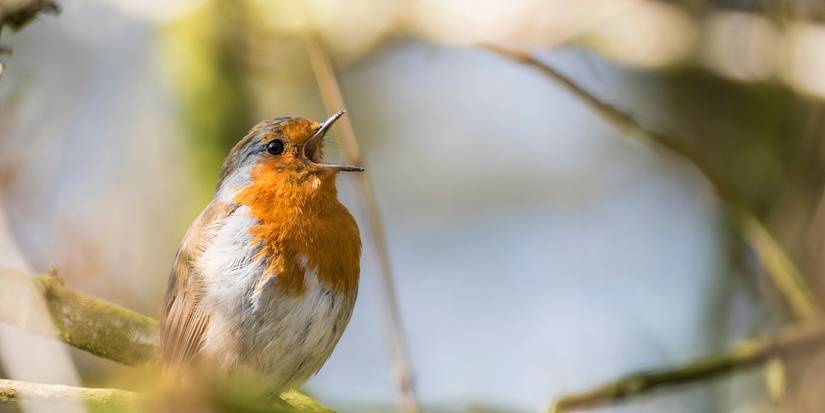
A song is not always loud or musical. A Northern Cardinal may sing from a tree, while a House Wren may produce a fast, busy series of notes. A call may sound simple but still carry useful information.
Birds also use body language. A bird that freezes, flicks its tail, raises its crest, or flies toward cover may be responding to danger even when its sound is hard to hear.
The Most Common Meanings of Bird Calls
Most bird calls fall into a small number of useful categories. Context helps you decide which meaning is most likely.
1. Alarm: “There is danger nearby”
Alarm calls warn other birds about a predator or threat. The threat may be a hawk, owl, cat, snake, human, or another animal near a nest.
Alarm calls often have these traits:
- They sound sharp, harsh, or urgent.
- Several birds may join in.
- Birds may stare at one spot or move into thick cover.
- The calls may change when the predator moves.
- Birds may mob the threat by flying near it or scolding it.
Not every loud call is an alarm. A bird may call loudly because it is defending a territory or trying to locate a mate.
2. Contact: “Where are you?”
Contact calls help birds stay connected. A pair may use them while feeding in a yard. A flock may use them while moving through trees or flying overhead.
Contact calls are often:
- Short
- Repeated at steady intervals
- Less harsh than alarm calls
- Answered by another bird
A chick calling from a nest may also use a contact sound. The adult may answer or return with food.
3. Territory: “This space is occupied”
Birds use songs and calls to defend feeding or nesting areas. The sound may warn another bird to stay away.
Territorial behavior often includes:
- Singing from a visible perch
- Repeating the same phrase
- Chasing another bird
- Flying toward a rival
- Returning to the same area
Male birds sing more often in many species, but females also sing in some species. Song use varies by species, season, age, and location.
4. Mating: “I am a possible mate”
Songs can help birds attract or assess mates. A song may show that a bird is healthy, experienced, or able to hold a territory. That does not mean a human listener can decode every detail.
During breeding season, you may hear more singing at dawn. This is called the dawn chorus. It is common in spring and early summer, though timing varies across the United States.
Mating behavior may also include calls, wing displays, postures, and flight patterns. Listen for the full scene rather than treating one sound as a complete message.
5. Food begging: “Feed me”
Young birds often make loud, high-pitched calls when they want food. These calls may come from a nest, a tree, or the ground.
A fledgling on the ground may still be cared for by its parents. It may call while an adult watches from nearby. A young bird that has feathers and can hop or fly short distances is often best left alone unless it is in immediate danger.
If a bird is injured, cold, unable to stand, or attacked by a pet, contact a licensed wildlife rehabilitator. Do not give food or water unless a rehabilitator tells you to do so.
6. Flock coordination: “Move together”
Some birds call while flying or feeding in groups. These sounds can help a flock maintain spacing, find other members, or respond to movement.
You may hear this from geese, crows, blackbirds, waxwings, chickadees, and many other social birds. Flock calls can become louder when the group takes flight or faces a threat.

How Context Changes the Meaning
A bird call does not have one fixed translation. Its meaning depends on who is calling, where the bird is, what the bird is doing, and what other birds do next.
Use this simple observation method:
- Find the bird. Note its species, sex if known, age, and position.
- Watch the behavior. Is it feeding, chasing, hiding, flying, or looking at a predator?
- Check the setting. Record the habitat, weather, time, and season.
- Listen for a pattern. Does the sound repeat? Does another bird answer?
- Watch the result. Do birds scatter, gather, attack, or return to feeding?
- Compare recordings. Use a trusted field guide or sound tool after observing the bird.
For example, a Blue Jay may make a loud, harsh call near a hawk. It may also use similar sounds while defending food or reacting to a person. The call alone does not prove the cause.
The best interpretation combines sound and behavior. Think of the call as one part of a sentence. The bird’s movement and surroundings provide the rest.

What Common Backyard Bird Calls May Mean
The following examples apply broadly to birds often seen in U.S. backyards. They are patterns, not exact translations.
Northern Cardinal
A sharp metallic chip may serve as a contact or alert call. A male’s clear song often relates to territory and mating. Cardinals may call from shrubs, trees, or near a feeder.
American Robin
Robins use several calls, including short contact notes and sharper warning sounds. Their early morning songs are often linked to territory and breeding.
Black-capped Chickadee
Chickadees use different calls in different settings. Their familiar “chick-a-dee-dee-dee” call can carry information about danger. Research has found that the number and pattern of “dee” notes may vary with the level or type of threat.
Do not treat this as a simple code in which every extra note has one exact meaning. The bird’s behavior and the type of predator also matter.
Blue Jay
Blue Jays make many sounds. They may use harsh calls during conflict, softer calls for contact, and vocal imitations in some situations. A loud Blue Jay is not automatically warning you about a hawk.
American Crow
Crows use calls for contact, alarm, group movement, and conflict. Several crows calling together may be responding to a predator, an owl, a rival, or a food source.
Mourning Dove
The low, repeated coo is usually a song-like breeding or territorial sound. It is not the same as a distress call. Mourning Doves also use short calls during flight and close contact.
House Wren
House Wrens produce rapid, energetic songs during breeding. A bird near a nest box may also use calls connected with territory, courtship, or contact.

How to Identify a Bird Call
You can identify a bird call more accurately by combining your ears, eyes, and a field guide.
Start with the sound
Describe the sound in plain words:
- Clear or harsh
- High or low
- Fast or slow
- One note or several
- Rising, falling, or level
- Repeated or irregular
- Soft, medium, or loud
Words such as “chip,” “whistle,” “buzz,” “trill,” and “rattle” help you remember a sound. They do not need to be exact scientific terms.
Note the location
Habitat narrows the possibilities. Ask whether you heard the bird in:
- A city park
- A backyard feeder
- A wetland
- A forest
- A prairie
- A desert
- A coastal area
- A farm or open field
Also note the state or region. A bird common in Florida may be rare in Minnesota. Migration can change which species appear in a place during spring and fall.
Use a field guide or sound app carefully
Tools such as the Cornell Lab’s Merlin Bird ID can help suggest species from recordings. The Cornell Lab also provides species accounts and audio through All About Birds. The National Audubon Society offers bird identification resources as well.
These tools are useful aids, not final proof. Background noise, regional song differences, poor recordings, and similar species can lead to errors. Confirm a result with the bird’s appearance, range, habitat, and behavior.
Record the call when practical
A phone recording can help you compare sounds later. Hold the phone still, reduce nearby noise, and record several seconds before and after the call.
Do not approach a nest or chase a bird to improve a recording. Distance protects the bird and often produces a more natural sound.

Why Bird Calls Change by Season, Region, and Age
Bird vocal behavior changes throughout the year. Spring often brings more territorial songs and courtship sounds. In late summer and fall, some birds become quieter, while others use calls during migration or flock movement.
Birds of the same species may also have regional differences called dialects. A White-crowned Sparrow in California may sound different from one in the eastern United States. These differences can develop when young birds learn songs from nearby adults.
Age matters too. Young birds may produce incomplete songs or unusual calls. They often improve with practice. Sex can matter as well, since males and females may use different sounds or use the same sound in different settings.
Weather and noise also affect what you hear. Wind, rain, traffic, and urban construction can hide soft calls. Birds may call more loudly or change their timing when background noise is high.

Common Mistakes When Interpreting Bird Calls
Mistake 1: Assuming every sound has a direct translation
Bird calls do not work like human words. A sound may signal a general state, such as alertness, contact, or conflict, without naming a single object.
Mistake 2: Confusing a bird’s song with distress
A loud song can sound urgent to a person, especially at dawn. Look for behavior before deciding that the bird is in trouble.
Mistake 3: Assuming the loudest bird caused the disturbance
One bird may call because another bird detected danger first. The loudest sound may come from the species that is most vocal, not the species that noticed the threat.
Mistake 4: Trusting an app without checking the bird
Sound tools can suggest a likely species. They cannot always separate similar calls or account for local variation. Use several clues.
Mistake 5: Playing recordings too often
Playback can attract or stress birds, disrupt feeding, expose a nest, or draw a bird into unsafe areas. The American Birding Association and bird researchers generally encourage restraint, especially during breeding season.
If you use playback, keep the volume low, use it briefly, and stop when a bird reacts. Avoid playback near nests, during sensitive breeding activity, or in protected areas where it is prohibited.

Frequently Asked Questions About Bird Calls
Do birds understand each other’s calls?
Birds of the same species often respond to calls from their own kind. Some species also react to calls from other birds, especially alarm calls. This does not mean they understand human-style words. Their responses come from learned signals, instinct, experience, and context.
Can a bird call mean more than one thing?
Yes. A call may serve as contact in one situation and an alert in another. Volume, rhythm, repetition, location, and behavior can change its likely meaning.
Why do birds call at night?
Some birds call at night during migration, territory disputes, breeding, or movement. Owls are well-known night callers, but nocturnal sounds can also come from rails, nightjars, thrushes, and migrating songbirds.
Why do birds call at dawn?
Many birds sing at dawn because sound carries well in cool, calm air. Early morning is also a key time for territory defense and mate attraction. The dawn chorus varies by habitat, season, weather, and species.
Should I help a bird that keeps calling?
First, watch from a distance. A calling fledgling may be safe while its parents search for food. If the bird is injured, trapped, cold, or attacked by a pet, contact a licensed wildlife rehabilitator rather than trying to treat it yourself.
Key Takeaways
- Bird calls can signal danger, contact, territory, mating, food begging, or flock movement.
- The same sound may have different meanings in different settings.
- Behavior and habitat are as useful as the sound itself.
- Bird songs are often linked to territory and mating, but the terms overlap.
- Identification apps can help, but confirm results with sight, range, and context.
- Avoid disturbing nests and use playback sparingly.
Conclusion
Bird calls are best understood as part of a larger scene. Listen to the sound, then watch the bird. Note the habitat, season, time, and response of nearby birds.
With practice, you may learn that a sharp chip near a feeder means alertness, a repeated soft note keeps a pair together, and a long song from a treetop marks a territory. The goal is not to translate every sound perfectly. It is to notice patterns without disturbing the birds that make them.