
Introduction
Different bird chirps can signal danger, food, a mate, a nearby flock member, or a young bird asking for care. But one chirp rarely has one fixed meaning. The bird’s species, body posture, time of day, habitat, and nearby events all help explain the sound.
In the United States, a short note from a Northern Cardinal may serve as a contact call. A sharp Blue Jay call may warn of a predator. A series of soft notes from a nestling may mean, “Feed me.” The same species may also change its call when it feels calm, threatened, or separated from its group.
The best way to understand bird chirps is to match the sound with the situation. Listen for the pattern, watch the bird, and identify the species before assigning a meaning.
What Bird Chirps Mean
A bird chirp is a broad term for a short bird vocalization. Scientists often use more exact terms, such as call, song, alarm call, contact call, or begging call.
Most bird sounds fall into these groups:
| Type of sound | Common purpose | What you may notice |
|---|---|---|
| Contact call | Keeps birds connected | Short notes repeated at intervals |
| Alarm call | Warns of danger | Sharp, fast, or harsh sounds |
| Begging call | Requests food or care | Persistent, high-pitched notes |
| Territorial call | Claims or defends an area | Repeated notes from a fixed perch |
| Courtship sound | Attracts or reassures a mate | Singing, displays, or soft calls |
| Flock call | Coordinates group movement | Calls exchanged while flying or feeding |
| Distress call | Signals capture or severe danger | Loud, urgent, unusual vocalizing |
These categories overlap. A call that warns one bird may also alert the rest of its flock. A song may attract a mate and warn other males to stay away.
Bird sounds also differ by species. A “chirp” from a House Sparrow does not carry the same message as a “chirp” from a Carolina Wren. Even within one species, young birds and adults may use different sounds.
Bird calls versus bird songs
A call is usually short and used for immediate communication. Birds use calls throughout the year.
A song is often longer and more complex. Many songbirds use songs to defend a breeding area or attract a mate. In the United States, male birds often sing more during spring and early summer, but this pattern varies by species, region, and weather.
The difference is not always strict. Some birds use complex calls, and some songs are brief. “Chirp” is a useful everyday word, but it does not describe a single scientific category.
A Bird Chirp Meaning Chart
Use this chart as a starting point, not as a translation key. Context matters more than the sound alone.
| What you hear or see | Likely meaning | Clues that support it |
|---|---|---|
| One short note, repeated every few seconds | Contact call | The bird stays calm and another bird answers |
| Fast, sharp notes | Alarm | The bird freezes, flicks its tail, or looks toward a hawk, cat, or person |
| Harsh scolding sounds | Predator warning or mobbing | Several birds gather and call at the same animal |
| Soft, repeated notes near a nest | Contact or care | An adult approaches the nest or a juvenile calls from cover |
| High, steady peeps from a nest | Begging | Young birds gape, flutter, or follow an adult |
| Long, patterned phrases | Song or territory defense | The bird sings from a high perch and repeats the pattern |
| Calls exchanged during flight | Flock coordination | Birds call while moving, feeding, or regrouping |
| Quiet, rapid notes between two birds | Courtship or pair contact | Birds stay close, feed each other, or display |
| Sudden loud calls during a chase | Conflict or defense | Birds pursue, posture, or drive another bird away |
A single sound may fit more than one row. For example, a Northern Cardinal may give a short chip when it sees a rival, a predator, or its mate. The surrounding behavior helps separate those possibilities.
Common Bird Chirps in the United States
Bird identification is the first step toward understanding a call. The following examples describe common patterns, but local dialects and individual variation are normal.
Northern Cardinal
Northern Cardinals use several calls. Their sharp “chip” often appears during contact, territorial conflict, or alarm. Cardinals may also give softer calls when a pair stays near one another.
Listen for the bird’s behavior. A cardinal that sits low and watches a cat may be giving an alarm call. A cardinal that moves calmly through shrubs may be using a contact call.
The male’s clear, whistled song is different from its short chip. It can help defend territory and attract a mate.
American Robin
American Robins use short calls to stay in touch, especially when moving through yards, parks, and woodland edges. Their familiar spring song has clear, repeated phrases and often begins before sunrise.
A robin may also make sharp notes when disturbed. Calls near a nest can become more urgent if a person, cat, crow, or hawk approaches.
Carolina Wren
Carolina Wrens produce loud, varied calls and songs. Their repeated phrases often serve as territorial or pair communication.
A wren may call from a hidden spot, which can make the sound seem closer or farther away than it is. Many wrens stay near dense cover, porches, brush piles, and tangled vines.
Black-capped Chickadee
Black-capped Chickadees have several well-known calls. Their “chick-a-dee-dee-dee” call can change with the level of danger. Researchers have found that the number and structure of the “dee” notes can provide information about predators and threat level.
This does not mean every extra note has a simple word-for-word translation. The call works as part of a wider communication system. Chickadees may also use calls to keep a flock together.
Blue Jay
Blue Jays are known for loud calls, including harsh alarm-like sounds and varied vocal imitations. A jay may warn other birds about a predator, defend food, or react to a person near its nest.
A Blue Jay’s loud call does not always mean danger. Jays are social and vocal birds. Watch for nearby movement, repeated scanning, chasing, or a group response before deciding that the call is an alarm.
Eastern Phoebe
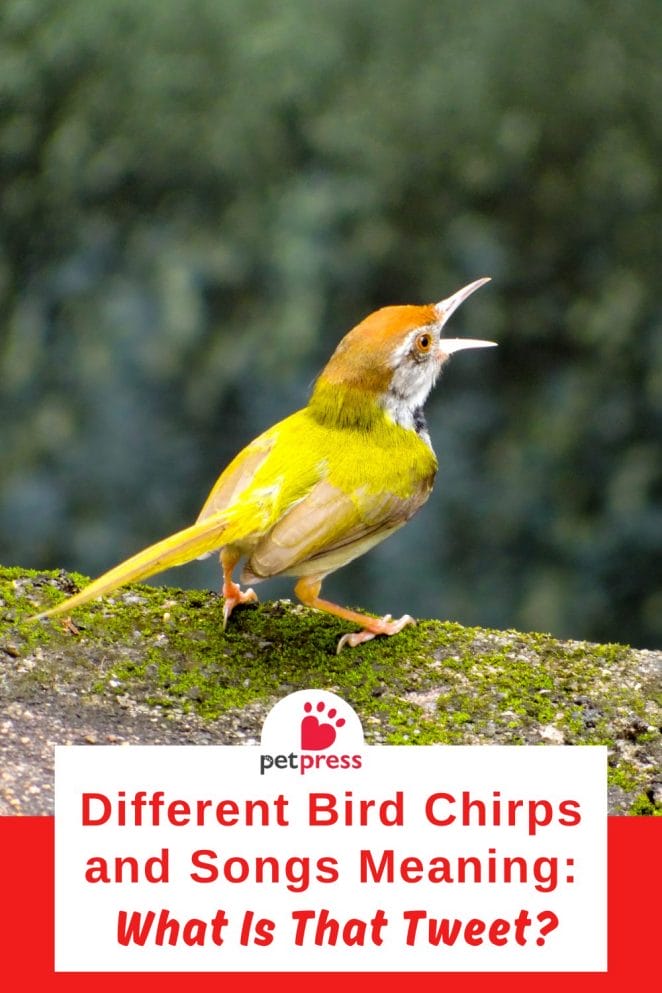
Eastern Phoebes often give short, clear calls while hunting from a perch. They may repeat their name-like “phoebe” sound as a contact or territorial signal.
Their calls can seem simple, but the bird may use them in different settings. A phoebe calling from a nesting area may be defending that space. One calling between feeding flights may be keeping contact with a mate.
House Sparrow
House Sparrows use short chirps and chatter to stay in contact, compete for food, and interact around nest sites. Their calls may become louder during disputes.
Because House Sparrows often gather around buildings and feeders, you may hear several overlapping voices. In that setting, body movement and group behavior can be more useful than one isolated sound.
How to Tell What a Bird Chirp Means
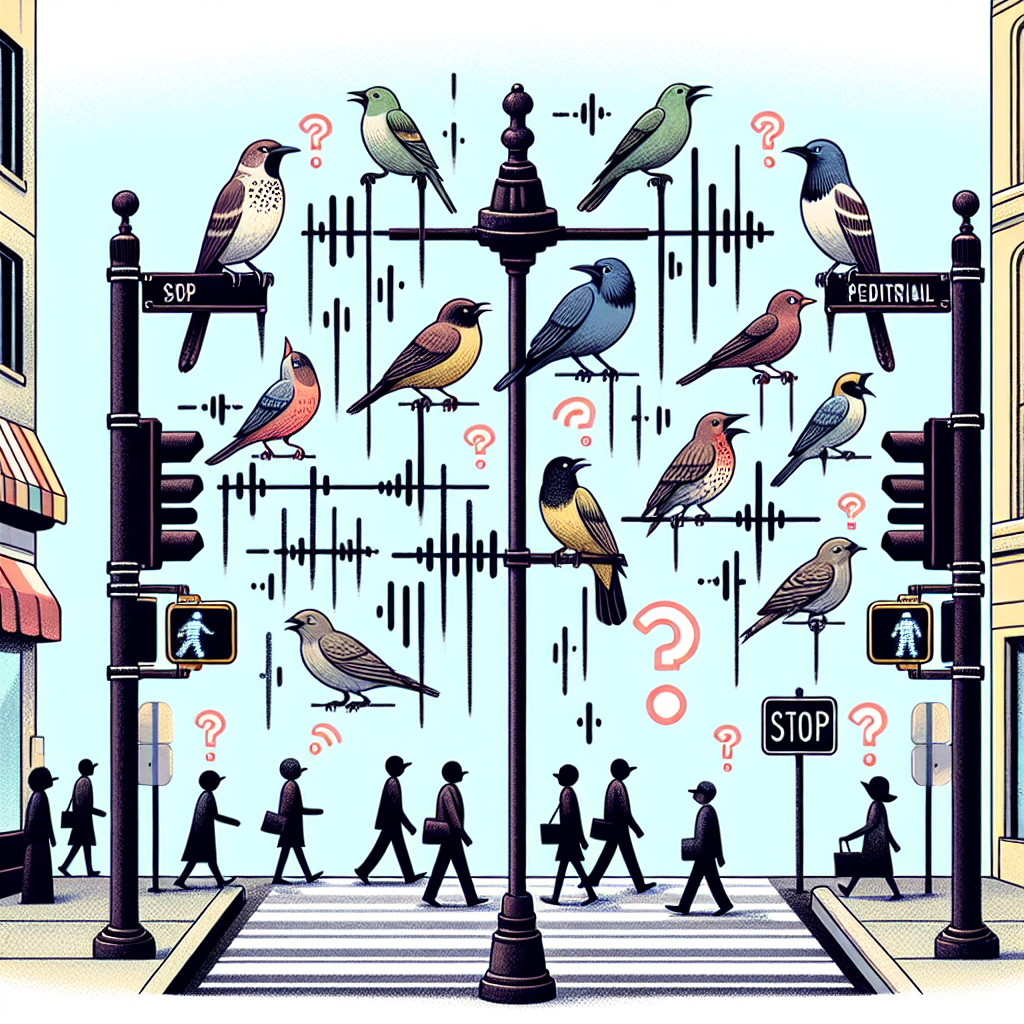
You can make a better guess by using a simple five-step method.
1. Identify the bird
Start with shape, color, size, movement, and habitat. A sound identification app can help, but treat its result as a suggestion. Background noise, nearby species, and regional variation can lead to errors.
Useful tools include the Cornell Lab of Ornithology’s Merlin Bird ID and the BirdNET project. Confirm an identification with a field guide or a clear visual sighting when possible.
2. Note the setting
Record where and when you heard the sound:
- Near a nest or nest box
- At a bird feeder
- In a tree canopy
- On the ground
- During migration
- At dawn or dusk
- Near a pond, forest edge, or open field
A call near a nest may have a different purpose from the same call at a feeder.
3. Watch the bird’s behavior
Behavior often gives the clearest clue.
An alarmed bird may:
- Freeze or crouch
- Flick its tail
- Face one direction
- Look upward
- Move from cover to an exposed perch
- Chase or scold a predator
- Cause nearby birds to become alert
A relaxed contact call may occur while the bird feeds, preens, or moves normally.
4. Study the pattern
Listen for:
- How many notes occur in a phrase
- How often the phrase repeats
- Whether the pitch rises or falls
- Whether the sound is clear, harsh, thin, or buzzy
- Whether another bird answers
- Whether the calls stop when a threat leaves
A single note tells you less than a repeated pattern linked to visible behavior.
5. Check what changes
If a hawk appears and several small birds begin calling, the timing supports an alarm interpretation. If the calls continue while the birds calmly feed, contact or flock communication may be more likely.
This process does not produce a perfect translation. It helps you make a careful, evidence-based interpretation instead of guessing from sound alone.
Why Bird Chirps Change
Bird calls can change because communication depends on context.
Distance
A bird may use a louder call when its mate or flock is far away. Close-range calls may be softer and less noticeable.
Habitat
Leaves, walls, buildings, and wind can block or distort sound. Some birds adjust their pitch or volume in noisy urban areas. A call heard in a city may sound different from one heard in a quiet forest.
Season
Breeding season brings more songs and territorial calls for many species. During migration, birds may use contact calls to maintain a group or locate other birds.
Age
Young birds often produce begging calls. These sounds can be high, repetitive, and persistent. Juveniles may also make calls that resemble adult contact or alarm calls but sound less controlled.
Individual and regional variation
Birds can learn parts of their vocal behavior. Some species develop local song differences, often called dialects. A field guide may show the general pattern, but local birds may sound slightly different.
Predator type
Some birds respond differently to a hawk, snake, cat, or owl. Chickadees, for example, can vary their alarm calls based on the kind of threat and how dangerous it appears.
How to Record and Study Bird Sounds
You do not need special equipment to begin. A phone can record useful notes if you stay close enough and reduce background noise.
Follow these steps:
- Record the date, time, location, weather, and habitat.
- Start the recording before the bird calls, if possible.
- Keep the phone still and avoid speaking over the sound.
- Record at least 30 seconds when conditions allow.
- Write down what the bird did before, during, and after the call.
- Compare the recording with a trusted field guide or sound library.
- Save the file with the species, location, and date if you identify it later.
Do not play a bird call repeatedly to force a response. Playback can stress birds, distract them from feeding, or draw them away from a nest. Use it sparingly, and avoid it near nesting birds or threatened species.
For nestlings, injured birds, or birds trapped inside a building, contact a licensed wildlife rehabilitator. Do not handle a wild bird unless there is an immediate safety need and local guidance supports it.

Common Mistakes When Interpreting Bird Chirps
Mistake 1: Treating every chirp as a warning
Many short calls are normal contact signals. A bird that keeps feeding and moving calmly is less likely to be in severe distress.
Mistake 2: Assuming one species has one call
Birds use several sounds. A cardinal’s song, contact chip, alarm call, and nest-related calls are not interchangeable.
Mistake 3: Ignoring body language
Sound and behavior work together. A sharp call means more when the bird also freezes, scans the sky, or causes other birds to flee.
Mistake 4: Trusting an app without checking
Sound tools can confuse similar species. They may also identify a common bird when the real caller is a less common species nearby.
Mistake 5: Approaching a nest
A bird calling near a nest may be warning you to leave. Move away and watch from a distance. Repeated disturbance can expose eggs or young birds to predators.
Mistake 6: Using human emotions as a translation
A loud call may sound angry or sad to a person, but the bird may be defending territory, finding a mate, or keeping contact with its flock. Use observable clues rather than human labels.
Key Takeaways
- Bird chirps can signal contact, danger, food, courtship, territory, or distress.
- “Chirp” is a general word, not a precise meaning.
- Species, sound pattern, location, season, and behavior all matter.
- Alarm calls often cause birds to freeze, scan, scold, or flee.
- Begging calls usually come from young birds near an adult or nest.
- Sound apps can help identify a bird, but visual and behavior clues improve accuracy.
- Avoid repeated playback and keep away from active nests.
Frequently Asked Questions
Do birds have different languages?
Birds do not use human language in the usual sense, but many species have complex communication systems. They may use different calls for contact, danger, mating, territory, and care of young. Some species can also learn or change parts of their vocal behavior.
Can birds understand human speech?
Some birds can learn to respond to human sounds, especially birds raised around people. That does not mean they understand human speech in the same way people do. Wild bird calls and human words belong to different communication systems.
Why do birds chirp at night?
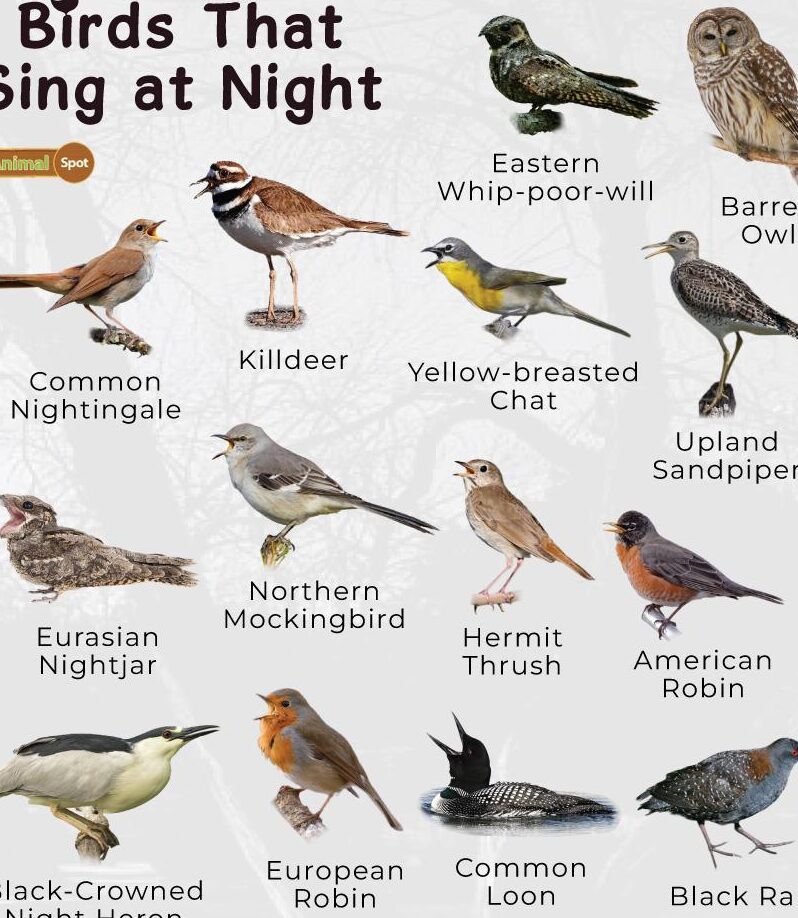
Night calls may come from nocturnal birds, migrating birds, birds disturbed by light, or daytime birds reacting to a threat. Owls, mockingbirds, robins, and other species may call at night in some settings. Bright lights, traffic, weather, and urban noise can affect nighttime vocal activity.
Why do birds chirp loudly near my window?
A bird may see its reflection and treat it as a rival. It may also be defending a nearby territory, calling to a mate, or reacting to movement indoors. If reflection attacks continue, use a temporary screen or outside covering to reduce the reflection.
How can I tell if a baby bird is calling for help?
A healthy fledgling may sit on the ground while adults feed it. It may hop, flutter, and call without being abandoned. If the bird has little or no feather cover, place it back in its nest if you can do so safely. If it is injured, cold, or in immediate danger, contact a licensed wildlife rehabilitator rather than trying to raise it yourself.
Conclusion
Different bird chirps do not have fixed meanings that can be translated one by one. The most reliable interpretation comes from combining the species, sound pattern, setting, season, and behavior.
Start by identifying the bird. Then ask what changed around it. A calm call between flock members, a sharp warning near a hawk, and a high peep from a nestling may all sound like “chirps,” but they serve very different purposes.
The next time you hear a bird call in your yard or local park, pause before labeling it. Watch, listen, record the context, and let the bird’s behavior complete the message.