
In the United States, “red finch” usually means a House Finch or Purple Finch. Both birds have bright red coloring on the male and make soft, musical sounds. A House Finch often sings a long, fast warble with a rough or nasal note near the end. A Purple Finch has a richer, more rolling song that may sound smoother and more flute-like.
The exact sound depends on the species, the bird’s sex, the season, and whether it is singing or giving a short call.

What People Mean by “Red Finch” in the United States
“Red finch” is a casual name, not one official species name used by the American Ornithological Society. In most parts of the United States, people use it for one of these birds:
- House Finch: Common at backyard feeders and in towns.
- Purple Finch: More common in northern forests and during winter movements.
- Common Redpoll: A small northern finch with a red forehead. It is less often meant by the term “red finch.”
- Cassin’s Finch: A western finch whose male has a red crown and throat.
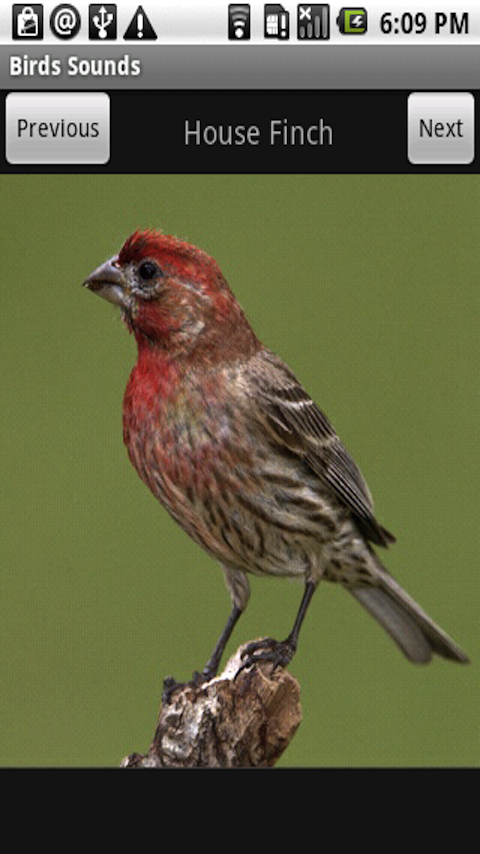
The House Finch is the most likely bird at a typical U.S. backyard feeder. Its male has red on the head, throat, and upper breast. The female is brown and streaked.
The Purple Finch male has a raspberry-red wash over much of the head, breast, and back. It also has a more rounded body and a stronger facial pattern than a House Finch. Because the two species can look and sound similar, location and behavior help with identification.
The Cornell Lab of Ornithology and the National Audubon Society provide useful species information for birders in the United States.

What Does a House Finch Sound Like?
A male House Finch usually sings a long, cheerful warble. The song may include:
- Fast, joined notes
- Soft whistles
– Chatter-like sounds - Harsh or buzzy notes
- A nasal or “zree” sound at the end
The song often seems to run together rather than follow a neat pattern. It can sound like a small bird talking quickly under its breath. Some notes are clear, while others are rough or scratchy.
A House Finch song may last several seconds. The bird often repeats similar phrases but does not always sing the same song in exactly the same way. Males commonly sing from a roof, tree branch, fence, or utility wire.
A useful written imitation is:
“Wheer-dee-dee-dee-zree.”
This spelling is only a rough guide. Bird sounds do not translate well into human words, and regional birds may sing different versions.
House Finches also make short calls. A common call is a sharp, rising note that may sound like “wheet” or “cheet.” Flock members use these calls to stay in contact. Birds may call more often when feeding, flying, or reacting to danger.
You can compare recordings on the Cornell Lab House Finch sounds page. Listen for the song’s quick warble and its occasional nasal ending.
What Does a Purple Finch Sound Like?
A Purple Finch song is often described as rich, musical, and rolling. It tends to sound fuller and more deliberate than a House Finch song.
A Purple Finch may produce:
- Clear whistles
- Soft warbles
- Slurred notes
- Rapid musical phrases
- A smooth, rising or falling pattern
One common impression is that a Purple Finch sounds like a House Finch played at a slower pace. That comparison is not exact, but it can help when you are learning both birds.
A rough imitation might sound like:
“Pea-dee-dee-diddle, whee-oh.”
The song can vary from bird to bird. Some Purple Finch songs contain more distinct whistles. Others sound like a short cascade of connected notes.
Purple Finches also give a short call that may sound like a soft “pik” or “tick.” Their call is not always enough for a confident identification. If you hear a rich song in a wooded area, look for the bird’s shape and color as well.
Hear verified recordings through the Cornell Lab Purple Finch sounds page.

House Finch vs. Purple Finch: Sound Comparison
The table below shows the most useful listening clues. These are general patterns, not strict rules.
| Feature | House Finch | Purple Finch |
|---|---|---|
| Overall song | Fast, loose warble | Rich, rolling warble |
| Tone | Often buzzy, rough, or nasal | Often smoother and more musical |
| Phrase shape | Notes may run together | Phrases may sound more separate |
| Common setting | Cities, suburbs, farms, feeders | Forest edges, northern areas, winter flocks |
| Male color | Red head and upper breast | Raspberry-red head, breast, and back |
| Female pattern | Brown with strong streaks | Brown with a less sharply streaked appearance |
| Best clue | Nasal ending and common backyard presence | Rich tone plus raspberry-red coloring |
The sound alone may not settle the identification. House Finches and Purple Finches can overlap in range, and background noise can hide key notes.
Use several clues together:
- Listen to the song’s tone. Is it buzzy and nasal, or rich and rolling?
- Check the habitat. House Finches often live near homes and feeders. Purple Finches favor wooded areas but may visit feeders.
- Study the male’s red color. A House Finch usually has red concentrated on the head and breast. A Purple Finch often looks more deeply washed in red.
- Look at the female. Female finches are often easier to separate by shape and streaking than by sound.
- Use a recording app only as a guide. Confirm the result with a field guide or trusted bird-sound library.
A noisy recording, distant bird, or mixed flock can make the two songs seem nearly identical.

What Do Red Finch Calls Mean?
A finch call is usually shorter than a song and serves a different purpose. Calls help birds keep contact, warn of danger, or communicate during flight and feeding.
Common situations include:
- Contact calls: Short notes exchanged between flock members.
- Alarm calls: Sharper sounds made when a hawk, cat, or other threat is nearby.
- Flight calls: Brief notes used while birds move together.
- Begging calls: Softer or more persistent sounds made by young birds.
- Courtship sounds: Songs and quiet notes used during pair bonding.
Male House Finches sing mainly during the breeding season, but you may hear some singing at other times. Singing can help defend a territory and attract a mate.
A bird that gives one sharp note is not necessarily “singing.” It is more likely making a call. This distinction matters because field guides often list songs and calls separately.
If a finch suddenly becomes quiet, the bird may have noticed a predator. Silence can be as useful as sound when you are watching backyard birds.

When and Where Will You Hear a Red Finch?
The best time to hear a House Finch is often early morning, especially in spring and early summer. Males may sing from exposed perches before daily activity becomes loud.
You may hear a House Finch near:
- Tube feeders
- Parks
- Suburban trees
- Building edges
- Shrubs and hedges
- Open woodland
Purple Finches are often easier to hear in coniferous or mixed forests. In winter, they may visit sunflower feeders and wooded neighborhoods, depending on food supplies and local movement.
For better listening:
- Go outside before traffic and neighborhood noise increase.
- Stand still for several minutes.
- Watch high perches, not only feeders.
- Record the sound from a safe distance.
- Compare the recording with several known examples.
- Check the bird’s shape, color, and location.
Do not approach a nest or play loud recordings near a bird. Repeated playback can stress birds and may disrupt feeding or territorial behavior. If you use playback for identification, keep it brief and quiet.

How to Identify a Red Finch by Sound
Sound identification works best when you combine audio with visual clues. Follow this simple process.
1. Decide whether you hear a song or a call
A song is usually longer and more complex. A call is often one note or a short group of notes.
2. Note the song’s texture
Ask whether it sounds:
- Buzzy
- Nasal
- Clear
- Flute-like
- Harsh
- Smooth
- Fast or slow
A rough, quick warble points more toward House Finch. A richer, smoother warble may point toward Purple Finch.
3. Watch the bird’s behavior
A singing male often sits in an open, high place. A calling bird may move through a flock or feed in a shrub.
4. Look for red plumage
Do not identify the bird from the red color alone. Many finches have red or orange markings, and light can change how the color appears.
5. Compare a trusted recording
Use recordings from established sources such as:
A match is stronger when the recording comes from the same species, region, and type of sound.

Common Mistakes When Identifying Red Finch Sounds
The most common mistake is assuming that every red-colored finch is a House Finch. Red Crossbills, Common Redpolls, Cassin’s Finches, and Purple Finches can also fit a casual description of “red finch.”
Another mistake is relying on one written spelling. Words such as “cheet,” “wheet,” and “zree” help describe a sound, but they cannot capture pitch, speed, or tone.
Background noise creates another problem. Wind, traffic, air conditioners, and other birds can hide the features that separate House Finch and Purple Finch songs.
Do not treat a bird-identification app as final proof. Sound-recognition tools can make errors when the recording is short, distant, or noisy. Use the app to suggest possibilities, then check the bird’s appearance, range, habitat, and behavior.
Key Takeaways
- In the United States, “red finch” usually means a House Finch or Purple Finch.
- A House Finch sounds like a fast, loose warble with possible buzzy or nasal notes.
- A Purple Finch often sounds richer, smoother, and more musical.
- Short finch calls are different from longer songs.
- The safest identification uses sound, appearance, habitat, and range together.
Frequently Asked Questions
Is a red finch the same as a House Finch?
Not always. In the United States, people often use “red finch” to mean a House Finch, but the term can also refer to a Purple Finch or another red-colored finch.
What does a red finch sound like at a bird feeder?
A House Finch at a feeder may give short, sharp contact calls. A nearby male may sing a longer warble from a tree, roof, or wire. The feeder itself does not create a special sound; the bird’s species and behavior do.
Do female red finches sing?
Females can make calls, but males are usually the birds people hear singing. Female finches may also produce quiet sounds during contact, nesting, or feeding.
Can a red finch sound like a canary?
A House Finch can sound somewhat canary-like because its song includes musical notes and warbling. It is usually less smooth and may include buzzy or nasal sounds.
What other bird sounds like a red finch?
Purple Finches are the closest common match. Depending on location, Cassin’s Finch, Common Redpoll, and some other finches may also cause confusion.
How can I hear a real red finch sound?
Start with verified recordings from the Cornell Lab of Ornithology or the Macaulay Library. Search for both “House Finch song” and “Purple Finch song,” then compare the recordings with the bird outside.
Conclusion
A “red finch” in the United States most often sounds like a House Finch or Purple Finch. The House Finch has a quick, flexible warble that may end with a nasal or buzzy note. The Purple Finch usually has a fuller, smoother, rolling song.
For the best identification, listen first, then check the bird’s red pattern, body shape, habitat, and behavior. A short recording and a trusted bird guide can turn a vague “red finch” sound into a confident species identification.