
Introduction
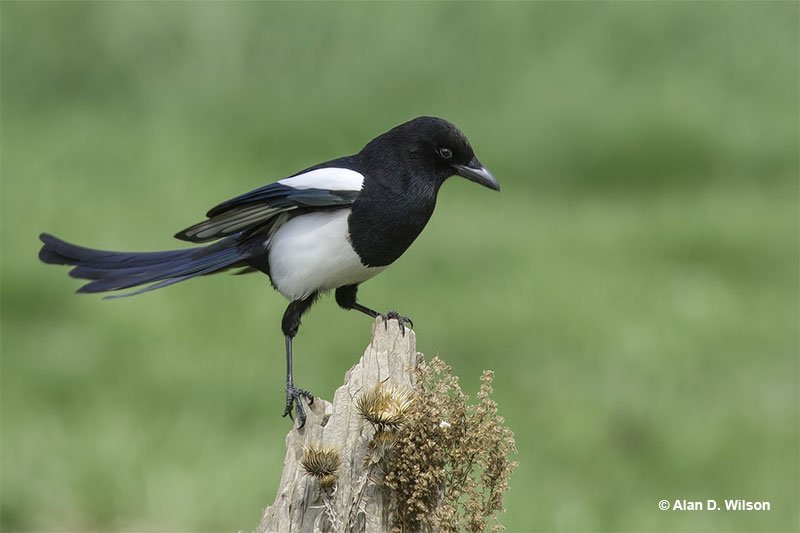
In the United States, the Black Phoebe is one of the best matches for a bird that looks black with a white belly. It has a sooty-black head, back, and chest, plus a clear white belly and undertail. It is common near streams, ponds, gardens, and other places with open water in the western U.S.
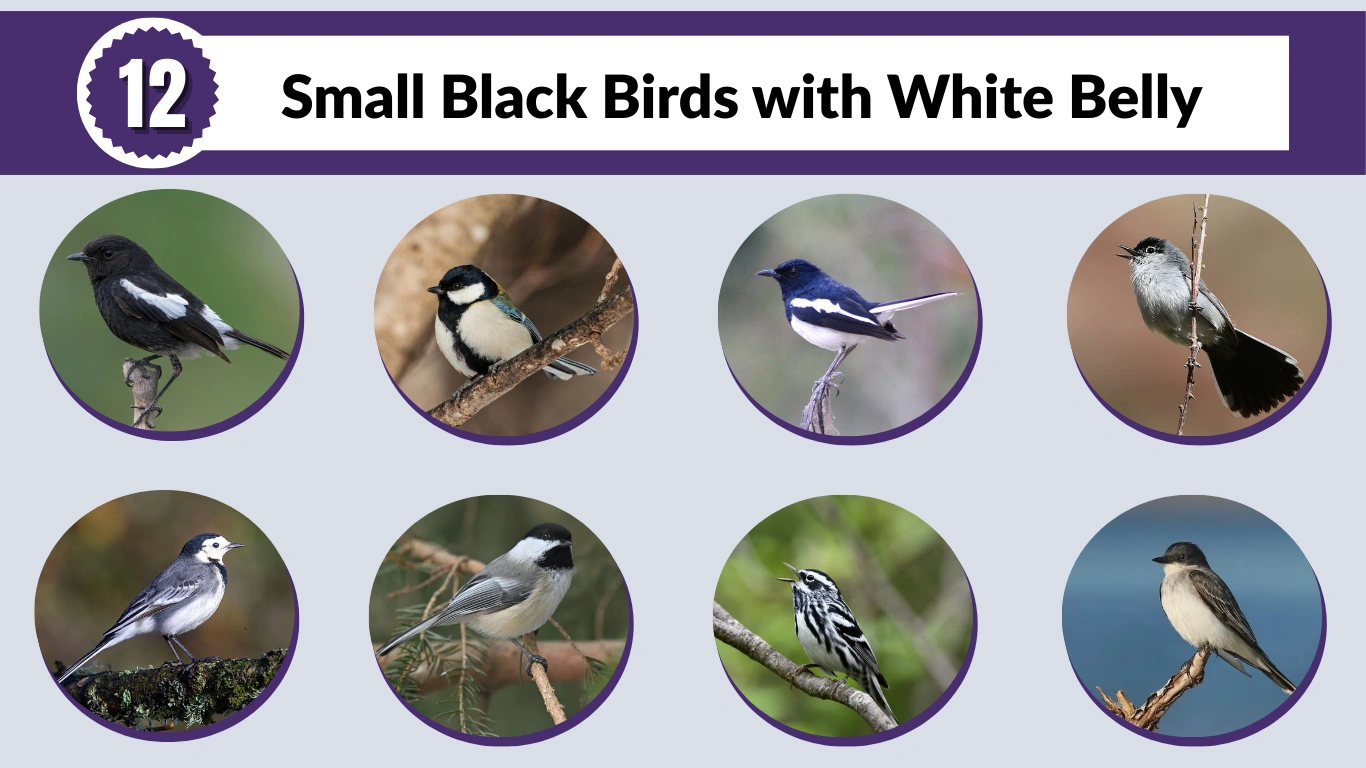
However, several U.S. birds can look black and white from a distance. The bird may be a Black-and-white Warbler, Eastern Phoebe, Black-capped Chickadee, Downy Woodpecker, or White-breasted Nuthatch. Your location, the bird’s shape, its behavior, and the pattern on its wings can help narrow it down.

The Most Likely Answer: Black phoebe
the Black Phoebe (Sayornis nigricans) is the closest match when the bird has a mostly black body and a bright white belly.
Its key features include:
- Black head, back, wings, and upper chest
- White lower belly and undertail
- A medium-sized, upright songbird shape
- A short, straight bill
- A habit of perching low near water
- Frequent tail bobbing
- Quick flights to catch insects
Black Phoebes live mainly in the western United States. Their range includes California, Arizona, New Mexico, Nevada, Utah, Texas, and parts of nearby states. They often stay near creeks, ponds, reservoirs, irrigation channels, and shaded water edges.
The bird may look almost black at first glance. In bright light, the white belly is usually easy to see. In poor light, the dark breast can blend into the black back, making the bird appear smaller or darker than it is.
The Cornell Lab of Ornithology describes the Black Phoebe as a flycatcher that often hunts from low perches near water. Its repeated tail movements and short flights from a perch are useful clues for identification.
Black Phoebe identification checklist
You may be looking at a Black Phoebe if most of these clues fit:
| Feature | What to look for |
|---|---|
| Main color | Black or deep sooty gray above |
| Belly | White from the lower chest to the undertail |
| Size | About sparrow-sized, but with a longer body |
| Posture | Upright while perched |
| Tail | Often bobs up and down |
| Habitat | Near water, bridges, rocks, lawns, or garden edges |
| Behavior | Flies out to catch insects and returns to the same perch |
| U.S. range | Mostly western and southwestern states |
A Black Phoebe is especially likely if you saw the bird beside a creek or pond and watched it make short, low flights over the ground or water.

Other U.S. Birds That Look Black With a White Belly
A black-and-white bird is not always a Black Phoebe. These common U.S. species can create a similar impression.
Black-and-White Warbler
The Black-and-white Warbler has bold black-and-white stripes across its head, back, wings, and underside. It is much more patterned than a Black Phoebe.
Look for:
- Strong black-and-white stripes
- A thin, pointed bill
- A small songbird body
- Creeping movements along tree trunks and branches
- A habit of searching bark for insects
Black-and-white Warblers breed across much of the eastern and central United States and migrate through many other regions. They do not usually sit upright on low perches near water like Black Phoebes.
If the bird looked striped rather than solid black, this species is a better match.
Eastern Phoebe
The Eastern Phoebe is a common flycatcher in the eastern United States. It has a gray-brown back, a dark head, and a pale or whitish belly. It may appear black and white in shade or at a distance.
Important clues include:
- Gray or brown back rather than true black
- Pale belly
- Dark head
- Repeated tail bobbing
- Perching on fences, branches, buildings, or bridges
- A range mainly east of the Rocky Mountains
The Eastern Phoebe and Black Phoebe behave in similar ways. Color and location are the main differences. A dark bird with a clean white belly in California is more likely to be a Black Phoebe. A gray-brown bird in Pennsylvania or Ohio is more likely to be an Eastern Phoebe.
Black-capped Chickadee
The Black-capped Chickadee has a black cap and throat, white cheeks, gray wings, and a pale underside. It is not solid black, but its dark head can make it look black and white.
Look for:
- A round body
- A black cap
- White cheeks
- A small black bib under the bill
- Gray back and wings
- Quick, active movements in shrubs and trees
Black-capped Chickadees are common across northern and eastern parts of the United States. They often visit feeders and make a clear “chick-a-dee-dee-dee” call.
If you saw a tiny, round bird with white cheeks, it was likely a chickadee rather than a phoebe.
Downy Woodpecker
A Downy Woodpecker can look black and white because of its barred wings, white back stripe, and pale underside.
Look for:
- A short, chisel-like bill
- Black-and-white barred wings
- A white stripe down the back
- A small body
- Climbing on tree trunks
- A red patch on the rear of the head in many males
Downy Woodpeckers are widespread across the United States. Their stiff tail feathers help them brace against tree bark. A bird clinging to a trunk is more likely to be a woodpecker than a phoebe.
White-breasted Nuthatch
The White-breasted Nuthatch has a white face and belly, a blue-gray back, and a black cap. It often appears black, white, and gray.
Its most useful clues are:
- White face and underside
- Dark cap
- Blue-gray back
- Short tail
- Long, pointed bill
- Habit of moving headfirst down tree trunks
This bird is common in mature woods, parks, and suburban yards. It may visit bird feeders and has a nasal, repeated call.
American Dipper
The American Dipper is a dark bird with a pale underside that lives near fast-moving streams in the western United States.
Look for:
- Slate-gray to black body
- White throat or pale underside
- Short tail
- Constant bobbing motion
- Walking or swimming in cold, rushing water
- Rocky mountain stream habitat
The American Dipper is less likely in a city park or quiet backyard pond. It is strongly linked to clean, fast-flowing mountain streams.
How to Identify the Bird You Saw
Start with location and behavior before focusing on color. Black-and-white patterns can look different in shade, bright sun, or through binoculars.
1. Check your region
Use the bird’s location as the first filter.
- Western U.S. near water: Black Phoebe or American Dipper
- Eastern U.S. near open fields or buildings: Eastern Phoebe
- Forests across much of the country: Black-and-white Warbler, chickadee, nuthatch, or woodpecker
- Northern and eastern backyards: Black-capped Chickadee
- Tree trunks: Downy Woodpecker or White-breasted Nuthatch
Range is helpful, but it is not absolute. Birds migrate, and some species occur outside their most common range.
2. Watch how it moves
Behavior often gives a stronger clue than color.
- Flies from a low perch to catch insects: Phoebe
- Creeps along tree bark: Black-and-white Warbler
- Climbs headfirst down a trunk: White-breasted Nuthatch
- Hammers or probes wood: Downy Woodpecker
- Bobs while standing in a stream: American Dipper
- Hops actively through branches: Black-capped Chickadee
A Black Phoebe often returns to the same perch after catching an insect. It may flick or pump its tail each time it lands.
3. Look at the bird’s shape
Shape can separate similar birds.
A phoebe has a slim, upright body and a medium-length tail. A chickadee looks rounder. A woodpecker has a straighter, stronger bill and a stiff tail. A nuthatch has a short tail and a longer, sharper bill.
Do not judge size without a reference. A bird seen alone can look larger or smaller than it is. Compare it with a sparrow, robin, fence post, or nearby branch when possible.
4. Study the white area
The position of the white feathers matters.
- White only on the lower belly: Often a Black Phoebe
- White cheeks and belly with a black cap: Black-capped Chickadee
- White face, belly, and back stripe: White-breasted Nuthatch
- White stripes across the whole body: Black-and-white Warbler
- White back stripe and barred wings: Downy Woodpecker
- Pale belly with gray-brown upperparts: Eastern Phoebe
5. Listen for the call
Sound can confirm a visual guess.
Black Phoebes give sharp, clear calls and songs from low perches. Eastern Phoebes often make a repeated, raspy “fee-bee” sound. Black-capped Chickadees give their familiar “chick-a-dee-dee-dee” call.
Bird calls vary with age, season, and context. Use sound as supporting evidence rather than relying on one short note.

Quick Comparison Chart
Use this chart when you remember only a few details.
| Bird | Main appearance | Best behavior clue | Typical U.S. setting |
|---|---|---|---|
| Black Phoebe | Black above, white belly | Tail bobs; catches insects from a low perch | Western waterways and yards |
| Eastern Phoebe | Gray-brown above, pale belly | Repeated tail bobbing and flycatching | Eastern fields, farms, and buildings |
| Black-and-White Warbler | Bold black-and-white stripes | Creeps along tree trunks | Forests and wooded parks |
| Black-capped Chickadee | Black cap, white cheeks, gray wings | Active in shrubs and trees | Northern and eastern yards |
| Downy Woodpecker | Black-and-white wings and back stripe | Clings to and taps tree trunks | Woodlands and feeders |
| White-breasted Nuthatch | White face and belly, dark cap | Moves headfirst down trees | Mature trees and bird feeders |
| American Dipper | Dark body with pale underside | Bobs and forages in rushing water | Mountain streams in the West |
The Black Phoebe is the strongest match when the bird is mostly black, has a clean white belly, and stays near water. The Black-and-white Warbler is more likely if the bird has clear stripes. The Eastern Phoebe is more likely if the upperparts look gray or brown rather than black.
Where Black Phoebes Are Found in the United States
Black Phoebes are most common in the western and southwestern United States. They favor habitats with water and exposed perches.
Typical places include:
- California creeks and ponds
- Arizona washes and canals
- Texas streams and reservoirs
- New Mexico wetlands
- Nevada and Utah waterways
- Urban parks with fountains or ponds
- Ranches, gardens, and suburban yards near water
They may nest on ledges, bridges, culverts, buildings, and sheltered structures. Their nests are made from mud and plant material. Do not disturb a nest or handle young birds.
The species can adapt to human-made water sources, but that does not mean every dark bird beside water is a Black Phoebe. Confirm the white belly, upright posture, tail movement, and flycatching behavior together.
Common Identification Mistakes
Mistake 1: Treating all dark birds as blackbirds
Many birds look black because of shade or distance. A bird may actually be gray, brown, or blue-black.
Use sunlight, a clear photograph, or several viewing angles before deciding.
Mistake 2: Ignoring the bill
The bill is a strong clue. Flycatchers have short, broad-based bills. Woodpeckers have chisel-like bills. Nuthatches have narrow, pointed bills.
Mistake 3: Using color without location
A Black Phoebe is unlikely in most of the Northeast. An Eastern Phoebe is unlikely to be the usual answer in coastal California. Range does not prove identity, but it can remove unlikely choices.
Mistake 4: Chasing the bird for a better view
Chasing can stress wildlife and may disrupt feeding or nesting. Watch from a distance, use binoculars, and avoid entering private property or protected nesting areas.
Mistake 5: Trusting an automatic photo identification without checking
Bird-identification apps can suggest useful options, but they can also confuse similar species. Compare the suggestion with the bird’s range, habitat, body shape, and behavior.

Frequently Asked Questions
Is a black bird with a white belly a Black Phoebe?
It may be. A Black Phoebe is the best match when the bird has a solid black upper body, a clean white lower belly, an upright posture, and a habit of catching insects near water. Other species can look similar, so location and behavior matter.
What black-and-white bird bobs its tail?
Phoebes commonly bob their tails. Both the Black Phoebe and Eastern Phoebe show this behavior. The Black Phoebe is darker and usually has a stronger black-and-white contrast, while the Eastern Phoebe is often gray-brown above.
What black bird has a white belly in California?
The Black Phoebe is a leading possibility, especially near creeks, ponds, canals, and parks. A Black-and-white Warbler, White-breasted Nuthatch, or other species may also occur in California, depending on the habitat and season.
What small black-and-white bird lives near water?
A Black Phoebe often lives near water in the western United States. An American Dipper also lives near water, but it prefers fast, rocky streams and often walks or bobs at the water’s edge.
How can I identify the bird from a photo?
Check the bird’s bill, tail, wing pattern, body posture, habitat, and location. A photo that shows the side, back, and underside is more useful than a distant front view. Compare the image with range maps and species accounts from sources such as the Cornell Lab of Ornithology and the Audubon Guide to North American Birds.
Conclusion
The Black Phoebe is the most likely answer to “what bird is black with a white belly” when the bird is mostly black, has a crisp white lower belly, bobs its tail, and hunts insects near water in the western United States.
If the bird was striped, consider a Black-and-white Warbler. If it had white cheeks and a black cap, consider a Black-capped Chickadee. If it climbed a tree trunk, check for a Downy Woodpecker or White-breasted Nuthatch. Record the location, habitat, movement, call, and body pattern before making a final identification.