
Introduction
For readers in the United States, the short answer is about 45 living species of birds of paradise. These birds are not native to the mainland United States. Most live in New Guinea, eastern Australia, and nearby islands.
The exact number can vary by checklist. Bird taxonomists may split one species into two or combine two forms into one. For that reason, some sources report a slightly different total. Still, 45 species in the bird family Paradisaeidae is the most useful current figure.

The short answer: 45 species
Birds of paradise belong to the family Paradisaeidae. Most modern bird lists recognize about:
- 45 living species
- 17 genera
- One biological family
- A range that centers on New Guinea and nearby islands
- A smaller number of species in Australia
This total refers to recognized species, not every named subspecies or local color form.
A species is a distinct group of birds that can usually breed with one another and produce fertile young. A subspecies is a regional form within a species. Subspecies may look different, but taxonomists do not always count them as separate species.
That difference explains why two trusted sources may give totals such as 43, 44, 45, or 46. The disagreement does not mean that scientists lack basic knowledge of these birds. It reflects changes in genetic research, field studies, and taxonomic rules.
Why the number can change
Bird classification is not fixed forever. New evidence can change the species count in several ways:
-
A split creates more species.
A bird once treated as one species may contain two or more distinct populations. -
A lump reduces the total.
Two named forms may prove to be part of the same species. -
New field evidence changes boundaries.
Song, behavior, breeding range, and genetics can show that birds are more or less distinct than once thought. -
Checklists use different taxonomic standards.
The International Ornithologists’ Union, the Clements Checklist, BirdLife International, and museum databases may update at different times.
For a general answer, 45 species is the clearest figure. For scientific work, always name the checklist and version used.

What counts as a bird of paradise?
A bird of paradise is a member of the family Paradisaeidae. The family includes small, medium-sized, and large birds with unusual feathers, bright colors, and complex courtship displays.
Many males have traits that look far removed from ordinary feathers. Examples include:
- Long flank plumes
- Wire-like head feathers
- Bright blue breast shields
- Metallic green or bronze color
- Broad tail feathers
- Plumes that form a cape or fan
Females are often less colorful. Their plain brown or gray feathers help them hide while they feed or raise young.
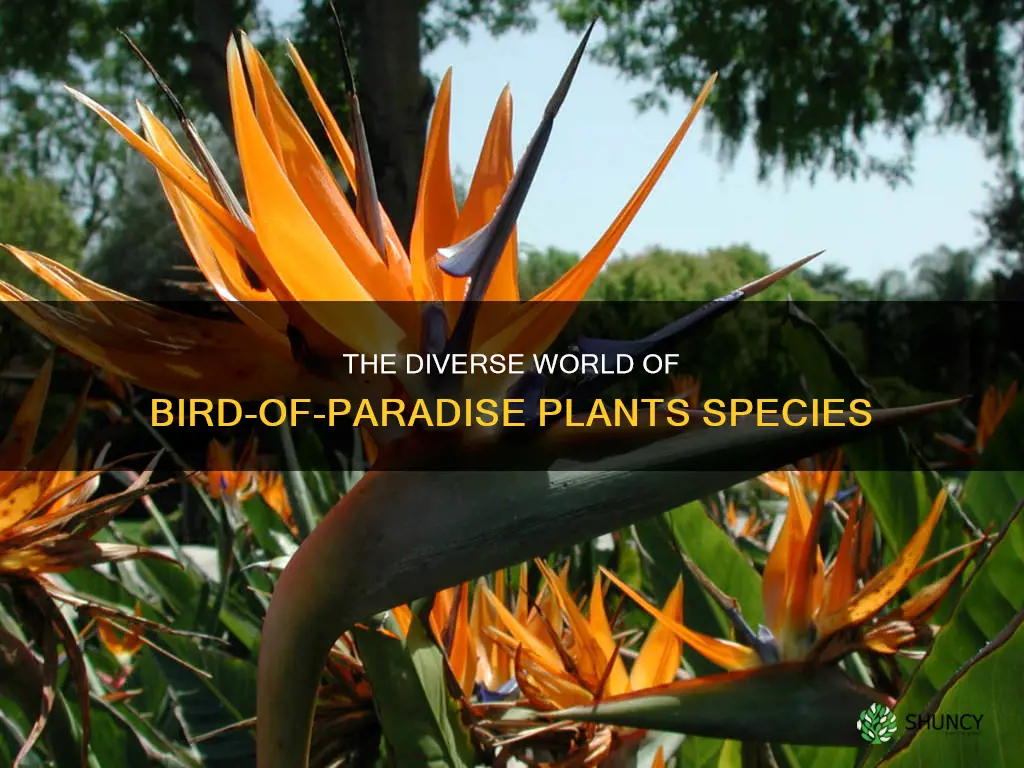
The name can also cause confusion. Birds of paradise are not the same as birds-of-paradise flowers. The flowers belong mainly to the plant genus Strelitzia. They share a common name but are not related to the birds.
Main bird-of-paradise genera
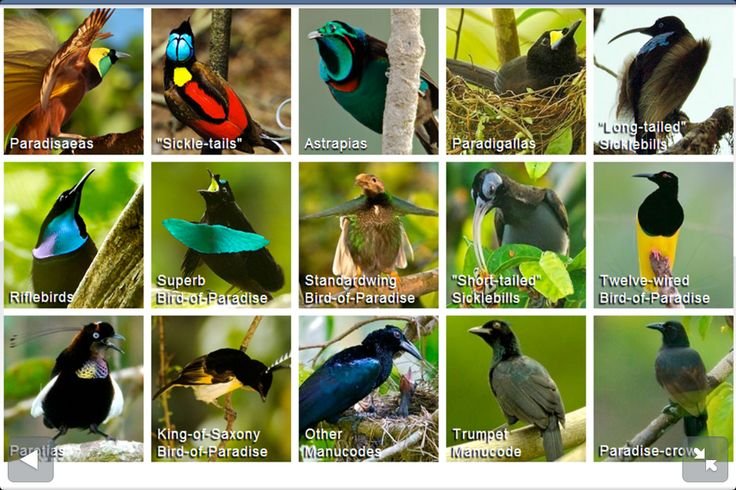
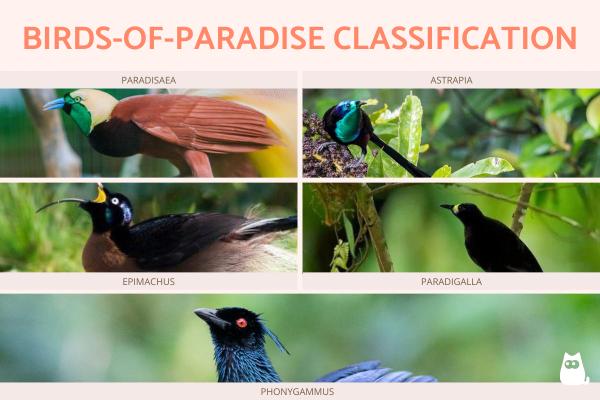
The family contains several genera. Common examples include:
| Genus | Representative species or group | Notable feature |
|---|---|---|
| paradisaea | Greater and Raggiana birds of paradise | Long, flowing display plumes |
| Astrapia | Ribbon-tailed and Stephanie’s astrapias | Very long tail feathers in some males |
| Parotia | Six-plumed birds of paradise | Precise dance displays and breast feathers |
| Lophorina | Superb birds of paradise | Dark cape and blue breast shield |
| Manucodia | Trumpet manucodias | Less extreme plumage and fruit-based diets |
| Ptiloris | Riflebirds | Courtship displays with raised wings |
| Sericulus | Bower-like golden birds of paradise | Bright yellow and black plumage |
| Epimachus | Sicklebills | Long, curved bills and tail feathers |
Taxonomy can place some familiar birds in different genera. For example, checklists may treat certain “riflebirds,” “manucodias,” or “sicklebills” differently as classifications change.

Where do birds of paradise live?
Most birds of paradise live in New Guinea, which includes the countries of Papua New Guinea and Indonesia’s provinces of Papua. Other species occur on nearby islands, including the Moluccas and the Bismarck Archipelago.
Australia has several native species, especially in northern Queensland. The Victoria’s riflebird, paradise riflebird, and some other members of the family occur there.
Their habitats include:
- Lowland rainforest
- Montane forest
- Cloud forest
- Forest edges
- Swamps
- Woodland and wet tropical habitats
The species count does not mean that all 45 birds live in the same place. Many have small ranges. Some live only on one island, mountain range, or forest zone.
That limited range makes habitat loss a serious concern. A species may survive in one valley while disappearing from nearby areas after forests are cleared.
Why are male birds of paradise so colorful?
Male birds of paradise use their feathers, posture, movement, and calls to attract females. This process is called sexual selection.
In many species, females choose among males. Males with striking feathers or skilled displays may gain more chances to mate. Over many generations, this can produce extreme traits.
A male may:
- Clean a display site
- Call to attract a female
- Spread a cape of feathers
- Raise a blue throat shield
- Swing his head from side to side
- Hang upside down
- Hop, bow, or turn in a set pattern
- Use light and shadow to show off his plumage
The female does not simply judge color. She may also assess the male’s timing, posture, sound, and control of the display area.
The result is one of nature’s clearest examples of courtship shaped by mate choice. The feathers may help with reproduction, even when they make flight harder or make the male easier to see.
Why females often look plain
Female birds of paradise usually need camouflage more than display feathers. They spend time on nests and may care for chicks alone. Brown, olive, or gray plumage can help them blend into leaves and branches.
This difference between male and female appearance is called sexual dimorphism. It is common in the family, but the degree varies. In some species, males and females look fairly similar. In others, the male has a dramatic costume.
Are all 45 species equally unusual?
No. “Birds of paradise” covers a wide range of forms and behaviors.
The most famous species have elaborate feathers. The greater bird of paradise, for example, has long yellow and white plumes. The superb bird of paradise can transform its dark body feathers into a rounded cape and display a bright blue breast shield.
Other species look more like ordinary forest birds. Manucodias often have dark, glossy feathers and less exaggerated ornaments. Some species rely more on calls, movement, or display sites than on very long plumes.
This variation matters because the group is not defined by one feature. A bird does not need to have huge feathers to belong to Paradisaeidae. Family membership depends on its evolutionary relationships and shared traits.
How many bird-of-paradise species are found in the United States?
No bird-of-paradise species is native to the contiguous United States. The United States does not have wild breeding populations of the family in its mainland states.
People in the United States may see these birds in:
- Accredited zoos
- Natural history museums
- University collections
- Wildlife documentaries
- Scientific research collections
Some U.S. zoos display related tropical birds, but public exhibits change. A zoo’s current collection should be checked directly before planning a visit.
The phrase “bird of paradise” can also refer to the bird-of-paradise plant, which is grown as an ornamental plant in warm parts of the United States. That plant is not a bird and does not affect the number of bird species.

What are the best-known species?
Several species receive frequent attention because of their appearance, behavior, or conservation value.
Greater bird of paradise
The greater bird of paradise (Paradisaea apoda) is known for long yellow and white flank plumes. Males raise these feathers during courtship displays.
Raggiana bird of paradise
The Raggiana bird of paradise (Paradisaea raggiana) is native to New Guinea. It is the national bird of Papua New Guinea and appears on that country’s national emblem.
Superb bird of paradise
The superb bird of paradise (Lophorina superba) uses a dark, rounded cape and a bright blue chest shield during its display. Researchers have documented distinct regional forms and complex display behavior in this group.
Wilson’s bird of paradise
Wilson’s bird of paradise (Cicinnurus respublica, in taxonomies that use this genus placement) has a vivid blue crown and curled tail feathers. It has a small range on islands in Indonesia’s West Papua region.
King of Saxony bird of paradise
The king of Saxony bird of paradise (Pteridophora alberti) has long head wires that can move during display. It lives in mountain forests of New Guinea.
Victoria’s riflebird
Victoria’s riflebird (Ptiloris victoriae) is found in northeastern Australia. Unlike some New Guinea species, it occurs within a well-known Australian bird fauna.
These examples show why one simple total does not tell the whole story. The family includes birds with very different sizes, habitats, ranges, and display styles.
Are birds of paradise endangered?
Some birds of paradise face serious risks, but conservation status differs by species. Habitat loss, hunting, climate pressure, and small geographic ranges can all increase risk.
A species with a narrow island range may be more vulnerable than one that occupies a broad area. Forest clearance can also remove display trees, feeding sites, nesting areas, and travel routes.
The International Union for Conservation of Nature evaluates species one by one. Its Red List categories include:
- Least Concern
- Near Threatened
- Vulnerable
- Endangered
- Critically Endangered
A family-wide statement such as “birds of paradise are endangered” would be too broad. The correct approach is to check the status of the particular species.
Conservation work often includes:
- Protecting intact forest
- Supporting local land management
- Limiting illegal hunting and trade
- Studying small populations
- Protecting important breeding areas
- Using community-based conservation programs
The Convention on International Trade in Endangered Species also regulates international trade in many wild birds. Rules can differ by species and country.

What is the most accurate species count?
For most readers, use this wording:
There are about 45 recognized living species of birds of paradise in the family Paradisaeidae. The exact total may differ slightly between taxonomic checklists.
This answer is more accurate than giving a bare number with no qualification. It explains why reputable references may not match.
When you need a formal count, record:
- The checklist name
- The checklist version or publication date
- Whether extinct species are included
- Whether subspecies are counted
- How recent taxonomic splits are treated
Do not count every local name as a separate species. A common name may refer to a species, a subspecies, a genus, or an entire group.

Common mistakes about the number of species
Mistake 1: Counting subspecies as species
A species may have several regional forms. Counting each form separately can create an inflated total.
Mistake 2: Treating every colorful tropical bird as a bird of paradise
Many tropical birds have bright feathers. Only members of Paradisaeidae belong to the bird-of-paradise family.
Mistake 3: Confusing the bird with the plant
The bird-of-paradise flower is a plant in the genus Strelitzia. It is not included in the bird count.
Mistake 4: Assuming all checklists use the same taxonomy
Bird lists update at different times. A total from one database may not match a total from another.
Mistake 5: Including extinct birds without saying so
The answer of about 45 normally refers to living species. Fossil and historically extinct forms require a separate count.
Frequently asked questions
Are there 43 or 45 species of birds of paradise?
Both numbers may appear in reputable sources because taxonomic authorities use different rules and update schedules. About 45 living species is the best general answer, but a scientific report should name the checklist used.
What family do birds of paradise belong to?
They belong to the family Paradisaeidae. The family includes birds such as paradisaeas, riflebirds, manucodias, astrapias, sicklebills, and birds in several related genera.
What country has the most birds of paradise?
New Guinea has the greatest diversity of birds of paradise. The island is divided politically between Papua New Guinea and Indonesia. Exact country totals depend on range maps and taxonomy.
Can birds of paradise fly?
Yes. Birds of paradise can fly. Some males have very long or heavy feathers, but these birds still move through forest canopies and between display sites.
Are birds of paradise related to crows?
Yes. Birds of paradise are part of the order Passeriformes, the large group that includes perching birds. Their closest relationships are within the broader corvid and related passerine lineages, although they are not simply “tropical crows.”
Can I keep a bird of paradise as a pet?
These are wild birds with complex needs. They are not suitable pets for most people. International trade laws, permits, diet, space, social needs, and welfare requirements make private ownership difficult and often restricted.
Conclusion
There are about 45 living species of birds of paradise. They belong to the family Paradisaeidae and live mainly in New Guinea, nearby islands, and parts of Australia.
The total can change slightly as scientists revise bird taxonomy. The safest precise answer is therefore “about 45,” rather than treating one number as permanent.
For the most current formal count, consult a dated authority such as the International Ornithologists’ Union World Bird List, BirdLife International, or a major global bird checklist. Always check whether the source counts living species only and which taxonomic system it follows.